Key Points
- Charity Mission: Environmental charity Letting Grow is leading educational reform in London by reconnecting inner-city children, vulnerable families, and low-wealth demographics with nature.
- Ambitious Target: The organisation has committed to a long-term urban afforestation plan, aiming to plant 250,000 trees across London over the next five years.
- Humble Beginnings: Founded in 2018, the initiative transformed a severely neglected and misused community allotment in Acton into a thriving, functional green hub.
- Strategic Growth: Eight years on from its inception, Letting Grow operates across five diverse sites, receives financial backing from the National Lottery, and is integrated into Mayor Sadiq Khan’s high-profile environmental schemes.
- Immersive Experiences: Educational workshops run by the charity guide pupils through the entire agricultural life cycle—from sowing a tiny seed to cooking homegrown harvest over an open schoolyard fire.
- Upcoming Expansion: Backed by fresh National Lottery funding, a new project is slated to launch later this year at Greenford Library to bring community gardening deeper into West London.
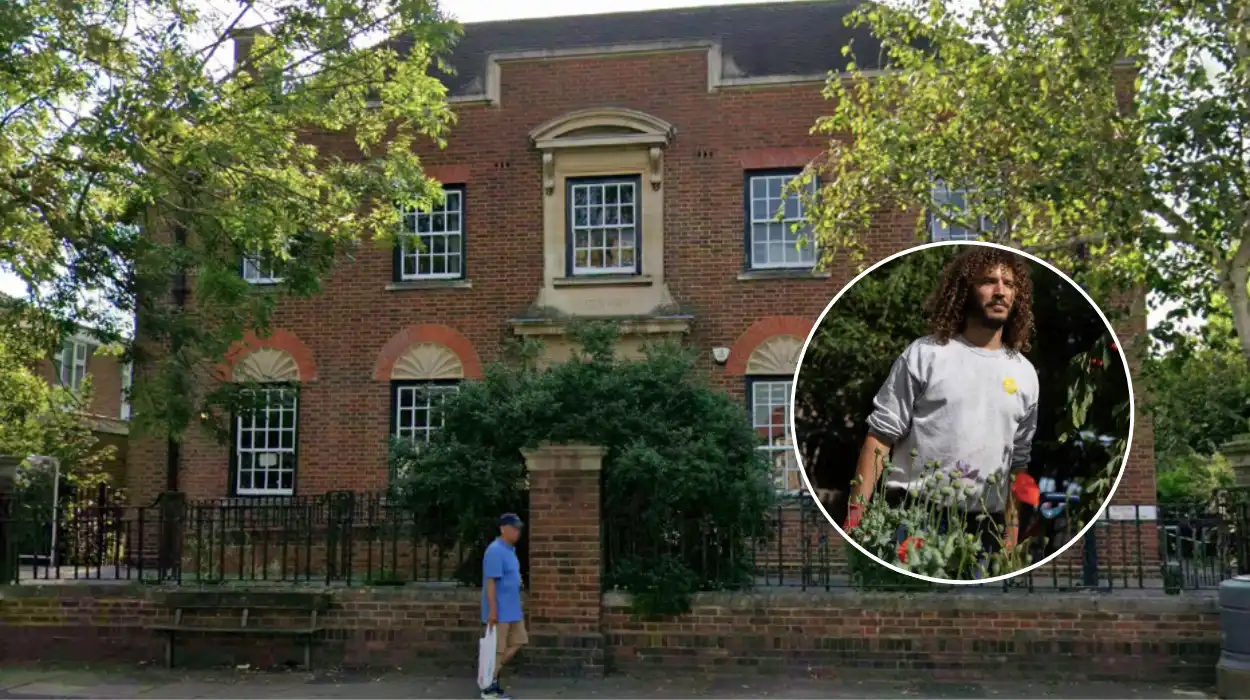
Ealing (Extra London News) June 20, 2026 – In a bid to counter the profound disconnection between inner-city children and the natural world, a grass-roots environmental charity founded in West London is transforming urban education by taking students out of the concrete jungle and into rural landscapes, reportedly leaving young participants with their ‘minds blown’ after experiencing fields and hills for the first time. Letting Grow, an ambitious non-profit enterprise spearheaded by 38-year-old Lewisham native Ross Walker, is pioneering a model of hands-on environmentalism that bridges the gap between agricultural literacy and urban survival, while simultaneously committing to the vast ecological goal of planting a quarter of a million trees across the capital within the next five years.
- Key Points
- What is the Primary Mission of the Letting Grow Charity?
- Who Does the Letting Grow Charity Aim to Help?
- How Did the Letting Grow Initiative Begin in Acton?
- How Has Letting Grow Scale Up Over the Past Eight Years?
- Where Are the Five Letting Grow Sites Located?
- How Do the Seed-to-Plate Workshops Function for Students?
- What is the Next Major Project Planned for Greenford Library?
What is the Primary Mission of the Letting Grow Charity?
As reported by journalists covering West London’s environmental initiatives for MyLondon, the primary objective of Letting Grow goes far beyond simple landscape aesthetics; it is designed as a direct intervention into the educational system. The charity focuses on driving systemic educational reform by physically moving children out of standard indoor classrooms and immersing them directly in nature. By integrating outdoor education into the daily lives of urban youth, the organisation aims to foster a generation that understands and respects environmental sustainability.
The scope of their work is highly practical. It includes teaching children how to grow their own sustainable sources of fruit and vegetables from scratch, cultivating wild spaces, and organizing intensive tree-planting initiatives. This dual focus on localized food production and mass urban afforestation addresses both the immediate developmental needs of urban youth and the broader macro-environmental pressures facing Greater London.
Who Does the Letting Grow Charity Aim to Help?
In an interview documented by the original news coverage, Chief Executive Officer Ross Walker outlined the specific societal groups that his charity targets for support. According to Walker, the organisation deliberately filters its outreach to focus on three distinct, underserved demographics within the local community:
- Vulnerable people requiring therapeutic or community support.
- Vulnerable students who struggle within the constraints of traditional, desk-bound academic environments.
- Low-wealth demographic families who face systemic barriers to accessing rural green spaces and fresh, organic produce.
By structuring programs around these specific groups, the charity seeks to use environmental therapy and agricultural education as tools for social mobility and mental well-being, providing experiences that are often economically unavailable to high-density urban populations.
How Did the Letting Grow Initiative Begin in Acton?
The roots of the charity trace back to 2018, when the initiative began its mission at a single, heavily neglected site in West London. As reported by MyLondon, the group took over a community allotment in Acton that was described at the time as being “completely misused.” Rather than serving as a cultivation site, the plot had degenerated into a local “dumping ground” filled with refuse and weeds.
Through sustained community volunteer efforts, the team managed to clear the site completely, transforming it from an eyesore into a fully functioning, productive community allotment. Reflecting on those foundational days, CEO Ross Walker stated that the initial pilot project “was a real success,” demonstrating that even the most degraded urban land could be reclaimed and repurposed for public benefit.
How Has Letting Grow Scale Up Over the Past Eight Years?
Eight years after those initial clearing efforts in Acton, the project has transitioned from a localized volunteer group into a highly structured, institutionalised charity. As reported in the original media coverage, Letting Grow has secured prestigious long-term financial backing from the National Lottery, which has allowed the organization to stabilise its operations and expand its staff.
Furthermore, the charity has been integrated into one of London Mayor Sadiq Khan’s most positive environmental schemes, aligning grass-roots community efforts with city-wide municipal policies aimed at improving London’s air quality and green canopy. Commenting on this significant trajectory of growth, Ross Walker noted:
“Letting Grow is now a fully functioning charity, funded by the National Lottery and is involved in one of Sadiq Khan’s most positive schemes. We’ve worked with thousands of students now.”
Where Are the Five Letting Grow Sites Located?
To manage its expanding operations and deliver its diverse educational programs, the charity currently distributes its work across five dedicated sites in the region. This multi-site framework enables the charity to run different environmental interventions simultaneously, catering to different regional needs:
- Three Tree-Planting Sites: Dedicated plots designed to handle the logistical demands of their 250,000 tree-planting target, acting as carbon sinks and educational hubs for forestry.
- One Educational School Site: A core academic partnership zone where outdoor learning is integrated directly into the student curriculum.
- One Community Garden: A shared space focused on fostering social cohesion, local volunteerism, and the accessible cultivation of fresh produce.
Explore more Ealing News:
West London NHS Trust Halves Pelvic Health Wait: Ealing 2026
Downing Street Honours LNWH Chief Pippa Nightingale for NHS Success: Ealing 2026
How Do the Seed-to-Plate Workshops Function for Students?
The core of Letting Grow’s pedagogical model is its immersive, circular workshops that take students through the entire lifecycle of food production. Rather than just teaching abstract biology, the charity structures practical exercises where pupils plant a seed, nurture the growing vegetable over weeks or months, harvest it, and ultimately prepare it as food.
This holistic approach bridges the gap between agriculture and culinary education. As detailed by Ross Walker in the MyLondon report:
“We run workshops onsite with students that take them from growing a piece of fruit or vegetable all the way up to cooking it on a fire in their school. If they don’t have a kitchen garden or a fire-cooking site, we help build one for the school. We create a functioning grow space and a functioning cooking site for them.”
By physically constructing infrastructure like kitchen gardens and fire-cooking zones directly onto school grounds, the charity leaves behind a permanent, self-sustaining legacy that schools can use for future generations of students.
What is the Next Major Project Planned for Greenford Library?
The next phase of expansion for the charity is centered around a new urban regeneration project at Greenford Library in West London. According to the published reports, this upcoming site is set to receive an immediate cash injection from the National Lottery to fund its development.
Scheduled to become operational later this year, the Greenford Library project will adapt the charity’s successful community garden model to a public library setting. This will create an accessible civic space where local urban families can engage in environmental learning, attend urban gardening workshops, and participate directly in the charity’s wider green initiatives without having to travel outside their borough.