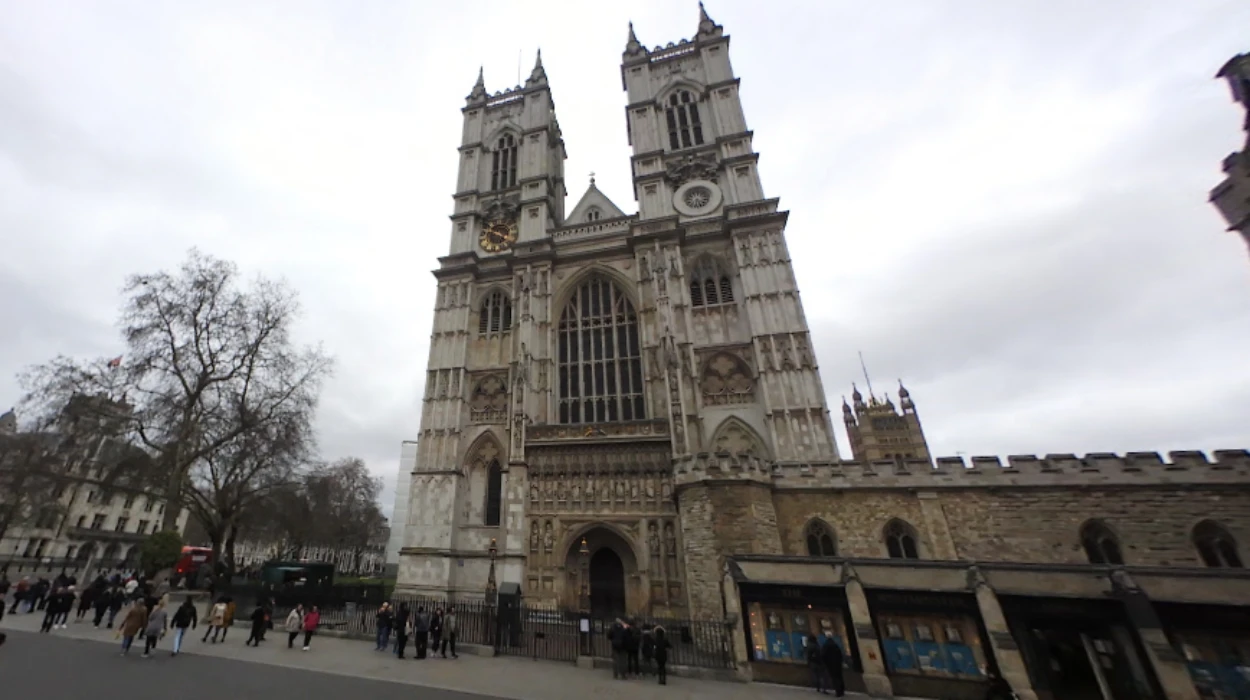
Key Points
- Centuries of Monarchical Tradition: Westminster Abbey stands as the cornerstone of British constitutional history, serving as the designated venue for royal coronations since 1066.
- Architectural Evolution: The existing structure features stunning Gothic masonry dating back to the extensive 13th-century rebuilding project commissioned by King Henry III.
- A Intersection of Church and State: Located in the City of Westminster, the site forms a critical component of a broader ceremonial landscape integrated with the Houses of Parliament and government quarters.
- National Pantheon of Remembrance: Beyond its primary function as an active house of worship, the abbey serves as a commemorative space housing the graves and monuments of iconic writers, scientists, and historical figures.
- Global Cultural Appeal: The landmark offers international tourists, particularly from the United States, a rare tangible experience where centuries of political, literary, and religious milestones overlap seamlessly.
London (Extra London News) June 18, 2026 – Westminster Abbey remains one of the most recognized historic sites in London, functioning simultaneously as an active church and a monumental theatre of statecraft where English history continues to breathe. For centuries, the landmark has stood as a physical manifestation of public memory, hosting royal coronations, state funerals, and national ceremonies within its soaring Gothic stonework. Situated in the heart of the City of Westminster near the River Thames and the Houses of Parliament, the abbey encapsulates a dense, highly symbolic environment where architecture, monarchy, literature, and politics overlap to attract millions of pilgrims, tourists, and history enthusiasts globally.
As reported by the editors of the AD HOC NEWS History & World Heritage Desk, the structural narrative of the modern abbey traces its origins directly to the 13th century, when King Henry III ordered a massive architectural overhaul of the site’s earlier religious foundations. This ambitious undertaking produced the magnificent Gothic church visible today, securing its destiny as Britain’s preeminent ceremonial building and final resting place for the architects of its culture. According to official statements from the Westminster Abbey administration, every English and British monarch since William the Conqueror in 1066 has been crowned here, anchoring the site uniquely within the constitutional history of the United Kingdom.
What Is the Historic Significance of Westminster Abbey?
To understand why Westminster Abbey occupies such a revered position in global tourism and British heritage, one must look at how it compresses vast expanses of time into a single physical location. For international visitors—especially American travellers whose own national history postdates the abbey’s foundations by several centuries—the space serves as a striking cross-section of Western civilization.
The AD HOC NEWS History & World Heritage Desk reports that the landmark acts as a living bridge between antiquity and the modern era. The physical atmosphere inside the nave allows visitors to look up at centuries-old masonry while standing directly on top of the stones that have supported the weight of real historical transformations. This continuity of purpose ensures that the building is never viewed merely as a museum, but rather as an active participant in the unfolding narrative of the British state.
Explore more Westminster News:
Westminster Abbey Cafe Opens for Historic First Dinner: London 2026
Westminster Council Drops Oxford Street Legal Challenge: London 2026
How Do Church and State Intertwine in Westminster’s Landscape?
The geographical placement of Westminster Abbey is far from accidental; it is the spiritual anchor of a meticulously planned ceremonial ecosystem. Nestled tightly within the administrative core of the United Kingdom, its immediate surroundings dictate its symbolic power.
According to analysis provided by the AD HOC NEWS History & World Heritage Desk, the abbey’s setting close to the Houses of Parliament and the River Thames provides an immediate, visual lesson in how closely religion and governance are intertwined in British history. This tight spatial layout forms a grand ceremonial landscape. When a monarch walks through these spaces or when state processions march down these avenues, the physical proximity of the legislature, the executive offices of Whitehall, and the high altars of the abbey reinforces the ancient constitutional reality of the Crown-in-Parliament.
Why Is the Abbey Considered a National Memory Space?
While its primary architectural identity is that of a grand Gothic cathedral, Westminster Abbey functions equally as a national pantheon—a collective diary of British achievement, intellect, and memory carved into stone.
As detailed by the Westminster Abbey administration, the building slowly transitioned over the centuries from a purely royal mausoleum into a broader commemorative centre. The interior walls, floors, and chapels are densely populated with:
- Tombs of Monarchs: Covering dynasties from the Plantagenets to the Tudors.
- Poets’ Corner: The legendary resting place and memorial zone for giants of English literature, including Geoffrey Chaucer, Charles Dickens, and William Shakespeare.
- Scientific Pioneers: Gravesites dedicated to minds that altered human understanding, such as Sir Isaac Newton and Charles Darwin.
- Statesmen and Explorers: Monuments honoring politicians, military leaders, and navigators who mapped the boundaries of the historic British world.
This dual identity as both a house of active Christian worship and an open archive of secular achievement is precisely what makes the site uniquely compelling. It allows the abbey to serve a multi-faceted audience, gathering religious pilgrims, secular historians, literature students, and casual tourists under the same vaulted ceilings.
How Has the Architecture Altered Since the 13th Century?
The structural profile that commands the London skyline today is the result of layered history, driven forward by competitive royal patronage and changing architectural movements. Though religious activity has occurred on the site for over a millennium, the architectural focal point shifted dramatically during the medieval period.
The AD HOC NEWS History & World Heritage Desk notes that the defining aesthetic of the current abbey belongs to the high Gothic style, brought to fruition under the direct orders of King Henry III in the 1200s. Seeking to honour Saint Edward the Confessor, Henry III poured vast royal resources into tearing down parts of the older Norman church to build a soaring masterpiece inspired by the contemporary cathedrals of France. This architectural choice introduced the pointed arches, ribbed vaulting, and flying buttresses that give the abbey its signature sense of weightlessness and divine scale, ensuring that the physical space itself would inspire awe for generations to come.
What Should Visitors Expect When Planning a Tour?
For those looking to experience the deep history of Westminster Abbey firsthand, navigating the dense interior requires an understanding of its dual nature. Because it remains an active place of daily prayer, operational schedules and crowd dynamics vary significantly compared to standard historical museums.
| Visitor Consideration | Description & Impact |
| Active Church Status | The abbey holds regular daily services. Certain areas may close temporarily for prayer, and tourists are expected to maintain respectful silence in designated zones. |
| The Coronation Chair | Located near the Shrine of St. Edward the Confessor, this historic artifact has been the physical seat of English power for nearly a millennium. |
| Geographic Integration | Because it sits directly adjacent to Parliament Square, tours can easily be paired with walks past Big Ben, Westminster Bridge, and Whitehall. |
| Crowd Management | Due to its immense popularity with international tour groups, arriving early in the morning or booking specific timed entry slots is highly recommended by travel experts. |
As emphasized by the AD HOC NEWS editorial team, the experience of walking through the abbey is distinct because “time feels unusually compressed.” Within a few paces, a visitor can move from the burial site of medieval kings to the memorials of modern historical icons, providing an unmatched educational journey through the eras that built the modern world.