Key Points
- Holocaust Survivors’ Legacy: Founded in 1957 by George and Eva Markus, who escaped the failed 1956 Hungarian Revolution to establish a sanctuary for premium coffee in the heart of London.
- Preserved Historical Continuity: Located at 13 Connaught Street within the exclusive Connaught Square, the shop has retained its antique atmosphere and layout for nearly seven decades.
- Unparalleled Specialist Variety: The establishment imports, stocks, and freshly roasts 34 distinct varieties of premium coffee beans sourced from 13 different countries daily.
- Succession of Expertise: Before retiring, the founders personally passed down their proprietary blending and roasting techniques to their close friend, Mr Sarwar, who joined the business in 1976 and continues to maintain its strict heritage standards today.
- High-Profile and High-Security Clientele: Renowned globally as a favourite spot for luxury figures like Jimmy Choo, the café also operates under unique, 24-hour armed police security due to its close proximity to the residence of former British Prime Minister Tony Blair.
London (Extra London News) June 6, 2026 – Tucked away amidst the grand stuccoed terraces of the exclusive Connaught Square estate, a deceptively modest storefront stands as one of the oldest remaining independent commercial tenants in the district, masking a deeply moving history of wartime survival, political asylum, and artisanal resilience.
- What is the Secret History Behind 13 Connaught Street?
- How Did a Failed Revolution Give Birth to a London Specialty Landmark?
- Why Has the Antique Atmosphere of Markus Coffee Been Intentionally Maintained?
- Who is Mr Sarwar and How is the Founders’ Original Art Form Preserved?
- Which Famous Signature Blends Continue to Attract Global Coffee Connoisseurs?
- Why Do Armed Police Stand Guard Outside This Neighbourhood Coffee Shop?
- Who Are the Global Celebrities That Frequent This Historic Hidden Gem?
What is the Secret History Behind 13 Connaught Street?
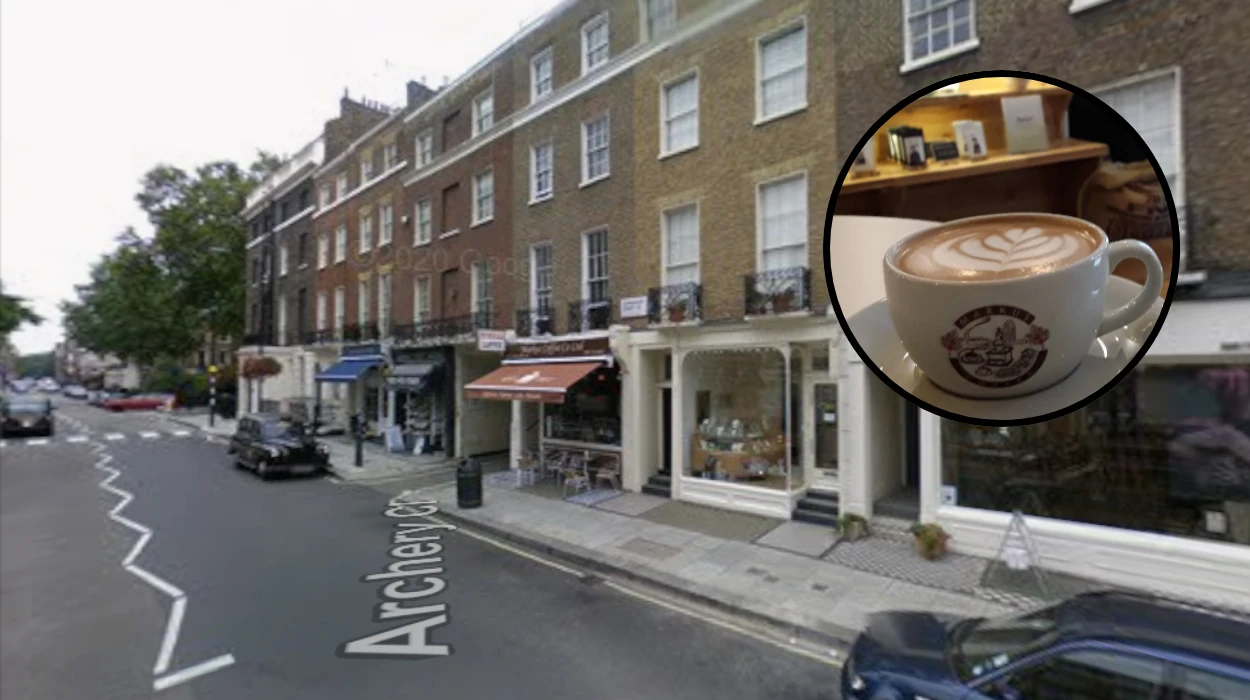
The architectural landscape of Connaught Village has undergone sweeping transformations since the mid-20th century. According to historical archives preserved by the Connaught Village Estate Management, most of the original post-war businesses have long since vanished, replaced by a revolving door of high-end contemporary boutiques. However, as documented in archival records of the Connaught Street South Side history, the distinct signage of Markus Coffee has remained an unchanging fixture on the streetscape since it first opened its doors in 1957.
To the casual passerby or the average tourist navigating the path from Marble Arch Station up Edgware Road, the establishment appears to be just another tiny, unassuming neighbourhood café. Yet, as noted by architectural historians tracking the area’s development from the 1970s through to 2018, the shop purposefully retained its traditional, antique aesthetic. This preservation serves not merely as a design choice, but as a living monument to a mid-century European migration story born from the ashes of the Holocaust and the harrowing realities of the Cold War.
How Did a Failed Revolution Give Birth to a London Specialty Landmark?
The foundation of this specialist coffee institution is directly tied to the geopolitical upheavals of Eastern Europe. According to the official historical record published by the venue’s current management, the business was conceptualised by Mr George Markus and Mrs Eva Markus, both of whom were Holocaust survivors who had endured the horrors of Nazi-occupied Europe. Following the end of the Second World War, the couple sought to rebuild their lives in Budapest, where Mr Markus successfully operated the ‘Mokka’ coffee bean shop, an establishment celebrated for its freshly roasted and custom-blended beans.
This period of stability was brutally cut short. Following the onset of the Soviet occupation and the subsequent Communist takeover, private businesses were systematically nationalised. The crisis reached its absolute boiling point during the failed Hungarian Revolution of 1956. Facing intense political persecution and imminent danger, George and Eva Markus made the perilous decision to flee their homeland, eventually arriving in England as political refugees.
Determined to introduce the British capital to an unparalleled standard of coffee freshness, the couple leveraged Mr Markus’s extensive pre-war roasting expertise. In 1957, they secured the lease at 13 Connaught Street. The core philosophy of their new enterprise was radical for its time in tea-dominated post-war Britain: sourcing the absolute finest raw coffee beans from across the globe, and roasting and blending them directly on the shop premises to ensure maximum flavour retention.
Explore More London Local News
Westminster Abbey Cafe Opens for Historic First Dinner: London 2026
Clarion and Hill Partner for Tower Hamlets Social Housing Scheme (2026)
Why Has the Antique Atmosphere of Markus Coffee Been Intentionally Maintained?
In an era where modern coffee culture is heavily dominated by sleek, minimalist aesthetic chains and automated espresso machines, the interior of 13 Connaught Street offers an deliberate step back in time. The current management team states on their primary digital platform that while the store has undergone necessary structural renovations since its mid-century inception, they have deliberately maintained an “antique” feel.
This spatial layout features traditional hessian sacks overflowing with raw green coffee beans, vintage wooden counter fixtures, and classic storage tins that have house the shop’s signature roasts for decades. The preservation of this environment has made the location a highly sought-after cultural landmark. Management reports that the shop is frequently utilized by various international media outlets for high-profile interviews and has been selected as a historic location for professional film shoots.
Who is Mr Sarwar and How is the Founders’ Original Art Form Preserved?
The longevity of the café is rooted in a strict lineage of mentorship and shared passion. As the founders approached their age of retirement in the latter part of the 20th century, they faced the critical challenge of ensuring their life’s work would not be commercialized or diluted.
According to historical documentation provided by the estate’s retailers, the founders chose to pass their proprietary knowledge down to Mr Sarwar, a close family friend who had entered the business under their direct employment in 1976. For over four decades, Mr Sarwar has operated as the custodian of the Markus family’s technical methodologies. Today, over half a century since the initial opening, he continues to oversee the daily roasting schedules, manually assessing the beans to maintain the exact profile standards established by George and Eva Markus in the late 1950s.
Which Famous Signature Blends Continue to Attract Global Coffee Connoisseurs?
Despite its compact physical footprint, the establishment operates as a major global library for coffee varieties. The store’s inventory logs confirm that Markus Coffee currently stocks an extensive selection of 34 distinct varieties of coffee beans, systematically sourced from 13 different importing countries.
During its early decades, the shop rapidly transformed from a local neighborhood secret into a premier commercial supplier, providing custom roasts to leading luxury hotels and fine-dining restaurants across the West End. Private retail customers were known to regularly commute extensive distances across the United Kingdom specifically to purchase the establishment’s two most famous historical creations: the Regent and Negresco blends. The daily roasting process remains an interactive sensory event for the local community, as the rich aroma of the roasting beans routinely spills onto Connaught Street, serving as a natural marketing draw for pedestrians.
Why Do Armed Police Stand Guard Outside This Neighbourhood Coffee Shop?
Beyond its rich immigration history, the venue operates under a highly unique contemporary environment due to its geographical location. The shop sits within the immediate vicinity of Connaught Square, an area that has required heightened national security measures for over two decades.
In public safety advisories published by the Marble Arch Business Improvement District (BID), visitors to the retail village are routinely given specific contextual reassurance regarding the heavy security presence. The management of Markus Coffee explicitly advises its clientele on its official communications channels:
“If you see armed police officers around the store please do not be alarmed, our country’s ex Prime Minister, Tony Blair, lives a few seconds away from us. Their 24 hour patrol makes the area one of the safest in London.”
This constant, highly visible protective detail creates a striking juxtaposition, where everyday patrons sit and enjoy an artisan beverage alongside armed Metropolitan Police officers securing the residential square.
Who Are the Global Celebrities That Frequent This Historic Hidden Gem?
The unique combination of historical charm, exceptional product standards, and high-level security has made the café a quiet sanctuary for prominent public figures, artists, and international dignitaries.
According to the café’s verified historical customer gallery, world-renowned luxury shoe designer Datuk Professor Jimmy Choo OBE is a long-standing regular patron, publicly describing the establishment as his absolute “favourite coffee shop in London.”