Key Points
- Significant Month-on-Month Surge: Antisemitic hate crimes recorded by the Metropolitan Police in London escalated by 72% between April and May, while Islamophobic hate crimes rose by approximately one-third (33%).
- Surge in Documented Incidents: The total number of monthly antisemitic offences logged across the capital rose sharply to 255 in May, up from 148 recorded during the previous month of April.
- Geographical Hotspots for Antisemitism: The London Borough of Barnet recorded the highest concentration of anti-Jewish offences with 76 logged incidents, single-handedly accounting for nearly 30% of London’s total monthly figure.
- Vulnerable Communities Targeted: Barnet houses large, established Jewish populations across the key districts of Golders Green, Hendon, and Finchley, which have recently faced escalating localized targeted threats.
- Wider Geographical Spread: Beyond Barnet, anti-Jewish hate crimes spiked across multiple boroughs, with neighbouring Camden, alongside Hackney, Haringey, and Westminster reporting notable concentrations of offences.
- Islamophobic Patterns Manifesting: Anti-Muslim and Islamophobic offences also experienced a concurrent spike across the capital, heavily concentrated in regions such as the City of Westminster, reflecting broader community anxieties.
- Enhanced Strategic Policing Interventions: In response to the escalating data patterns, the Metropolitan Police deployed a specialized 100-officer “Community Protection Team” combining local neighborhood units with specialist counter-terrorism intelligence.
- Political and Communal Pushback: Communal groups, including the Board of Deputies of British Jews and the Jewish Leadership Council, issued joint calls for swifter public order prosecutions to counter growing fears that communities are operating under virtual siege conditions.
London (Extra London News) June 5, 2026 – Antisemitic hate crimes recorded across Greater London by the Metropolitan Police Service have experienced an acute monthly spike of 72 per cent, while Islamophobic offences rose concurrently by more than a third, fresh official crime statistics have revealed. According to comprehensive data released by the force and subjected to statistical analysis, police teams logged 255 antisemitic hate crimes across the capital in May, marking an aggressive rise from the 148 incidents officially recorded during the month of April. The statistical surge has brought renewed scrutiny to community safety frameworks and illuminated the uneven geographical distribution of racially and religiously motivated abuse across London’s expansive municipal boroughs.
- Key Points
- Why Have Antisemitic Crimes Risen in London?
- Which Areas Are Most Affected by Religious Hate Crimes?
- What Types of Incidents Form the Basis of These Figures?
- How Are London’s Muslim Communities Being Impacted?
- What Is the Metropolitan Police Doing to Address the Spike?
- How Have Community Leaders and Politicians Responded?
- What Measures Are Being Implemented in Higher Education?
Analysis of the operational datasets establishes that the London Borough of Barnet remains the primary focal point for reported anti-Jewish offences, registering 76 localized incidents in May alone. This concentration means a single suburban authority accounted for approximately 30 per cent of all antisemitic hate crimes recorded throughout the entirety of Greater London. The borough contains the residential and commercial districts of Golders Green, Hendon, and Finchley, areas which sustain some of the largest and most dense Jewish populations within the United Kingdom and have historically formed the cultural heartlands of the Anglo-Jewish community.
Why Have Antisemitic Crimes Risen in London?
The statistical trajectory published by the Metropolitan Police reflects an escalating baseline of hostility that community security bodies state has built up over successive months. As reported by Chris Osuh, the Community Affairs Correspondent for The Guardian, the newly recorded figures highlight an ongoing multi-year peak in localized faith-targeted targeting, revealing that the capital has encountered its highest sustained volume of monthly hate offences in approximately two years. This trend has manifested through an array of public order offences, targeted verbal abuse, harassment, online vitriol, and targeted property damage.
As noted in regional reporting by ITV News London, the underlying data shifts follow a wholesale modification implemented by the Metropolitan Police in March 2024 regarding how specific hate incidents are systematically categorized, collated, and verified. Under the current streamlined counting mechanisms, the combined spring figures indicate an incremental, compounding monthly escalation. Historical comparative analyses indicate that while absolute peaks were visible during the direct aftermath of geopolitical re-escalations in the Middle East in late 2023—where monthly figures previously reached 518 automated logs—the modern baseline continues to stabilize at a rate significantly higher than pre-conflict metrics.
Explore More Barnet News
City Hall Approves Arada and Barratt Schemes: Barnet 2026
Barnet Council Split Forces Historic Bipartisan Power-Sharing Reform: Barnet 2026
Which Areas Are Most Affected by Religious Hate Crimes?
A granular geographic breakdown of the Metropolitan Police data illustrates that while faith-based hostility affects almost every tier of the capital, it remains profoundly clustered around distinct communal demographics. In their extensive collaborative reporting, journalists at The Independent observed that outside the primary statistical epicenter of Barnet, specific North and West London boroughs are bearing a disproportionate volume of the administrative caseload.
The analytical breakdown of individual borough data shows the following distribution patterns across London:
- Barnet: 76 offences (30% of the total metropolitan footprint, heavily concentrated within Golders Green and Finchley).
- Camden: 17 distinct offences tracked by local authorities, positioning it as the secondary cluster immediately south of the primary hotspot.
- Hackney: 16 targeted incidents officially cataloged by responding officers.
- Haringey: 10 recorded offences spanning both public thoroughfares and private infrastructure.
- Westminster: 7 recorded antisemitic incidents, running parallel to a steep concentration of localized Islamophobic reports tracked across the same central commercial zone.
What Types of Incidents Form the Basis of These Figures?
The quantitative surge in hate crime entries corresponds directly to a series of physical incursions and property violations investigated by specialist units. In an extensive investigative overview published by The Guardian, reporter Chris Osuh detailed that the operational data encompasses several severe criminal profiles, including a succession of attempted arsons targeting visible institutional structures.
Specifically, as documented by Osuh, investigators were deployed to handle:
- An attempted arson attack executed against the Finchley Reform Synagogue.
- A targeted arson attempt at the Hendon-based premises formerly occupied by the prominent communal charity Jewish Futures.
- A deliberate ignition attack targeting a public communal memorial wall situated within Golders Green.
Furthermore, public safety concerns were magnified following a serious double stabbing occurring on a main thoroughfare in Golders Green. As confirmed by the Metropolitan Police counter-terrorism command, that specific physical assault was formally designated as a suspected act of terrorism, fundamentally shifting the risk parameters evaluated by municipal safety planners.
How Are London’s Muslim Communities Being Impacted?
While anti-Jewish offences experienced the sharpest month-on-month percentage growth, London’s Muslim communities have faced a parallel escalation in hostile acts. The Metropolitan Police datasets indicate that Islamophobic hate crimes rose by roughly 33 per cent over the same operational period, shifting visibly upward from the baseline data logged during the early spring months.
According to regional briefings compiled by Perspective Media, Islamophobic patterns frequently involve targeted street harassment, the defacement of Islamic community centers, and localized public order intimidation. The geographic mapping of anti-Muslim offences differs from antisemitic patterns, showing a broader dispersion across Inner London boroughs, with central transport hubs and commercial sectors like the City of Westminster experiencing elevated rates of reporting. Communal monitors have noted that these spikes typically mirror periods of heightened political rhetoric surrounding immigration, domestic protest movements, and international developments, which often translate into localized hostilities on metropolitan streets.
What Is the Metropolitan Police Doing to Address the Spike?
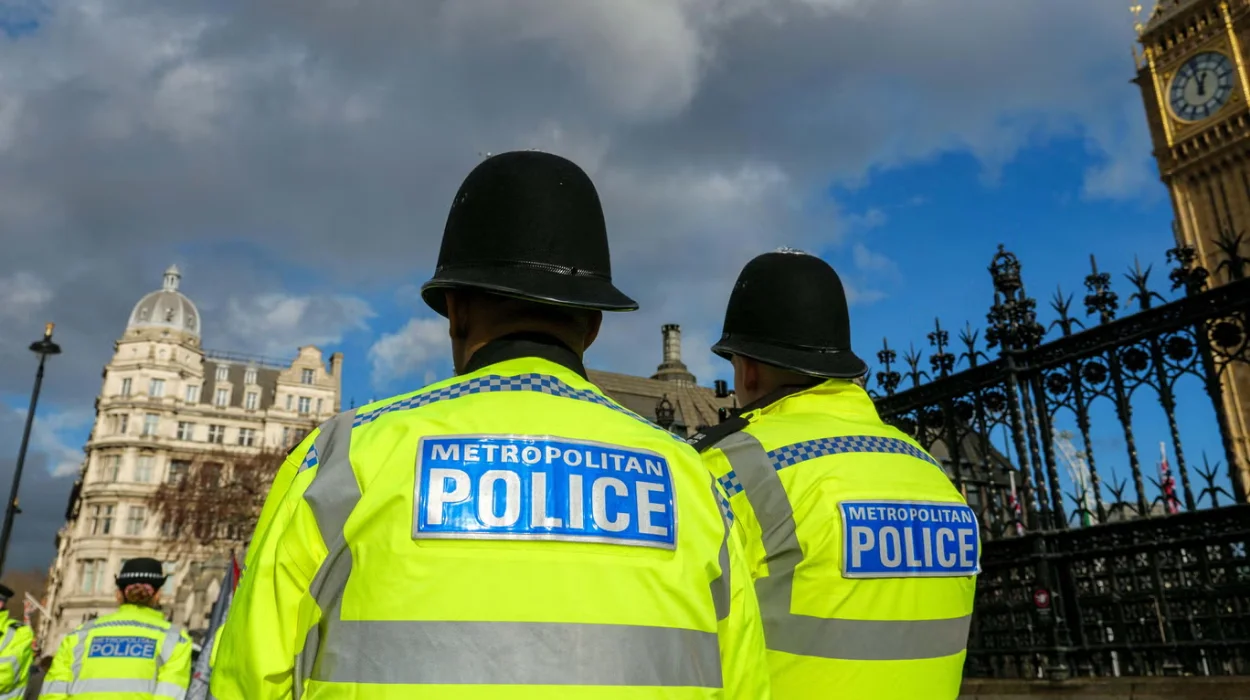
To counter the compounding statistical increases and restore public confidence, the Metropolitan Police leadership has restructured its visible deployment frameworks across high-risk zones. In an official administrative statement broadcast by ITV News London, the force confirmed the creation and immediate deployment of a dedicated Community Protection Team. This specialized task force introduces 100 additional full-time officers into active field operations to deliver a structured, intelligence-led presence specifically engineered to protect vulnerable minority communities across the wider capital.
According to institutional declarations issued directly by the Metropolitan Police, the newly formed operational model utilizes a multi-disciplinary approach:
“The new team will involve neighbourhood policing as well as specialist protection and counter-terrorism capabilities, and marks the beginning of a new, more sustainable and consistent model of protection built around local knowledge, visibility and partnership, rather than relying solely on repeated short-term surges.”
The command structure further acknowledged that London’s Jewish community currently “faces some of the highest levels of hate crime alongside significant terrorist and hostile state threats,” a reality that necessitates structural changes rather than temporary, reactive policing responses.
How Have Community Leaders and Politicians Responded?
The publication of the May hate crime data has triggered coordinated political interventions and joint statements from major communal representative bodies. In a comprehensive joint press statement released to national media outlets, the Board of Deputies of British Jews alongside the Jewish Leadership Council (JLC) formally acknowledged the expanding police measures while simultaneously demanding more rigorous judicial interventions from central government bodies.
As recorded by The Guardian, the joint statement issued by the Board of Deputies and the JLC explicitly asserted:
“Our community is strong, proud and resilient. We call on all parts of our society to stand with us against extremism.”
The leadership bodies have continuously petitioned the Home Office and the Crown Prosecution Service for faster, more decisive processing of individuals accused of incitement to racial or religious hatred during public demonstrations. They have also called for an extensive rollout of localized public order enforcement powers to eliminate what they termed a “postcode lottery” regarding how different regional sectors of the Metropolitan Police manage street-level intimidation and the protection of faith-based educational institutions.
What Measures Are Being Implemented in Higher Education?
The fallout from the escalating hate crime metrics has extended deeply into London’s higher education sector, where campus tensions have mirrored the broader citywide statistics. In response to mounting concerns regarding student safety, central government directives have introduced new institutional reporting mandates.
As highlighted in the analytical findings published by Chris Osuh, universities operating within the metropolitan area are now explicitly expected to compile, verify, and publish detailed annual data reflecting the precise levels of antisemitism and Islamophobia present on their respective campuses. Under these updated frameworks, higher education administrators must provide clear public accounts detailing the specific safeguarding mechanisms, disciplinary protocols, and reporting lines they have established to protect minority students from intimidation. This administrative requirement operates alongside a broader reinforcement of national funding allocations designed to augment physical security measures at communal schools, synagogues, mosques, and community hubs throughout Greater London.