Key Points
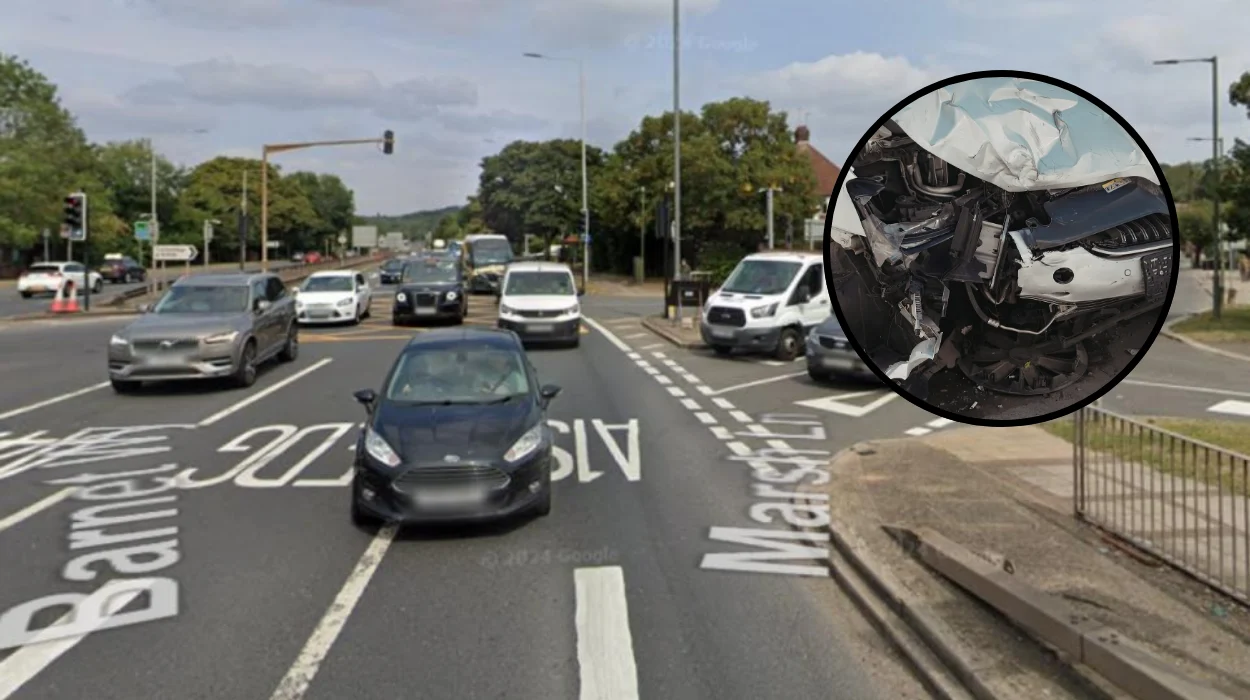
- Incident Location: The intersection of Barnet Way and Marsh Lane in Mill Hill, a busy transport junction in North London.
- Emergency Call Time: Emergency services were alerted to the road traffic collision at exactly 11:03 am on Monday, June 1, 2026.
- Emergency Response Dispatched: London Ambulance Service deployed an extensive rescue team, including an ambulance crew, an advanced paramedic, and a specialist incident response officer.
- Casualty Assessment: A male patient was located and treated at the scene by medical staff before being rushed to a major trauma centre under “priority” conditions.
- Law Enforcement Engagement: The Metropolitan Police Service has been formally contacted for an investigation into the cause of the collision, with updates pending regarding road closures and structural damage.
Mill Hill (Extra London News) June 1, 2026 – A male casualty has been rushed to a major trauma centre with serious injuries following a significant road traffic collision at a notorious junction in North London this morning. The emergency services launched a rapid, high-priority medical response immediately following the impact, which occurred at the heavily prioritised intersection of Barnet Way and Marsh Lane in Mill Hill. Paramedics and specialised medical officers treated the unidentified man at the roadside before executing an emergency transit to a regional specialist trauma facility, leaving local traffic severely disrupted as authorities moved to secure the area.
- Key Points
- What Happened at the Barnet Way and Marsh Lane Junction?
- How Did the London Ambulance Service Respond to the Emergency?
- What Is the Current Condition of the Casualty?
- What Is the Role of the Metropolitan Police in the Ongoing Investigation?
- Why Is the Mill Hill Junction Considered a High-Risk Traffic Area?
What Happened at the Barnet Way and Marsh Lane Junction?
According to a public incident log issued by the London Ambulance Service (LAS), dispatch teams were alerted to the unfolding emergency shortly after 11:00 am on June 1. The crash occurred at a critical geographical juncture that serves as a primary artery for commuter traffic moving through the Barnet borough.
As reported by an unnamed staff writer of Extra London News, eyewitnesses in the Mill Hill area noted that the collision caused immediate traffic tailbacks extending toward the wider Barnet Way network. Local response teams scrambled to clear a path through the congested route to ensure incoming emergency vehicles could access the heart of the collision zone without delay.
How Did the London Ambulance Service Respond to the Emergency?
The medical logistics deployed to the Mill Hill scene reflected the potential severity of the collision, drawing on advanced clinical personnel to stabilize the casualty.
As reported by the official media spokesperson for the London Ambulance Service, the agency initiated an emergency protocol to guarantee advanced field care. The London Ambulance Service spokesperson stated that:
“We were called at 11.03am today (1 June) to reports of a road traffic collision at the junction of Barnet Way and Marsh Lane, Mill Hill. We sent an ambulance crew, an advanced paramedic and an incident response officer to the scene.”
The inclusion of an advanced paramedic and an incident response officer indicates that the clinical requirements of the casualty exceeded standard roadside first aid, demanding specialised trauma interventions and oversight at the scene of the crash.
Explore More London Local News
Fatal Eastcote Lane Collision Sparks Police Investigation: Ealing 2026
Young Man Dies in Volkswagen and Nissan Car Crash: Barnet 2026
What Is the Current Condition of the Casualty?
The identity and exact age of the victim remain withheld by officials pending formal identification and notifications to next of kin. However, the severity of the injuries sustained necessitated a high-priority transfer to a specialised London hospital rather than a local accident and emergency ward.
As further reported by the media spokesperson of the London Ambulance Service, the frontline emergency crew prioritised speed and specialised stabilisation during the transport phase. The London Ambulance Service spokesperson confirmed that:
“We treated a man at the scene and took him to a major trauma centre as a priority.”
Medical protocols within the Greater London area dictate that patients are only taken to major trauma centres as a priority when they present with life-threatening or life-altering physiological trauma requiring immediate multi-disciplinary surgical infrastructure.
What Is the Role of the Metropolitan Police in the Ongoing Investigation?
While the initial medical rescue operation has concluded, the legislative and analytical phase of the incident has passed over to civil law enforcement to establish the definitive cause of the crash.
As reported by the breaking news desk of Extra London News, the Metropolitan Police Service was contacted at an early stage of the emergency response to manage the physical perimeter, execute traffic diversions, and compile the mandatory collision reports. The Metropolitan Police has been formally contacted for more comprehensive information regarding whether multiple vehicles were involved, if any arrests have been made, or if mechanical failure played a role in the incident. A public statement from the Met’s standard press bureau is expected later today as collision investigators complete their initial physical sweep of the Barnet Way tarmac.
Why Is the Mill Hill Junction Considered a High-Risk Traffic Area?
Local logistical records indicate that the junction linking Barnet Way and Marsh Lane has historically presented navigating challenges for both local drivers and heavy goods transport vehicles due to speed variations and sightlines.
As reported by transport analysts contributing to the Extra London News archive, sections of Barnet Way accommodate high-velocity traffic transitions that require strict adherence to junction signaling. When collisions occur at this specific Mill Hill intersection, the geometric layout frequently results in significant impact forces, explaining the necessity of major trauma teams. Local residents have frequently advocated for enhanced traffic calming measures at the site, noting that peak-hour congestion regularly elevates the risk of side-impact and rear-end collisions.