Roman London, known as Londinium, formed the administrative and commercial centre of Roman Britain for nearly four centuries. Founded after the Roman invasion of AD 43, the city developed into a fortified settlement containing roads, temples, amphitheatres, bathhouses, warehouses, and defensive walls. Modern London still preserves fragments of this Roman infrastructure beneath streets, offices, churches, museums, and public walkways.
- Why did the Romans establish Londinium?
- What can visitors see on a self-guided walking tour of Roman London’s ruins?
- Where to Find the Ancient Roman London Wall Today
- What remains of the Roman amphitheatre in London?
- How did Roman religion influence Londinium?
- What evidence survives of Roman commerce and trade?
- Why do Roman ruins remain important in modern London?
A self-guided walking tour of Roman London’s ruins allows visitors to follow the geography of the ancient city while exploring surviving archaeological remains integrated into the modern City of London. The route reveals how Roman engineering, commerce, military planning, and urban administration shaped London’s long-term development.
Why did the Romans establish Londinium?
Londinium became the Roman capital of Britain because it controlled a strategic crossing of the River Thames, connected military roads across southern Britain, and enabled trade, taxation, and provincial administration throughout the Roman occupation period.
The Roman Empire invaded Britain in AD 43 under Emperor Claudius. Roman commanders selected the Thames crossing as a logistical and commercial centre because it linked continental trade routes with inland Britain.
The first settlement developed near the location of modern London Bridge. Archaeological excavations reveal timber structures, warehouses, defensive ditches, and imported goods dating to the mid-first century. Londinium quickly evolved into a major port city trading with regions including Gaul, Hispania, and Germania.
The city suffered major destruction during the Boudican revolt of AD 60 or AD 61. Boudica, queen of the Iceni tribe, led an uprising against Roman rule after disputes involving taxation and land seizure. Archaeologists identified burned destruction layers beneath the modern city, confirming widespread devastation.
Roman authorities rapidly rebuilt Londinium. By the late second century, the city contained a forum, basilica, amphitheatre, temples, bathhouses, administrative buildings, and extensive defensive walls.
What can visitors see on a self-guided walking tour of Roman London’s ruins?
Visitors can explore surviving sections of the Roman Wall, underground amphitheatre remains, Roman temples, archaeological museums, ancient roads, and preserved commercial infrastructure throughout the modern City of London.
The walking route follows the approximate boundaries of Roman Londinium. Most visible remains survive within the financial district because the Roman settlement concentrated near the Thames waterfront and administrative centre.
The route demonstrates how modern London developed directly above Roman foundations. Contemporary office towers, churches, underground stations, and commercial buildings now stand over ancient streets, military zones, and marketplaces.
A complete walking tour typically covers several kilometres and can be completed within half a day. Many sites include interpretive displays explaining archaeological discoveries and historical context.
To experience this historic landmark in person today, consult our comprehensive [Roman London Visitor Guide and Things to See in the City] for itineraries and visiting parameters.
Where to Find the Ancient Roman London Wall Today
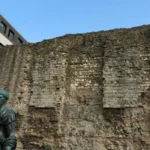
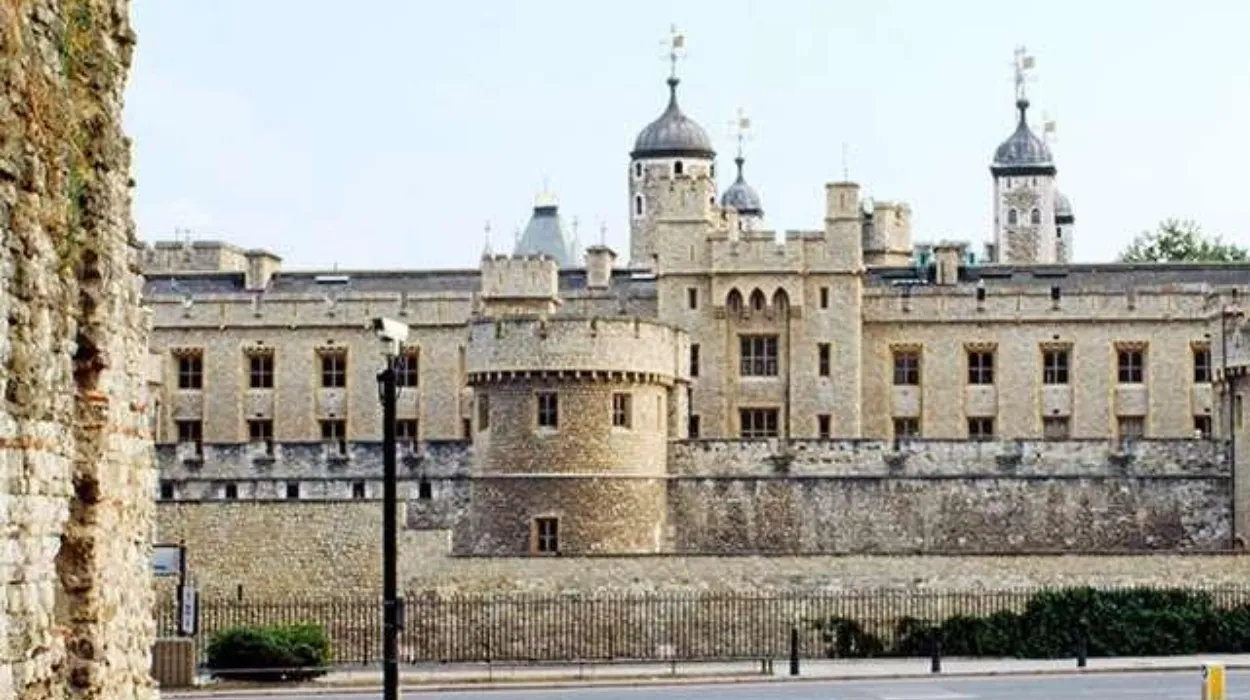
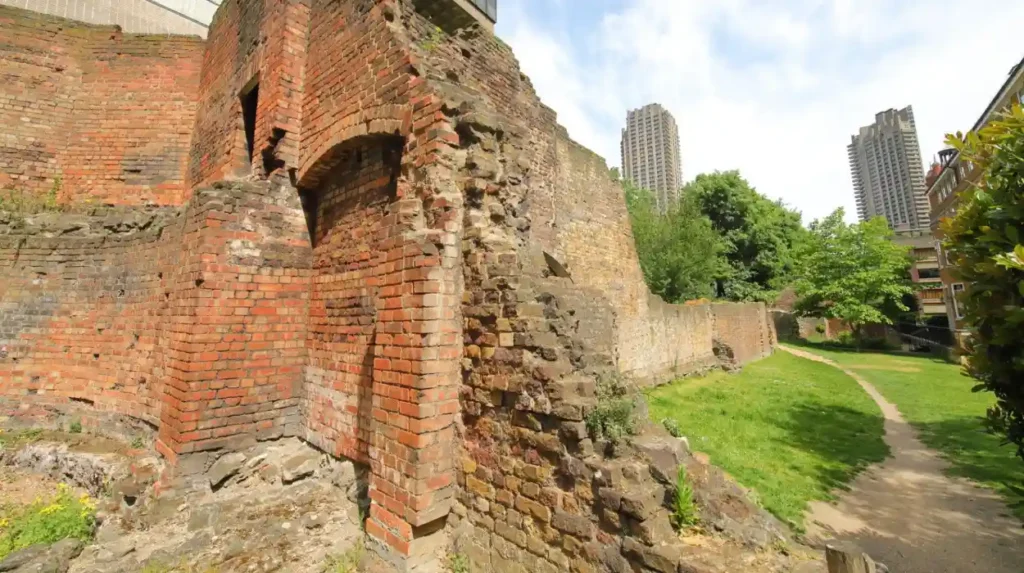
The best-preserved sections of the Roman London Wall survive near Tower Hill, the Barbican, Noble Street, Cooper’s Row, and the Museum of London archaeological zones within the modern City of London.
The Roman Wall formed one of Londinium’s most important defensive structures. Constructed around AD 200, the wall enclosed approximately 330 acres of the city and stretched nearly three kilometres around the settlement perimeter.
Large visible remains stand near Tower Hill Underground Station. These sections contain original Roman masonry combining ragstone, flint, and layered Roman brick. Archaeological restoration during the twentieth century preserved these remains after wartime bombing exposed buried foundations.
Additional preserved fragments survive near the Barbican complex and Noble Street. Visitors walking these areas can trace the original line of Roman defences through the modern city landscape.
The wall included major gates controlling movement into Londinium. Examples included Aldgate, Bishopsgate, Ludgate, and Newgate. Modern London districts still preserve these Roman names, demonstrating the long-term influence of Roman urban geography.
The phrase “Where to Find the Ancient Roman London Wall Today” has become increasingly relevant for cultural tourists and heritage researchers seeking visible Roman remains within central London. The surviving wall sections provide direct evidence of Roman military engineering and urban planning still embedded within the modern capital.
What remains of the Roman amphitheatre in London?
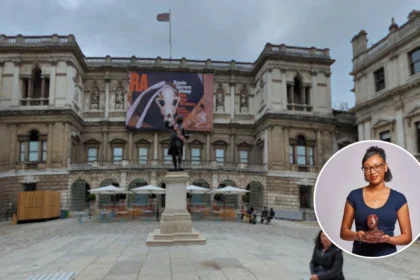
The Roman amphitheatre beneath Guildhall Yard preserves the foundations of Britain’s only known Roman amphitheatre in a major urban centre and demonstrates the role of public entertainment in Roman London.
Archaeologists discovered the amphitheatre in 1988 during redevelopment near the Guildhall. The structure measured approximately 100 metres in length and likely accommodated between 5,000 and 7,000 spectators.
The amphitheatre hosted gladiatorial contests, military ceremonies, public punishments, and civic events. Roman amphitheatres reinforced imperial culture and military authority throughout the empire.
Visitors can explore preserved underground remains beneath the Guildhall Art Gallery. Visible foundations, drainage systems, and arena walls reveal Roman engineering methods and urban planning.
How did Roman religion influence Londinium?
Roman religion shaped Londinium through temples, shrines, rituals, and imported deities that reflected both imperial authority and cultural exchange between Roman and local British traditions.
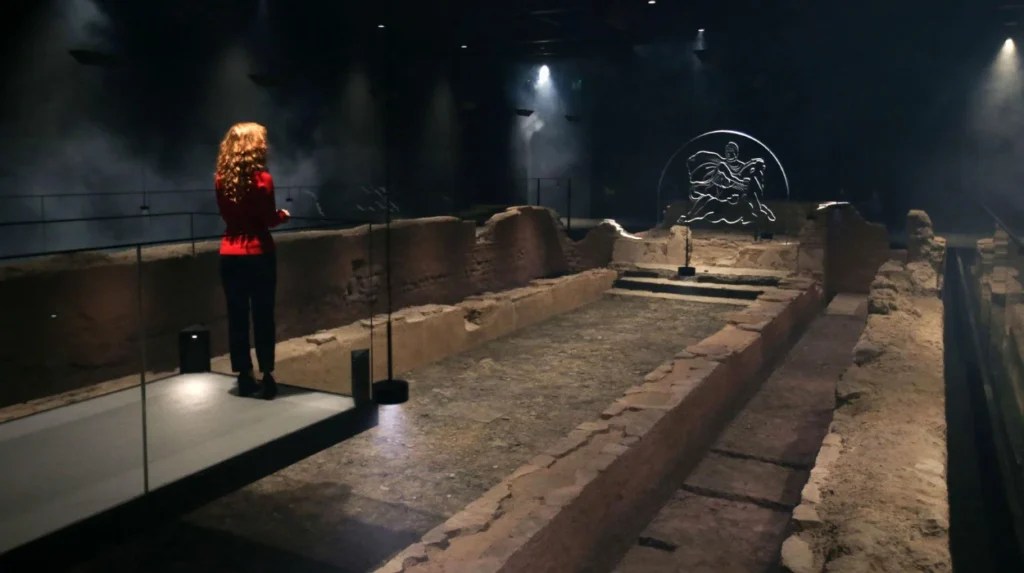
The Temple of Mithras represents one of Roman London’s most important religious discoveries. Excavated near Walbrook in 1954, the temple belonged to the Mithraic mystery cult popular among Roman soldiers and merchants.
The reconstructed London Mithraeum now preserves temple foundations and displays Roman sculptures, inscriptions, pottery, and ritual objects discovered during excavations.
Religious worship in Londinium also included temples dedicated to Jupiter, Diana, and Mercury. Archaeological evidence indicates that Roman and Celtic traditions frequently merged within local religious practices.
What evidence survives of Roman commerce and trade?
Roman London preserves extensive evidence of international trade networks through warehouses, docks, imported pottery, coins, writing tablets, and commercial infrastructure linked to continental Europe and the wider Roman Empire.
The River Thames functioned as Londinium’s commercial backbone. Roman engineers constructed quays and warehouses along the waterfront to manage imported goods arriving from across the empire.
Archaeologists uncovered amphorae used to transport olive oil, wine, and fish sauce from regions including Spain and North Africa. Thousands of Roman coins recovered throughout the city demonstrate large-scale economic activity.
The Bloomberg London excavations produced one of Britain’s most important archaeological discoveries: hundreds of Roman writing tablets containing contracts, financial records, and merchant correspondence dating from the AD 50s and AD 60s.
One tablet contains the earliest known written reference to Londinium.
Why do Roman ruins remain important in modern London?
Roman ruins remain historically important because they preserve evidence about Britain’s earliest urban development, reveal imperial governance systems, and connect modern London to nearly two millennia of continuous historical transformation.
Modern construction projects across London continue to uncover major Roman archaeological discoveries. Excavations associated with transport and commercial development repeatedly reveal roads, burial grounds, temples, and residential districts buried beneath the city.
Institutions including the Museum of London, Historic England, and the Museum of London Archaeology coordinate preservation and public education programmes related to Roman London.
The surviving ruins also contribute significantly to heritage tourism and academic research. Visitors can observe how Roman infrastructure directly influenced London’s later medieval and modern development.
A self-guided walking tour of Roman London’s ruins, therefore, offers more than an archaeological experience. It provides direct evidence of how military planning, trade systems, engineering, and urban administration established the foundations of one of the world’s most historically influential cities.
What was Roman London called?
Roman London was known as Londinium during the Roman occupation of Britain.