Key points
- Researchers at King’s College London, led by Shakespeare scholar Professor Lucy Munro, have identified the precise site of William Shakespeare’s only known London house in the Blackfriars district.
- The property, bought in 1613, was previously known only to be “near” a modern plaque; the new research shows the plaque actually sits on the footprint of Shakespeare’s former home.
- The discovery is based on three newly unearthed seventeenth‑century documents, including a previously unrecognized floorplan of the Blackfriars plot.
- The house is described as a substantial L‑shaped dwelling built out of a former medieval monastery complex, with its gatehouse still visible today.
- The findings suggest Shakespeare may have spent more time in London than previously assumed, revising long‑held assumptions about his retirement to Stratford‑upon‑Avon.
- The identified location spans modern streets including Ireland Yard, Burgon Street and St Andrew’s Hill, in the Blackfriars area just west of the City of London.
Blackfriars (Extra London News) April 18, 2026 – Blackfriars, London – Shakespeare’s “missing” London house has been located for the first time, after a King’s College London researcher uncovered previously overlooked documents that reveal its exact position and layout. As reported by BBC News, Professor Lucy Munro, a Shakespeare scholar at King’s College London, has mapped the playwright’s sole documented London property to a specific plot in the Blackfriars district, ending a centuries‑old mystery about the precise location of the home he bought in 1613.
- Key points
- How was the exact site identified?
- What did the documents reveal?
- Layout and architectural character
- Modern location and streets involved
- Why was the house called “missing”?
- What changed with the new documents?
- How long did Shakespeare really live in London?
- How does this reshape his image?
- Reactions from experts
- Public and heritage interest
The discovery not only settles where Shakespeare actually lived in the capital, but also implies he may have remained more involved in London’s theatrical world than earlier biographies suggested, offering fresh context for his later years.
How was the exact site identified?
As detailed in the BBC report, Professor Lucy Munro identified the precise site through a 17th‑century plan of the Blackfriars precinct that had not previously been recognised as showing Shakespeare’s house. According to news coverage by The Tribune, Munro unearthed three key archival documents, including this floorplan, which together reveal both the footprint and dimensions of the property on St Andrew’s Hill.
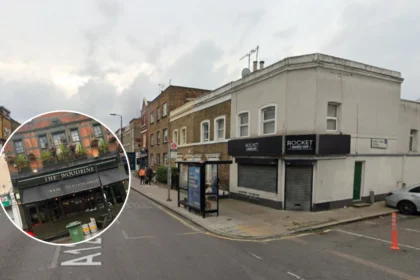
News4Jax noted that historians had long known Shakespeare purchased property near the Blackfriars Theatre in 1613, yet the exact location remained vague, with only a plaque on a 19th‑century building marking that lodgings lay “near this site.” Parade’s coverage adds that the new research shows the plaque actually sits on the very spot previously occupied by Shakespeare’s house, meaning the wording “near this site” was effectively correct all along.
What did the documents reveal?
In a King’s College London statement cited by BBC News, Munro explained that the plan of the Blackfriars precinct clearly depicts a substantial L‑shaped dwelling carved from a former medieval monastery complex, including its gatehouse. As reported by PopSci, the building’s layout is now known in detail, with the gatehouse still visible in the modern streetscape along St Andrew’s Hill.
The Tribune’s dispatch emphasises that the newly discovered materials allow historians to move beyond approximation and speak with confidence about the exact position and structure of Shakespeare’s London residence. Additional coverage from TOVIMA and BBC Sounds notes that the discovery has “solved” a long‑standing mystery about the playwright’s only London property, which had frustrated scholars for decades.
Layout and architectural character
As described by BBC News, the newly identified house is portrayed as a sizeable, L‑shaped residence built out of the former Blackfriars monastery, suggesting a relatively grand and secure London dwelling for a man of Shakespeare’s status. PopSci’s feature underlines that the property would have offered direct access to the adjacent Blackfriars Theatre, which Shakespeare’s acting company, the King’s Men, operated from the early 1600s.
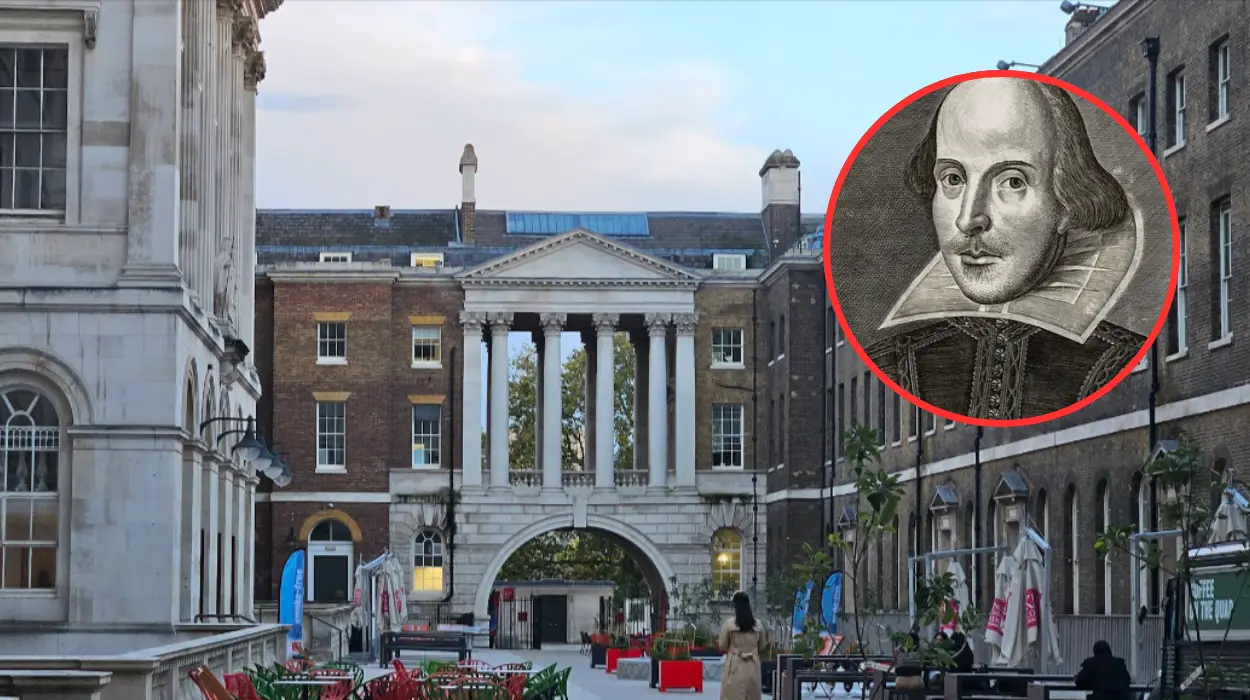
The existing gatehouse, mentioned in the King’s College London announcement and repeated in Parade’s coverage, anchors part of the Shakespeare‑era footprint within today’s streetscape, helping to visualise how the playwright’s home fitted into the wider monastic precinct.
Modern location and streets involved
According to The Tribune, the house is now understood to occupy an area that corresponds to what are today Ireland Yard, Burgon Street and St Andrew’s Hill in the Blackfriars neighbourhood. Parade’s article notes that the plaque, previously thought to mark only a general vicinity, in fact sits on the original property’s footprint, reinforcing that the home lay directly beneath the modern urban surface.
Coverage from BBC Sounds and international outlets such as TOVIMA stresses that the Blackfriars site is located just west of the City of London, close to landmarks like the Millennium Bridge, helping situate the house in a contemporary London map.
Why was the house called “missing”?
As reported by BBC News, the house had long been regarded as “missing” not because scholars doubted its existence, but because no definitive plan or precise address linked Shakespeare to a specific plot. News4Jax explained that earlier historians relied on scattered references and the 19th‑century plaque, which only gestured toward a general area rather than a pinpointed building.
The Tribune added that, for years, the property was “approximated” by researchers, with historians aware it stood somewhere in the Blackfriars precinct but unable to narrow it down further. TOVIMA’s coverage similarly highlights that the lack of clear documentation caused research on the topic to “stagnate” for some time, until Munro’s find reignited the field.
What changed with the new documents?
In remarks quoted by BBC News and King’s College London, Munro said that, while working on a broader research project, she realised she was looking at a floorplan of Shakespeare’s Blackfriars house and that the discovery “significantly enhances our understanding” of his London residence. She reportedly expressed surprise that so little evidence was thought to remain, noting that the rediscovered plan and related documents overturn the assumption that the topic had been exhausted.
PopSci’s article quotes Munro as saying she “couldn’t believe it when I realized what I was looking at—the floorplan of Shakespeare’s Blackfriars house,” underscoring how the documents had lain unnoticed in archives until now.
How long did Shakespeare really live in London?
As reported by BBC News, the new location data have led experts to reconsider how often Shakespeare may have returned to London after his 1613 purchase, rather than fully retiring to Stratford‑upon‑Avon. Previously, many biographies suggested that the playwright gradually withdrew from the capital in his final years; this discovery supports the idea that he maintained a substantial London base.
The Tribune notes that the detailed layout of the house, combined with its proximity to the Blackfriars Theatre, points to a residence that facilitated ongoing professional ties rather than a mere occasional retreat.
How does this reshape his image?
According to BBC Sounds, some scholars now argue that Shakespeare’s move into Blackfriars signals a deliberate investment in the theatrical and property markets of London, rather than a simple retirement. Parade’s coverage suggests the findings may encourage a more nuanced reading of his later plays and collaborations, placing them against the backdrop of an active London home life.
TOVIMA’s piece adds that the pinpointing of the house also strengthens the connection between Shakespeare’s personal life and the physical environment of early‑modern London, offering a concrete setting for future exhibitions and educational narratives.
Reactions from experts
In statements carried by BBC News, colleagues at King’s College London have described the discovery as “a major breakthrough” for Shakespeare studies, praising Munro’s archival detective work. The Tribune quotes unnamed historians as saying that having a clear map of the house “opens up new avenues” for research into property ownership, social networks, and performance logistics in Jacobean London.
TOVIMA’s coverage highlights that some scholars see the find as transforming a “fuzzy” area of biography into a precisely locatable episode, with potential ripple effects on how Shakespeare’s finances and civic status are interpreted.
Public and heritage interest
As reported by BBC News and Parade, the identification of the exact site has already sparked interest among heritage groups and local officials in the Blackfriars area, who are discussing how best to mark the revelation for visitors and school groups. The Tribune notes that the existing plaque is likely to be re‑interpreted or supplemented with information explaining that it stands on Shakespeare’s actual home, rather than merely “near” it.
BBC Sounds’ feature adds that the discovery is expected to attract more tourists and students to the Blackfriars district, turning a long‑standing scholarly footnote into a tangible tourist‑history landmark.