Watching a Play at The Globe: A Modern Visitor Guide remains essential because Shakespeare’s Globe offers one of the most historically immersive theatre experiences in Europe. The venue combines reconstructed Elizabethan architecture, live Shakespearean performance, historical education, and cultural tourism within modern London’s South Bank heritage district.
- What was the original Globe Theatre in Elizabethan London?
- How accurately does the modern Globe recreate the historic theatre?
- What should visitors expect when watching a play at the Globe?
- When is the best time to visit Shakespeare’s Globe?
- How does the Globe preserve Shakespearean traditions for modern audiences?
- Why does watching a play at the Globe remain culturally important today?
Shakespeare’s Globe stands close to the original Globe Theatre site established in 1599 by the Lord Chamberlain’s Men, the acting company associated with William Shakespeare. The reconstructed Globe opened in 1997 after decades of historical research led by Sam Wanamaker. Today, it operates both as a working theatre and as a centre for Shakespearean scholarship.
The phrase Watching a Play at The Globe: A Modern Visitor Guide reflects increasing global interest in experiential heritage tourism. Modern visitors seek authentic historical environments that combine entertainment with educational value. Shakespeare’s Globe satisfies this demand through historically informed productions, reconstructed architecture, and direct engagement with early modern theatrical traditions.
Unlike modern indoor theatres, the Globe recreates conditions experienced by audiences during the Elizabethan and Jacobean eras. Performances frequently occur in natural daylight, scenery remains limited, and actors interact directly with spectators. The venue’s open-air structure exposes audiences to weather conditions similar to those encountered by seventeenth-century theatre-goers.
The Globe also occupies an important geographical position within London’s historical landscape. Located in Southwark on the southern bank of the River Thames, the theatre sits within an area historically associated with entertainment, commerce, and social gathering. During Shakespeare’s lifetime, Southwark contained theatres, inns, animal-baiting arenas, and taverns operating outside the stricter legal jurisdiction of the City of London authorities.
Modern visitors attend Globe productions for multiple reasons. Cultural tourists seek connections with Shakespearean history. Students analyse Renaissance dramatic performance. Academic researchers study reconstructed staging methods. Theatre enthusiasts observe experiments involving original pronunciation, historical costume reconstruction, and period music performance.
The Globe also functions as a major educational institution. Workshops, archives, lectures, and actor-training programmes support schools, universities, and theatre professionals worldwide. This combination of live entertainment and historical scholarship gives the venue international cultural significance.
To experience this historic landmark in person today, consult our comprehensive [Shakespeare’s Globe Visitor Guide] for itineraries and visiting parameters.
What was the original Globe Theatre in Elizabethan London?
The original Globe Theatre opened in 1599 and became the principal venue for Shakespeare’s acting company. Constructed using timber from an earlier theatre in Shoreditch, it symbolised the commercial growth of professional drama during the Elizabethan period.
The Globe Theatre emerged during a period of rapid urban and cultural expansion in late sixteenth-century London. England’s population increased significantly during the reign of Elizabeth I, while London developed into a major commercial and political centre. Public demand for entertainment also increased, encouraging the growth of professional theatre companies.
The origins of the Globe connect directly to the earlier Theatre in Shoreditch, built in 1576 by actor-manager James Burbage. This earlier structure became one of England’s first permanent public playhouses. Lease disputes later threatened the Theatre’s future, prompting members of the Burbage family to dismantle the structure during the winter of 1598.
Workers transported the timber across the Thames to Southwark, where carpenters constructed the Globe Theatre. The new venue opened in 1599 and quickly became London’s leading public theatre. Shakespeare himself held a financial share in the enterprise alongside actors including Richard Burbage.
The Globe became the principal home of the Lord Chamberlain’s Men. In 1603, following the accession of James VI and I, the company received royal patronage and became known as the King’s Men. Royal support increased the company’s prestige and financial stability.
Historical evidence suggests the Globe accommodated approximately 3,000 spectators. Audience members represented multiple social classes. Wealthier individuals occupied covered gallery seating, while poorer attendees known as “groundlings” stood in the open yard surrounding the stage. Ticket prices varied according to seating arrangements and social status.
The architecture of the original Globe reflected practical commercial considerations. The open-air design allowed performances during daylight hours without expensive artificial lighting. The projecting stage enabled strong interaction between performers and audiences. Minimal scenery reduced production costs while emphasising spoken language and physical performance.
Many of Shakespeare’s major works premiered at the Globe. Examples include Hamlet, King Lear, Macbeth, Othello, and Julius Caesar. These productions contributed significantly to the development of English drama and literary culture.
The original Globe Theatre burned down on 29 June 1613 during a performance of Henry VIII, co-written by Shakespeare and John Fletcher. A theatrical cannon used for special effects ignited the thatched roof. Contemporary accounts reported no deaths, although panic spread rapidly among spectators.
A second Globe Theatre opened in 1614 on the same site. This rebuilt structure operated until 1642, when Puritan authorities ordered the closure of English theatres during the English Civil War period. In 1644, the building was demolished to create residential housing.
Archaeological excavations during the twentieth century uncovered surviving foundations of the original Globe beneath modern Southwark buildings. These discoveries provided essential evidence for reconstructing the modern Globe Theatre.
How accurately does the modern Globe recreate the historic theatre?
The modern Globe recreates the appearance and performance environment of the 1599 theatre using archaeological evidence, historical documentation, and traditional building techniques while adapting the structure to meet modern safety regulations.
The reconstruction of Shakespeare’s Globe began as a long-term cultural preservation project led by Sam Wanamaker. After visiting London in the 1940s, Wanamaker became concerned about the lack of recognition given to the original Globe Theatre site. His campaign eventually developed into an international fundraising and research initiative.
Architects, historians, archaeologists, carpenters, and theatre scholars collaborated extensively during the planning process. Researchers analysed surviving legal contracts, Renaissance illustrations, written eyewitness accounts, and archaeological findings from Elizabethan theatre sites including the Rose Theatre and Swan Theatre.
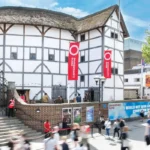
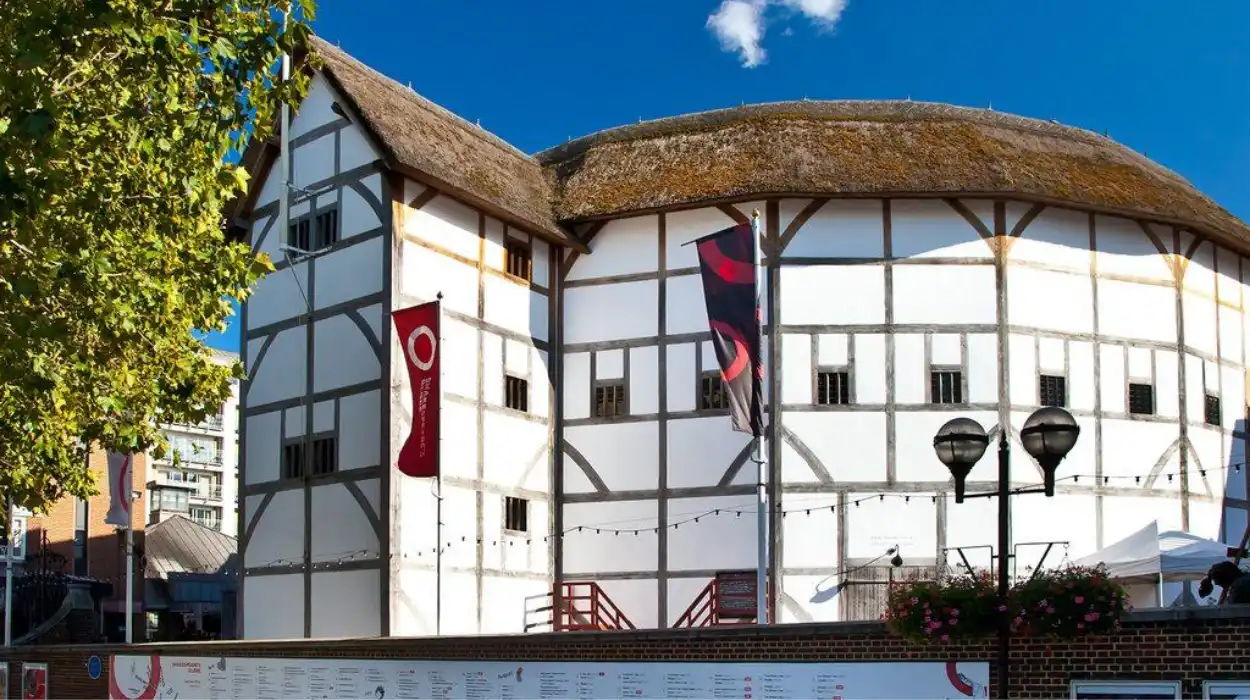
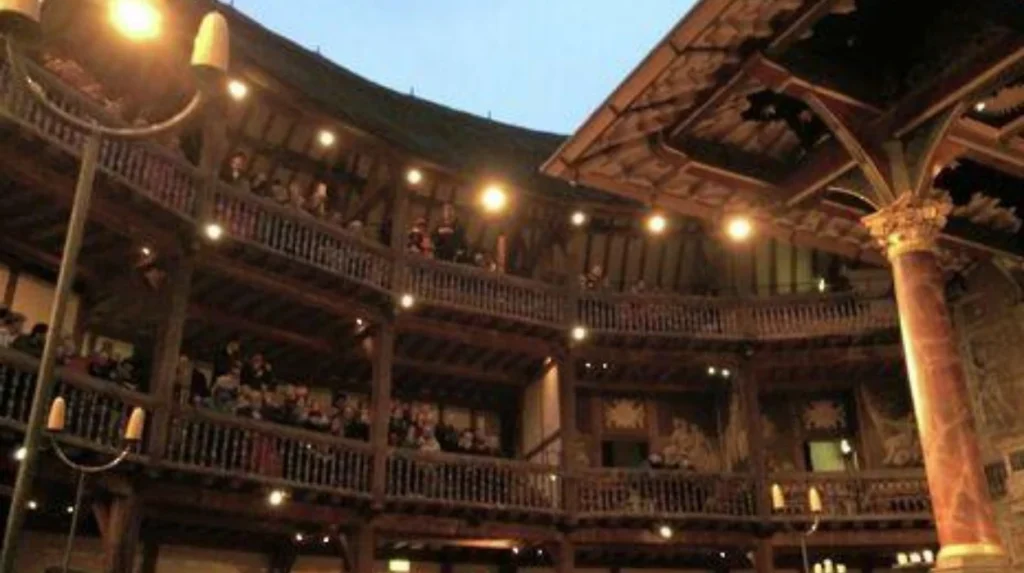
The present Globe uses oak timber framing, lime plaster walls, and a traditional thatched roof. This roof became historically significant because London authorities had prohibited thatched roofing following the Great Fire of London in 1666. The reconstructed Globe, therefore, became the first major thatched structure approved in central London for several centuries.
The design intentionally replicates Renaissance building methods wherever possible. Traditional carpentry joints replace many modern construction techniques. Hand-crafted timber framing follows patterns identified in surviving Elizabethan structures. Builders also studied period tools and construction practices to improve historical accuracy.
A major focus of Watching a Play at The Globe: A Modern Visitor Guide involves understanding how architecture shapes theatrical experience. The Globe’s circular appearance actually consists of multiple polygonal sides arranged to create a rounded structure. Historians believe the original Globe likely used a similar design.
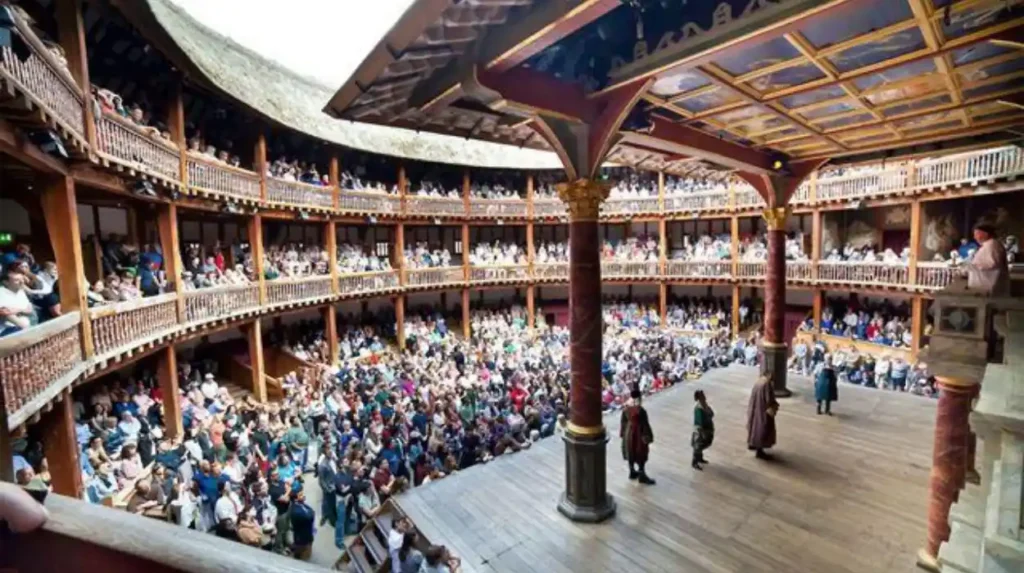
The stage projects prominently into the audience area. Spectators surround performers on three sides, creating unusual physical intimacy between actors and audiences. Groundlings standing before the stage remain only a short distance from performers, encouraging direct communication and audience participation.
The reconstructed Globe deliberately limits technological intervention. Productions typically avoid extensive scenery, amplified sound systems, and highly artificial lighting. This approach allows audiences to experience dramatic language, movement, and vocal performance under conditions approximating Renaissance theatre.
Acoustic research also influenced the reconstruction. The wooden structure naturally amplifies spoken voices, allowing actors to perform without heavy electronic enhancement. Scholars continue studying how the building’s design affects speech projection and audience listening patterns.
Despite extensive research, historians acknowledge that the reconstruction cannot achieve perfect historical accuracy. Limited architectural evidence survives from the original Globe. Some dimensions required interpretation based on comparable theatre sites and written descriptions. The present structure therefore represents a scholarly approximation rather than an exact replica.
The Globe complex additionally includes the Sam Wanamaker Playhouse, opened in 2014. This indoor candlelit theatre recreates Jacobean indoor performance traditions associated with aristocratic audiences during the seventeenth century.
What should visitors expect when watching a play at the Globe?
Visitors should expect an open-air theatrical experience featuring audience participation, limited scenery, historically informed staging, and close interaction between performers and spectators. The Globe prioritises spoken language, live performance energy, and historical atmosphere over modern theatrical technology.
Watching a production at Shakespeare’s Globe differs significantly from attending a modern West End performance. The venue emphasises Renaissance theatrical traditions rather than cinematic realism or technologically complex stage design.
Groundling tickets provide the most historically immersive experience. Spectators stand in the open central yard directly before the stage, closely replicating conditions experienced by ordinary Elizabethan audiences. These tickets also remain among the most affordable theatre options in central London.
Audience interaction forms an important part of Globe performances. Actors frequently speak directly to spectators, move through audience areas, and encourage vocal responses. Modern Globe audiences regularly laugh, applaud, and react audibly during productions, reflecting the energetic atmosphere associated with Renaissance theatre culture.
Gallery seating provides elevated views and partial weather protection beneath the roof structure. Wooden bench seating remains intentionally simple to preserve historical authenticity. Cushions are available for hire because performances often exceed two hours in duration.
The open-air environment strongly shapes the visitor experience. Rain, wind, and temperature changes affect performances throughout the season. Productions generally continue despite poor weather conditions, making practical preparation essential for visitors attending outdoor performances.
Costume and musical design vary according to individual productions. Some performances prioritise historical reconstruction using Renaissance clothing styles and period instruments including lutes, shawms, viols, and drums. Others combine modern interpretations with traditional architectural staging methods.
The Globe’s acoustics create a distinctive listening environment. The timber-framed structure reflects and amplifies spoken language naturally. Shakespearean dialogue therefore becomes central to the audience experience, reinforcing the importance of rhetoric and poetic rhythm within Renaissance drama.
Food and refreshments are available within the Globe complex before performances and during intervals. Visitors also frequently combine theatre attendance with exploration of nearby South Bank attractions including Tate Modern, Borough Market, and the riverside Thames Path.
Accessibility services have expanded significantly in recent years. Captioned performances, relaxed performances, audio-described events, and wheelchair-accessible seating areas improve inclusion for broader audiences while maintaining the Globe’s historical character.
When is the best time to visit Shakespeare’s Globe?
The best time to visit Shakespeare’s Globe is between late spring and early autumn, when the open-air theatre hosts its largest performance season. Summer evenings provide the closest approximation to Renaissance theatrical conditions experienced by original Globe audiences.
The Globe’s annual performance schedule follows seasonal patterns shaped by the open-air nature of the theatre. Main productions generally run between April and October, while indoor performances continue year-round at the Sam Wanamaker Playhouse.
Summer remains the most popular visiting period. Longer daylight hours allow performances to unfold under gradually changing natural light conditions. Evening productions frequently begin in daylight and conclude after sunset, creating atmospheric transitions unavailable in conventional indoor theatres.
Tourism demand reaches peak levels during June, July, and August. International visitors, school groups, and cultural tourists contribute to high attendance rates during these months. Advance booking becomes particularly important for Shakespearean classics and weekend performances.
Spring and autumn offer practical advantages for visitors seeking smaller crowds and improved ticket availability. Temperatures generally remain comfortable, while educational tours and workshops continue operating extensively outside peak tourist periods.
Winter performances occur primarily inside the Sam Wanamaker Playhouse. Candlelit productions in this indoor Jacobean-style venue create intimate acoustic environments that differ substantially from the larger outdoor Globe experience.
The Globe also hosts lectures, workshops, family programmes, staged readings, and international theatre collaborations throughout the year. Academic conferences and educational partnerships further reinforce the institution’s scholarly role within global Shakespeare studies.
Visitors frequently combine Globe attendance with broader exploration of Southwark and the South Bank. River transport services, riverside walking routes, museums, historic churches, and markets create opportunities for full-day cultural itineraries.
How does the Globe preserve Shakespearean traditions for modern audiences?
The Globe preserves Shakespearean traditions through historically informed performance methods, educational programmes, linguistic research, costume reconstruction, and experimental staging practices that investigate how Renaissance audiences originally experienced drama.
The Globe functions simultaneously as a theatre, research institution, and heritage conservation project. Its educational and scholarly activities investigate multiple aspects of Renaissance performance culture.
One important research area involves Original Pronunciation, commonly abbreviated as OP. Linguists reconstruct sixteenth-century English pronunciation using surviving spellings, rhyming patterns, and contemporary descriptions. Globe productions using OP pronunciation reveal previously unnoticed puns, rhymes, and rhetorical effects embedded within Shakespeare’s language.
Historical costume reconstruction forms another major area of study. Renaissance garments significantly influence physical movement, posture, and stage interaction. Corsets, armour, cloaks, and layered fabrics affect actor mobility differently from modern clothing styles.
Music also plays an essential role in Globe preservation efforts. Productions frequently incorporate reconstructed Renaissance instruments and musical arrangements derived from surviving historical manuscripts. These performances help scholars understand the relationship between drama and music within early modern theatre culture.
Educational programmes support schools, universities, and international theatre organisations. Students participate in workshops examining rhetorical delivery, verse speaking, textual interpretation, and stage movement. Many programmes place participants directly on the Globe stage to recreate Elizabethan actor-audience relationships.
The Globe’s research department publishes academic materials addressing topics including theatrical economics, censorship laws, gender representation, audience behaviour, and urban entertainment culture in Renaissance England.
Conservation specialists continuously maintain the building using traditional materials and repair techniques. The thatched roof, exposed timber, and open-air design require specialised preservation work because weather conditions accelerate structural wear.
Digital initiatives increasingly expand the Globe’s international reach. Recorded productions, virtual educational resources, online archives, and digital exhibitions provide access for global audiences unable to visit London physically.
This combination of performance, scholarship, education, and conservation allows Shakespeare’s Globe to preserve historical theatrical traditions while adapting them for contemporary cultural audiences.
Why does watching a play at the Globe remain culturally important today?
Watching a play at Shakespeare’s Globe remains culturally important because the theatre connects modern audiences with London’s literary, architectural, and social history while preserving live performance traditions rooted in the Renaissance period.
The Globe represents continuity between historical London and the modern global city. Few reconstructed heritage sites allow visitors to experience historical entertainment practices within an operational public venue.
The theatre also preserves awareness of Shakespeare’s continuing influence on literature, theatre, film, education, and political rhetoric worldwide. Globe productions contextualise Shakespeare’s works within the architectural and social environments for which they were originally written.
Culturally, the Globe contributes significantly to London’s international reputation as a centre for theatre and heritage tourism. Alongside institutions including Royal National Theatre and Royal Opera House, the Globe strengthens the city’s role within global performance culture.
The venue also supports preservation efforts throughout Southwark. Tourism revenue, archaeological research, and educational investment encourage continued conservation of the district’s historic environment. Nearby heritage landmarks include Southwark Cathedral, Winchester Palace remains, and preserved riverside warehouses linked to London’s commercial history.
Modern Globe audiences reflect the diversity of contemporary London. Productions attract visitors from multiple countries, educational backgrounds, and cultural traditions. This international participation contrasts with the more socially restricted audiences of Renaissance England.
The Globe’s continued relevance also derives from its adaptability. Directors reinterpret Shakespearean works through contemporary themes including migration, politics, identity, and social inequality while maintaining historical staging traditions. This balance allows Renaissance drama to remain accessible to modern audiences.
More broadly, Watching a Play at The Globe: A Modern Visitor Guide demonstrates how reconstructed heritage sites can function as active educational institutions rather than static museums. Visitors participate directly in living cultural traditions shaped by architecture, performance, language, and audience interaction.
For many visitors, attending a production at Shakespeare’s Globe provides one of London’s most historically immersive cultural experiences. The combination of reconstructed Elizabethan architecture, live Shakespearean performance, and open-air staging conditions creates a theatrical environment unmatched elsewhere in modern Europe.
What is Shakespeare’s Globe?
Shakespeare’s Globe is a reconstructed Elizabethan theatre located on London’s South Bank near the original 1599 Globe Theatre associated with William Shakespeare and the Lord Chamberlain’s Men.