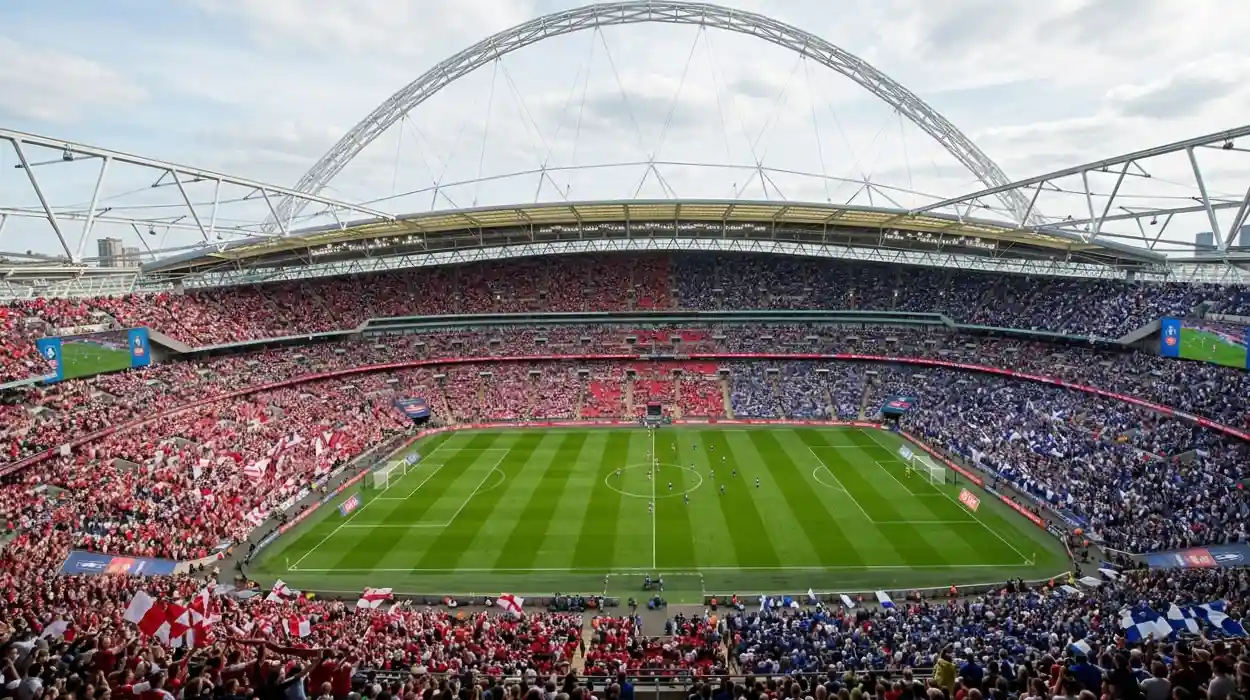
The Football Association Challenge Cup Final, universally known as the FA Cup Final, represents the conclusion of the oldest domestic knockout football competition in the world. Organized by the Football Association, the governing body of association football in England, the event takes place annually in May at Wembley Stadium in London. The fixture serves as the definitive showcase of the English domestic football season, attracting millions of global television viewers and maximum stadium capacities. For football enthusiasts seeking comprehensive insights, Extra London News presents this authoritative guide detailing the structural mechanics, historical milestones, and modern sporting implications of the FA Cup Final.
- What is the FA Cup Final?
- What is the History of the FA Cup Final?
- The Formative Years and Venue Evolution
- The Wembley Era and the White Horse Final
- Modern Era Adjustments
- What are the Traditions and Ceremonies of the Matchday?
- Which Teams have been the Most Successful in the Final?
- What are the Most Significant Individual Records?
- How does the Match Impact European Qualification and Finances?
- What is the Future Relevance of the FA Cup Final?
What is the FA Cup Final?
The FA Cup Final is the ultimate match of the Football Association Challenge Cup tournament, an annual knockout competition for English football clubs. It determines the tournament champion, who receives the historic silver trophy and qualification into the UEFA Europa League.
Definition of the Event
The FA Cup Final is a single-elimination football match played under standard International Football Association Board laws. If the score remains level after 90 minutes of regulation time, two 15-minute periods of extra time are played. If the stalemate persists, a penalty shootout determines the winner. The event is a protected “listed event” under United Kingdom broadcasting regulations, ensuring it is broadcast live on free-to-air terrestrial television networks, specifically the BBC and ITV.
Tournament Eligibility and Progression
The journey to the final begins in August of the preceding calendar year with the Extra Preliminary Round. The tournament accommodates up to 10 tiers of the English football league system, encompassing professional clubs in the English Football League and the Premier League, alongside hundreds of semi-professional and amateur clubs from non-league structures.
Clubs progress through six qualifying rounds and six proper rounds via a random draw mechanism. The semi-finals and the final are hosted at neutral venues, with Wembley Stadium serving as the permanent host for both stages since 2008.
What is the History of the FA Cup Final?
The FA Cup Final was inaugurated on March 16, 1872, at the Kennington Oval in London, where Wanderers FC defeated the Royal Engineers 1–0. It has since evolved from an amateur exhibition into a globally recognized professional sporting institution.
The Formative Years and Venue Evolution
In the late 19th century, the competition was dominated by amateur clubs composed of wealthy public school alumni and military officers, such as Old Etonians and Oxford University. The advent of professionalism in 1885 shifted dominance toward northern and midland industrial clubs, such as Blackburn Rovers and Aston Villa.
The Final rotated through multiple venues across England before establishing a permanent identity. Examples of early host venues include:
- Kennington Oval (London)
- Crystal Palace (London)
- Fallowfield Stadium (Manchester)
- Goodison Park (Liverpool)
- Stamford Bridge (London)
The Wembley Era and the White Horse Final
In 1923, the Football Association opened the original Wembley Stadium, then known as the Empire Stadium, in north-west London. The inaugural 1923 final between Bolton Wanderers and West Ham United attracted an estimated unofficial crowd of 300,000 spectators, far exceeding the official 126,047 capacity.
The match became legendary as the “White Horse Final” after a mounted police officer named George Scorey and his white horse, Billy, cleared the pitch of overflowing spectators so play could commence. Bolton Wanderers secured a 2–0 victory.
Modern Era Adjustments
Between 2001 and 2006, the final relocated to the Millennium Stadium in Cardiff, Wales, during the demolition and reconstruction of Wembley Stadium. The new 90,000-seat Wembley Stadium opened in 2007, hosting its first final on May 19, 2007, where Chelsea defeated Manchester City 1–0.
A monumental rule change occurred in September 1998, when the Football Association abolished match replays for the final. Prior to this decision, a drawn final resulted in a full second match played days later, a scenario that occurred 14 times in history, ending with the 1993 replay between Arsenal and Sheffield Wednesday.
Explore More Things To Do
Wembley Stadium Visitor Guide: Transport and Dining Tips in Wembley Park
Best Kept Secrets Beyond Portobello Road — Notting Hill
What are the Traditions and Ceremonies of the Matchday?
The FA Cup Final incorporates deep-rooted British cultural traditions, including communal singing of historical hymns, formal introductions to the British Royal Family, and specific post-match trophy presentations that have remained unchanged for over a century.
Pre-Match Musical Traditions
Hours before kick-off, the stadium hosts a structured musical program delivered by military bands, such as the Band of the Household Cavalry. Since the 1927 final, the crowd has participated in the singing of “Abide with Me,” a Christian hymn written by Scottish poet Henry Francis Lyte. The song acts as an emotional anthem for football fans, symbolizing remembrance and sporting camaraderie. Following the hymn, the stadium performs the national anthem, “God Save the King.”
Royal Presentation and Protocol
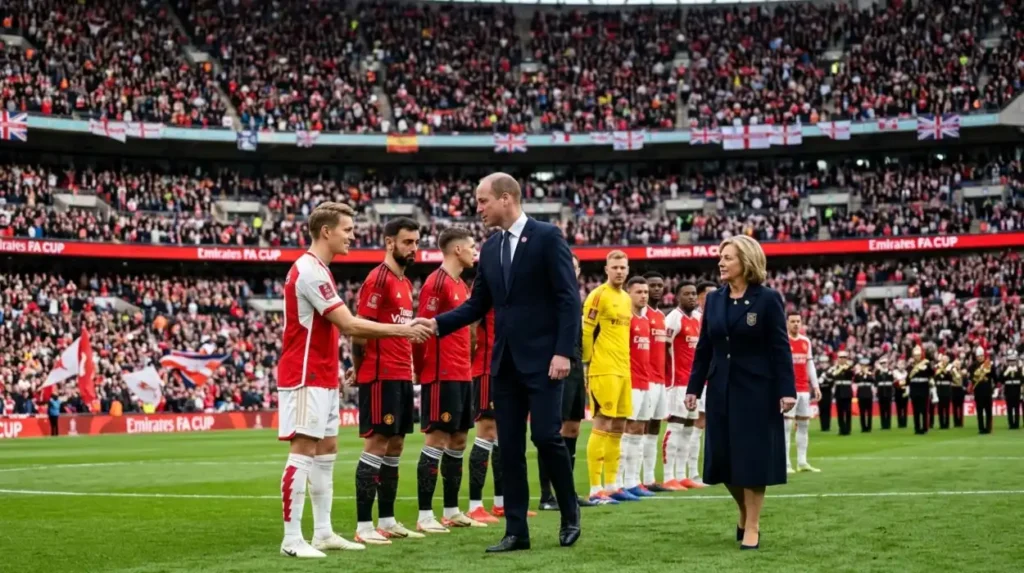
The Football Association maintains a strict protocol involving its patron, the Prince of Wales, or other senior members of the British Royal Family. Before the match commences, the royal dignitary walks onto the Wembley pitch alongside the FA Chair to be formally introduced to the players and match officials of both competing teams.
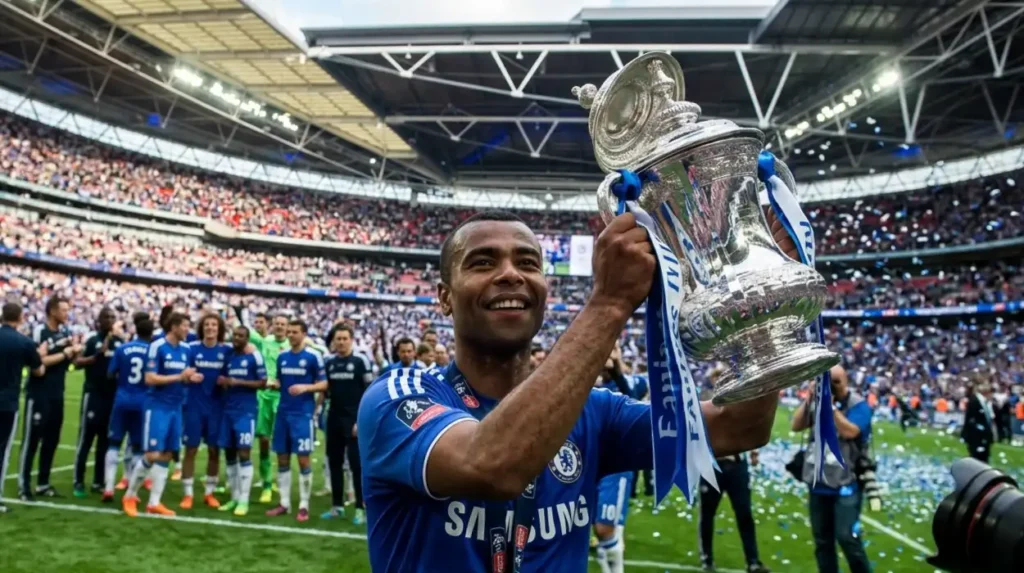
At the conclusion of the match, the losing team ascends the steps to the Royal Box to collect their runners-up medals, followed by the winning team. The team captain lifts the trophy in the Royal Box before returning to the pitch for a celebratory lap of honor.
Which Teams have been the Most Successful in the Final?
Arsenal holds the record for the most FA Cup victories in football history, having lifted the trophy 14 times. Professional clubs from the Premier League dominate the modern honors list, though lower-league teams’ historical achievements remain prominent.
All-Time Winners Leaderboard
The distribution of FA Cup successes reflects the historical dominance of elite clubs. Only 45 distinct clubs have won the trophy since 1872. The following data highlights the most successful clubs in the history of the competition:
- Arsenal (14 Titles): Most recent victory occurred in 2020.
- Manchester United (13 Titles): Most recent victory occurred in 2024.
- Chelsea (8 Titles): Achieved an unmatched feat of reaching five finals in six years between 2017 and 2022.
- Liverpool (8 Titles): Secured their last title in 2022 via a penalty shootout.
- Tottenham Hotspur (8 Titles): Renowned for winning the cup as a non-league club in 1901.
- Manchester City (7 Titles): Set modern benchmarking statistics for scoring and final appearances under manager Pep Guardiola.
Notable Anomalies and Non-English Winners
Cardiff City, based in Wales, remains the only non-English club to ever win the FA Cup, defeating Arsenal 1–0 in the 1927 final. Lower-league clubs have occasionally disrupted elite dominance. The last club from outside the top flight of English football to win the FA Cup was West Ham United in 1980, when they defeated Arsenal 1–0 while competing in the Second Division.
What are the Most Significant Individual Records?
Ashley Cole holds the record for the most individual player victories, having won the FA Cup seven times across spells with Arsenal and Chelsea. Individual records span historical scoring feats and modern tactical achievements.
Player and Manager Milestone Statistics
The FA Cup Final serves as a platform where individual players cement their legacy within English football history. Notable individual statistical records include:
- Most Player Wins: Ashley Cole achieved seven winners’ medals (three with Arsenal: 2002, 2003, 2005; four with Chelsea: 2007, 2009, 2010, 2012).
- Most Manager Wins: Arsène Wenger managed Arsenal to seven FA Cup titles between 1998 and 2020, surpassing the historic record held by Aston Villa manager George Ramsay.
- The Wembley Hat-Trick: Stan Mortensen remains the only player to score a hat-trick in a final at the original Wembley Stadium, achieving this during Blackpool’s 4–3 victory over Bolton Wanderers in 1953, a match famously termed “The Matthews Final.”
Scoring and Timing Milestones
The speed of execution in modern football has rewritten timing records. During the 2023 FA Cup Final between Manchester City and Manchester United, German midfielder İlkay Gündoğan scored the fastest goal in final history, volleying the ball into the net just 12 seconds after kick-off.
In terms of career longevity in finals, Didier Drogba of Chelsea holds the unique distinction of scoring in four separate FA Cup finals (2007, 2009, 2010, 2012), all of which resulted in Chelsea victories.
How does the Match Impact European Qualification and Finances?
The winner of the FA Cup Final receives direct entry into the UEFA Europa League league stage for the subsequent season. It also triggers substantial financial distributions through prize money, television rights, and commercial bonuses.
UEFA Continental Qualification Rules
The sporting stakes of the final extend beyond domestic prestige. The winner secures a coveted berth in the UEFA Europa League, the secondary club competition in European football. If the FA Cup winner has already qualified for the UEFA Champions League or the Europa League via their final position in the Premier League, the European spot transfers automatically to the highest-placed team in the Premier League table that has not yet qualified for a European tournament. The runners-up do not receive the European spot under current UEFA guidelines, a rule change formalized in 2015.
Financial Rewards and Economic Impact
The Football Association structures significant financial incentives for the clubs that reach the showpiece final. The winners receive £2,000,000 in direct prize money, while the runners-up receive £1,000,000, accumulating on top of prize money collected from earlier rounds.
Additional revenue streams generated by the final encompass global broadcasting distributions to over 100 countries, equal splits of stadium ticket sales, and commercial sponsorship activations, which collectively inject millions of pounds into the participating clubs’ operational budgets.
What is the Future Relevance of the FA Cup Final?
The FA Cup Final faces modern structural pressure from expanding international football calendars, yet it maintains its status as an irreplaceable cornerstone of domestic football heritage. The tournament continues to adapt through technological integration and schedule modifications.
Calendar Bottlenecks and Structural Integrity
The rise of expanded European competitions, such as the revamped UEFA Champions League format and the FIFA Club World Cup, places intense physical strain on professional squads. This has led to intense debates regarding the scheduling of the FA Cup Final.
While the match traditionally stood alone on the final Saturday of May as an isolated sporting spectacle, modern broadcasting and league obligations sometimes require Premier League fixtures to be played on the same weekend, altering the historic exclusivity of the date.
Technological Adaptation and Longevity
The Football Association uses the FA Cup Final to pioneer new sporting technologies. It was one of the first major domestic finals to implement Goal-Line Technology and the Video Assistant Referee (VAR) system to ensure officiating accuracy.
As digital media consumption shifts toward streaming platforms, the global distribution models for the final continue to evolve. However, the cultural capital of walking out at Wembley Stadium ensures that lifting the FA Cup trophy remains a primary objective for every professional club across England, cementing its relevance for future generations.
What is the FA Cup Final?
The FA Cup Final is the championship match of the Football Association Challenge Cup, the oldest national football tournament in the world. It is played each year at Wembley Stadium and determines the winner of England’s most prestigious domestic knockout competition.