Key Points
- A six-month live facial recognition (LFR) trial on Croydon High Street led to 173 arrests between October 2025 and March 2026.
- The Metropolitan Police say recorded crime fell by 10.5% during the pilot and violence against women and girls fell by 21% in the area.
- Arrests included suspects wanted for long-standing offences, including a 36-year-old woman wanted for failing to appear at court for a 2004 assault; others were wanted for kidnap, rape and serious sexual assault.
- The Met says cameras were used in 24 separate operations and each deployment used an “intelligence-led watchlist” created within 24 hours and deleted immediately afterwards.
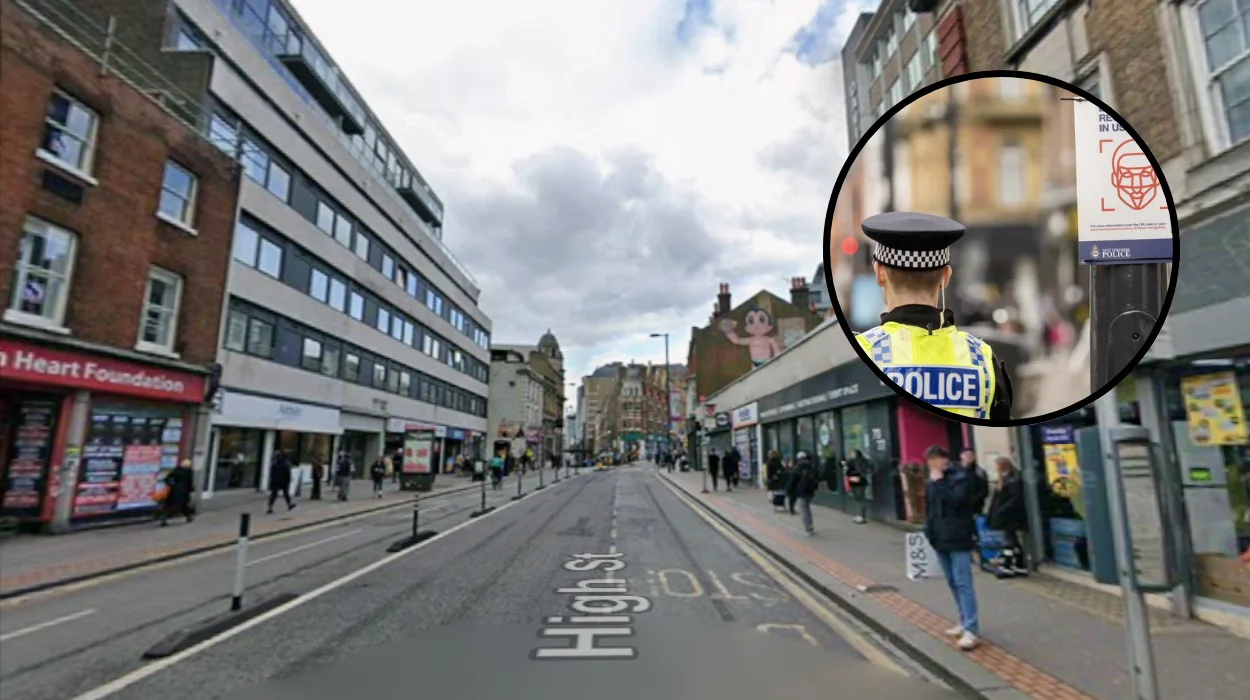
- Static cameras were mounted on lampposts at the north and south ends of Croydon High Street, and LFR vans were also used in some deployments.
- The Met described LFR as a “powerful tool” for policing, while campaign group Big Brother Watch warned that strict safeguards are needed for the technology.
- The force reported that 61% of offences linked to arrests were committed in Croydon.
- The trial raised questions about privacy, proportionality and oversight, with calls for transparency about watchlist composition, accuracy, and how long images and data are retained.
Croydon (Extra London News) May 13, 2026 – The Metropolitan Police said a six-month trial of live facial recognition (LFR) on Croydon High Street led to 173 arrests and a measured fall in crime during deployments, while civil liberties campaigners and privacy experts urged stricter safeguards and clearer public oversight of the technology.
- Key Points
- Why did the Metropolitan Police run the live facial recognition trial in Croydon?
- How many arrests were made and what types of offences were involved?
- What impact did the trial have on crime figures?
- How were the cameras deployed and what technology was used?
- What safeguards and rules did the Met claim to follow?
- What have campaign groups and privacy advocates said about the pilot?
- How reliable and accurate is the technology in operational settings?
- Who were some of the named individuals arrested during the pilot?
- What do police supporters and critics say about public safety versus civil liberties?
- Which areas of transparency did campaigners demand after the pilot?
- How might this trial affect future policing policy in London?
- What are the next steps announced by the Met or asked by critics?
Why did the Metropolitan Police run the live facial recognition trial in Croydon?
As reported by the Metropolitan Police in its published summary of the pilot, the trial aimed to test LFR as an operational tool to identify people wanted for arrest and to deter offending during targeted deployments on Croydon High Street, with cameras operating across 24 separate operations between October 2025 and March 2026.
The force said deployments used a “bespoke, intelligence-led watchlist” created no more than 24 hours before each activation and deleted immediately afterwards, a process the Met described as designed to limit data retention and to keep watchlists tightly focused on current policing needs.
How many arrests were made and what types of offences were involved?
The Met reported 173 arrests during the trial — equivalent, it said, to roughly one arrest every 35 minutes during active operations — including people wanted for a range of serious offences.
Among those arrested was a 36-year-old woman who had been wanted for more than 20 years after failing to appear at court for an assault in 2004, a 31-year-old man wanted for voyeurism, and a 41-year-old man wanted in connection with an alleged rape in Croydon in November 2025.
The force said the arrests accounted for crimes including kidnap, rape and serious sexual assault, and that 61% of the offences linked to those arrests had been committed in Croydon itself.
What impact did the trial have on crime figures?
According to the Met’s account of the pilot, recorded crime on Croydon High Street fell by 10.5% across the trial period, with a larger 21% reduction specifically in recorded offences of violence against women and girls during the same time frame.
The force argued that those figures indicated LFR could be a powerful tool in targeted policing operations when used alongside other investigative methods.
How were the cameras deployed and what technology was used?
The pilot used two main deployment modes: a dedicated van housing cameras and computing equipment, and static cameras mounted on street infrastructure such as lampposts at the north and south ends of the high street.
The Met said static cameras were activated during 24 separate operations, each drawing from an intelligence-led watchlist that was limited in scope and lifespan for each deployment.
The force emphasised that watchlists were created no more than 24 hours in advance and deleted immediately afterwards, and that deployments were targeted rather than continuous monitoring.
What safeguards and rules did the Met claim to follow?
The Met’s briefing on the trial stressed that watchlists were bespoke, intelligence-led and time-limited, and that images collected in a deployment were subject to police retention rules and deletion processes aligned with the pilot’s design.
The force framed the pilot as operationally focused, limited in time and geography, and justified by investigative needs tied to arrests and public protection.
What have campaign groups and privacy advocates said about the pilot?
Big Brother Watch, a civil liberties campaign group, urged strict safeguards around the use of LFR, warning that the technology poses risks to privacy and civil liberties if not tightly regulated and independently overseen.
The group raised concerns about watchlist composition, potential inaccuracies in identification, the risk of disproportionate impact on minority communities, and the need for transparency about how data is stored and used. Other commentators and digital rights organisations have similarly called for clear legal frameworks, independent audits, and public reporting before wider roll-out of face recognition technology in public spaces.
Explore More Croydon News
Croydon Men Charged in Charing Cross Tube Assault, London 2026
Gatwick Airport trains delayed after East Croydon incident London 2026
How reliable and accurate is the technology in operational settings?
The Met’s public statements on the trial noted operational successes in locating wanted individuals, but the broader debate about LFR’s accuracy remains contested in academic and civil society reporting. Accuracy can vary with factors such as camera angle, lighting, camera resolution and the underlying algorithm’s training data; critics argue such factors can produce false positives that have serious consequences for those incorrectly identified.
Campaigners have pointed to published research showing variable performance across different demographic groups and urged independent testing and transparency on error rates before the technology is deployed widely.
Who were some of the named individuals arrested during the pilot?
The Met released examples to illustrate results from the trial: a 36-year-old woman wanted for failing to appear at court over a 2004 assault, a 31-year-old man wanted for voyeurism, and a 41-year-old man wanted for an alleged rape in Croydon in November 2025 — all of whom, the force said, were located and detained with the assistance of LFR during deployments on the high street.
The force also said many of the arrests were for offences committed in Croydon, reflecting the watchlists’ local intelligence focus.
Explore More Croydon News
Teen e‑scooter rider dies in tram crash, family sues operator in Croydon 2026
Croydon £10k Monthly Lottery Prize Unclaimed 2026
What do police supporters and critics say about public safety versus civil liberties?
Supporters of the Met’s use of LFR point to the arrests of wanted suspects — including those linked to longstanding or serious crimes — and to the reductions in recorded crime during the trial as evidence the technology can assist policing and public protection.
Critics counter that reduced crime during an active, targeted pilot does not resolve longer-term concerns about surveillance creep, potential misuse, the need for independent oversight, and the risk that marginalised groups could be disproportionately affected by errors or biased watchlists.
Which areas of transparency did campaigners demand after the pilot?
Campaign groups demanded disclosure about how watchlists were compiled and who authorised inclusion; clarity on which images and matches were stored, for how long, and under what legal basis; independent verification of algorithmic accuracy and bias testing; and stronger statutory safeguards to govern any future use of LFR in public spaces.
They also sought assurances that any roll-out would be subject to parliamentary scrutiny and independent audits.
How might this trial affect future policing policy in London?
The Met’s positive assessment of the pilot suggests the force may favour continuing to explore targeted LFR deployments where intelligence indicates a clear operational benefit, but public and parliamentary scrutiny could shape tighter governance and oversight requirements before broader adoption.
Any future expansion would likely need to address the legal and ethical concerns raised by civil society and to provide independent evidence of accuracy, fairness and necessity.
Elsewhere in the UK and internationally, LFR has faced mixed responses — operational pilots in some areas, legal challenges in others, and in some jurisdictions moratoria or bans prompted by privacy and human-rights concerns.
Courts and data-protection authorities have increasingly demanded rigorous justification and safeguards where the technology is used in public policing, and independent studies have pushed for transparency on performance and bias.
What are the next steps announced by the Met or asked by critics?
The Metropolitan Police said it will review the pilot’s outcomes and consider how LFR might be used as part of a suite of policing tools, emphasising the intelligence-led, time-limited nature of the deployments. Campaigners have called for the data from the trial to be independently audited and published, for legal clarity on watchlists and retention, and for statutory safeguards to regulate any future use of LFR.