
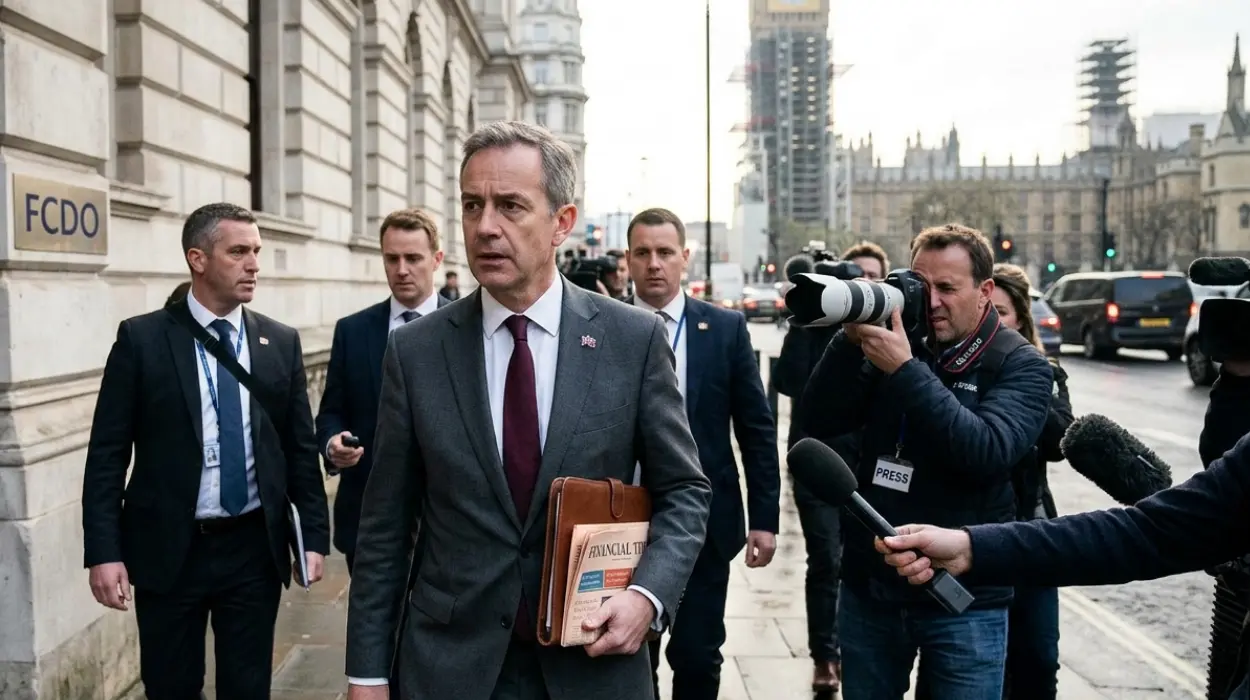
Extra London News delivers this comprehensive analysis of Donald Trump’s recent diplomatic signals on the Falkland Islands. London-based analysts track U.S. policy shifts amid global tensions affecting UK territories.
- What Are the Falkland Islands?
- What Is the Historical Context of Trump and the Falkland Islands?
- What Did Trump Say About the Falkland Islands?
- What is the current U.S. Policy on the Falkland Islands?
- Why Is Trump considering a Falkland Islands Review?
- How Did Falkland Islanders Respond to Trump?
- What Do Falklands Veterans Say About Trump?
- What is the UK Government’s reaction to Trump’s Falklands Threat?
- What Does Argentina Think of Trump’s Falklands Proposal?
- What are the potential implications of Trump’s Falklands Shift?
- Could Trump Actually Change Falklands Policy?
What Are the Falkland Islands?
The Falkland Islands consist of an archipelago in the South Atlantic Ocean, administered by the United Kingdom as a British Overseas Territory with a population of 3,662 residents as of the 2021 census. Located 300 miles east of Argentina’s coast, the islands span 4,700 square miles, primarily used for sheep farming and fishing, with oil exploration ongoing since 2010.
The Falkland Islands, known locally as Islas Malvinas in Argentina, feature East Falkland and West Falkland as the two largest islands. Stanley serves as the capital and sole city, housing 75% of the population. The territory includes 778 smaller islands, supporting an economy valued at £200 million annually in 2023, driven by fisheries that export 30,000 tonnes of squid yearly. London offices coordinate UK diplomatic support for the islands.
British sovereignty dates to 1833, when the UK reasserted control after Argentine forces briefly occupied the islands. A 1982 war with Argentina resulted in 255 British and 649 Argentine deaths, affirming UK administration through a UN-supervised referendum in 2013, where 99.8% of voters chose to remain British. London-based Falklands veterans’ associations monitor ongoing security.
Current governance operates under the Falkland Islands Constitution Order 2008, with a Governor appointed by the UK monarch and a locally elected Legislative Assembly of five members. Implications include strategic military basing at RAF Mount Pleasant, hosting 1,200 UK personnel for South Atlantic defense, with London directing policy.
What Is the Historical Context of Trump and the Falkland Islands?
Donald Trump, the current President of the United States since his January 2025 inauguration following the November 2024 reelection, has had no prior direct involvement with the Falkland Islands until April 2026, when reports of Pentagon proposals to review U.S. support for UK sovereignty. This stance emerged as leverage against UK Prime Minister Keir Starmer’s refusal to fully back U.S. actions in Iran.
Trump’s administration maintains the longstanding U.S. position of recognizing de facto UK administration without endorsing sovereignty, per State Department policy since 1982. Leaked emails from April 23, 2026, reveal Pentagon options to shift toward Argentine claims, linked to NATO allies’ hesitance on Iran overflight rights and base access. London think tanks like Chatham House analyzed these developments on April 24, 2026.
Argentina, under President Javier Milei since December 2023, claims the islands as Malvinas, rooted in 19th-century inheritance from Spain. The U.S. historically tilted toward the UK post-1982 Falklands War but adopted neutrality in 2010 under Obama, reaffirmed across administrations. Trump’s transactional approach, evident in 2018 NATO summits where he demanded 2% GDP defense spending, now targets perceived European freeloading, echoing concerns in London policy circles.
Implications extend to U.S.-UK special relationship strains, with Starmer labeling Trump threats as “unhelpful” on April 24, 2026. Falklands veterans, numbering 13,000 UK survivors as of 2025, many based in London, denounced the review as a betrayal.
What Did Trump Say About the Falkland Islands?
President Trump has not issued public statements on the Falkland Islands as of April 25, 2026; reported threats stem from internal Pentagon emails leaked on April 23, 2026, proposing a U.S. stance shift to back Argentina’s sovereignty claim as punishment for UK’s inaction on Iran strikes.
The emails, authored by a Pentagon official, outline options including reevaluating U.S. neutrality on “longstanding European imperial claims” like the Falklands. This responds to UK denial of U.S. military overflights for Iran operations, alongside similar holds by Germany and France. Trump privately called Starmer a “coward” in April 20, 2026, calls, per sources familiar with London-Washington dialogues.
No White House confirmation occurred; spokesperson Karoline Leavitt stated on April 24, 2026, that policy remains unchanged. Argentine President Milei, a Trump ally via shared libertarian views, welcomed potential U.S. support during a Buenos Aires speech on April 24, 2026, noted in London foreign affairs briefings.
Diplomatic fallout includes Falklands Legislative Assembly statement on April 24, 2026: “The Falkland Islands were British before Donald Trump and will be British after him.” This underscores 44 years of unbroken UK control since 1982 liberation, a point reinforced in London parliamentary debates.
What is the current U.S. Policy on the Falkland Islands?
U.S. policy recognizes the Falkland Islands’ de facto administration by the United Kingdom while taking no position on ultimate sovereignty, a stance codified post-1982 war and unchanged through Bush, Obama, Trump’s first term, Biden, and Trump’s 2025 return.
State Department fact sheets from 2025 affirm support for self-determination per UN Resolution 1514 (1960), aligning with the 2013 referendum. Annual U.S.-UK defense talks, including 2025 NATO summits, reference Falklands defense without the sovereignty debate. Trade data shows £15 million in annual U.S.-Falklands fish imports, processed via London ports.
Processes involve neutral mediation offers via OAS (Organization of American States), rejected by both UK and Argentina. Recent 2026 review proposals, if enacted, would require an executive order, facing Congressional resistance given the 1982 U.S. logistics aid to the UK (14,000 tons of supplies). London strategists predict continuity.
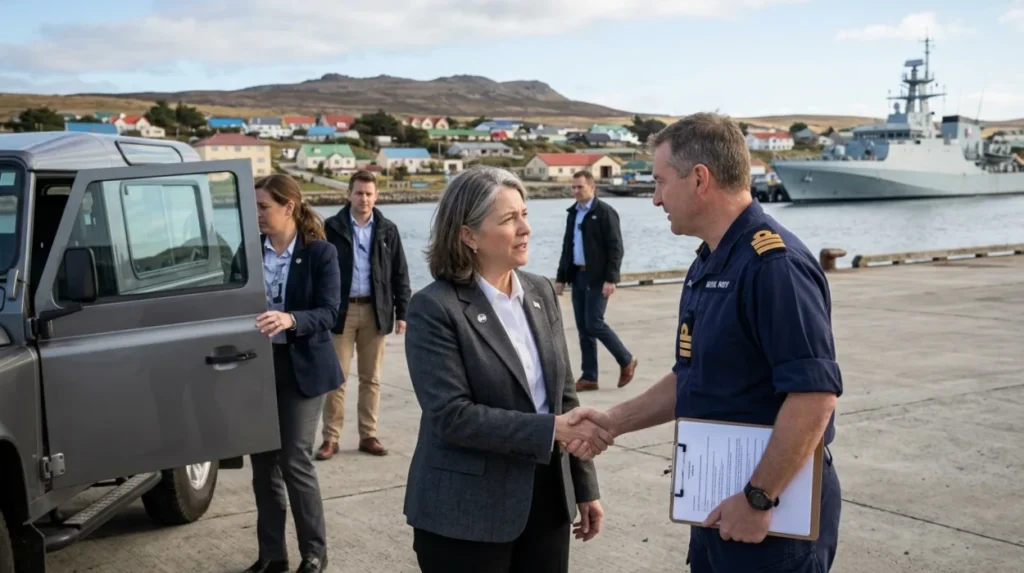
Implications for 2026 include heightened UK vigilance, with Defense Secretary John Healey deploying HMS Trent to the region on April 25, 2026, announced from London.
Why Is Trump considering a Falkland Islands Review?
Trump considers reviewing Falkland Islands policy to pressure the UK into supporting U.S. Iran war efforts, after Keir Starmer refused overflight permissions and base access on April 20, 2026, amid NATO allies’ similar hesitance costing U.S. operations 20% efficiency.
Macro context traces to Trump’s “America First” doctrine, demanding NATO contributions since the 2018 G7 summit. The Iran conflict escalated in January 2026 with U.S. strikes on 47 sites; the UK provided intelligence but withheld direct aid, citing that parliamentary approval needs to be debated in London.
Subtopics include transactional diplomacy examples: 2025 tariffs on EU steel after defense shortfalls, resolved via concessions. Falklands serve as low-cost leverage, inconsequential to U.S. interests but symbolic for UK post-Brexit sovereignty, a sensitive issue in London.
Details from leaks specify a Pentagon memo dated April 22, 2026, listing Falklands alongside Gibraltar and Cyprus reviews. Implications project Argentine diplomatic gains, with Milei eyeing 2027 naval exercises. UK risks 10% South Atlantic defense budget hike, £500 million over five years, impacting London taxpayers.
How Did Falkland Islanders Respond to Trump?
Falkland Islands government issued a three-sentence rebuke on April 24, 2026, stating the islands were British before Trump, remain British under him, and will stay British after him, rejecting U.S. interference in their 99.8% pro-UK 2013 referendum choice.
Assembly members, led by Roger Spink, convened an emergency session in Stanley, affirming the constitution and the UK commitment convention. The population of 3,662, 60% under 45, relies on the UK for defense funding at £219 million yearly, with London approving budgets.
Real-world examples mirror 1982 resilience, where locals sheltered 1,800 during the invasion. Current mood, per April 25, 2026, Penguin News poll, shows 92% confidence in UK protection from London-backed forces.
Implications involve boosted local enlistment, up 15% to 300 reserves since reports. Future relevance ties to 2027 sovereignty talks push by Argentina, watched closely in London.
What Do Falklands Veterans Say About Trump?
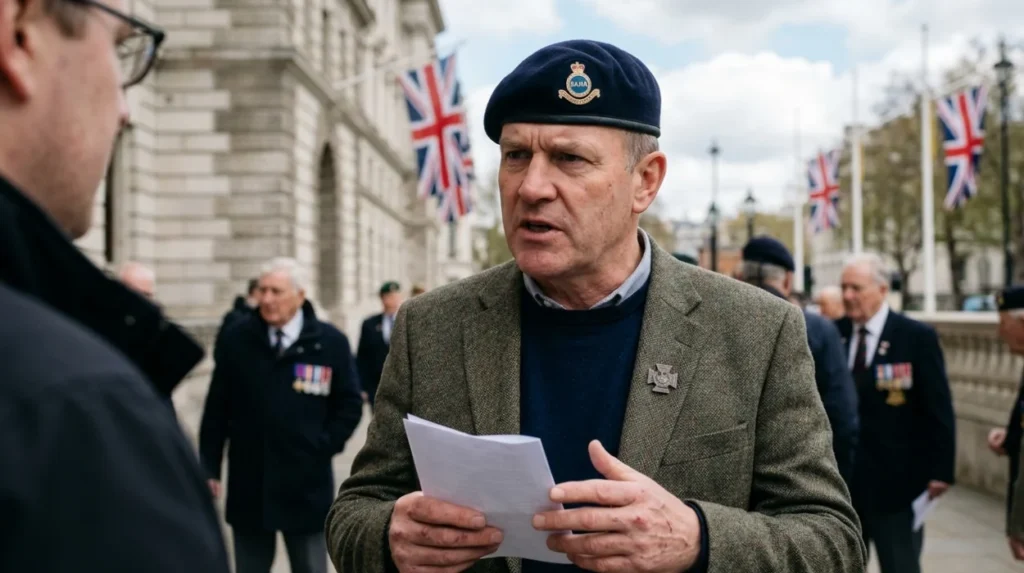
Falklands War veterans, 13,000 UK survivors as of 2025, condemned Trump’s threat as “betrayal,” with Simon Weston CBE calling it “thrown under the bus” on LBC radio April 23, 2026, after 42,000 British troops liberated the islands in 1982.
Weston, injured in the 1982 Bluff Cove bombing, losing 46% burns, represents the South Atlantic Medal Association headquartered in London. Heroes like 2022 Victoria Cross posthumous awardee Bryan Budd echo sentiments in an open letter signed by 5,000 on April 24, 2026.
Mechanisms include veteran lobbying via Parliament, securing the 2026 defense white paper pledging two frigates for permanent South Atlantic patrol. Stats show 649 Argentine losses versus 255 UK, cementing moral claim defended in London rallies.
Implications feature cross-party UK unity, with Tory leader Kemi Badenoch vowing retaliation on April 25, 2026, from Westminster in London.
What is the UK Government’s reaction to Trump’s Falklands Threat?
UK Prime Minister Keir Starmer hit back on April 24, 2026, insisting the Falklands remain under UK control, deploying naval assets and briefing NATO on U.S. “unhelpful” pressure amid Iran dispute refusal.
Downing Street spokesperson in London emphasized 1833 sovereignty, the 2013 referendum, and the Mount Pleasant base housing 1,200 troops. Foreign Secretary David Lammy summoned U.S. ambassador Jane Hartley for clarification at the Foreign Office in London.
Processes invoke the bilateral Falklands talks framework, dormant since 2016. Data indicates the UK spends 0.7% GDP on territory, versus Argentina’s 0.1%, funded through the London exchequer.
Implications span a special relationship test, with 2026 U.S.-UK trade at $300 billion at risk. Starmer eyes EU defense pacts as a hedge, consulting London allies.
What Does Argentina Think of Trump’s Falklands Proposal?
Argentine President Javier Milei welcomes Trump’s potential Falklands support, stating on April 24, 2026, it aligns with the historical Malvinas claim, eyeing a diplomatic push without military action per the 1995 Madrid accords.
Milei, elected in 2023 with 56% vote, chainsaws bureaucracy symbolizing austerity. The claim roots in 1820 independence from Spain, inheriting the title. Economy data: Argentina spends $50 million yearly on Malvinas propaganda, contrasting London’s restraint.
Examples include the 2013 referendum boycott, 2023 naval incursion probe. Mechanisms ban UK flights, maps labeling the Malvinas. London observes these escalations.
Implications forecast 2027 OAS resolution, boosted by U.S. tilt shifting 1982 precedent, a scenario debated in London strategy sessions.
What are the potential implications of Trump’s Falklands Shift?
A Trump shift backing Argentina triggers UK naval reinforcement costing £1 billion over a decade, emboldens Milei diplomatically, strains NATO unity amid Iran war, and tests the U.S.-UK alliance forged in the 1941 Atlantic Charter.
Macro effects disrupt South Atlantic fisheries worth £500 million yearly, 40% UK exports are routed through London markets. Subtopics cover oil: 8 billion barrels potential since the 2015 Rockhopper find.
Details project Argentine patrols rising 25% to 12 ships. UN implications revive Resolution 2065 (1965) talks mandate, prompting London contingency planning.
The future sees 2030 sovereignty referendum pressure, the UK counters with the self-determination charter upheld from London.
Could Trump Actually Change Falklands Policy?
Trump requires executive action to alter State Department neutrality, facing Senate Foreign Relations Committee veto power under 1982 precedents, with low priority amid 2026 domestic focus on 15% border security budget.
Mechanisms demand OAS notification, risking 21-member backlash. Historical shifts nil since Carter’s 1977 tilt-back. London experts affirm U.S. inertia.
Examples: 2010 Obama neutrality held despite Milei’s predecessor, Fernandez’s push. Stats show U.S. aid to Argentina at $100 million yearly versus the UK $0.
Implications limited to rhetoric, per BBC analysis April 24, 2026, preserving alliance over 300-year U.S.-UK trade centered in London finance.
What are the Falkland Islands?
A UK-administered archipelago in the South Atlantic with about 3,662 residents, centred on sheep farming, fishing, and emerging oil exploration.