Key Points
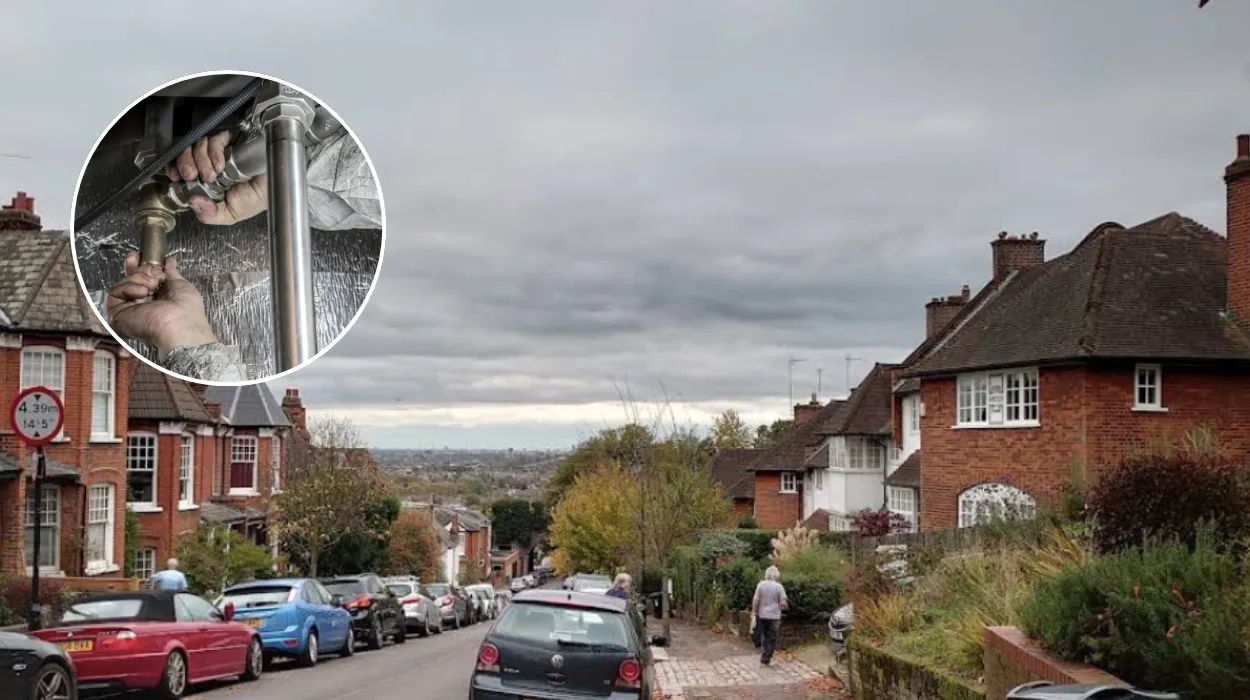
- A water pipe burst on Woodside Avenue in Muswell Hill, north London, leaving thousands of properties without water or dealing with low pressure.
- Residents said the disruption started at about 9:00 AM on Monday, cutting off running water for more than 24 hours.
- The supply failure impacted postcodes N6, N19, NW2, NW3, NW6, and NW11.
- Thames Water sent teams to Woodside Avenue to handle the flooding, fix the pipe, and provide alternative water supplies during repairs.
- Residents expressed frustration over the outage and lack of communication, with one local describing it as “a crazy situation.”
London (Extra London News) August 25, 2026 — Thousands of households across several boroughs in north and north-west London have been left completely without water or experiencing critically low pressure following a major burst water main in the residential neighbourhood of Muswell Hill.
- Key Points
- Why are thousands of homes in north London without water?
- Which specific postcodes have been affected by the Muswell Hill burst pipe?
- What are residents saying about the Thames Water crisis?
- How is Thames Water responding to the Woodside Avenue incident?
- What steps are being taken to prevent future catastrophic main bursts?
According to reports gathered by The Evening Standard, the critical infrastructure failure occurred on Woodside Avenue, triggering localized flooding and an immediate loss of water supply to a sprawling network of postcodes. Local residents have raised serious concerns over the duration of the outage, stating that their taps ran dry at approximately 9:00 AM on Monday morning and remained empty for well over 24 hours.
The utility provider, Thames Water, confirmed they dispatched emergency engineering teams to the scene on Woodside Avenue to isolate the damaged pipe and begin complex repairs. However, despite ongoing recovery operations, communities spanning multiple postcodes—specifically N6, N19, NW2, NW3, NW6, and NW11—continue to face severe supply disruptions, prompting widespread calls for faster emergency provisions and tanker deployments.
Why are thousands of homes in north London without water?
The root cause of the widespread supply failure is a catastrophic rupture of a strategic water main situated along Woodside Avenue in Muswell Hill. When high-capacity mains burst, the sudden drop in hydraulic pressure prevents water from being forced up through the regional distribution network, starving elevated zones and surrounding postcodes of normal supply.
As reported by emergency correspondents for The Evening Standard, the sheer volume of water escaping from the fractured pipe not only drained local storage reservoirs and pressure rings but also created localized surface flooding around the Muswell Hill site. Thames Water engineers quickly cordoned off the affected section of Woodside Avenue to execute heavy excavation work, aiming to access the buried main and stem the loss of millions of litres of treated drinking water.
Yet, the intricate nature of London’s Victorian-era and modern interconnected pipe network means that isolating one major main can inadvertently trigger cascading pressure drops across adjacent postal districts, stretching from Haringey down toward parts of Camden, Barnet, and Brent.
Explore more London Local News:
Caravan Site Backlash Sparks Tension in Islington 2026
British-Palestinian Family Drowns in Sussex Coast Tragedy, Shoreham 2026
Which specific postcodes have been affected by the Muswell Hill burst pipe?
The geographical footprint of the water outage is exceptionally wide, impacting residential streets, local businesses, and public facilities across multiple north and north-west London districts.
As detailed in coverage by The Evening Standard, households registered under the following postcodes have experienced either complete water loss or intermittent, low-pressure trickles since Monday morning:
- N6 (Highgate, Swain’s Lane)
- N19 (Upper Holloway, Archway)
- NW2 (Cricklewood, Dollis Hill)
- NW3 (Hampstead, Swiss Cottage)
- NW6 (Kilburn, West Hampstead, Queen’s Park)
- NW11 (Golders Green, Temple Fortune)
Local authorities and community groups within these affected zones have noted that vulnerable residents, care homes, and schools within these specific postcodes are facing acute challenges as they attempt to manage routine hygiene, cooking, and sanitation without a dependable mains supply.
What are residents saying about the Thames Water crisis?
Frustration has boiled over among local communities who have found themselves high and dry for more than a full day. The unexpected nature of the outage, combined with what many have termed a slow emergency response regarding alternative water distribution, has drawn heavy criticism.
Describing the gravity of the unfolding emergency on the ground, local residents expressed utter disbelief at the scale of the disruption. As reported by The Evening Standard, one disgruntled local resident encapsulated the public mood by telling reporters: “It’s a crazy situation.”
Further testimonies gathered by journalists at The Evening Standard highlight the immense daily friction caused by the sudden loss of water. Residents reported being unable to flush toilets, wash clothes, or prepare meals safely, with many forced to scour local supermarkets and convenience stores for bottled water, only to find shelves rapidly stripped bare by panic-buying neighbours.
How is Thames Water responding to the Woodside Avenue incident?
As public pressure mounts, Thames Water customer service and operational divisions have faced intensive scrutiny regarding their handling of the crisis.
In official updates monitored by The Evening Standard, Thames Water representatives stated that their incident management teams are working around the clock to restore normal service. A spokesperson for Thames Water stated that
“our engineers are on-site at Woodside Avenue in Muswell Hill working hard to repair the burst pipe and get supplies back to normal as quickly as possible.”
The utility company has faced the formidable task of rerouting water from alternative unaffected zones, utilizing pressure management valves, and dispatching bottled water stations to strategic drop-off points across the impacted N and NW postcodes. However, early logistical delays in establishing these emergency distribution points drew sharp rebukes from local councillors and residents’ associations, who argued that contingency plans were activated far too late given the scale of the outage.
What steps are being taken to prevent future catastrophic main bursts?
The recurring failure of ageing water mains across the capital has reignited a fierce political and environmental debate regarding the structural integrity of London’s subterranean water infrastructure.
Industry analysts speaking to The Evening Standard noted that historical under-investment, combined with shifting ground conditions caused by extreme weather cycles, clay soil contraction, and heavy traffic loads, places immense strain on Victorian-era iron pipes and mid-20th-century asbestos-cement mains.
Environmental campaigners have repeatedly challenged Thames Water over leakage rates and the time it takes to modernise vulnerable arterial mains. While emergency repairs on Woodside Avenue are slated for completion, questions remain over whether compensation schemes will be automatically triggered for households enduring prolonged disruptions, and what long-term capital replacement schedules Thames Water will enforce to safeguard north London against repeating this frustrating, dry ordeal.