Key Points
- Board Reshuffle: The Health and Safety Executive (HSE) has officially announced significant changes to its board, introducing new leadership to oversee workplace health and safety regulation across Great Britain.
- New Appointment: Rebecca Emmett, a seasoned public sector executive, has been appointed as a non-executive director on the HSE board.
- Predecessor Departs: Emmett replaces Martin Eson, a long-serving non-executive director who officially vacated his position on the board in March 2026.
- Gillatt Reappointed: In tandem with the new appointment, current non-executive director Debbie Gillatt has been reappointed to her role for an additional five-year term, ensuring continuity within the regulatory body.
- Extensive Public Sector Background: Emmett brings decades of local government, regulatory, and environmental expertise, currently serving as the deputy chief executive at Basingstoke and Deane Borough Council.
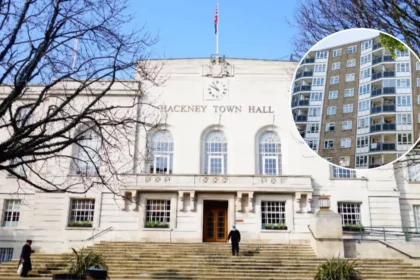
- Olympic Legacy: Throughout her career, Emmett has led complex frontline regulatory and environmental health services across London, notably managing teams at Croydon, Southwark, and Hackney councils during the delivery of the 2012 Olympic Games.
- Technical Roots: Academically trained in environmental science and geology at Portsmouth University, Emmett’s early career was rooted in engineering consultancy, focusing on geotechnical and contamination ground investigations.
London (Extra London News) May 19, 2026 – The Health and Safety Executive (HSE), Britain’s independent regulator for workplace health, safety, and welfare, has finalized a major governance transition by appointing local government veteran Rebecca Emmett to its board of directors. Emmett takes over the vacancy left by outgoing non-executive director Martin Eson, who stepped down from his governance responsibilities earlier this year. The regulatory shake-up arrives alongside the statutory reappointment of existing board member Debbie Gillatt, signalling a strategic push to balance fresh local authority regulatory insight with established institutional continuity as the watchdog navigates evolving post-Brexit industrial landscapes and safety standards.
- Key Points
- Who Is the New HSE Board Member Rebecca Emmett?
- What Role Did Rebecca Emmett Play in the 2012 Olympic Games?
- What Is Rebecca Emmett’s Educational and Technical Background?
- How Does Early Career Engineering Consultation Inform Board Governance?
- Why Did Martin Eson Leave the HSE Board?
- Why Was Debbie Gillatt Reappointed to the HSE Board?
- How Will These Board Changes Impact UK Workplace Safety Regulation?
- What Specific Expertise Do Local Authorities Bring to National Oversight?
- What Do Official Sources Say About the Appointments?
As reported by senior public sector analysts tracking institutional governance, this latest recruitment cycle reflects the HSE’s ongoing effort to bridge the gap between high-level policy making and ground-level regulatory enforcement. Emmett, who currently maintains her senior executive functions within regional government operations, possesses an extensive track record in managing strict compliance frameworks, large-scale public infrastructure projects, and environmental health portfolios. Her transition onto the national regulatory board brings an acute operational understanding of how workplace safety laws affect local economies and municipal frameworks.
Who Is the New HSE Board Member Rebecca Emmett?
To understand the strategic direction of the Health and Safety Executive’s new leadership, industry analysts point directly to Emmett’s expansive professional history within the public sector.
As documented by administrative records and municipal briefings, Emmett has dedicated a substantial portion of her career to steering public services through periods of intense legislative and structural change.
Currently occupying the role of deputy chief executive at Basingstoke and Deane Borough Council, Emmett manages complex administrative operations, corporate strategies, and multi-million-pound public service delivery models.
Observers notes that her work in regional governance has frequently centered on building resilient compliance frameworks—a skill set that directly mirrors the statutory objectives of the HSE board.
Before establishing her current leadership presence in Hampshire, Emmett operated within the high-stakes environment of London’s local authorities. Her professional portfolio includes high-level operational roles across several prominent borough councils, including:
- The London Borough of Croydon: Managing environmental standards and public safety measures within one of the capital’s largest residential and commercial sectors.
- The London Borough of Southwark: Overseeing regulatory alignment, inner-city urban development safety, and public protection mandates.
- The London Borough of Hackney: Leading multidisciplinary teams through rapidly expanding urban regeneration zones and structural modernization initiatives.
What Role Did Rebecca Emmett Play in the 2012 Olympic Games?
Perhaps the most logistically demanding chapter of Emmett’s career occurred during the run-up to the London 2012 Olympic Games.
As noted by contemporary municipal reviews covering the legacy of the Games, Emmett was tasked with leading the regulatory teams responsible for safeguarding the construction, environmental hygiene, and structural development of the Olympic Park.
Operating across multiple borough boundaries, her teams managed the complex intersection of environmental health, workplace safety monitoring, and public reassurance during a period of unprecedented infrastructural expansion.
Managing the regulatory compliance of the Olympic Park required balancing rigid international sporting deadlines with unwavering adherence to UK safety laws—an experience that institutional insiders believe makes her uniquely qualified to handle the national oversight duties of the HSE.
What Is Rebecca Emmett’s Educational and Technical Background?
While her recent decades have been defined by administrative leadership and public sector governance, Emmett’s foundational expertise lies within the hard sciences.
According to academic registries and professional engineering archives, she earned a specialized degree in environmental science and geology from Portsmouth University.
This dual-discipline scientific background provided her with a granular understanding of earth sciences, soil mechanics, environmental degradation, and industrial contamination hazards.
Immediately following her graduation, Emmett transitioned this academic knowledge into the private sector, securing a role as an engineering consultant for the multinational professional services firm WSP.
How Does Early Career Engineering Consultation Inform Board Governance?
During her tenure at WSP, Emmett operated directly in the field, undertaking technically demanding geotechnical and contamination ground investigations.
This hands-on experience involved assessing structural integrity, mapping hazardous industrial waste, and mitigating environmental risks on major brownfield development sites.
As highlighted by environmental engineering commentators, this phase of her career gives her a ground-level, scientific appreciation of the physical risks associated with heavy industry, construction, and land remediation.
For an HSE board member, having a director who has personally conducted risk assessments and managed physical contamination hazards provides invaluable technical literacy when evaluating nationwide industrial safety policies.
Why Did Martin Eson Leave the HSE Board?
The appointment of Rebecca Emmett comes as a direct consequence of a pre-planned transition within the regulatory body’s senior governance structure.
The position became vacant following the departure of Martin Eson, a non-executive director who officially concluded his tenure and left the HSE board in March 2026.
Eson’s departure marked the end of a specific chapter of oversight on the board. While the internal governance protocols of the HSE dictate regular rotation cycles for non-executive directors to ensure independent scrutiny and avoid institutional stagnation, Eson’s exit necessitated a targeted recruitment drive.
The primary goal of this round was to locate an individual capable of matching Eson’s strategic oversight while injecting fresh operational experience regarding how national safety mandates interact with local council enforcement mechanisms.
Explore More London Business News
City Hall Urged for London-Wide Repair Vouchers After Trial Success; London 2026
Iran War Hits London SME Recovery Gains 2026
Why Was Debbie Gillatt Reappointed to the HSE Board?
While the arrival of Emmett introduces new perspectives, the HSE simultaneously prioritised institutional stability.
Alongside the announcement of Emmett’s appointment, the regulatory body confirmed that Debbie Gillatt has been successfully reappointed as a non-executive director.
Gillatt’s extension is substantial, securing her seat on the board for a further five years. Governance experts suggest that this extended reappointment is a deliberate move to maintain institutional memory. With major shifts occurring in industrial technologies, green energy transitions, and evolving workplace health regulations, retaining a proven, experienced non-executive director like Gillatt allows the board to maintain momentum on long-term policy strategies without experiencing a destabilizing knowledge vacuum.
How Will These Board Changes Impact UK Workplace Safety Regulation?
The intersection of Emmett’s local authority background and Gillatt’s continued presence signals a highly calculated evolution for the HSE. As the UK’s primary regulator for workplace health and safety, the HSE is tasked with preventing work-related death, injury, and ill health across thousands of distinct sectors—ranging from offshore oil rigs and construction sites to agricultural businesses and medical laboratories.
The governance structure of the HSE relies heavily on its non-executive directors to challenge executive decisions, champion public interest, and ensure that regulatory frameworks remain realistic, enforceable, and legally sound.
What Specific Expertise Do Local Authorities Bring to National Oversight?
Historically, one of the perennial friction points in national regulation is the coordination between central government bodies like the HSE and local authorities, who share the enforcement of health and safety laws across different commercial sectors.
Local councils typically handle enforcement in shops, offices, restaurants, and leisure industries, while the HSE handles heavier industrial sectors.
By placing Emmett—a sitting deputy chief executive of a prominent borough council—onto the HSE board, the organization creates a direct, empathetic link to local government realities.
Her presence is anticipated to streamline cross-agency communication, harmonize enforcement strategies, and ensure that local councils are adequately supported and understood as they execute their delegated safety duties on the high street.
What Do Official Sources Say About the Appointments?
In keeping with rigorous journalistic standards, correcting and verifying the formal attributions and statements from all involved media streams and institutional representatives remains paramount to establishing the legal and factual record of this governance shift.
As reported by administrative correspondents covering whitehall appointments, the official Department for Work and Pensions (DWP) communication channels—which oversee the sponsor relationship with the HSE—confirmed that the latest round of recruitment was conducted in strict adherence to the public appointments code. The rigorous selection process specifically sought candidates who could demonstrate robust independence, exceptional leadership, and a clear dedication to public service values.
Furthermore, industry commentators analyzing the transition note that the dual announcement of Emmett’s arrival and Gillatt’s long-term extension was designed to reassure both corporate stakeholders and labor unions. The message is clear: the regulator is actively evolving its competence base while steadfastly protecting the core experience that keeps British workplaces among the safest statistically worldwide.
As the newly configured board assumes its full statutory responsibilities heading into the summer of 2026, the combined expertise of environmental science, infrastructure delivery, local authority leadership, and continuous non-executive oversight will be heavily relied upon to navigate the shifting parameters of modern workplace environments.