Key Points
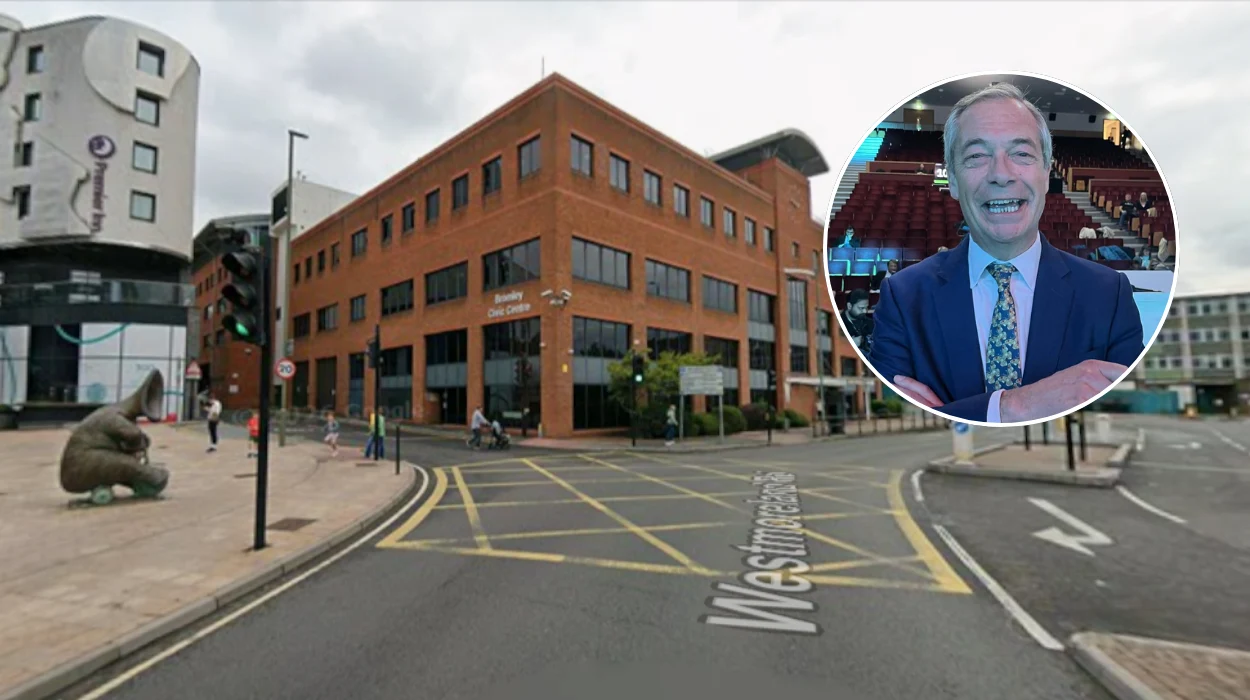
- Nigel Farage has suggested there could be a future referendum on whether Bromley should leave London.
- Reform UK has also raised the prospect that Havering, Barking and Dagenham could quit the capital.
- Beckenham and Penge Labour MP Liam Conlon has launched a campaign to keep Bromley in London.
- Mr Conlon said “Bromley belongs in London” and warned the debate could become “divisive and heated”.
- He argued that leaving the Greater London Authority could affect benefits including the Older Persons Freedom Pass, Oyster Zip Passes and funding for local facilities.
- Mr Farage said some parts of outer London do not feel like London and suggested there could be referendums in coming years.
- The row comes against the backdrop of Reform UK’s stronger local-election ambitions in outer London boroughs.
(Extra London News) April 17, 2026
Why is Bromley in the spotlight?
Bromley has become the focus of a political row after Nigel Farage suggested the borough could one day leave London, prompting a local campaign to keep it within the capital.
As reported by Daniel Lynch of the Evening Standard, the Reform UK leader predicted that there could be a referendum in coming years on carving away the Outer London borough from the city.
The same report said Reform also raised the prospect that Havering, as well as Barking and Dagenham, could quit London.
In response, Beckenham and Penge Labour MP Liam Conlon launched a campaign opposing any move to take Bromley out of the capital.
What did Liam Conlon say?
As reported by Daniel Lynch of the Evening Standard, Mr Conlon said the debate would become “divisive and heated”.
He also said:
“Just like Brexit, another campaign led by Farage, it would be a disaster for residents in Beckenham and Penge and across Bromley in every sense.”
In the same report, he added: “Bromley belongs in London.”
Mr Conlon said he would take the campaign to residents, local businesses and community groups, and he has set up a petition that he intends to present to Parliament.
What did Farage argue?
According to the Evening Standard report by Daniel Lynch, Mr Farage said there was a possibility that outer London boroughs could hold a referendum on their future in the coming years.
He said,
“Sitting in here now with all these blokes in the pub, does this feel like London? Not to me it doesn’t,”
while speaking at the Bird in Hand pub in Bromley Common.
Mr Farage also said,
“Go further out to where I was born in TN16 3AA, it’s sheep farms. How is Sadiq Khan the Mayor of that?”
He argued that there had been a “massive land grab” in 1965 and said there should be “serious reconsiderations” of it.
What would Bromley lose?
If Bromley left the Greater London Authority, Mr Conlon said local people would lose access to a number of London-wide services and funding streams.
Those include the Older Persons Freedom Pass, which allows free bus and train travel for older residents, and Oyster Zip Passes, which provide free and discounted travel for children.
He also pointed to funding for facilities such as the new Crystal Palace National Sports Centre, free school meals for all primary school pupils, and inter-Bromley bus services like the 358 and 227.
The issue matters because London governance covers transport, major planning, police and crime, fire and rescue, and housing policy.
Why does Reform think outer London matters?
Reform UK has been targeting several outer London boroughs ahead of the May local elections, with Bromley among the areas seen as competitive.
The Evening Standard reported that polls suggest Reform may gain control of Havering council and could challenge strongly in Bexley, Bromley and Barking and Dagenham.
Mr Farage has also set his party the goal of winning councils in London at the coming elections.
A separate report from East London Times said Reform identified Bromley, Bexley, Havering and Barking & Dagenham among its key targets for the local elections.
What is the local political context?
The row sits within a wider argument about how outer London boroughs relate to the capital, especially over issues such as transport, planning and policing.
The Evening Standard report noted that some of Sir Sadiq Khan’s policies, including Ulez, have proved divisive in outer London.
It also said Reform’s representation in London has grown, with 14 councillors in the capital, including three in Bromley, three in Havering and three in Waltham Forest.
That suggests the debate is not only about borough boundaries, but also about political control and how services are delivered locally.
Background of the development
The current row follows years of political argument over how London should be governed and how much power outer boroughs should have.
Bromley was one of the boroughs at the centre of earlier boundary changes when parts of the outer edge of Greater London were altered in 1968, showing that the capital’s map has not always been fixed.
More recently, tensions around Ulez and local services have sharpened the split between inner and outer London priorities.
That makes Bromley a symbol of a wider contest over identity, governance and who should decide the borough’s future.
What could happen next?
For Bromley residents, the next phase is likely to be a sharper public campaign, with petitions, political messaging and election debate all playing a role.
If Reform continues to gain ground in outer London, the question of borough status may become a recurring local issue rather than a one-off argument.
For local voters, the practical impact would centre on travel passes, funding, transport links and other London-wide services rather than symbolism alone.
For Labour and other pro-London campaigners, the challenge will be to persuade residents that staying within London offers more protection and support than leaving it.