Key Points
- Widespread Bans: Barbecuing is forbidden across the vast majority of London’s open spaces, including all eight historic Royal Parks and nearly all 32 local council jurisdictions, to prevent devastating grass fires.
- Risk Upgraded to Extreme: The London Fire Brigade (LFB) officially escalated the capital’s wildfire threat level from “elevated” to “extreme” on Friday amid the year’s third persistent heatwave.
- Stratford Infrastructure Incident: Just hours after the warning escalation, a major trackside fire erupted near Stratford station, highlighting the volatile nature of dry railway and parkside vegetation.
- Ecological Catastrophe: Open-space authorities report that recent accidental blazes have killed rare wildlife, including lizards and stag beetles, and completely destroyed 700-year-old veteran trees.
- Human Action vs Nature: While wildfires can technically spark naturally, emergency services emphasize that the overwhelming majority of incidents in the metropolitan area are triggered by careless human behavior.
- Equipment and Litter Hazards: Fire officials are campaigning against disposable barbecues due to wind-blown embers, while also warning that discarded glass bottles act as lenses, magnifying sunlight to ignite dry brush.
- Exceptions and Alternatives: Only a minute fraction of municipal spaces, such as designated zones in Camden or specific electric hotplates in Southwark, permit outdoor cooking, with visitors otherwise directed to pack traditional picnics.
London (Extra London News) July 13, 2026 — Londoners have been hit with an urgent, blanket warning against barbecuing in parks and public green spaces as the metropolitan capital swelters under its third consecutive major heatwave of the year. The London Fire Brigade (LFB) has taken the extraordinary step of upgrading the city-wide wildfire risk from “elevated” to “extreme,” warning that parched, yellowing grass caused by prolonged dry weather has turned the city’s famous green lungs into highly flammable tinderboxes.
- Key Points
- What Prompted the London Fire Brigade’s Extreme Wildfire Warning?
- Why Are Disposable Barbecues a Primary Target for Municipal Bans?
- How Are London’s Royal Parks and Ancient Wildlife Affected by Public Grilling?
- Which London Boroughs Enforce a Total Ban on Barbecues?
- Where Are the Few Exceptions Where You Can Legally BBQ in London?
- 1. Camden Council’s Seasonal Regulation
- 2. Southwark Council’s Electric Solution
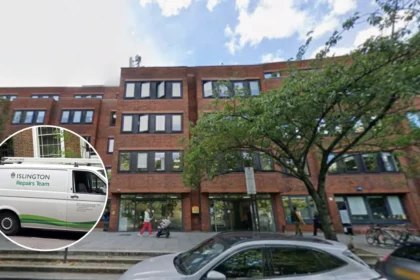
- 3. Islington Council’s Digital Rental Model
- 4. Sutton’s Fixed Grilling Stands
- What Other Hidden Hazards Are Contributing to London’s Wildfire Risk?
- How Are Authorities Preparing to Manage the Ongoing Heatwave?
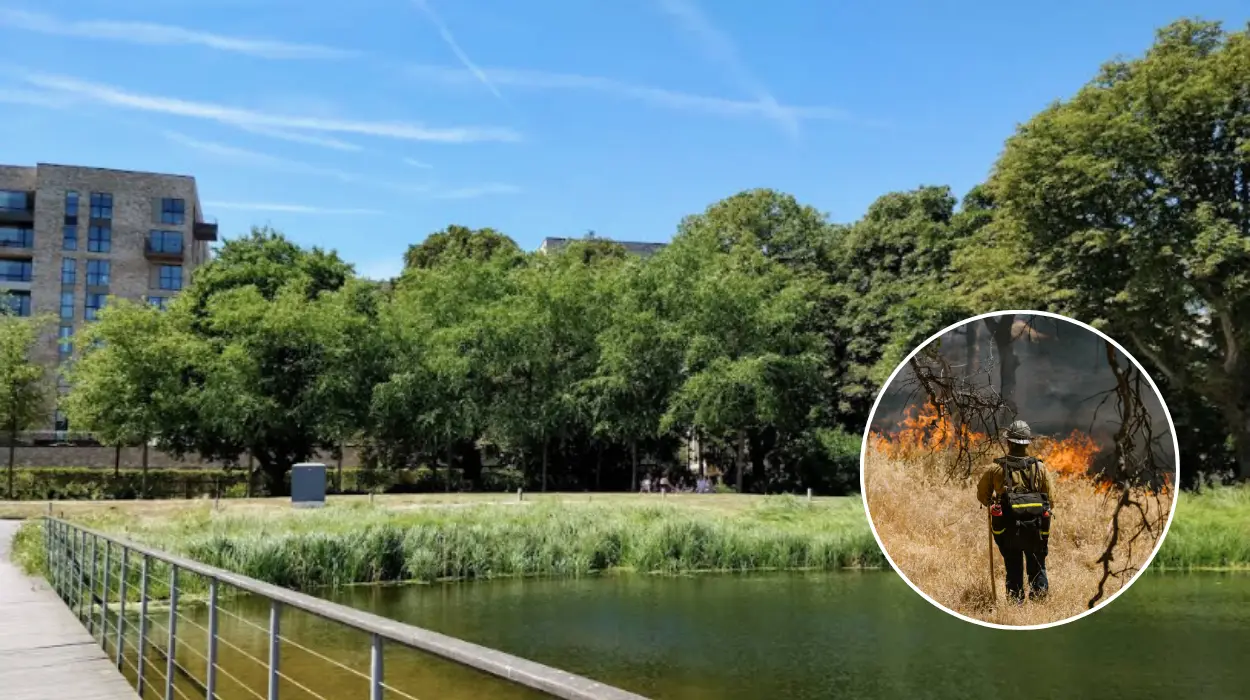
The urgency of the prevention campaign was brought into sharp focus on Friday afternoon, when a severe blaze broke out along the trackside near Stratford station in east London, severely disrupting rail travel and demonstrating the frightening speed with which open-air fires can ignite and spread under current meteorological conditions.
What Prompted the London Fire Brigade’s Extreme Wildfire Warning?
The decision to escalate the risk index came directly from emergency service analysts monitoring soil moisture deficits and vegetation dryness across Greater London. As reported by Bill Bowkett of The Standard, the LFB explicitly utilized its public communication channels to issue a stark directive ahead of a weekend where temperatures were projected to breach the 25°C (73°F) mark, accompanied by drying winds. The brigade posted a warning on X, formerly known as Twitter, stating: “There is a heightened risk of grass fires and wildfires in London today and over the coming days. Please don’t take a disposable BBQ to the park and [be] careful about how you dispose of your cigarettes and rubbish.”
The technical justification behind this operational shift was elaborated upon by Assistant Commissioner Keeley Foster of the London Fire Brigade. In an official briefing published by the City of London Corporation News, Assistant Commissioner Foster recalled the unprecedented and devastating impact of the historic 2022 wildfires across the capital, stating that “firefighters and colleagues across the Brigade demonstrated incredible bravery and determination to respond but it was an example of how firefighters are increasingly being challenged by new extremes of weather as the climate changes.”
Foster further detailed the operational lessons implemented over the last two years, indicating that the service has procured specialized response vehicles and adapted new firefighting tools, such as the “Holey Hose” system, to tackle modern climate threats. However, she emphasized that municipal preparedness must be matched by civilian prevention:
“Preparedness and prevention is essential in helping to reduce the risk to our communities to prevent grass fires. That means not having barbecues in open spaces or on balconies, throwing rubbish away safely and not leaving broken bottles or glass on the ground and disposing of cigarettes properly.”
Why Are Disposable Barbecues a Primary Target for Municipal Bans?
The mechanical properties of cheap, single-use foil barbecues make them uniquely dangerous during heatwaves. As outlined in the core safety portfolio compiled by journalists at The Standard, the LFB is actively campaigning for an outright nationwide ban on the sale and use of disposable barbecues. The primary hazard stems from smouldering ash and lightweight embers, which can be lifted out of the foil tray by a light breeze and carried onto surrounding dry grass fields, instantly starting a secondary fire yards away.
Furthermore, fire safety specialists note that the thermal properties of the ground are deeply impacted by these units. According to published guidelines from the London Fire Brigade Safety Centre, the earth directly beneath a disposable barbecue can remain searingly hot for hours after the unit has been lifted or supposedly extinguished. This hidden heat grid poses an immediate, severe burn risk to unsuspecting children, barefoot park users, and companion animals walking across the grass later in the day.
How Are London’s Royal Parks and Ancient Wildlife Affected by Public Grilling?
The environmental toll of illegal barbecuing has reached crisis levels across London’s eight historic Royal Parks, which span over 5,000 acres of highly protected crown land. Reporting on the ongoing ecological damage, a special communications dispatch from The Royal Parks charity revealed that a staggering 52 accidental fires had been recorded across their properties within a single 18-month monitoring window, with a vast majority traced directly back to illegal barbecues.
The data shows that Bushy Park—a heavily protected Site of Special Scientific Interest (SSSI)—has borne the brunt of these human-caused incidents. Michael Rowland, the Head of Park Operations at The Royal Parks, expressed immense frustration regarding the preventable nature of the destruction. In an official organizational report, Rowland noted:
“It is upsetting to witness the avoidable damage caused by accidental fires on these precious landscapes. We welcome everyone to the parks to enjoy a picnic, but please remember that BBQs are banned. Careless actions can destroy the natural features which make the parks so special.”
The physical loss extends to irreplaceable botanical structures. In a secondary warning issued via The Royal Parks Media Centre, journalists documented instances where visitors had placed barbecues directly under the canopy or against the trunks of ancient oak trees to seek shade while cooking. Because some of these trees have stood for more than 700 years, their trunks have naturally become hollow over centuries. When a fire is lit at the base, it triggers a catastrophic “chimney effect,” drawing flames upward inside the trunk. This process causes the entire ancient structure to burst into flames within minutes, completely obliterating the tree and killing all nesting wildlife inside.
The direct impact on slow-moving wildlife is equally severe. Park operational records show that previous grassland blazes, including one that quickly consumed a 100-square-metre plot in Richmond Park, left behind the charred remains of protected native fauna. Conservationists have confirmed the deaths of numerous common lizards, grass snakes, toads, frogs, smooth newts, and rare stag beetles—all of which are unable to outrun a fast-moving grass fire fueled by summer winds.
Which London Boroughs Enforce a Total Ban on Barbecues?
To understand the legal landscape across London’s highly fractured local government systems, analysts at Barratt London conducted an exhaustive, multi-borough audit by contacting all 32 individual London borough councils to clarify their Public Space Protection Orders (PSPOs) and bylaws regarding open flames.
The journalism team at Barratt London confirmed that an overwhelming majority of local authorities have instituted a zero-tolerance policy. The following structural breakdown details the official responses from prominent councils:
- Barking and Dagenham: The council confirmed that absolutely no barbecues of any nature are allowed within any of their municipal parks or green spaces.
- Barnet: Local authority regulations completely prohibit the lighting of barbecues inside any public park boundaries.
- Bexley: In an effort to protect delicate local biodiversity, the borough council has enacted a comprehensive ban on barbecues across all council-maintained green infrastructure.
- Brent: Brent Council issued an urgent plea to residents to cease all park grilling after a public bench was severely damaged and melted by a hot barbecue frame. The council warned that any breach of this local public space protection order carries an immediate £100 fixed penalty notice.
- Bromley: Following a series of acute grass fires that threatened nearby residential fences, barbecues have been entirely banned across Bromley’s park networks.
- Croydon: Barbecues are completely illegal in all Croydon parks. However, local chiefs clarified that small gazebos for family picnics are permitted at the user’s own risk, provided they do not damage the turf.
- Ealing: The west London authority stated that barbecues are entirely banned from all parks and open spaces under its management.
- Enfield: The northern borough takes an aggressive enforcement stance; local bylaws make having a barbecue an illegal act, with park patrols and police officers actively authorized to issue penalties.
- Greenwich: The Royal Borough of Greenwich completely forbids the use of a barbecue or any form of open fire across its public parks.
- Hackney: Hackney Council confirmed that barbecues are completely banned across its entire green estate, ending a historical period where spaces like London Fields allowed controlled grilling.
Where Are the Few Exceptions Where You Can Legally BBQ in London?
While a total ban blankets most of the capital, a handful of local authorities have opted to provide highly controlled, strictly monitored facilities or seasonal windows to accommodate urban residents who do not have private gardens.
According to investigative research compiled by the editorial team at Time Out London, there are a few notable exceptions where grilling remains permissible, provided users strictly adhere to local frameworks:
1. Camden Council’s Seasonal Regulation
As verified by the Barratt London council database, Camden London Borough Council permits barbecues within highly specific zones of certain parks, but only during a designated seasonal window (historically framed between April 11 and September 20). Camden requires that users utilize approved, reusable barbecue fuel or safety firelighters. Crucially, larger gatherings exceeding 20 people, or those involving gazebos and amplified music, require formal, advanced permission from the council’s events team. Within this zone, prominent spots include:
- Lincoln’s Inn Fields (Holborn): This central London public square—the largest in the capital—permits barbecues provided users employ approved, non-disposable safety equipment.
- Russell Square (Bloomsbury): Frequented by academics and tourists, this location permits outdoor cooking but explicitly bans single-use disposable units; only heavy-duty, reusable portable charcoal grills are permitted.
- Cantelowes Gardens: Situated away from central Camden crowds, this park features a dedicated zone near its skate park where portable cooking sets can be fired up safely.
- Talacre Gardens: Located near Chalk Farm station, this small green space is legally designated to allow local residents to operate small, contained cooking grills.
- Note on Waterlow Park (Highgate): While historically a premier Camden barbecue spot, council authorities implemented a complete, temporary emergency ban on all barbecues in Waterlow Park for the entirety of the 2026 summer season due to elevated ground vulnerability.
2. Southwark Council’s Electric Solution
In an attempt to balance community desires with public safety, Southwark Council restructured its approach at Burgess Park in Camberwell. As reported by the Time Out London lifestyle desk, the council removed traditional charcoal options due to extreme litter and fire risks. In their place, the council installed three modern, communal electric hotplates. These outdoor grilling facilities are entirely free to use on a first-come, first-served basis from 10:00 AM until dusk, removing open flames and glowing embers from the park entirely.
3. Islington Council’s Digital Rental Model
Following a similar philosophy, Paradise Park in Holloway completely banned coal and gas canisters but embraced digital infrastructure. According to the Time Out report, the park features specialized electric hotplates that must be booked in advance via the ‘EverGrill’ mobile application or by scanning an on-site QR code. Unlike Southwark’s free model, this utility carries a standard rental fee of £10 per hour to fund the maintenance of the electric infrastructure.
4. Sutton’s Fixed Grilling Stands
On the outer fringes of London, Sutton Borough Council allows grilling at Roundshaw Park and the adjacent Roundshaw Downs grassland. However, to keep intense heat away from dry grass roots, cooking is strictly confined to two permanently installed, elevated steel barbecue stands, requiring users to arrive early to secure the legal infrastructure.
Explore more Fire News:
London Fire Brigade Assists After Kent Fleet Fails: Folkestone 2026
70 Firefighters Battle Major Converted Flat Fire: Thornton Heath 2026
What Other Hidden Hazards Are Contributing to London’s Wildfire Risk?
While open flames from charcoal grills are the most obvious threat, civic leaders are warning that everyday trash can be just as hazardous during periods of intense sunlight. In a multi-agency alert issued via the City of London Corporation Media Board, Caroline Haines, the Chair of the City Corporation’s Natural Environment Board and West Ham Park Committee, warned that the general public often underestimates the power of discarded litter. Haines explained:
“Our parks and open spaces are a lifeline for so many communities, from City workers taking a lunchbreak, to families spending time in nature. We’ve seen how climate change has given rise to more extreme types of weather. Most wildfires in the UK are the result of human activity, and periods of hot, dry weather increase the risk of fires breaking out. Even litter, such as a carelessly discarded glass bottle, or a cigarette butt, has the potential to cause a severe fire, posing a danger to plant, animal, and human life.”
Haines strongly advised that if any member of the public spots an active grass fire, they must immediately retreat to a safe distance and dial 999 to alert emergency services, rather than attempting to stomp or extinguish the fast-moving flames themselves.
Concurrently, The Royal Parks charity re-emphasized that glass items left behind on parched fields are a major cause of accidental blazes. When left exposed on short, dry grass under direct sunlight, a clear or green glass bottle can act exactly like a magnifying lens. It focuses intense solar rays onto a single, concentrated point on the dry grass below, creating enough heat to smoulder and ignite a major fire without any human setting a match.
How Are Authorities Preparing to Manage the Ongoing Heatwave?
The response from emergency services has shifted toward active, real-time surveillance and public engagement. As detailed in the City of London Corporation emergency briefing, a massive, multi-agency training exercise was executed on Wanstead Flats in east London. Led by the London Fire Brigade, the simulation was designed to test rapid containment strategies on dry terrain, mimicking the exact conditions currently seen across the capital’s parklands.
The Hampstead Heath Constabulary—a specialized, dedicated park police force—has also altered its operational routine. Officers are conducting increased foot and vehicular patrols across iconic vantage points like Hampstead Heath to catch and stop illegal grilling before a fire can catch.
Ultimately, all public land managers across London are asking for the same simple shift in behavior: swap the grill for a basket. By choosing traditional cold sandwiches, salads, and finger foods over cooked meats, Londoners can enjoy the summer sun without risking the safety of the city’s vital green spaces.