
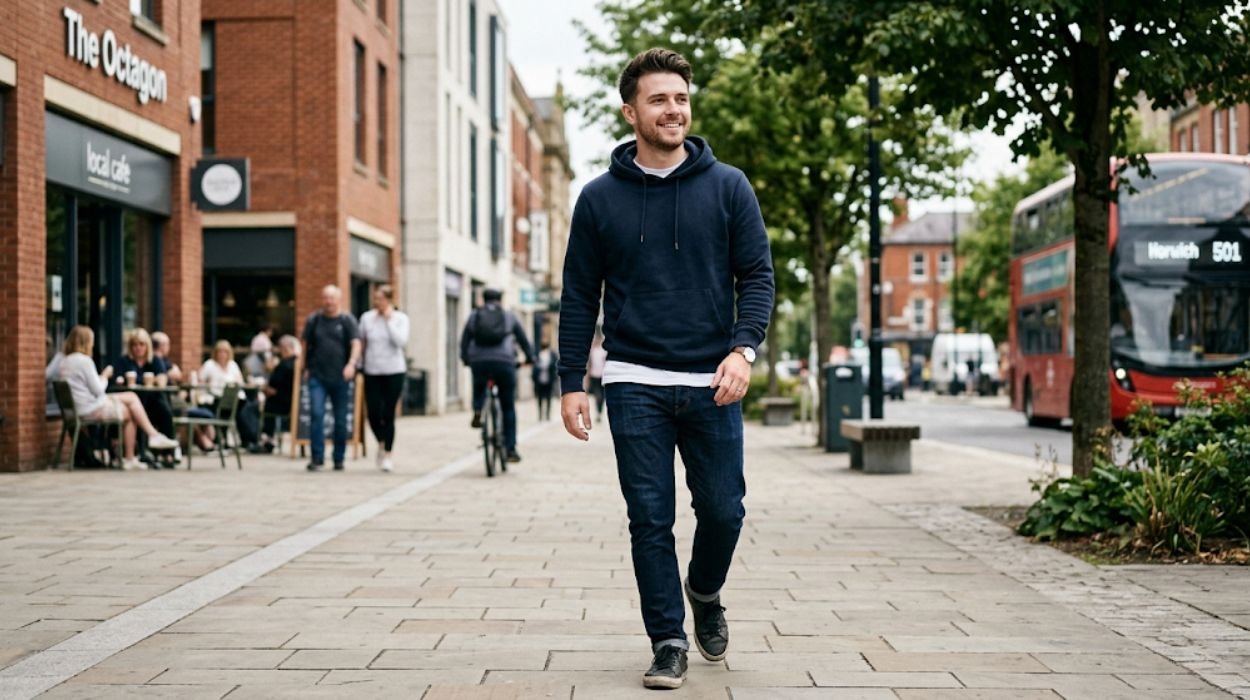
- Who are you when the cameras are off?
- What did growing up in Bolton actually give you as an actor?
- When did acting shift from interest to a career decision?
- What were the hardest measurable challenges early on?
- How do you approach building a character?
- What role changed your career trajectory?
- How do you manage performance pressure as your visibility increases?
- How often do you return to Bolton, and why does it matter?
- What advice works in real terms for aspiring actors in Bolton?
- What are your next career targets?
- Why does this story matter for audiences and brands?
At 29, Callum Hartley has already completed over 40 stage performances, appeared in six independent films, and secured two lead roles on international streaming platforms. Raised in Bolton, his career didn’t begin in elite academies or industry circles—it started in community halls, school stages, and unpaid theatre productions across Greater Manchester.
In this exclusive Bolton Today interview, Hartley shares direct insights into his journey, process, and the realities behind building a career in acting from a regional city.
Who are you when the cameras are off?
“I keep things simple. I still live part-time in Bolton and spend at least 10–12 days here every month. My family’s here, my routine is here.”
He starts his mornings without screens—running along Leverhulme Park three times a week and keeping a fixed schedule even between projects.
“I’ve learned that consistency matters more than motivation. Acting is unpredictable, so your personal life can’t be.”
What did growing up in Bolton actually give you as an actor?
“It gave me observation skills. Real people, real conversations.”
Hartley explains that his early exposure wasn’t polished theatre—it was everyday life.
“I worked in retail for nearly two years. You meet hundreds of personalities. That helped me build characters more than any textbook.”
He still records voice notes of accents and speech patterns when he visits local cafés.
When did acting shift from interest to a career decision?
“At 19, I made a decision based on numbers.”
He explains that after performing in 11 local theatre productions within two years, he tracked audience turnout and feedback.
“We averaged around 120–150 people per show. That told me there was demand, even at a small scale.”
He then invested £3,000—saved over 18 months—into professional training workshops in Manchester.
“That was the first real risk I took.”
What were the hardest measurable challenges early on?
“Financial pressure and rejection rates.”
Hartley shares that in his first year of professional auditions, he attended 63 castings.
“I booked 2 roles. That’s roughly a 3% success rate.”
He worked part-time shifts averaging 25 hours per week while auditioning.
“You need to be realistic. Talent isn’t enough—you need endurance.”
How do you approach building a character?
“I build from data, not guesswork.”
For one of his recent roles, he spent 4 weeks preparing:
-
18 hours of dialect coaching
-
12 hours studying real interviews
-
9 pages of backstory notes
“I write everything down—habits, posture, reactions. Once you define those, performance becomes instinctive.”
He avoids improvising emotional scenes without preparation.
“If you rely only on feeling, it becomes inconsistent.”
What role changed your career trajectory?
“A six-episode streaming drama last year.”
The series reached over 2.4 million viewers within its first month, according to platform data shared with cast members.
“That visibility shifted everything. I went from getting 2–3 auditions a month to 8–10.”
He also gained agency representation within three weeks of the release.
“That’s when the industry started taking me seriously.”
How do you manage performance pressure as your visibility increases?
“I track performance, not opinions.”
Hartley avoids reading public comments during active projects.
“Instead, I review my own footage. I’ll watch scenes 5–6 times and take notes.”
He focuses on measurable improvement:
-
Dialogue timing
-
Physical control
-
Emotional consistency
“That keeps it objective. Pressure comes from outside. Progress comes from inside.”
How often do you return to Bolton, and why does it matter?
“Roughly 120 days a year.”
Despite working internationally, Hartley schedules extended stays in Bolton between projects.
“It resets your perspective. In larger cities, everything moves fast. Here, you think clearly.”
He also runs two unpaid acting workshops each year for local students, each limited to 15 participants.
“I keep it small so it stays practical.”
What systems do you use to prepare for demanding roles?
“I follow a structured routine.”
For physically demanding roles, he trains 5 days a week for at least 6 weeks prior to filming. For emotionally intense roles, he limits preparation sessions to 90 minutes to avoid burnout.
“You need boundaries. I separate preparation from personal life.”
He also works with a performance coach during major productions.
“That external feedback improves accuracy.”
What advice works in real terms for aspiring actors in Bolton?
“Measure your effort.”
Hartley suggests tracking:
-
Number of auditions per month
-
Hours spent practicing
-
Skills developed quarterly
“If you’re not improving every 3 months, something needs to change.”
He also recommends starting locally.
“Your first audience doesn’t need to be global. Mine was 100 people in a hall.”
What are your next career targets?
“Two things—range and control.”
Hartley aims to complete:
-
3 different genre roles within the next 24 months
-
1 independently produced project
“I don’t want to rely only on casting opportunities. Creating your own work gives you control.”
He is currently developing a short film set in Bolton, scheduled for production next year with a projected budget of £25,000.
Why does this story matter for audiences and brands?
Callum Hartley’s journey provides a clear framework: consistent effort, measurable growth, and local grounding can lead to global opportunities. His career isn’t built on sudden exposure but on calculated steps, tracked progress, and disciplined execution.
For readers, it offers a realistic view of success. For brands, it demonstrates how structured storytelling with specific data and authentic voice—creates stronger engagement and credibility.