Shoreditch is a historic district in East London whose transformation from a medieval settlement and entertainment district into a centre of manufacturing, creative industries, street art and digital technology reflects major changes in London’s economic and cultural history. Located immediately north of the City of London, Shoreditch developed through successive periods of theatrical activity, industrial production, urban decline, artistic regeneration and technological entrepreneurship. Its modern identity as a centre for art and innovation rests on this accumulated historical infrastructure rather than on a single period of redevelopment.
- What is Shoreditch and why has its location shaped its history?
- How did Shoreditch become an important centre for Elizabethan theatre?
- How did industrialisation transform Shoreditch during the nineteenth century?
- Why was Shoreditch associated with technological innovation before the digital age?
- What caused Shoreditch’s industrial decline during the twentieth century?
- How did artists and creative industries reshape Shoreditch?
- Why did Shoreditch become a major centre for street art and contemporary culture?
- How did Silicon Roundabout turn Shoreditch into a technology hub?
- What role did historic architecture play in Shoreditch’s creative and technological growth?
- How has regeneration changed Shoreditch’s communities and economy?
- What historic landmarks and institutions preserve Shoreditch’s heritage?
- Why is Shoreditch still important to London’s future?
- How did Shoreditch become London’s thriving hub for art and innovation?
- Frequently Asked Question
The district’s surviving warehouses, workshops, theatres, streets and public institutions provide physical evidence of these changes. Historic England identifies South Shoreditch as one of the country’s most significant former concentrations of furniture manufacturing and selling, while Hackney Council recognises the area as internationally associated with creativity, innovation, street art and the technology economy.
What is Shoreditch and why has its location shaped its history?
Shoreditch is a historic East London district immediately north of the City of London, and its location between central commerce and expanding eastern neighbourhoods created the economic connections, population density and adaptable urban environment that shaped its development for centuries.
Shoreditch occupies a strategically important position on London’s historic northern approaches. Its proximity to the City of London connected the district to one of Europe’s most important commercial centres while placing it outside the City’s historic boundaries and regulatory structures.
This geographical position influenced Shoreditch throughout its history. Businesses requiring access to London’s markets could operate close to the City. Industries needing larger workshops and warehouses found space beyond the densely developed commercial core. Entertainment enterprises also benefited from locations outside stricter central jurisdictions.
Historic records show that medieval development concentrated around the parish church of St Leonard and along the routes now associated with Shoreditch High Street and Kingsland Road. Holywell Priory, an Augustinian religious institution founded during the twelfth century, formed another important element of the area’s medieval landscape.
By the eighteenth century, much of the district had been built over as London expanded. Shoreditch then became an increasingly dense urban and industrial environment. Its location beside the City remained central to its economic development.
That geographical advantage later supported several distinct economic phases. These phases included Elizabethan theatre, Victorian manufacturing and twenty-first-century technology enterprises. The same basic advantage remained consistent: Shoreditch provided close access to central London while offering building types and commercial spaces different from those available in the City’s financial core.
For cultural tourists seeking to understand how this geography remains visible in the modern district, the relationship between historic streets and contemporary creative activity is central to the area’s identity.
How did Shoreditch become an important centre for Elizabethan theatre?
Shoreditch became an important centre for Elizabethan theatre during the late sixteenth century because commercial playhouses developed outside the City of London’s jurisdiction, establishing the district as one of London’s earliest major centres for professional theatrical performance and entertainment.
Theatre provided one of Shoreditch’s earliest internationally significant cultural identities. During the Elizabethan period, London’s expanding population created a large audience for professional entertainment.
Two of England’s earliest purpose-built playhouses were associated with Shoreditch: The Theatre and the Curtain. These structures established the district as a major location in the development of English professional drama.
The Theatre was built in 1576 by James Burbage. It is widely recognised as the first successful permanent purpose-built public playhouse in England. The Curtain followed in 1577 and operated as another important venue within Shoreditch’s theatrical landscape.
These venues existed before the construction of the Globe Theatre on the south bank of the River Thames. Their history demonstrates that Shoreditch played an important role in London’s theatrical development before Shakespeare’s later association with the Globe.
The district’s position outside the City was significant. London authorities often regarded theatrical activity with suspicion because of concerns about public order, crowds and disease. Locations beyond the City’s direct jurisdiction provided opportunities for entertainment businesses.
This pattern established an important historical principle in Shoreditch’s development. Activities that required experimental spaces often found room on the edges of established institutions. Elizabethan theatre was one early example. Later creative industries and technology companies followed different economic circumstances but also benefited from Shoreditch’s position outside London’s traditional commercial core.
Hackney Council has identified Shoreditch’s theatrical heritage as an important part of its contemporary identity, including the rediscovery of the Curtain Theatre and its development as a heritage destination.
The surviving archaeological and historical record therefore connects modern Shoreditch’s cultural economy with a much older tradition of artistic production.
How did industrialisation transform Shoreditch during the nineteenth century?
Industrialisation transformed Shoreditch into a densely populated manufacturing district during the nineteenth century, concentrating furniture production, printing and other trades in workshops and warehouses whose buildings later provided the physical infrastructure for creative businesses, artists and technology companies.
Industrialisation fundamentally changed Shoreditch’s built environment and population.
The furniture trade moved into Shoreditch during the early nineteenth century. Access to timber supplies and proximity to London’s commercial markets helped establish the industry. Hackney’s industrial history records the movement of furniture production into Shoreditch as part of the wider industrial expansion of East London.
From the mid-nineteenth century until the mid-twentieth century, South Shoreditch became the principal centre of Britain’s furniture manufacturing and wholesale trade. Manufacturers produced furniture for retailers in London’s West End, provincial cities and export markets across the British Empire.
This industrial economy created a distinctive architectural landscape.
Workshops allowed small-scale manufacturing. Warehouses stored materials and finished goods. Showrooms connected manufacturers with wholesale and retail customers. The concentration of these interconnected building types produced a specialised urban environment.
Charlotte Road provides a surviving example. Historic England records that the workshops and warehouses at 43–49 Charlotte Road were developed between 1877 and 1881 for furniture-related commercial activity. The buildings represent the industrial architecture that later became valuable to new creative and commercial users.
Shoreditch was also densely populated. The Shoreditch Town Hall historical timeline records a population of 109,257 in 1851 and a peak of 129,364 in 1861. These figures demonstrate the intense concentration of people within a relatively small urban district during Victorian London.
Industrial Shoreditch was therefore not simply a collection of factories. It was a complete urban economy involving workers, employers, suppliers, traders, transport systems and local institutions.
The buildings created during this period later became one of the most important foundations of Shoreditch’s creative revival.
Why was Shoreditch associated with technological innovation before the digital age?
Shoreditch developed a technological reputation long before the internet because nineteenth-century local government and industry invested in modern infrastructure, including innovative systems for electricity generation, waste disposal and urban services supporting its dense population and manufacturing economy.
Innovation did not begin in Shoreditch with digital technology.
During the nineteenth century, the district faced practical problems created by population density, industrial production and rapid urban growth. Local government therefore became involved in infrastructure and technological systems.
The Metropolitan Management Act of 1855 gave London vestries expanded responsibilities and powers. In Shoreditch, this contributed to a period of local administrative reform and investment. The Shoreditch Town Hall historical record describes the later borough as an important site of municipal innovation.
A major example emerged in 1897. Shoreditch combined refuse disposal and electricity generation within an innovative municipal undertaking. The system reflected the area’s industrial requirements and demonstrated how waste and energy infrastructure could be connected.
The Metropolitan Borough of Shoreditch was created in 1900 and adopted the motto “More Light, More Power.” The phrase reflected the importance of electricity and technological infrastructure to the district’s late Victorian and Edwardian identity.
This history is important because it corrects the idea that Shoreditch’s association with innovation began during the technology boom of the 2000s.
The technologies changed. The economic principle remained familiar. Shoreditch repeatedly developed industries requiring specialised knowledge, adaptable infrastructure and access to London’s markets.
Victorian municipal engineering represented one stage of this history. Digital technology represented a later stage.
What caused Shoreditch’s industrial decline during the twentieth century?
Shoreditch’s industrial economy declined during the twentieth century as manufacturing changed and furniture workshops closed, leaving underused commercial buildings that became comparatively affordable spaces for artists, designers and emerging creative businesses from the late twentieth century onward.
The furniture industry that had dominated South Shoreditch for almost a century entered decline during the later twentieth century.
Historic England identifies the decline of the furniture trade during the 1980s as a major turning point. Buildings once used for manufacturing, wholesale selling and storage lost their original economic functions.
Industrial decline produced serious economic consequences. Traditional employment disappeared, and established commercial networks weakened.
At the same time, the physical legacy of industry remained.
Former workshops retained large floor areas. Warehouses contained open interiors. Industrial buildings often provided flexible spaces capable of adaptation. These characteristics became increasingly important when artists and small creative companies sought affordable places to work.
The London Museum records that Shoreditch underwent enormous change from the 1980s as traditional workshops closed and artists and creative companies moved into the area because of comparatively cheap rents.
This process transformed industrial decline into a new form of urban reuse.
The relationship between old buildings and new economic activity became one of the defining mechanisms behind Shoreditch’s regeneration. The district did not require an entirely new cityscape to support creative industries. Existing structures could be converted.
Former industrial architecture therefore became an economic resource.
How did artists and creative industries reshape Shoreditch?
Artists and creative businesses reshaped Shoreditch from the late twentieth century by occupying former industrial spaces, establishing studios, galleries, design businesses and cultural venues that converted the district’s manufacturing architecture into infrastructure for London’s expanding creative economy.
The arrival of artists represented a major stage in Shoreditch’s transformation.
Creative workers often require flexible workspace rather than conventional offices. Former industrial buildings provided large interiors, robust construction and adaptable layouts.
Shoreditch’s warehouses and workshops suited these requirements.
The area’s comparatively low costs during the period of industrial decline also created opportunities for artists and independent businesses. Cultural activity expanded through studios, galleries, performance spaces, fashion enterprises and design companies.
This transformation was connected to broader changes in London’s economy. Manufacturing employment declined while cultural production, media, design and professional services expanded.
Shoreditch became one of the places where these economic changes became visible in the built environment.
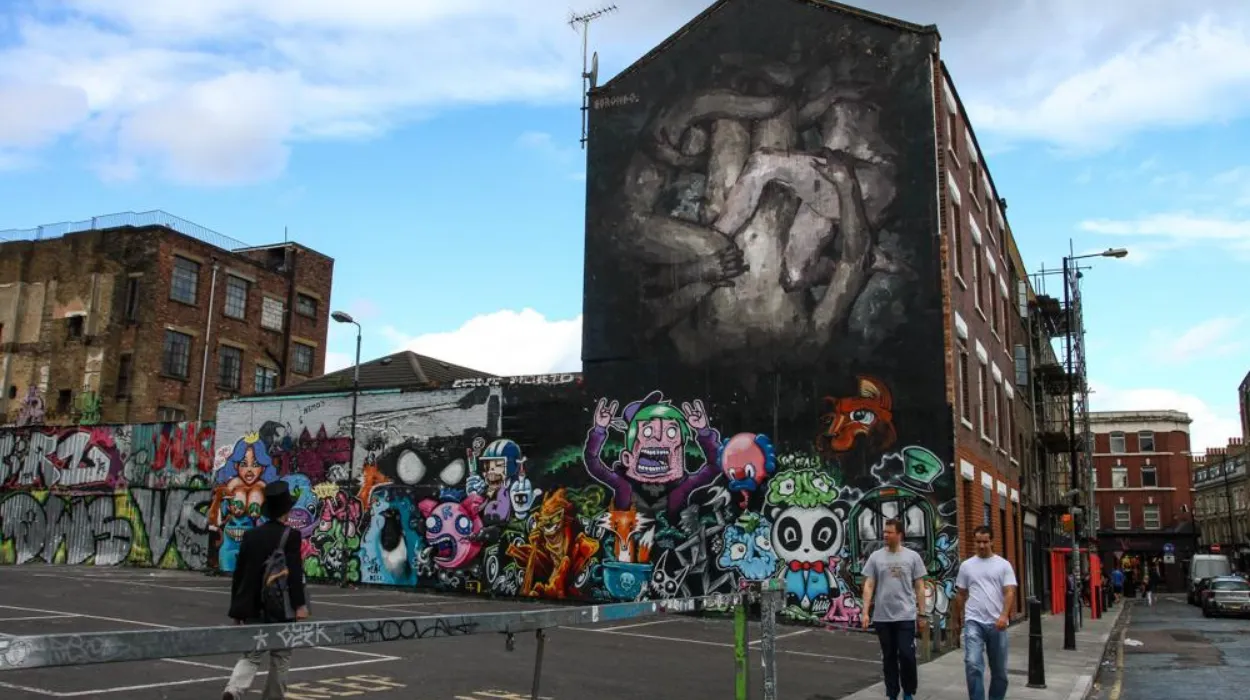
Street art also became a defining feature of the district’s public identity. Walls, shutters and other visible urban surfaces became spaces for artistic expression. This public art helped distinguish Shoreditch from London’s more formal cultural institutions.
Hackney Council now identifies iconic street art as part of Shoreditch’s internationally recognised creative character.
The area’s cultural transformation also affected its reputation beyond London. Shoreditch became associated with independent fashion, contemporary art, nightlife, design and experimental business culture.
For visitors who want to see how these historical layers appear in the district today, consult our comprehensive [Explore Shoreditch’s Best Street Art, Markets, and Creative Spaces Like a Local] for itineraries and visiting parameters.
The creative economy therefore changed both the function and perception of Shoreditch.
Why did Shoreditch become a major centre for street art and contemporary culture?
Shoreditch became a major centre for street art and contemporary culture because its creative population, industrial architecture, independent businesses and accessible public spaces created an urban environment where visual art, design, fashion and cultural experimentation became highly visible.
Street art is one of Shoreditch’s most recognisable modern cultural features.
Unlike museum-based art, street art operates within public urban space. It interacts directly with buildings, streets and changing neighbourhoods.
Shoreditch’s industrial architecture provided extensive surfaces and visually distinctive settings. Brick warehouses, side streets and commercial buildings became part of the visual environment.
The growth of galleries, studios and creative businesses also produced an audience familiar with contemporary visual culture.
Street art therefore developed within a wider cultural ecosystem rather than independently.
Fashion and design businesses contributed additional layers to Shoreditch’s creative identity. Independent retailers and creative enterprises used the district’s former industrial spaces, reinforcing the relationship between architecture and cultural production.
Hackney Council describes Shoreditch as globally recognised for creativity and innovation, citing street art, independent businesses and a substantial cultural economy among its defining characteristics.
The significance of this development extends beyond tourism.
Public art helped establish Shoreditch as a recognisable cultural brand. The district became associated with visual experimentation and contemporary urban culture.
That reputation later helped attract technology companies seeking locations connected with creativity and young professional talent.
How did Silicon Roundabout turn Shoreditch into a technology hub?
Silicon Roundabout helped establish Shoreditch as a technology hub during the early twenty-first century by concentrating digital start-ups around Old Street, where affordable workspace, creative industries, investment networks and access to central London supported rapid technological entrepreneurship.
The modern technology phase of Shoreditch developed around Old Street and the junction popularly known as Silicon Roundabout.
Digital companies began clustering in East London during the 2000s. Shoreditch and neighbouring areas offered workspace that was more accessible to start-ups than many established central business districts.
The existing creative economy was important.
Technology businesses increasingly required skills associated with design, digital media, branding and user experience. Shoreditch already contained networks of creative professionals and independent enterprises.
This overlap created an economic connection between art and technology.
The term Tech City became associated with the wider East London technology cluster. Government policy and private investment later increased attention on the area.
Tech City describes the original cluster around Silicon Roundabout as expanding beyond Shoreditch into a wider community of technology and digital creative companies.
Hackney Council described Shoreditch as the home of Tech City and an important centre where creative technology, arts and sciences intersect. In 2017, the council reported that the wider Shoreditch area supported more than 40,000 jobs across more than 4,000 businesses, alongside more than 150 cultural venues.
These figures demonstrate the scale of Shoreditch’s transformation from a former manufacturing district into a mixed creative and commercial economy.
Technology companies did not replace Shoreditch’s cultural identity. Instead, digital businesses became another layer within an existing ecosystem.
What role did historic architecture play in Shoreditch’s creative and technological growth?
Historic architecture played a central role in Shoreditch’s growth because former furniture factories, warehouses and workshops supplied flexible commercial spaces that artists, designers, media companies and technology businesses adapted for modern economic uses while preserving important elements of industrial character.
Architecture connected Shoreditch’s industrial past with its modern economy.
The furniture trade created specialised buildings between the nineteenth and twentieth centuries. These structures were designed for production, storage, display and commercial exchange.
When the original industries declined, many buildings remained.
Historic England records that former furniture-industry buildings have been adapted for offices, restaurants, bars and live-work uses. This process of adaptive reuse preserved elements of the area’s historic urban structure while allowing economic functions to change.
South Shoreditch’s architectural importance has received formal recognition.
Hackney Council explains that the South Shoreditch Conservation Area reflects the area’s historic association with furniture and printing industries. Many surviving buildings and streets originated from, or were shaped by, these trades.
Conservation status therefore performs an important function.
It recognises that historic buildings contribute to local identity. It also provides a planning framework for managing change.
Shoreditch demonstrates how industrial heritage can support a new economy. Old buildings are not simply remnants of closed industries. Their form, location and adaptability can influence later patterns of economic development.
How has regeneration changed Shoreditch’s communities and economy?
Regeneration transformed Shoreditch into a globally recognised commercial and cultural district, increasing employment and investment while creating intense competition for workspace and raising concerns about affordability, displacement and the preservation of the neighbourhood’s historic character and diversity.
Shoreditch’s economic success has produced significant development pressure.
The district’s creative reputation attracted investment. Technology companies expanded. Major businesses sought locations close to London’s growing digital economy.
Hackney Council states that Shoreditch’s creative, cultural and commercially affordable character originally attracted technology start-ups, followed by larger corporations seeking access to the area’s talent and business networks.
This success changed property values.
Affordable workspace became increasingly difficult to find. Buildings that had supported small creative businesses gained higher commercial value.
Hackney’s planning documents identify rising rents and competition for space as central challenges in managing Shoreditch’s future. The council’s Future Shoreditch planning framework was designed to support economic growth while protecting urban character and community interests.
This creates a fundamental preservation question.
The characteristics that attracted artists and start-ups included affordable space, independent businesses and adaptable historic buildings. Rising costs can threaten those same conditions.
The future of Shoreditch therefore depends on managing growth rather than simply increasing development.
What historic landmarks and institutions preserve Shoreditch’s heritage?
Shoreditch’s heritage survives through conservation areas, historic industrial buildings, theatrical archaeology, museums, archives and civic institutions that preserve evidence of medieval settlement, Elizabethan entertainment, Victorian manufacturing and the communities that shaped the district across successive centuries.
Preservation in Shoreditch takes several forms.
The South Shoreditch Conservation Area protects and manages an important concentration of historic industrial and commercial buildings. Its surviving streets provide evidence of the furniture and printing industries that once defined the local economy.
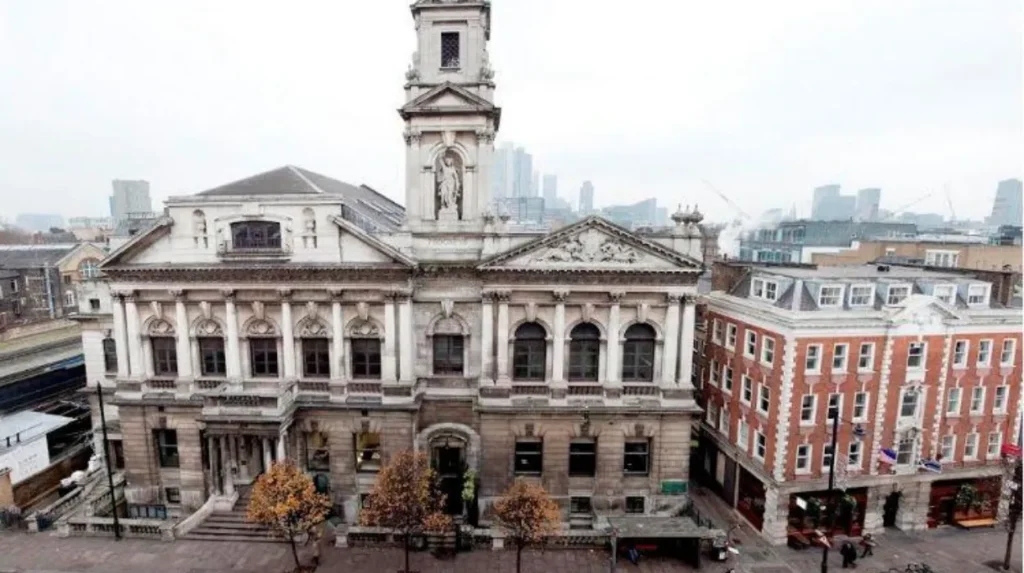
Shoreditch Town Hall preserves another important element of local history. The building and its historical records document the development of local government, public events and municipal innovation.
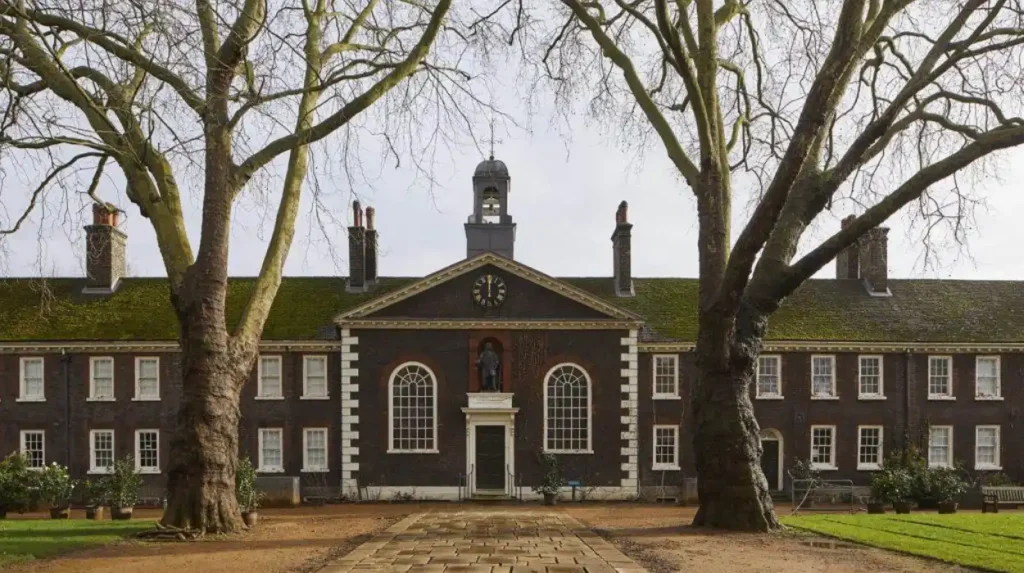
The Museum of the Home, located nearby in historic almshouses built in 1714, provides another connection to the social and design history of the wider Shoreditch and Hoxton area. The building became a museum in 1914 after the London County Council acquired the site.
Hackney Archives preserves official records connected with the historic metropolitan boroughs of Hackney, Shoreditch and Stoke Newington. Its collections include records from local government, businesses, organisations and individuals. The archive’s oldest record dates from 1356.
These resources are particularly valuable for historians, educators and genealogical researchers.
They provide evidence beyond famous landmarks. Local records can document businesses, institutions, families and communities that contributed to Shoreditch’s development.
Why is Shoreditch still important to London’s future?
Shoreditch remains important to London’s future because it demonstrates how historic industrial districts can support new cultural and technological economies, while also showing why affordable workspace, heritage protection and community diversity remain essential to long-term urban innovation.
Shoreditch represents a concentrated example of London’s wider economic transformation.
Its history includes medieval religious institutions, Elizabethan theatres, Victorian manufacturing, municipal engineering, industrial decline, artistic regeneration and digital technology.
These historical phases did not disappear completely when new industries arrived.
Industrial buildings remain part of the urban landscape. Theatre archaeology connects the district with the origins of English professional drama. Archives preserve records of former communities. Street art and digital companies represent contemporary layers of a much older urban history.
Hackney Council continues to describe Shoreditch as a district shaped by diverse communities, cultural heritage and a vibrant economy.
Its future historical significance will depend on how London manages the relationship between development and preservation.
Innovation requires more than new buildings and technology investment. Shoreditch’s history shows the importance of flexible space, specialised skills, cultural networks and connections between different industries.
Art and technology developed together in Shoreditch because the district already possessed an environment shaped by centuries of adaptation.
How did Shoreditch become London’s thriving hub for art and innovation?
Shoreditch became London’s thriving hub for art and innovation through centuries of economic adaptation, evolving from medieval settlement and Elizabethan theatre into Victorian manufacturing, creative regeneration and digital enterprise while repeatedly reusing its location, buildings and cultural networks for new purposes.
The transformation of Shoreditch followed a long historical process.
Its location north of the City connected the district to London’s commercial economy. Elizabethan playhouses established an early cultural identity. Industrialisation created specialised manufacturing networks and distinctive architecture.
The decline of furniture manufacturing created vacant and affordable spaces. Artists and creative businesses reused those spaces during the late twentieth century. Their presence established Shoreditch as a centre for contemporary culture.
Technology companies later entered an environment already associated with creativity, independent enterprise and flexible workspaces.
This sequence explains why Shoreditch became internationally recognised as a centre for both art and innovation.
The district’s modern economy is rooted in its historical geography and architecture.
Its future will continue to depend on the same central challenge that has shaped recent decades: preserving the conditions that allow new cultural and economic activity to develop while protecting the historic buildings and communities that created Shoreditch’s distinctive identity.
For historians, cultural tourists and educators, Shoreditch provides a clear record of London’s continuing transformation. Its streets demonstrate how one urban district can change functions repeatedly while retaining evidence of the people, industries and institutions that shaped every stage of its history.
Frequently Asked Question
What is Shoreditch famous for?
Shoreditch is famous for its street art, creative industries, independent businesses, historic theatres, industrial architecture and technology sector around Old Street’s Silicon Roundabout. Its history connects Elizabethan entertainment with modern art, design and digital innovation.