Key Points
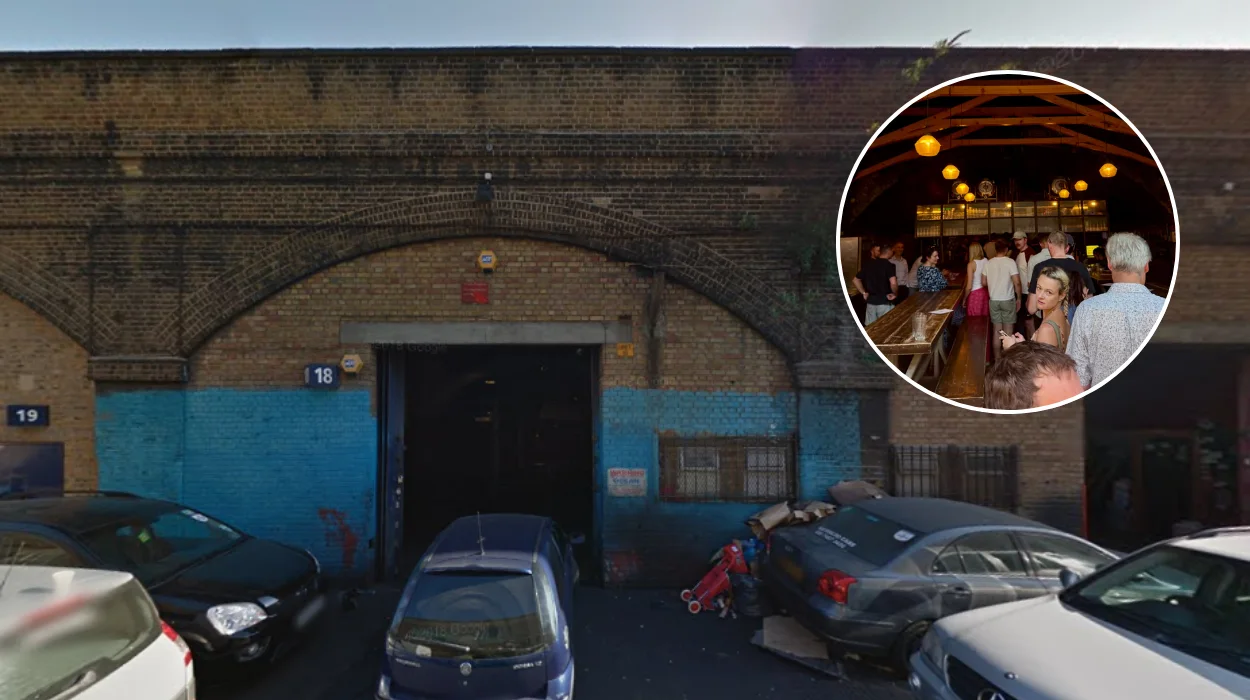
- The Problem: At the Hackney Church Brew Co on Bohemia Place in East London, there was a continuous problem of people queuing for service, making a line that stretched all the way halfway through the taproom, behaving like a post office when the whole length of the serving counter was available.
- The Action Taken: The management and employees made use of instructions through posters, gentle encouragements, and even shouted “please stop queuing” to manage lines that spilled outside into the streets.
- The Social Media Appeal: The brewery posted a comprehensive public service announcement on their Facebook account stating that a pub is not a post office and that customers ought to make use of the whole bar and let the staff, who are experienced, manage who is next.
- The Results: As a result of extensive media coverage and debate on the social media platform, customers heeded their appeal on the next Thursday service, which led to improved services and efficiency and increased by 25 percent the like-for-like sales.
London (Extra London News) August 25, 2026 — In an era where British politeness and post-pandemic habits collide in unexpected ways, a popular East London brewery has managed to turn a cultural quirk into a commercial triumph. Hackney Church Brew Co, situated on Bohemia Place, reported a significant business boom after launching a frank and humorous campaign urging patrons to abandon their deeply ingrained habit of forming single-file queues at the bar. The establishment, which found its bar space rendered redundant by lines snaking halfway across the taproom and out onto the street, took drastic measures to restore traditional pub etiquette—a move that ultimately resulted in a 25 per cent surge in like-for-like sales.
Why did a London brewery have to beg customers to stop queuing?
The unusual operational headache came to light when the management team at Hackney Church Brew Co noticed a rigid adherence to single-file queuing among their clientele. As reported by senior multimedia journalist Ayokunle Oluwalana of MyLondon, Brits have long held a global reputation for their love of a good queue, but this national pastime was creating an administrative bottleneck where it mattered least.
Detailing the frustration on social media, the brewery posted a lengthy public statement. As documented by MyLondon, Hackney Church Brew Co wrote on Facebook:
“Please stop queuing at the bar. We need to talk. You love our beer. We love you for loving our beer. You especially love our beer when it’s £3.50 a pint every Thursday. And frankly, who can blame you? But there’s a problem. WHY ARE YOU ALL QUEUING SINGLE FILE AT THE BAR?!……. A BAR IS NOT A POST OFFICE. You do not need to form one enormous, beautifully polite British queue stretching halfway across the taproom while four members of staff stare forlornly at 15 feet of completely empty bar.”
According to further insights shared by Hamish Glenn, managing director of Hackney Church Brew Co, writing in an opinion piece for Broadsheet, the team initially exhausted multiple methods to break the habit. Glenn stated that
“we tried signs, we tried politely encouraging people, we tried instructions, and we may even have resorted to the occasional bit of shouting.”
Staff frequently found themselves shouting “please stop queuing” directly to lines of customers that extended so far out that they formed physical obstructions outside the venue on the street.
Explore more Hackney News:
Well Street Stabbing: Hackney Attack Manhunt 2026
Cafe Kowloon Review: Inside Hackney’s Modern Cantonese Hotspot Hackney 2026
How does single-file queuing ruin the traditional pub experience?
To understand why the brewery took such a firm stance, industry experts and establishment owners point out the stark contrast between modern linear queuing and traditional British pub architecture. Pubs across the United Kingdom are structurally designed with elongated bars meant to accommodate crowds spread out along their entire width.
As explained by Hamish Glenn of Broadsheet, when customers form a single-file queue stretching away from a counter that features 20 feet or more of usable serving space, the vast majority of that counter space—along with several members of staff standing behind it—becomes entirely redundant. Glenn elaborated on the operational mechanics, stating:
“A single-file queue takes that beautifully simple system and turns a 20-foot bar into a one-person checkout. Service slows down, customers spend longer waiting, staff serve fewer people, and most importantly, everyone spends less time doing the thing they actually came to the pub to do: sitting with their mates and enjoying a pint.”
Ayokunle Oluwalana of MyLondon noted that the brewery’s public service announcement questioned whether this phenomenon stemmed from lingering post-Covid habits, an overextension of British politeness, or newer behavioral patterns among younger generations like Gen Z. Regardless of its origin, the brewery urged patrons to revert to how pubs have functioned for generations. As outlined in their original social media broadcast quoted by MyLondon:
“Here’s how pubs have worked for approximately forever: Use the whole bar. If there’s space at the bar, stand there. If the bar is full, stand behind someone. Catch the bartender’s eye with a nod, a smile, a wink or an appropriately demure little wave. We’ll work out who’s next. That’s literally our job.”
What was the public reaction to the pub’s controversial plea?
The brewery’s candid call-out sparked immediate online debate, dividing pub-goers between defenders of orderly lines and veterans of traditional pub culture. While a secondary poll reported by MyLondon suggested that a portion of the British public paradoxically claims a preference for waiting in single file over traditional crowding, the sentiment inside digital forums heavily favored the brewery’s stance.
As highlighted by MyLondon, patrons flooded the brewery’s social media pages with supportive commentary. One supportive customer wrote, as cited by MyLondon:
“Any time I’ve been in a pub where this is happening I just walk right past the queue to the bar and I always get served. If people complain just say I’ve just shown you how a bar works, you’re welcome.”
Another chimed in:
“Fight the good fight, people. Appreciate you calling this out. British bars are built to spread along; it’s not the Post Office.”
Hamish Glenn of Broadsheet noted that the organic amplification of the story through regional news and lifestyle titles helped carry the message far beyond their immediate local community. Because the issue struck a universal chord with hospitality workers and pub patrons across London, the digital discourse successfully prepared the ground for a behavioral shift inside the taproom.
Did the anti-queueing campaign actually boost business profits?
The ultimate test of the brewery’s campaign arrived on the following Thursday—traditionally a busy night for the venue due to discounted promotions. According to management, the results exceeded all expectations.
Writing in Broadsheet, Hamish Glenn described the turning point of the experiment: “When last Thursday night arrived, they actually listened. For the first time in what felt like forever, our bar looked like a pub bar again. People spread themselves along its full length. Staff served multiple customers simultaneously. Drinks moved faster. The enormous snake of people stretching into the room disappeared.”
Crucially, this operational efficiency translated directly into financial growth. Glenn revealed that the venue saw a remarkable “25 per cent increase in like-for-like sales compared with the previous week.” Clarifying the economics behind this jump, Glenn emphasized that the boost was not driven by an influx of new bodies through the doors, explaining:
“We had roughly the same number of patrons, but the average spend per head increased. In other words, when people spent less time queueing for drinks, they apparently bought more drinks.”
While management acknowledges that a single Thursday evening does not constitute a permanent sociological study, the immediate correlation between dismantling the single-file line and optimizing staff-customer interaction has provided strong validation. As Hackney Church Brew Co continues to monitor taproom behavior, the message to incoming punters remains clear: leave the post office mentality at the door, spread out along the counter, and let the informal human algorithm of traditional pub service take over.