Key Points:
- Highest Housing Target: Lord Sadiq Khan’s draft London Plan sets Barnet the highest housing target in the capital, marking a massive 38% increase compared to the 2021-2031 target.
- Green Belt Release: The draft plan expects Barnet to build 7,000 housing units on its Green Belt, designating areas like Mill Hill and Chipping Barnet as “Green Belt Broad Locations for Growth.”
- Total Housing Units: Barnet is mandated to construct 32,730 housing units over the ten years spanning from 2028 to 2038.
- Urbanisation Concerns: Critics argue the plan will push for high-density “site optimisation,” resulting in midrise buildings and flats rather than family homes, potentially increasing the borough’s population by nearly a quarter without matching infrastructure upgrades.
- Unequal Treatment Across Boroughs: As reported by Cllr Josh Mastin-Lee and Cllr Shimon Ryde of Barnet Post, underperforming boroughs such as Lewisham, Greenwich, and Barking & Dagenham have received reduced or static targets, effectively passing their unfulfilled quotas onto Barnet despite Barnet’s high historical delivery rate.
- Call for Action: Local councillors are urging residents to participate in the consultation process closing in mid-October, demanding an extension due to the Summer and Jewish High Holy days.
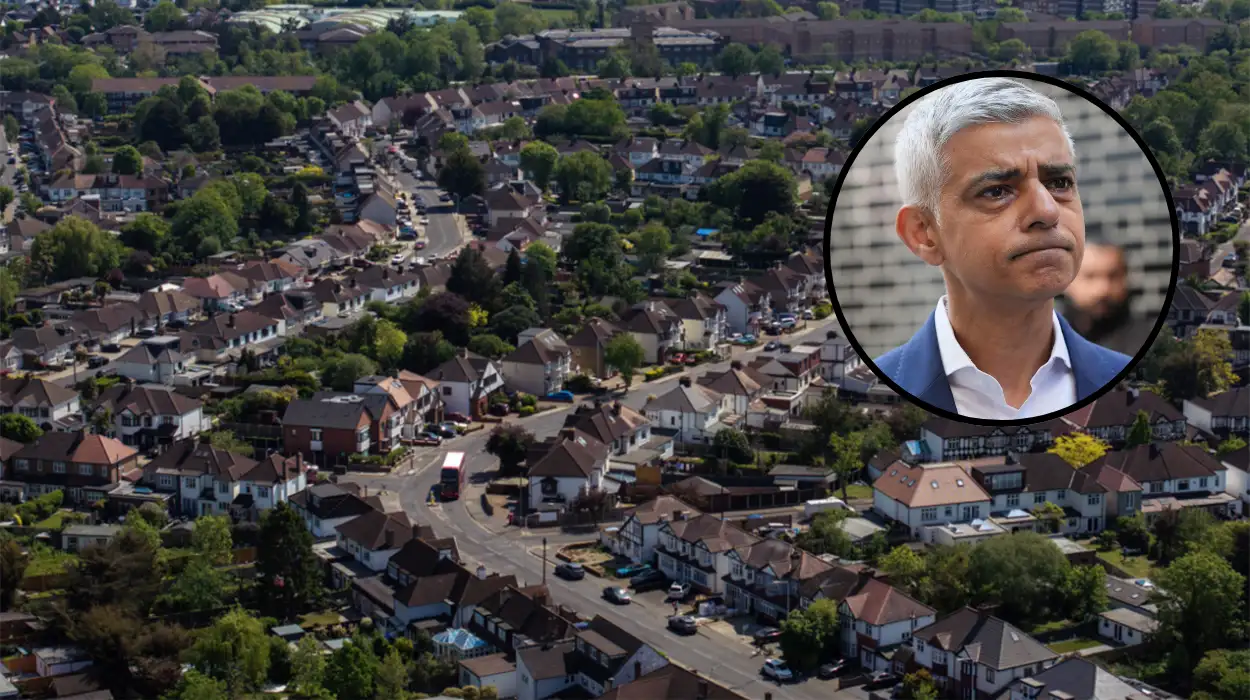
London (Extra London News) August 22, 2026 – The London borough of Barnet faces a profound transformation that threatens its historical suburban character, following the release of Mayor Sadiq Khan’s draft new London Plan for the 2028–2038 decade. The newly published blueprint assigns Barnet the highest housing target across the entire capital—mandating the delivery of 32,730 units, including thousands built directly on protected Green Belt land. Local conservative politicians and community advocates have vehemently criticized the policy, arguing that Barnet is being penalized for its past housing delivery success while underperforming boroughs are let off the hook.
What Does the Draft London Plan Entail for Barnet?
The draft London Plan, which outlines housing and spatial development policies across the capital for the next ten years, introduces sweeping changes that could completely reshape the architecture and population density of Barnet. According to documentation reviewed by local officials, the borough’s housing target will escalate by an unprecedented 38% compared to the 2021–2031 allocation.
As detailed by Cllr Josh Mastin-Lee and Cllr Shimon Ryde of Barnet Post, the strategy relies heavily on “site optimisation,” a planning mechanism designed to maximize the density of residential plots. This policy shift means that future developments are likely to lean heavily toward apartment blocks rather than traditional houses, fundamentally altering the suburban identity that has defined Barnet for generations. Furthermore, the minimum definition of a “tall building” is slated to rise from six to ten stories, while a new “Midrise” concept facilitates greater structural density throughout suburban neighborhoods.
Explore more Barnet News:
Cyprus Road Residential Redevelopment Plans Submitted to Barnet Council, Finchley 2026
Barnet Council Faces Record £113.5m Budget Deficit in London 2028
Why Are Local Councillors Labeling the Policy Unjust?
The allocation of these inflated targets has sparked fierce political backlash, with local representatives questioning the fairness of the methodology used by City Hall. Under the current London Plan, Barnet has ranked as the fourth-highest housing target holder in London and has successfully met expectations, driven largely by massive regeneration projects in areas like Brent Cross, Colindale, and West Hendon that exhausted most major brownfield sites.
As reported by Cllr Josh Mastin-Lee and Cllr Shimon Ryde of Barnet Post, other London boroughs delivered only a fraction of their assigned goals during the 2021–2024 window. For instance, Lewisham delivered a mere 23% of its target, Greenwich reached 39%, and Barking & Dagenham achieved 59%. Yet, under the new draft plan, Lewisham’s target falls by 16%, Greenwich drops by 1%, and Barking & Dagenham sees a massive 50% reduction.
Expressing deep frustration over these discrepancies, Cllr Josh Mastin-Lee and Cllr Shimon Ryde of Barnet Post stated that
“what is Barnet’s reward for its own Herculean efforts? It is a significantly higher housing target which consumes our green belt to save the Mayor of London’s blushes. Instead of marshalling underperforming London boroughs to do their bit, the mayor has instead dumped the unmet targets on Barnet. No good deed goes unpunished.”
How Will the Green Belt Be Impacted by the Proposals?
One of the most contentious elements of the draft London Plan is the requirement for Barnet to construct approximately 7,000 homes on its Green Belt land. The document officially designates Mill Hill and Chipping Barnet as “Green Belt Broad Locations for Growth,” placing local green spaces directly in the path of potential development.
Critics argue this directly undermines local planning protections and ignores the explicit promises made by political parties during recent local elections. As noted by Cllr Josh Mastin-Lee and Cllr Shimon Ryde of Barnet Post,
“in May’s elections, the Conservative and Labour manifestos both promised to protect Barnet’s green belt. Voters entrusted their councillors with a duty of stewardship over Barnet’s precious heritage as a leafy, neighbourly suburb of streets, parks and green fields.”
The proposed urban expansion also introduces a new Sustainable Access Measure, or “SAM,” which replaces previous Public Transport Accessibility Levels (PTAL). Historically, PTAL constraints helped prevent high-density development away from primary transit hubs. Removing these barriers, combined with Green Belt release, is predicted to strain local infrastructure severely. Cllr Josh Mastin-Lee and Cllr Shimon Ryde of Barnet Post warned that the plan risks introducing “Zone 1 density with Zone 6 services,” potentially expanding the borough’s population by nearly a quarter within ten years without any matching investment in local social or transport facilities.
What Steps Are Being Taken to Fight the Draft Plan?
In response to the publication of the draft guidelines, community leaders and cross-party political groups are mobilizing a coordinated defense to challenge the mandates before they are finalized. Because the current public consultation window overlaps with the summer holiday period and the Jewish High Holy days, local representatives are actively demanding an extension from the Mayor of London to ensure residents have adequate time to review and respond.
At the municipal level, Conservative and Labour council members are collaborating alongside planning officers to formulate a unified, formal council response. Parallel discussions are also underway with Conservative members of the London Assembly to press City Hall to view suburban boroughs as collaborative partners rather than convenient reservoirs for unfulfilled quotas.
Evoking a literary metaphor regarding political fairness, Cllr Josh Mastin-Lee and Cllr Shimon Ryde of Barnet Post emphasized that
“Barnet must not be ‘Boxer’ in Sadiq Khan’s Animal Farm,”
urging local residents, community groups, and neighborhood associations to submit formal objections directly to the consultation portal at londonplan@london.gov.uk before the mid-October deadline.