Soho is one of London’s most historically layered districts. Its present identity combines restaurants, jazz clubs, theatres, bars, cafés, independent businesses, Chinatown, LGBTQ+ heritage, and streets associated with British popular music. The area sits within the West End of the City of Westminster and has developed continuously since the late seventeenth century.
- What makes Soho historically important for food, music, and nightlife?
- How did Soho develop from fields into a West End entertainment district?
- Where can visitors explore Soho’s historic food culture?
- Which historic music venues and streets should music lovers explore in Soho?
- Why are Chinatown and Gerrard Street important for Soho nightlife?
- How did Carnaby Street influence Soho’s food, music, and popular culture?
- Which historic places should visitors include in a Soho heritage itinerary?
- How is Soho’s heritage protected while its nightlife continues to change?
- Frequently Asked Question
For visitors interested in food, music, and nightlife, Soho offers more than entertainment. Its streets preserve evidence of migration, religious change, commercial expansion, theatre development, post-war popular culture, and changing attitudes towards leisure. The modern district is therefore best understood through its historical development.
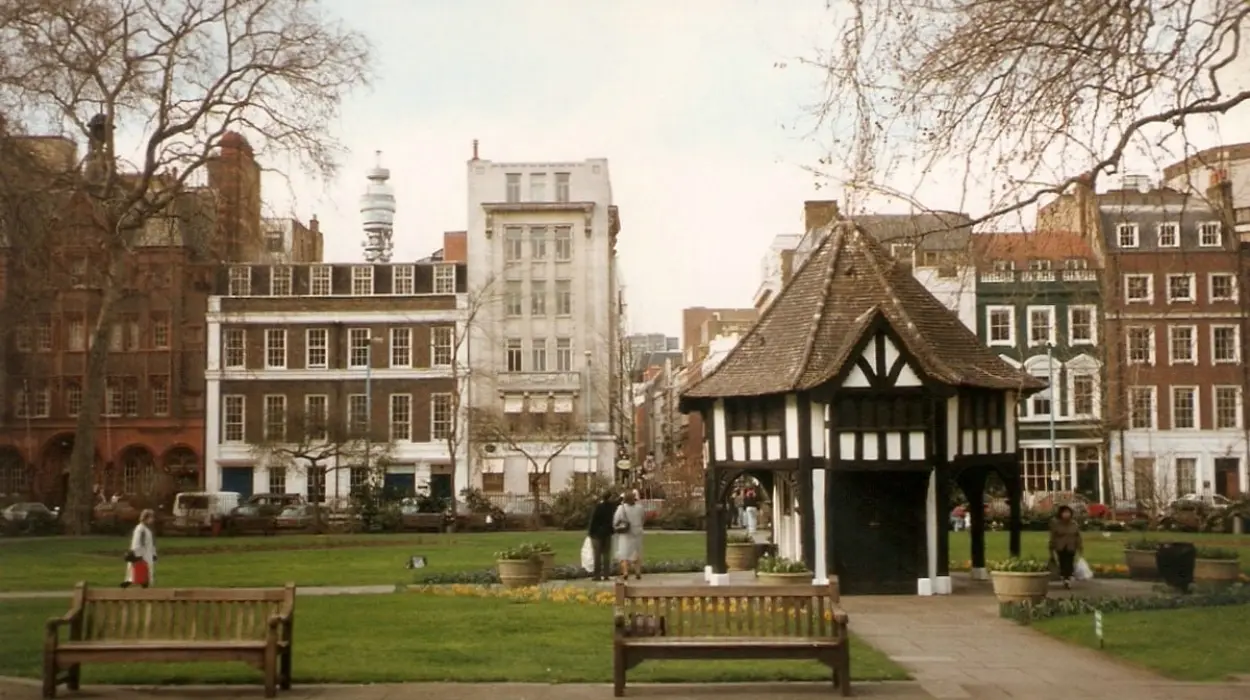
Soho Square provides a useful starting point. Westminster City Council records that the square dates from the 1680s, when the surrounding land was known as Soho Fields. Its central half-timbered building dates from 1895. The square remains one of the district’s principal public spaces.
The area also retains a strong connection with historic immigration. Greek communities appeared in the seventeenth century, French Huguenots settled in significant numbers from the 1680s, and later Italian, German, Jewish, Chinese, and other communities contributed to Soho’s commercial and cultural development.
That history explains why a modern visit to Soho naturally combines international food, live music, nightlife, architecture, and heritage. The district’s entertainment economy did not develop in isolation. It grew from centuries of migration, commerce, housing, theatre, music, and changing patterns of urban life.
What makes Soho historically important for food, music, and nightlife?
Soho became a major London entertainment district through centuries of migration, restaurants, theatres, music venues, cafés, clubs, and nightlife businesses. Its present character reflects seventeenth-century settlement, Victorian commercial growth, twentieth-century popular culture, and continuing cultural diversification.
Soho’s historical importance comes from the interaction of different urban functions within a compact area. Residential streets became commercial streets. Immigrant communities established businesses. Restaurants served local communities before attracting wider London audiences. Theatres expanded the West End’s entertainment economy. Music venues later developed alongside cafés, clubs, bars, and specialist shops.
Westminster’s Soho Public Realm Study identifies French Huguenot and Greek settlement as important early influences. During the eighteenth and nineteenth centuries, the district experienced increasing commercial activity, overcrowding, specialist trades, and manufacturing. The creation of Shaftesbury Avenue in the late nineteenth century strengthened Soho’s connection with theatre and entertainment.
Food became particularly important because immigrant workers established restaurants and food businesses. Italian migration was especially significant. London Museum records that northern Italian communities from Piedmont and Lombardy became established in Soho, with many immigrants working as cooks or waiters in West End hotels and restaurants. By the 1920s, Italian food businesses were flourishing.
Music developed through several different traditions. Jazz, skiffle, blues, rhythm and blues, rock, punk, and later forms of popular music all became associated with Soho and neighbouring streets. English Heritage research identifies Soho venues from the 1960s such as the Scene Club, Flamingo, La Discothèque, the 2i’s, and Bunjies as important parts of London’s music history.
Nightlife also formed part of Soho’s social history. Post-war establishments included drinking clubs, coffee bars, restaurants, theatres, jazz clubs, and other venues. London Museum describes 1950s Soho as a major centre for entertainment, music, restaurants, coffee bars, nightclubs, and drinking dens.
The district therefore represents a long historical process rather than a single entertainment period. Visitors who explore its restaurants, music venues, streets, squares, and theatres encounter different layers of London’s urban development.
How did Soho develop from fields into a West End entertainment district?
Soho developed from open fields into a residential district during the late seventeenth century, then became increasingly commercial during the eighteenth and nineteenth centuries. Theatre construction, immigration, restaurants, specialist trades, music venues, and nightlife gradually established its modern West End identity.
The name Soho is associated with the former Soho Fields, an open area outside the older built-up centre of London. Urban development accelerated during the late seventeenth century as streets and residential properties were constructed.
Soho Square is one of the clearest surviving markers of this transformation. Westminster City Council dates its development to the 1680s. The square became an important component of the planned residential landscape that replaced open land.
Religious and immigrant communities were also important during the early development of Soho. Historic England records Greek settlement in the seventeenth century, including a chapel on Hog Lane during the 1670s. From the 1680s, French Huguenots settled in substantial numbers and established several chapels.
St Anne’s Church became the principal Anglican church of the district. Built between 1677 and 1686, it served a rapidly developing parish. Its churchyard became an important burial ground. Historic England records estimates of up to 110,000 burials, although lower historical estimates also exist. The church was badly damaged during bombing in 1940, while its tower survives.
The eighteenth and nineteenth centuries brought major demographic and economic changes. Residential houses were increasingly divided into smaller units. Commercial premises expanded. Trades included manufacturing and other activities that reflected the changing economy of central London.
The district’s social problems also became significant. Overcrowding, poverty, sanitation problems, and poor housing conditions affected parts of Soho during the nineteenth century. Westminster’s historical research records six hospitals established in Soho between 1850 and 1875, alongside charitable housing initiatives.
The construction of Shaftesbury Avenue transformed the area further. New theatres created a stronger connection between Soho and the West End entertainment economy. Commercial buildings replaced some earlier residential structures, while the district retained a dense network of smaller streets.
This mixture of residential, commercial, cultural, and entertainment uses became one of Soho’s defining characteristics. It also created the physical conditions for restaurants, cafés, pubs, music venues, and specialist businesses to operate close together.
Where can visitors explore Soho’s historic food culture?
Visitors can explore Soho’s historic food culture through Chinatown, Italian-influenced restaurants, specialist food shops, cafés, markets, and modern international restaurants. These businesses reflect migration from Europe and Asia and Soho’s long development as a centre for eating outside the home.
Food is one of the strongest historical connections between Soho’s past and present. The district’s restaurants developed from immigrant communities, specialist trades, hospitality employment, and changing London dining habits.
Italian migration had a particularly strong impact. Westminster’s conservation research records substantial Italian settlement during the nineteenth century, including immigrants who worked in kitchens, restaurants, and related businesses. The district developed a reputation for restaurants serving French and Italian communities.
After the First World War, eating outside the home became more common as domestic service declined. Soho increasingly served a broader London clientele. The Westminster conservation audit identifies food businesses and specialist shops as important elements of this transformation.
London Museum records that Soho became a centre of northern Italian community life, particularly among migrants from Piedmont and Lombardy. Italian restaurants expanded during the early twentieth century, including Quo Vadis, which opened on Dean Street in 1927.
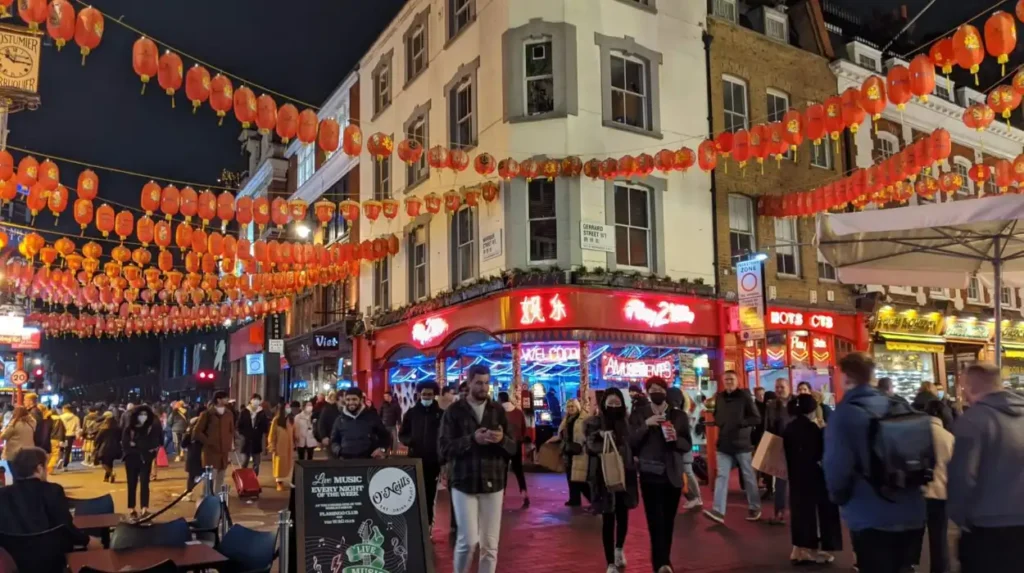
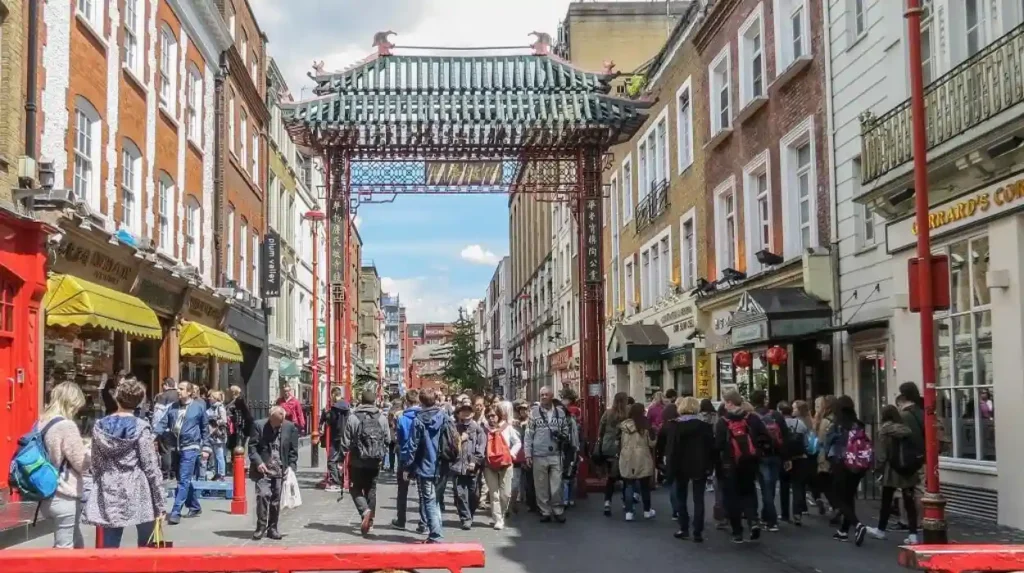
Chinatown represents another major stage in Soho’s culinary history. London’s original Chinatown developed in Limehouse, but the West End community grew during the twentieth century. Visit London states that today’s Chinatown began forming in Soho during the 1950s, when several Chinese restaurants opened in the area. By the following decade, Chinese businesses and services had established a stronger community presence.
Gerrard Street became the centre of this development. The present Chinatown extends between Shaftesbury Avenue, Rupert Street, Charing Cross Road, and Leicester Square, with Gerrard Street forming its central axis.
Modern Chinatown includes Chinese restaurants alongside Korean, Malaysian, Vietnamese, Taiwanese, Japanese, and other Asian food businesses. Visit London currently identifies almost 80 restaurants in the wider Chinatown area.
The historical significance of Chinatown also extends beyond restaurants. Shops, cultural events, specialist ingredients, Chinese New Year celebrations, and community institutions contribute to the area’s cultural identity.
For visitors, food exploration therefore provides a practical way to understand Soho’s migration history. A meal in Chinatown, an Italian restaurant, a specialist deli, or a modern international venue connects contemporary London with earlier waves of settlement and commercial development.
To experience this historic district in person today, consult our comprehensive [How Soho Became London’s Most Famous Entertainment and Cultural District] for itineraries and visiting parameters.
Which historic music venues and streets should music lovers explore in Soho?
Music lovers should explore Ronnie Scott’s, Frith Street, Gerrard Street, Carnaby Street, Wardour Street, Denmark Street, and the surviving sites associated with Soho’s jazz, skiffle, rock, punk, and popular music history. These locations document several generations of London’s musical development.
Soho’s music history expanded rapidly during the twentieth century. Jazz clubs became particularly important after the Second World War, while coffee bars and small clubs created spaces for emerging musicians and youth cultures.
Ronnie Scott is one of the central figures in this history. The British jazz musician co-founded Club Eleven in 1948, an important early modern jazz club in Soho. In October 1959, Scott and fellow saxophonist Pete King opened Ronnie Scott’s in the basement of 39 Gerrard Street.
The original venue occupied a modest basement space. Scott and King used a £1,000 loan from Scott’s stepfather to prepare the club, install a bandstand, purchase second-hand furniture, and obtain a baby grand piano. The club later became an important venue for American modern jazz artists.
The club moved to Frith Street in 1965. Ronnie Scott’s continues to operate from the Soho site and remains one of the district’s most internationally recognised music institutions. English Heritage describes the venue as the spiritual home of British jazz.
The original Gerrard Street site is also preserved through an English Heritage blue plaque installed in 2019. This provides a tangible connection between the modern club and its earlier location.
The wider Soho music scene was much larger than Ronnie Scott’s. English Heritage research documents venues including the Scene Club, Flamingo, La Discothèque, the 2i’s, Bunjies, the Bag O’ Nails, the Speakeasy, Middle Earth, and UFO. These venues supported different musical styles and audiences during the 1950s and 1960s.
Carnaby Street became closely associated with the cultural changes of the 1960s. Its surrounding streets attracted fashion businesses, musicians, clubs, cafés, and young consumers. Visit London identifies Carnaby as a major part of Soho’s fashion and music heritage and links the area to the Swinging Sixties.
Denmark Street, immediately north of Soho, provides another important musical connection. Historic England identifies its role in the British music industry, including music publishers and sheet-music businesses. Melody Maker was founded there in 1926. The street later became associated with musicians and the Sex Pistols.
These locations demonstrate how Soho’s music history developed through small venues, recording-related businesses, cafés, clubs, specialist shops, and nearby streets. The district’s musical importance is therefore geographical as well as institutional.
Why are Chinatown and Gerrard Street important for Soho nightlife?
Chinatown and Gerrard Street became central to Soho nightlife because restaurants, bars, clubs, theatres, and late-night businesses operated within a compact West End environment. Chinese immigration, international food, entertainment, and established nightlife created a distinctive evening economy.
Gerrard Street occupies a particularly important position within modern Soho. It forms the centre of Chinatown and also preserves the former location of Ronnie Scott’s first club.
The area’s transformation demonstrates how food and nightlife developed together. London Museum records that Soho’s established nightlife created demand for late-night restaurants and takeaways, while Chinese migrants entered restaurant employment and established businesses. The Lido restaurant, opened in 1969, was among the early Chinatown establishments and continues to operate.
Chinatown therefore became part of Soho’s wider night-time economy rather than functioning as an isolated food district. Restaurants served customers attending theatres, clubs, music venues, and other West End attractions.
The historical relationship between entertainment and commercial activity is especially visible around Shaftesbury Avenue. Westminster’s conservation research records that theatres developed along the avenue after its creation, strengthening Soho’s entertainment role.
Post-war Soho developed a particularly dense nightlife culture. London Museum records drinking clubs, coffee bars, restaurants, nightclubs, music venues, and other entertainment businesses operating during the 1950s. The district attracted artists, musicians, young people, and members of emerging subcultures.
The nightlife economy also intersected with social and political change. Soho became a major centre of LGBTQ+ life during the twentieth century. Old Compton Street became particularly associated with LGBTQ+ businesses and community activity. Visit London identifies Soho as a longstanding centre of London’s LGBTQ+ community.
Historic England’s Queer Soho research documents venues such as Le Duce, which opened on D’Arblay Street in 1964. The basement venue attracted queer mods and played Motown and Bluebeat. It illustrates how music, fashion, nightlife, and LGBTQ+ social history overlapped within Soho.
The district’s nightlife history also contains difficult aspects. Soho became strongly associated with the sex industry during the twentieth century. The 1959 Street Offences Act prohibited public solicitation, changing the way sex work operated in the area. London Museum records this legal and social transition as part of Soho’s post-war history.
Modern Soho has a regulated and diverse night-time economy. Restaurants, theatres, bars, music venues, cafés, and cultural businesses operate within an environment shaped by planning controls, heritage protection, residential needs, and noise management.
How did Carnaby Street influence Soho’s food, music, and popular culture?
Carnaby Street helped establish Soho as a centre of youth culture during the 1960s through fashion, music, independent businesses, clubs, and cafés. Its later restaurant economy preserves that cultural legacy while demonstrating the district’s continuing commercial adaptation.
Carnaby Street sits immediately behind Regent Street and forms one of the most recognisable cultural areas associated with Soho. During the 1960s, it became strongly linked with youth fashion and popular music.
The area’s cultural importance developed through a concentration of small shops, fashion businesses, clubs, restaurants, and music-related activity. Its proximity to other Soho venues allowed visitors to move between food, fashion, music, and nightlife within a small geographical area.
Historic England’s research into London’s 1960s music scene records Carnaby Street’s association with the Roaring Twenties-style revival of nightlife terminology, while nearby Soho venues supported mod, jazz, skiffle, rhythm and blues, psychedelic music, and other emerging styles.
Carnaby’s present commercial landscape has changed substantially. Visit London currently records more than 60 independent restaurants, cafés, bars, and pubs across 14 streets, representing more than 30 cuisines. Kingly Court provides a three-storey food destination with more than 20 food concepts.
This modern food economy reflects the broader historical pattern of Soho. International migration and commercial adaptation repeatedly changed the district’s businesses while maintaining its role as a destination for visitors.
The architectural environment also contributes to the experience. Pedestrianised streets, restored historic buildings, modern shopfronts, public art, and surviving commercial structures create a mixed urban landscape.
The Spirit of Soho mosaic is one modern example of public art celebrating the district’s artistic heritage and community identity. Carnaby also retains its association with fashion through independent retailers and larger brands.
For food and nightlife visitors, Carnaby provides a bridge between historical cultural tourism and contemporary dining. Restaurants operate in spaces once associated with youth culture, while the surrounding streets remain connected with London’s music and fashion history.
The area demonstrates that heritage does not require a street to remain unchanged. Soho’s historical identity has survived through repeated adaptation. The functions of individual buildings change, but the concentration of culture, commerce, entertainment, and social activity remains.
Which historic places should visitors include in a Soho heritage itinerary?
A strong Soho heritage itinerary should include Soho Square, St Anne’s Church and Churchyard, Gerrard Street and Chinatown, Frith Street and Ronnie Scott’s, Old Compton Street, Carnaby Street, Wardour Street, and nearby music landmarks connected with London’s entertainment history.
Soho is compact enough for visitors to connect multiple historical themes during one walking route. The most useful approach is to move chronologically through the landscape while recognising that many sites represent several periods simultaneously.
Soho Square provides an appropriate starting point because it represents the district’s seventeenth-century transformation from open fields into planned urban development. Westminster City Council dates the square to the 1680s and records its central 1895 building.
From Soho Square, visitors can move towards Wardour Street and St Anne’s Church. The church was built between 1677 and 1686 and represents the early parish structure of Soho. Its surviving tower and churchyard provide physical evidence of the district’s early urban history.
The next stage can focus on food and migration. Gerrard Street leads into Chinatown, where the modern streetscape reflects the growth of Chinese businesses from the 1950s onward. Restaurants, shops, cultural events, and community activities continue to define the area.
A music-focused section should include the site of Ronnie Scott’s original club at 39 Gerrard Street and the current Frith Street location. English Heritage’s blue plaque at Gerrard Street establishes a direct heritage connection between the two sites.
Old Compton Street provides an opportunity to study LGBTQ+ heritage and Soho’s twentieth-century social history. Its businesses form part of the district’s continuing role as a centre of LGBTQ+ culture.
Carnaby Street adds the history of 1960s youth culture, fashion, music, and commercial development. The surrounding streets also provide contemporary restaurants and cafés, demonstrating the continuing relationship between culture and commerce.
Wardour Street and the surrounding lanes add further historical context. The street became important to entertainment and later to the British film industry. Westminster’s conservation research records the development of the area’s entertainment industries after the construction of Shaftesbury Avenue.
Visitors interested in architectural heritage should also examine the scale and layout of Soho’s streets. Historic buildings, narrow plots, upper-floor residences, commercial ground floors, public squares, churches, theatres, and later developments reveal the district’s changing functions.
The result is a heritage itinerary that combines historical evidence with contemporary activity. Food represents migration and commerce. Music represents cultural production. Nightlife represents changing patterns of leisure and social life. Architecture provides the physical framework connecting these themes.
How is Soho’s heritage protected while its nightlife continues to change?
Soho’s heritage is protected through listed buildings, conservation policies, neighbourhood planning, public-realm management, heritage assessments, and support for cultural venues. These measures balance historic buildings and community identity with the pressures created by commercial activity, tourism, housing, and nightlife.
Soho faces the same central challenge as many historic entertainment districts: maintaining cultural activity while protecting historic buildings, residential amenity, and the character of the neighbourhood.
Westminster City Council adopted the Soho Neighbourhood Plan on 8 October 2021. The statutory plan addresses culture and heritage, commercial activity, entertainment, and the night-time economy.
Heritage protection also operates through listed-building legislation and conservation policies. Westminster identifies buildings, monuments, and spaces with heritage value as important components of the city’s historic environment.
The council’s heritage evidence includes a Soho Heritage and Character Assessment and a Soho Public Realm Study. These documents provide research into architecture, historic development, streets, public spaces, and the changing character of the district.
Music venues require additional protection because their value is cultural as well as architectural. The 100 Club, on Oxford Street at the northern edge of the Soho cultural area, illustrates this issue. The venue began presenting live music in 1942 and hosted performers including the Rolling Stones, Oasis, and the Sex Pistols. Westminster City Council introduced special support for grassroots venues, including business-rates relief under specified conditions.
The protection of Ronnie Scott’s former Gerrard Street location through an English Heritage blue plaque provides another model. The plaque does not recreate the original club, but it preserves the historical association and communicates the site’s role in British jazz history.
Soho’s heritage also survives through buildings that retain historical functions or associations. St Anne’s Church, Soho Square, surviving historic houses, Chinatown streets, music venues, theatres, and specialist food businesses collectively preserve different parts of the district’s history.
Modern planning research increasingly considers environmental conditions alongside heritage. Westminster’s 2026 Soho Monitoring Study examines air quality, noise, traffic, and movement as part of the area’s contemporary management.
This approach reflects the complexity of a living historic district. Soho is not an open-air museum. Residents live above commercial premises. Restaurants operate beside homes. Music venues depend on evening audiences. Tourists share streets with workers and local communities.
The future historical significance of Soho will therefore depend on how effectively the district retains its cultural infrastructure while adapting to economic, environmental, and social change. The preservation of venues, streets, buildings, community spaces, and independent businesses will determine how clearly future generations can understand Soho’s role in London’s history.
Soho remains significant because its food, music, and nightlife are products of historical processes that continue to shape the district. Seventeenth-century urbanisation created its basic street framework. Immigration diversified its population and businesses. Victorian redevelopment strengthened its entertainment role. Twentieth-century music and nightlife established an international cultural reputation. Contemporary planning now manages that inherited landscape.
For history enthusiasts, Soho provides evidence of changing London society within a compact area. For cultural tourists, its restaurants, music venues, theatres, public spaces, and streets provide direct access to that history. For educators and researchers, its surviving buildings and documented communities demonstrate how migration, commerce, entertainment, legislation, architecture, and urban planning interact over time.
The best things to do in Soho for food, music, and nightlife lovers are therefore not separate activities. They are connected expressions of the district’s historical development. A meal in Chinatown reflects migration and entrepreneurship. A visit to a jazz club connects with post-war music history. A walk through Carnaby Street recalls 1960s youth culture. A visit to Soho Square reveals the seventeenth-century foundation of the neighbourhood. A walk along Old Compton Street connects contemporary life with decades of LGBTQ+ history.
That combination makes Soho one of London’s most important living cultural landscapes. Its historical value exists not only in individual landmarks but in the relationship between streets, businesses, communities, music, food, architecture, and nightlife. Those connections give the district enduring relevance for visitors studying London’s past and experiencing its present.
Frequently Asked Question
What is Soho famous for?
Soho is famous for its restaurants, Chinatown, live music, theatres, nightlife, independent businesses, LGBTQ+ heritage, and historic streets. The district has been an important London entertainment centre since the 19th century.