Key Points
- Around 230 artists and creative people have been asked to leave the affordable studios in the Cartmel, Langdale, and Coniston housing blocks on the Regent’s Park Estate.
- The deadline for vacating these spaces is January 2027 after Camden Council decided to do so on the basis of new building safety laws.
- According to the council, the tall structures are in “grey area” for fire safety laws since improving them is not viable financially as they will eventually get demolished.
- The studio spaces were set up in 2022 in collaboration with Bow Arts Trust from the flats which were considered virtually uninhabitable because of HS2 construction site disruption.
- The artists, which include famous authors and painters, fear that without these spaces, their careers may come to an end and part of the heritage of Camden will be lost.
- A petition drive has been started to convince the council to accommodate the affected artists in Camden.
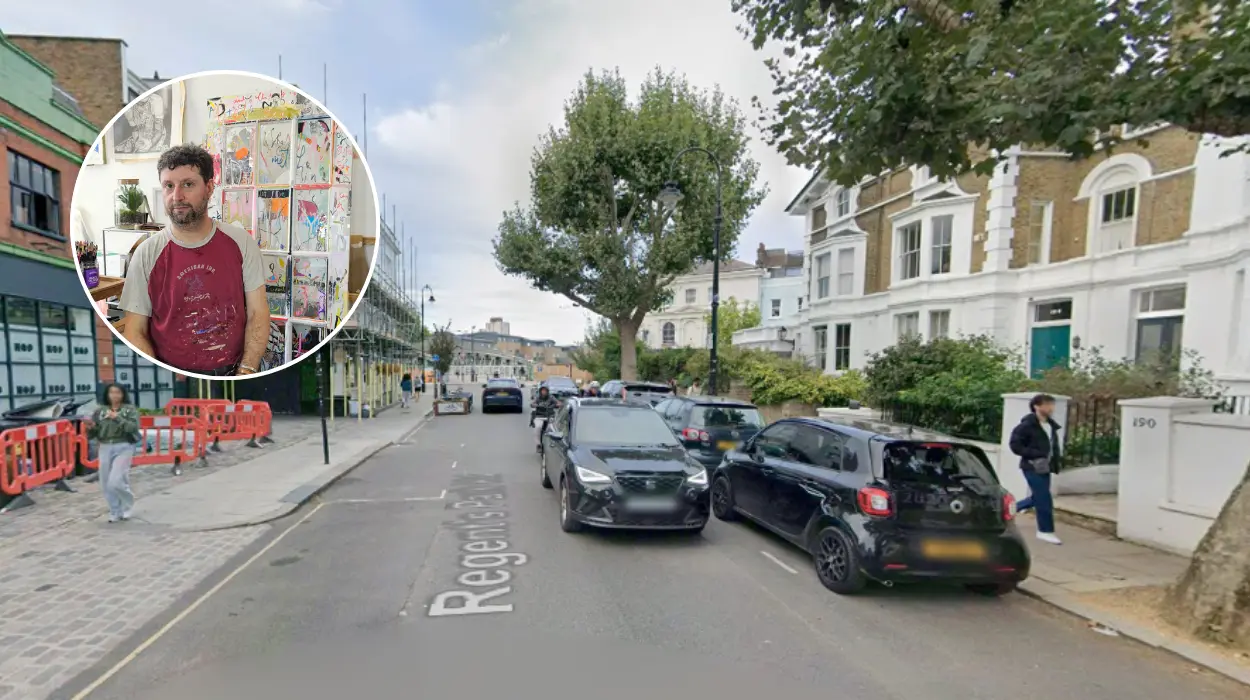
London (Extra London News) August 19, 2026 – A vibrant community of approximately 230 artists and creative professionals, who have transformed formerly derelict council housing into a thriving hub of culture and production, have been ordered by Camden Council to vacate their studios by January 2027. The news has sent shockwaves through the local creative sector, with many occupants warning that the loss of these “lifeline” workspaces, situated on the Regent’s Park Estate, could have catastrophic impacts on their careers and the wider cultural fabric of North London.
Why are the artists being evicted?
As reported by Josef Steen and Tom Place of the Evening Standard, the eviction stems from updated building safety legislation that has placed the high-rise blocks—specifically Cartmel, Langdale, and Coniston—into a fire safety “grey area” due to their height.
The buildings were originally vacated by residents in 2022 due to significant disruption caused by the adjacent HS2 rail project. In an effort to make use of the empty space, Camden Council partnered with the Bow Arts Trust to transform the “virtually uninhabitable” flats into affordable studios for local artists. However, the council has now determined that any necessary safety improvements to meet modern inspection standards would not be “financially viable,” primarily because the blocks are already slated for eventual demolition.
Cllr James Slater, the Cabinet Member for Planning and a Sustainable Camden, stated, as noted by the Evening Standard, that the use of the blocks as artist studios was “always temporary”.
What is the impact on the local artist community?
The impending closure has been met with widespread distress. Among those affected is the acclaimed children’s book author Andy Stanton, who spoke to the Local Democracy Reporting Service (LDRS) about the importance of the space.
“We all knew it was going to be temporary, but suddenly the accelerator has been put down,” Stanton told the LDRS. “It’s a real shame, and we’re imploring the council to look at making spaces available.” He further lamented the severe lack of affordable studio options in North London, stating that for many, these studios have been “life-changing”.
Painter Jennifer Louise Martin, who has held studios across London for over a decade, echoed these sentiments. As quoted by the Evening Standard, she noted the rarity of finding affordable, high-quality workspace within the borough.
“A lot of people are devastated. We were told it was going to be a rolling contract, but I never thought it would be this soon,”
she said. Martin also warned that the council itself might suffer, as they frequently commission local artists for their cultural programmes:
“Have they thought about where they will recruit us from if we lose our spaces to work in the borough?”.
Explore more Camden News:
Scenes from a Falling World Review – London 2026
Camden Nightclub Faces Strict Curfew and Crackdown in Camden 2026
Is there hope for a solution?
A Change.org petition has been launched, urging Camden Council to “prioritise the rehousing of these artists within Camden”. The petition organizers argue that the loss of these studios is not merely a loss of physical space, but a blow to the “soul and culture” of the area. They contend that practical solutions, such as identifying and repurposing other vacant buildings, could be explored to maintain Camden’s status as a leading cultural district.
Marcel Baettig, CEO and Founder of the Bow Arts Trust, also expressed deep concern regarding the situation. As reported by the Evening Standard, Baettig stated that the charity was “devastated” that the initiative was ending prematurely. “These spaces are vitally important—a lifeline for emerging creative people who contribute so much to the cultural life of Camden and Greater London,” Baettig said. He added that the organization is committed to working with Camden Council to find alternative arrangements for the displaced creatives.
What is the broader context for artists in London?
The displacement of the Regent’s Park Estate artists highlights a persistent and growing issue across the capital: the marginalization of creatives due to rising real estate costs and the redevelopment of urban spaces.
Research consistently paints a bleak picture for London’s artistic community. According to a 2022 King’s College London study, there were 13,780 creatives on a waiting list for affordable workspaces. The situation has worsened since then, with a 2025 survey by the London’s Affordable Artists Studio Network (LAASN) revealing that studio rents have surpassed £20 per square foot for the first time.
Mayor of London Sir Sadiq Khan has frequently warned that artists are being “priced out of neighbourhoods they helped to regenerate”. In January 2026, City Hall committed £2.2m to support the creation and preservation of studio spaces to help artists remain in their communities.
Despite these efforts, the situation remains precarious. While large-scale projects like the recently approved £1bn Camden Film Quarter are set to deliver over 100,000 square feet of creative workspace, such developments often focus on specific industries and professional-grade production, leaving a gap for the grassroots, affordable studio spaces that characterize the “lifeline” studios in the Regent’s Park Estate.
As the January 2027 deadline approaches, the hundreds of artists facing displacement are waiting to see if the council will heed their call to safeguard the future of the arts in Camden, or if this will mark yet another instance of a vibrant community being pushed out of the city they help define.