Britain’s royal residences are official and private homes used by the British monarch and members of the Royal Family. They function as centres of government, ceremonial venues, administrative headquarters, historic landmarks, and symbols of constitutional continuity spanning more than 1,000 years.
- How did Britain’s royal residences develop throughout history?
- Which royal residences have played the greatest role in British history?
- The Tower of London
- Windsor Castle
- Hampton Court Palace
- Buckingham Palace
- Kensington Palace
- St James’s Palace
- Balmoral Castle
- Sandringham House
- Palace of Holyroodhouse
- How did royal residences influence government and constitutional history?
- How has architecture reflected the changing role of the British monarchy?
- What role have royal residences played in British culture and national identity?
- How are Britain’s royal residences preserved for future generations?
- Why do Britain’s royal residences remain historically important today?
- Frequently Asked Question
Britain’s royal residences represent far more than palaces and castles. They are physical expressions of the evolution of the British monarchy, reflecting political authority, military security, architectural development, diplomatic relations, and national identity across successive reigns.
A royal residence is a property owned by the Crown, the Crown Estate, the Duchy of Lancaster, the Duchy of Cornwall, or privately by members of the Royal Family. Some residences serve official constitutional functions, while others operate primarily as family homes or seasonal retreats.
The history of these residences stretches from the Anglo-Saxon period through the Norman Conquest, the medieval monarchy, the Tudor dynasty, the Stuart era, the Georgian and Victorian periods, and into the modern constitutional monarchy established during the twentieth and twenty-first centuries.
Royal residences also preserve Britain’s architectural history. Romanesque fortifications, Gothic halls, Tudor brickwork, Baroque facades, Georgian interiors, Victorian renovations, and contemporary conservation projects coexist across the royal estate.
Their importance extends beyond architecture. State banquets, Privy Council meetings, diplomatic receptions, royal weddings, investitures, military ceremonies, and constitutional transitions have all taken place within these historic buildings.
Today, millions of visitors explore many of these properties annually, making royal residences among Britain’s most significant heritage attractions. To experience these historic landmarks in person today, consult our comprehensive [Best Royal Attractions to Visit in London Beyond Buckingham Palace for History Lovers] for itineraries and visiting parameters.
How did Britain’s royal residences develop throughout history?
Britain’s royal residences developed from fortified medieval castles into administrative palaces and ceremonial estates. Political stability, changing military technology, royal wealth, architectural innovation, and constitutional reform shaped their evolution between the eleventh century and the modern monarchy.
The earliest English kings did not occupy one permanent palace. Anglo-Saxon rulers travelled continuously between royal estates to administer justice, collect taxes, and demonstrate authority throughout their kingdoms.
The Norman Conquest in 1066 transformed royal architecture. William I ordered the construction of major stone castles that established military control over England. Royal residences increasingly combined domestic accommodation with defensive fortifications.
During the twelfth and thirteenth centuries, monarchs expanded royal residences into administrative centres. Great halls hosted feasts and legal proceedings, while chapels, kitchens, treasury rooms, and royal apartments supported the daily operation of government.
The Plantagenet kings invested heavily in castle construction. Royal residences became symbols of legitimacy during conflicts including the Barons’ Wars and the Hundred Years’ War.
The Tudor dynasty marked another significant transition. Henry VII and Henry VIII preferred luxurious palaces over heavily fortified castles. Renaissance influences introduced symmetrical layouts, decorative gardens, elaborate interiors, and expanded accommodation for growing royal households.
The Stuart period witnessed increasing emphasis on ceremony and diplomacy. Banqueting halls, reception rooms, and formal gardens reflected Britain’s expanding international influence.
Following the Glorious Revolution of 1688, the monarchy gradually became constitutional rather than absolute. Royal residences increasingly balanced ceremonial importance with governmental administration.
The Victorian era introduced modern infrastructure, including gas lighting, improved sanitation, railway access, and technological innovations that adapted historic buildings for contemporary use.
Today, conservation specialists preserve these residences while maintaining their constitutional functions. Historic preservation follows rigorous standards established through heritage legislation, archaeological research, and architectural conservation.
Which royal residences have played the greatest role in British history?
Several royal residences shaped Britain’s political, constitutional, and cultural history. The Tower of London, Windsor Castle, Hampton Court Palace, Buckingham Palace, Kensington Palace, St James’s Palace, Balmoral Castle, Sandringham House, and the Palace of Holyroodhouse each fulfilled distinct historical functions.
The Tower of London
Originally established by William the Conqueror during the late eleventh century, the Tower of London served multiple purposes throughout medieval and early modern history.
It functioned as:
- A royal fortress
- A royal residence
- A prison
- A treasury
- An armoury
- The home of the Crown Jewels
Numerous monarchs expanded the complex, including Richard I, Henry III, and Edward I. Although later monarchs preferred more comfortable palaces, the Tower retained immense ceremonial importance.
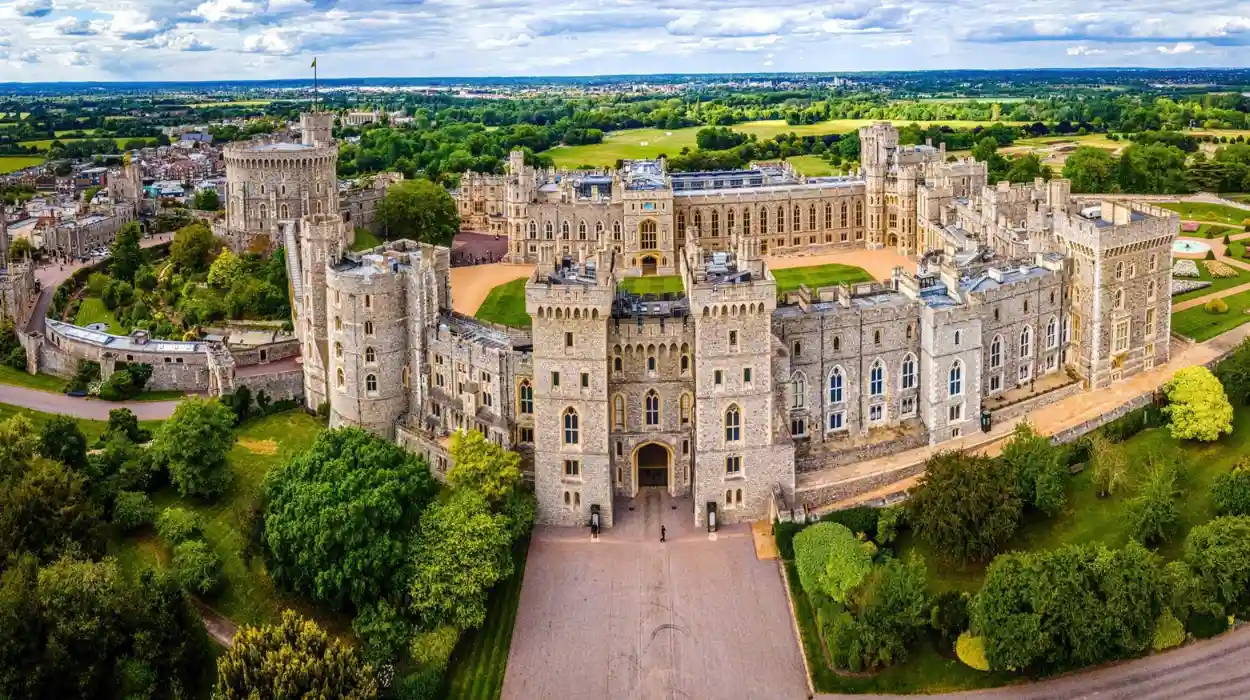
Windsor Castle
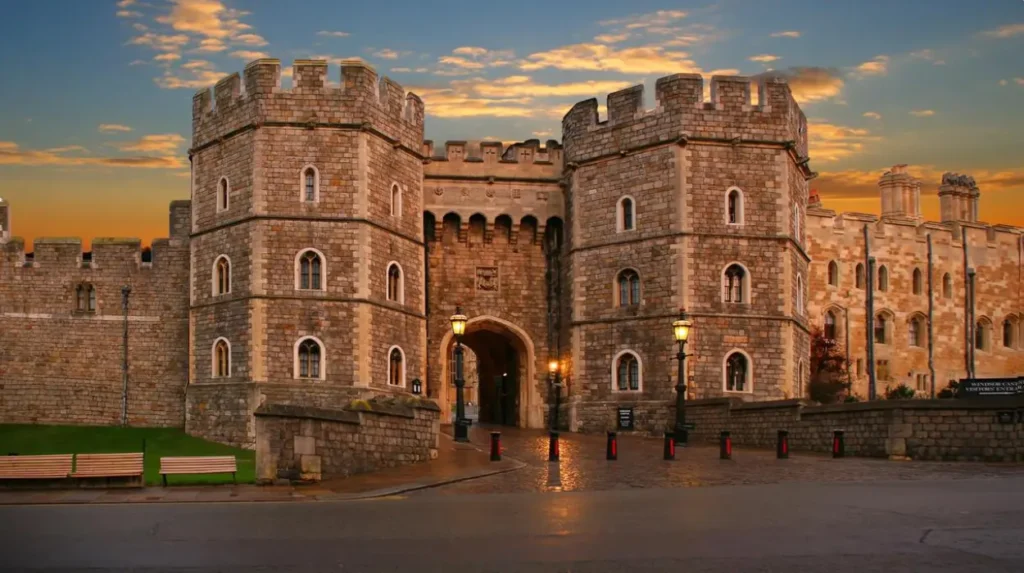
Windsor Castle is the world’s oldest and largest occupied castle. Founded around 1070 by William I, it has remained continuously associated with the monarchy for nearly one thousand years.
Successive monarchs transformed Windsor from a Norman fortress into an expansive royal residence. Edward III rebuilt much of the castle during the fourteenth century, while George IV commissioned major nineteenth-century renovations.
Today, Windsor continues to host State Visits, royal ceremonies, and official events.
Hampton Court Palace
Although originally built for Cardinal Thomas Wolsey, Hampton Court became one of Henry VIII’s principal residences after 1529.
The palace illustrates Tudor architecture alongside later Baroque additions commissioned by William III and Mary II.
Its Great Hall, Tudor kitchens, formal gardens, and famous maze demonstrate changing royal tastes across several centuries.
Buckingham Palace
Buckingham Palace became the monarch’s principal London residence during Queen Victoria’s reign in 1837.
Originally constructed as Buckingham House in 1703, it evolved into Britain’s primary ceremonial palace through extensive nineteenth-century expansion.
Today it serves as the administrative headquarters of the monarchy, hosting State Banquets, diplomatic receptions, Investitures, and official ceremonies.
Kensington Palace
Built during the late seventeenth century, Kensington Palace became a favourite residence of William III and Mary II.
It later housed numerous royal generations, including Queen Victoria during her childhood. Today parts of the palace remain official royal residences while other sections operate as a public museum.
St James’s Palace
Although Buckingham Palace became the principal royal residence, St James’s Palace remains one of Britain’s most significant ceremonial buildings.
It continues to play constitutional roles including the Accession Council following the death of a monarch.
Balmoral Castle
Purchased privately by Queen Victoria and Prince Albert in 1852, Balmoral became the Royal Family’s preferred Scottish retreat.
Unlike many official residences, Balmoral remains privately owned rather than belonging to the Crown.
Sandringham House
Acquired for the future Edward VII in 1862, Sandringham has remained a private royal residence for more than 160 years.
It traditionally hosts the Royal Family during Christmas celebrations.
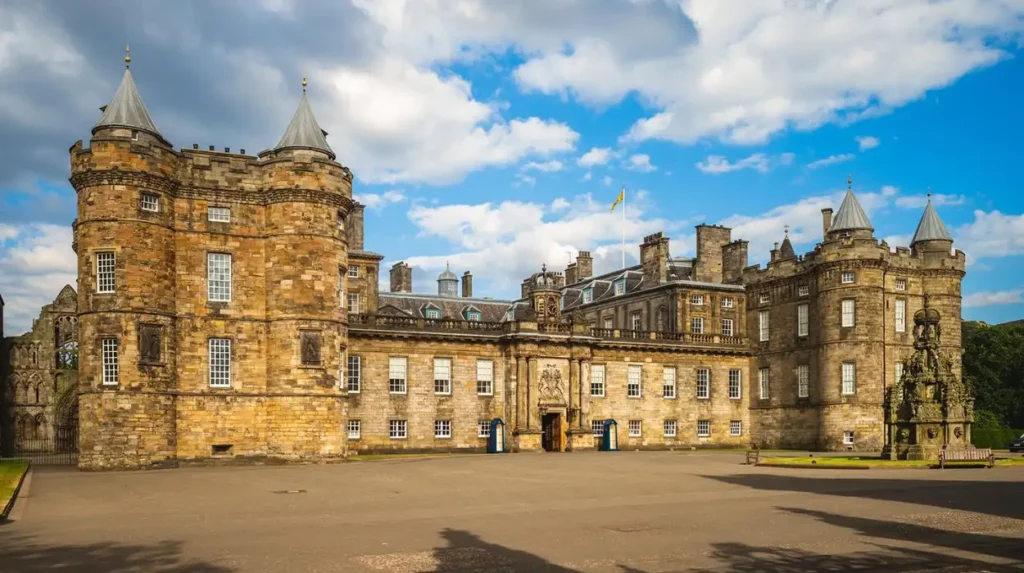
Palace of Holyroodhouse
Located in Edinburgh, the Palace of Holyroodhouse serves as the British monarch’s official residence in Scotland.
It hosts Scottish ceremonial events, official audiences, and royal engagements throughout the year.
How did royal residences influence government and constitutional history?
Royal residences functioned as centres of political administration before permanent parliamentary government emerged. Monarchs governed, received ambassadors, signed legislation, held councils, managed diplomacy, and directed military campaigns from these residences across successive centuries.
Before modern government departments existed, royal residences effectively served as Britain’s executive headquarters.
The royal household included administrators responsible for finance, diplomacy, military affairs, justice, religious administration, and foreign correspondence.
Many significant constitutional developments occurred within royal residences.
The Tudor monarchy expanded central government through palace-based administration.
The Stuart period witnessed constitutional disputes between Crown and Parliament.
Following the English Civil War and the Restoration, royal residences became increasingly associated with constitutional monarchy rather than personal royal rule.
State apartments hosted foreign ambassadors whose visits reinforced diplomatic alliances.
Privy Council meetings addressed national governance before cabinet government developed into Britain’s dominant executive system.
Royal residences also provided secure locations for safeguarding state records, official correspondence, royal archives, and ceremonial regalia.
Modern constitutional monarchy continues many historic traditions within these buildings. Investitures, audiences with the Prime Minister, diplomatic credential ceremonies, and State Banquets all remain essential constitutional functions.
How has architecture reflected the changing role of the British monarchy?
Royal architecture reflects changing political priorities, defensive requirements, artistic movements, technological innovation, and constitutional identity. Norman military design evolved into Tudor palaces, Baroque ceremonial spaces, Georgian refinement, Victorian restoration, and modern conservation.
Architecture provides a chronological record of Britain’s monarchy.
Norman castles prioritised defence through thick stone walls, gatehouses, towers, and strategic positioning.
Medieval palaces introduced expansive Great Halls that accommodated feasts, courts, and administrative gatherings.
The Tudor period embraced Renaissance influences imported from continental Europe.
Large windows replaced narrow defensive openings.
Decorative brickwork became increasingly common.
Formal gardens reflected new approaches to landscape design.
The seventeenth century introduced Baroque grandeur.
Architects including Sir Christopher Wren influenced palace planning through symmetry, classical proportions, and monumental ceremonial spaces.
Georgian interiors prioritised elegance, proportion, and refined decoration.
Victorian renovations integrated technological improvements while preserving historic character.
Modern conservation emphasises authenticity.
Conservation architects use archaeological evidence, historical documentation, and scientific analysis to restore historic structures while maintaining long-term structural stability.
What role have royal residences played in British culture and national identity?
Royal residences represent continuity, ceremonial tradition, national identity, and cultural heritage. They preserve architectural achievements, royal collections, historic archives, ceremonial customs, and public memory while attracting millions of domestic and international visitors every year.
Royal residences have become internationally recognised symbols of Britain.
Events such as Changing the Guard, State Openings of Parliament, royal weddings, jubilees, and coronation celebrations reinforce public awareness of these historic buildings.
Their cultural significance extends beyond monarchy.
Historic interiors preserve paintings, sculpture, furniture, manuscripts, clocks, tapestries, and decorative arts spanning several centuries.
Many residences contain collections assembled by generations of monarchs.
These collections document Britain’s artistic, diplomatic, and imperial history.
Education programmes enable schools, universities, and researchers to study architecture, conservation, archaeology, genealogy, political history, and material culture.
Royal residences also contribute substantially to heritage tourism.
Visitors support local economies through accommodation, transport, hospitality, museums, and cultural attractions connected to royal history.
International media coverage further strengthens their global cultural profile.
How are Britain’s royal residences preserved for future generations?
Britain preserves royal residences through professional conservation, archaeological research, statutory heritage protection, environmental monitoring, specialist craftsmanship, and long-term restoration programmes that balance historic authenticity with continued royal and public use.
Historic preservation requires continuous maintenance rather than occasional restoration.
Stone structures experience weathering.
Wooden elements require specialist treatment.
Historic roofs, stained glass, decorative plasterwork, textiles, paintings, and furniture undergo regular conservation.
Conservation professionals include architects, archaeologists, engineers, historians, surveyors, conservators, and skilled craftspeople.
Scientific techniques such as laser scanning, structural monitoring, material analysis, and environmental control help preserve historic fabric.
Many royal residences operate under complex ownership arrangements involving the Crown Estate, Historic Royal Palaces, the Royal Household, or private ownership.
Public access also supports preservation.
Admission revenue contributes toward maintenance, conservation projects, educational programmes, and visitor facilities.
Research continues to improve understanding of historic construction techniques.
Archaeological investigations regularly reveal previously unknown features beneath palace courtyards, gardens, and surrounding landscapes.
Climate change has introduced additional conservation challenges.
Flood risk, changing rainfall patterns, biological growth, and temperature fluctuations require adaptive management strategies for historic buildings.
Why do Britain’s royal residences remain historically important today?
Britain’s royal residences remain historically important because they preserve over one thousand years of constitutional development, architectural achievement, cultural heritage, ceremonial tradition, and national memory while continuing to serve practical functions within the modern constitutional monarchy.
Few countries possess an unbroken network of royal residences continuously associated with the same monarchy across such an extended historical period.
These buildings illustrate the transformation of kingship from medieval military rule to constitutional monarchy.
They preserve evidence of changing architecture, governance, diplomacy, domestic life, religion, ceremonial tradition, and artistic patronage.
Royal residences also provide exceptional educational value.
Students examine original buildings rather than reconstructed examples.
Researchers analyse surviving archives, architectural evidence, archaeological discoveries, and royal collections to improve understanding of Britain’s past.
Public engagement continues through exhibitions, guided tours, educational outreach, digital archives, and conservation programmes.
These initiatives ensure historic knowledge remains accessible to future generations.
The continuing constitutional role of several residences distinguishes them from purely historic monuments.
Buckingham Palace, Windsor Castle, St James’s Palace, the Palace of Holyroodhouse, Balmoral Castle, and Sandringham House continue to support the activities of the British monarch while preserving centuries of historical continuity.
The history of Britain’s royal residences therefore represents the history of the monarchy itself. Each castle, palace, and estate records successive chapters in Britain’s political development, architectural innovation, and national identity. Together they form one of the world’s most significant collections of continuously used historic royal buildings, connecting medieval foundations with the constitutional monarchy that exists today.
Frequently Asked Question
What are Britain’s royal residences?
Britain’s royal residences are official and private homes used by the British monarch and members of the Royal Family. They include working palaces, historic castles, and private estates that support ceremonial, constitutional, and residential functions.