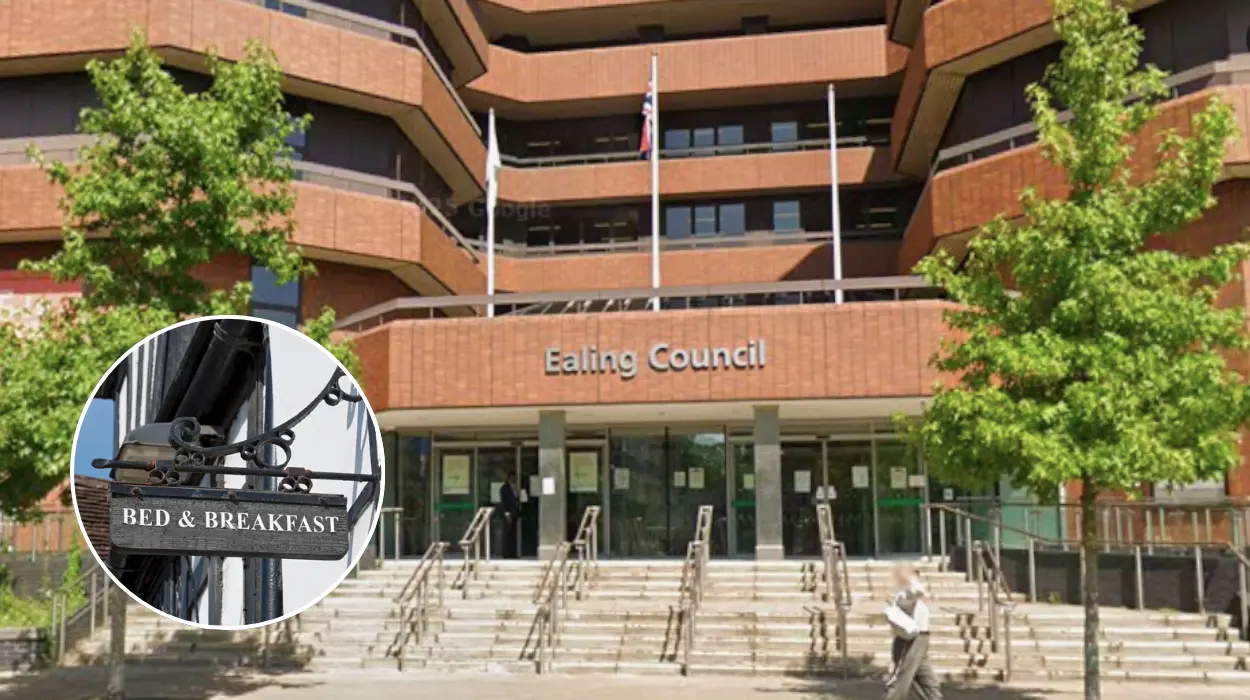
Key Points
- Legal Breach Identified: Ealing Council has been found in breach of statutory limits by leaving a vulnerable, disabled pregnant mother and her child in unsuitable temporary accommodation for 14 months.
- Statutory Limit Ignored: Under UK housing legislation, bed and breakfast (B&B) accommodation is legally deemed unsuitable for families with dependent children and must not be used for longer than six weeks.
- Severe Mobility Restrictions: The resident, known as Miss Y, is a wheelchair user with complex clinical requirements but was assigned a room with stairs, drastically curtailing her daily physical mobility.
- Systemic Administrative Failures: The Local Government and Social Care Ombudsman exposed multiple administrative faults, including severe delays in processing housing applications and a failure to evaluate urgent medical assessments submitted by a midwife.
- Financial Compensation Ordered: Ealing Council has issued an official apology and agreed to pay a financial remedy exceeding £6,000 to compensate for the distress, prolonged exposure to unsuitable living standards, and procedural delays.
Ealing (Extra London News) July 14, 2026 – A West London local authority has issued a formal apology and agreed to a compensation package exceeding £6,000 following an independent investigation that revealed it left a disabled pregnant mother and her infant child trapped in unsuitable emergency bed and breakfast accommodation for 14 months. The Local Government and Social Care Ombudsman issued a highly critical ruling against Ealing Council, declaring that the municipality directly breached statutory safeguards that explicitly cap emergency family placements in B&B facilities at a maximum of six weeks. The investigation concluded that systemic internal backlogs, delayed medical reviews, and inadequate complaint handling mechanisms left the vulnerable family in physically restrictive, shared-facility housing for nearly a year beyond the legal threshold, causing severe distress and compounding the mother’s complex medical conditions.
- Key Points
- What Happened to Miss Y and Her Baby in Ealing?
- Why Did Ealing Council Breach the Statutory Six-Week Limit?
- How Did the Accommodation Impact Miss Y’s Physical and Mental Health?
- What Failures Were Identified in Ealing Council’s Complaint Handling and Housing Assessment?
- How Much Compensation Has Ealing Council Agreed to Pay?
- How Has Ealing Council Responded to the Ombudsman’s Directives?
- What Is the Wider Context of London’s Temporary Accommodation Crisis?
What Happened to Miss Y and Her Baby in Ealing?
As chronicled in the formal case documentation published by Philip James Lynch, a Local Democracy Reporter for MyLondon, the aggrieved resident, referred to anonymously as Miss Y to protect her privacy, initially approached Ealing Council’s housing department as homeless in February 2024. Miss Y, who utilizes a manual wheelchair for daily mobility and manages a series of interconnected, complex medical vulnerabilities, was pregnant at the time of her initial application.
Despite her evident physical limitations, the local authority placed her into a standard bed and breakfast accommodation unit that was fundamentally unequipped to accommodate a wheelchair user. As documented by Philip James Lynch of MyLondon, the assigned facility contained internal and external structural stairs, which effectively isolated the pregnant mother, heavily restricted her capacity to enter or exit the building independently, and compromised her basic safety.
The watchdog’s formal assessment established that Ealing Council systematically failed to discharge its statutory duties to provide suitable housing from March 15, 2024, through to November 12, 2025. Miss Y spent an initial period of eight weeks and four days residing within standard B&B units, after which she was moved to a council-managed temporary accommodation block. However, this secondary facility required her to navigate shared communal kitchen and bathroom infrastructure. The Ombudsman ultimately ruled that this multi-occupancy arrangement was entirely incompatible with her severe clinical needs and physical disabilities, meaning her total period in legally non-compliant, unsuitable conditions extended across 14 gruelling months.
Why Did Ealing Council Breach the Statutory Six-Week Limit?
According to the legal framework governing English municipal authorities, specifically the Homelessness (Suitability of Accommodation) (England) Order, B&B accommodation is explicitly categorized as inherently unsuitable for families containing dependent children or pregnant women. The law dictates an absolute, non-negotiable temporal ceiling of six weeks for emergency placements within such facilities.
As noted in the comprehensive investigative findings written by Philip James Lynch for MyLondon, Ealing Council failed to adhere to these boundaries due to severe operational delays in assessing Miss Y’s housing register profile and allocating her correct priority status. When Miss Y’s personal circumstances escalated, her midwife forwarded urgent medical documentation directly to the council’s housing officers, explicitly detailing why her current accommodation was endangering her health and her pregnancy.
The Ombudsman’s investigation revealed that the council failed to act promptly upon receipt of this clinical data, creating what the watchdog termed an “unreasonable delay”. Because her medical information sat unexamined within municipal backlogs, the council did not adjust her priority banding on the local housing register. Consequently, Miss Y was completely barred from bidding on accessible, modified, or self-contained social housing properties that could have safely accommodated her wheelchair and her newborn child.
How Did the Accommodation Impact Miss Y’s Physical and Mental Health?
The intersection of a high-risk pregnancy, physical disability, and an unsupportive environment took an immediate toll on the complainant. As reported by Philip James Lynch of MyLondon, multiple healthcare professionals and external medical experts repeatedly intervened during the 14-month period, submitting direct alerts to Ealing Council to warn that the shared living arrangements and spatial barriers were triggering a measurable decline in Miss Y’s physical and psychological welfare.
The continuous friction of living in a space where basic sanitary facilities were shared with strangers, combined with the physical impossibility of navigating stairs in a wheelchair, eventually forced Miss Y to take drastic action. Desperate to protect her infant child and preserve her remaining health, Miss Y voluntarily vacated the council-managed unit.
This decision, driven by systemic neglect, forced the young mother and her baby into a precarious state of hidden homelessness. As Philip James Lynch reported for MyLondon, Miss Y and her infant were forced to depend on the goodwill of friends and extended family members, “sofa-surfing” across various temporary rooms for approximately six and a half months before Ealing Council finally intervened to provide an appropriate, self-contained temporary property.
What Failures Were Identified in Ealing Council’s Complaint Handling and Housing Assessment?
The Ombudsman’s final report did not limit its criticisms to the physical placement of the family; it exposed a broader culture of administrative dysfunction within Ealing Council’s internal review teams. As documented by Philip James Lynch of MyLondon, the independent watchdog identified an acute failure in how the council processed an internal medical assessment determination in January 2025.
While the council’s housing team had formally sought guidance from an independent medical adviser regarding Miss Y’s case, the local authority failed to properly weigh, review, or integrate the full spectrum of medical evidence presented by her primary care providers. Crucially, when the council issued its subsequent housing priority decision, it completely omitted to inform Miss Y that she possessed a statutory legal right to request an independent administrative review of the determination.
Furthermore, the family’s attempts to seek redress through official channels were met with prolonged silence. The Ombudsman recorded extensive, unvouched delays in the council’s internal complaint handling protocol. Ealing Council ultimately conceded this point during the investigation, admitting that its response times had collapsed entirely outside its own published statutory timescales. In the final report, the Ombudsman wrote a definitive condemnation of the council’s actions, stating: “The council’s continued failure to provide Miss Y with suitable accommodation while she was homeless was a fault.”
How Much Compensation Has Ealing Council Agreed to Pay?
To rectify the severe injustice suffered by the household, the Local Government and Social Care Ombudsman ordered a multi-layered financial remedy, which Ealing Council has formally accepted.
As detailed by Philip James Lynch in the MyLondon coverage, the financial breakdown consists of the following components:
| Redress Category | Financial Allocation | Statutory Purpose |
| Accommodation Injustice Remedy | £6,000 | Compensating for the prolonged impact of being forced to reside in entirely unsuitable and physically inaccessible B&B housing. |
| Distress and Uncertainty Remedy | £150 | Acknowledging the profound psychological distress, procedural confusion, and denial of review rights caused by flawed medical assessments. |
| Total Council Payout | £6,150 | Comprehensive financial settlement mandated by the independent housing watchdog. |
In addition to the financial awards, the Ombudsman mandated that senior housing managers issue a formal, unreserved written apology directly to Miss Y, acknowledging every individual instance of administrative failure, delay, and systemic oversight that occurred throughout her 14-month ordeal.
Explore more Ealing News:
Ealing Council Wins National Living Wage Leader Award: Ealing 2026
NHS Worker Travels 7,000km for England World Cup: London 2026
How Has Ealing Council Responded to the Ombudsman’s Directives?
Faced with the undisputed findings of the independent watchdog, Ealing Council chose not to contest the report, issuing an immediate statement of contrition and promising sweeping operational overhauls.
As reported by Philip James Lynch for MyLondon, an official spokesperson for Ealing Council delivered a direct statement detailing the organization’s position:
“We accept the findings in the report and sincerely apologise to the resident for the failings identified in this case and the impact this had on them. We have agreed to the Ombudsman’s recommended actions, including a formal apology and financial compensation to acknowledge the distress and inconvenience caused. We are taking steps to ensure this does not happen again.”
The local authority has committed to reviewing its internal medical assessment queues and updating its staff training protocols to guarantee that future applicants who present with complex physical disabilities or high-risk pregnancies are fast-tracked, and that their statutory rights to housing reviews are clearly communicated in all future correspondence.
What Is the Wider Context of London’s Temporary Accommodation Crisis?
The systemic failures exposed in Miss Y’s case are not isolated incidents within Ealing; rather, they reflect a deeper structural crisis crippling local authorities across Greater London. Reports compiled by journalists across several regional titles indicate that Ealing Council has repeatedly struggled to meet its legal obligations to homeless and vulnerable residents due to a critical shortage of affordable, self-contained housing stock.
For instance, in a separate but structurally identical housing investigation published by the editorial team at Ealing.News, Ealing Council was severely reprimanded by the Ombudsman for its handling of another vulnerable resident, referred to as Miss X. In that case, the council took an illegal amount of time to review a homelessness application, leaving a mother and her child unstable and “sofa-surfing” for 13 weeks longer than the legal limit.
Commenting on that specific systemic collapse, Councillor Mark Sanders, the Ealing Liberal Democrats spokesperson for honesty and accountability, stated to Ealing.News:
“It is alarming that Ealing Council ignored concerns raised by professionals in the case of a vulnerable woman and her child, then compounded the error by failing to handle the complaint in a timely manner.”
Furthermore, separate reporting by the Local Democracy Reporting Service (LDRS) highlighted the case of Tsgae Berhane, a mother of two who was placed by Ealing Council into an emergency B&B in Hayes for four months, directly breaching the six-week threshold. Ms Berhane was later moved to another single room in Uxbridge with shared facilities, where she was effectively “ghosted” by housing officers before being abruptly locked out when the council ceased benefit payments without notice. Her son, Daimen, told the LDRS: “What was disturbing is that for months we didn’t hear from our housing officer once… It’s draining every day seeing your mother cry.”
These parallel cases illustrate that the 14-month overstay endured by Miss Y is part of an ongoing pattern where Ealing Council routinely exceeds statutory limits, highlighting a critical shortage of wheelchair-accessible temporary housing across the capital. Local authorities continue to warn that without significant central government investment in social housing construction, vulnerable families will increasingly bear the brunt of an overloaded administrative system.