Key Points
- Devastating Diagnosis: Shafi Islam, a 26-year-old creative writing graduate from East London, has been diagnosed with stage four diffuse large B-cell lymphoma after initially mistaking severe symptoms for a simple sickness bug.
- Rare and Aggressive Disease: The specific sub-type of cancer diagnosed in Islam’s liver accounts for a mere 1% to 3% of all large B-cell lymphoma cases, presenting as a highly aggressive and fast-moving threat.
- Initial Symptom Dismissal: Islam began suffering from debilitating headaches, a high fever, and extreme night sweats that left his bedsheets completely drenched, but he ignored them for a full month believing it was a passing viral illness.
- Medical Investigation: Following an initial GP recommendation to take antacids, a subsequent emergency visit and two separate biopsies—one on his armpit and another on his liver—unveiled that a long-term, slow-growing lymphoma had rapidly mutated.
- Severe Complications: The illness caused severe fluid build-up in his abdominal cavity, resulting in a severely swollen stomach that required medical teams to drain four litres of excess fluid.
- Aggressive Treatment Underway: Islam is currently undergoing a gruelling regimen of six cycles of chemotherapy, which commenced just one week before his 26th birthday and has caused severe side effects, including a 40-degree fever.
- Unwavering Professional Drive: Despite the physical toll, financial pressures, and emotional strains of his stage four diagnosis, Islam continues to actively apply for employment and build professional connections on LinkedIn.
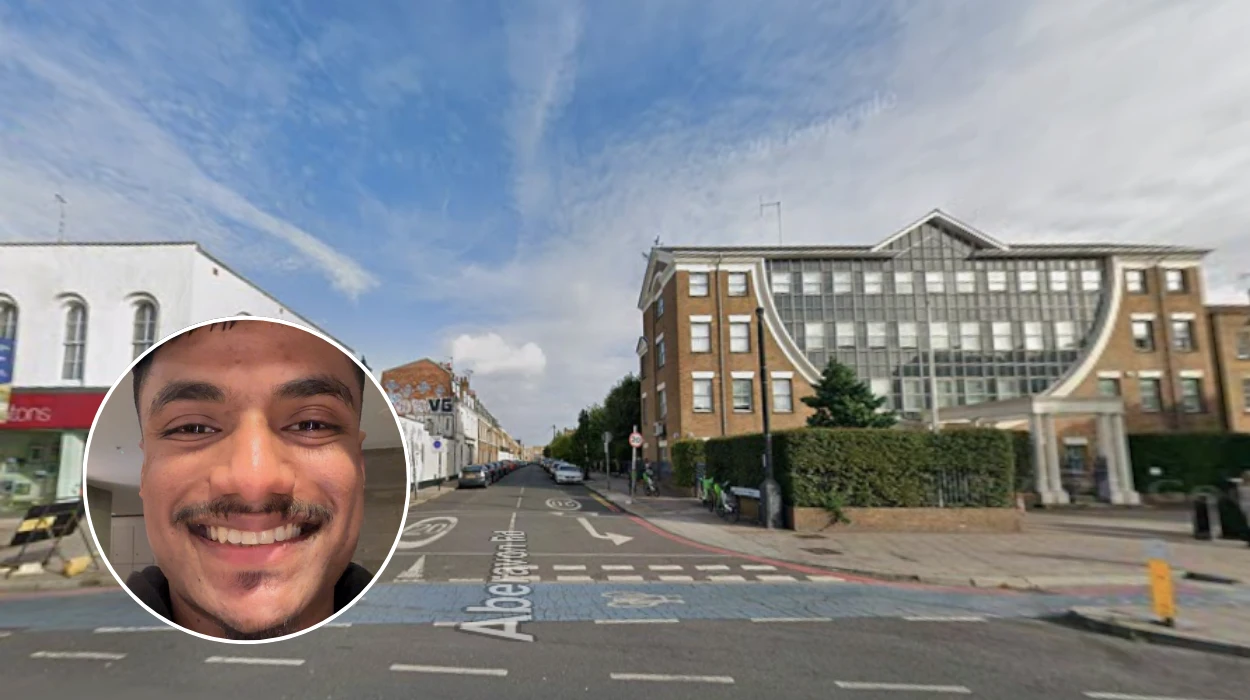
London (Extra London News) July 10, 2026 – A twenty-six-year-old London resident who dismissed severe night sweats, high temperatures, and continuous headaches as a standard viral sickness bug has been diagnosed with an exceptionally rare and aggressive stage four blood cancer. Shafi Islam, a resident of Tower Hamlets in East London, discovered he was battling stage four diffuse large B-cell lymphoma after a sequence of medical investigations revealed that a hidden, slow-growing condition had suddenly transformed into a life-threatening illness. The specific variation of the disease identified by medical professionals is incredibly uncommon, accounting for only 1% to 3% of all recorded large B-cell lymphoma cases globally.
- Key Points
- What Were the Initial Symptoms Mistaken for a Sickness Bug?
- How Did a GP Visit Lead to a Stage Four Cancer Diagnosis?
- What Is Diffuse Large B-Cell Lymphoma?
- How Does This Cancer Impact the Lymphatic System?
- Why Is Shafi Islam’s Case Considered Exceptionally Rare?
- How Has the Chemotherapy Regimen Affected the Patient?
- What Severe Side Effects Occurred After the First Cycle?
- How Has the Physical Transformation Impacted His Outlook?
- What Is the Expected Prognosis for This Rare Cancer?
- Why Is Shafi Islam Refusing to Stop His Job Search?
- How Many Rejections Has the Graduate Faced?
- How Has the Cancer Diagnosis Compounded His Employment Struggles?
- What Are the Key Warning Signs of Lymphoma to Look Out For?
As reported by journalist Howard Lloyd, the regional content editor for MyLondon, the young university graduate is currently undergoing an intensive course of six rounds of chemotherapy to combat the malignancy. The diagnosis has upended the life of the East Londoner, who had spent the weeks leading up to his illness actively seeking employment following his graduation from the University of Greenwich. Medical professionals believe that the underlying lymphoma may have been developing silently within his body for several years without exhibiting noticeable symptoms before rapidly accelerating into an aggressive stage four state.
What Were the Initial Symptoms Mistaken for a Sickness Bug?
The onset of the illness appeared deceptively ordinary, leading the young graduate to believe he had merely contracted a common temporary bug. As reported by Howard Lloyd of MyLondon, Shafi Islam recalled the initial moments of his health decline, stating: “One day I just woke up feeling feverish. I had a headache and all I wanted to do was go back to bed.” Earlier in March, Islam had spent a week working as a temporary room survey assistant at the London Business School, leading him to conclude that he had simply caught a passing workplace illness or a standard seasonal virus.
However, the condition did not dissipate as a standard viral infection would, instead evolving into highly disruptive physiological reactions. According to accounts compiled by Talk to the Press and published via SWNS, Islam stated: “It eventually led to really bad night sweats. I used to wake up in the middle of the night with my entire pillow and bed sheets drenched in sweat.” Alongside the nocturnal symptoms, his abdomen began to alter dramatically due to internal complications that he did not immediately understand. Islam observed that “My stomach became really, really swollen. I didn’t know it at the time, but I had fluid building up in my stomach. Eventually I had four litres drained.”
How Did a GP Visit Lead to a Stage Four Cancer Diagnosis?
What Did the Initial Medical Consultations Reveal?
Convinced that his physical decline was temporary, Islam waited a month before seeking formal medical advice. As reported by the SWNS editorial team, when he finally consulted a General Practitioner, the initial assessment did not point toward a haematological malignancy. The GP initially advised Islam to purchase Gaviscon, an over-the-counter antacid medication, to address the abdominal discomfort. However, recognizing the need for deeper investigation, the GP also booked him in for routine blood and stool tests, alongside instructing him to visit a local hospital the following day to receive a diagnostic chest X-ray.
Why Were Two Separate Biopsies Required?
Within a few days of his initial assessments, Islam’s worsening physical state prompted him to seek emergency care at an Accident and Emergency (A&E) department. As reported by Howard Lloyd of MyLondon, an initial biopsy performed on a lymph node in his armpit initially indicated the presence of a low-grade, slow-moving lymphoma. However, the medical team grew concerned because the extreme severity of the physical symptoms Islam was exhibiting did not align with a low-grade, indolent diagnosis. To achieve absolute clarity, physicians ordered a second, more invasive biopsy to be performed directly on his liver. The subsequent laboratory analysis of the liver tissue confirmed the presence of stage four diffuse large B-cell lymphoma, revealing the true scale and speed of the disease.
What Is Diffuse Large B-Cell Lymphoma?
How Does This Cancer Impact the Lymphatic System?
Lymphoma is a broad term for malignant conditions that originate inside the human lymphatic system, an essential component of the body’s immune framework. The disease alters the behavior of white blood cells, causing them to multiply abnormally and collect within lymph nodes and other vital organs, effectively spreading throughout the body. In large B-cell lymphomas, the abnormal cells are significantly larger than healthy lymphocytes and replicate at an accelerated pace, requiring swift therapeutic intervention to halt progression.
Why Is Shafi Islam’s Case Considered Exceptionally Rare?
While diffuse large B-cell lymphoma is a recognized form of blood cancer, the precise presentation diagnosed in Islam’s liver represents an extreme statistical anomaly. According to medical data cited by MyLondon, this specific variation accounts for a minimal 1% to 3% of all large B-cell lymphoma cases. Doctors involved in the case expressed the belief that Islam had likely hosted a slow-growing, asymptomatic variation of lymphoma within his lymphatic system for years. This underlying condition underwent a sudden, aggressive cellular transformation, shifting rapidly from an unnoticeable low-grade state into an advanced stage four malignancy.
How Has the Chemotherapy Regimen Affected the Patient?
What Severe Side Effects Occurred After the First Cycle?
The therapeutic plan devised by oncologists required an immediate and robust intervention consisting of six comprehensive rounds of chemotherapy. As reported by SWNS, Shafi Islam began his first cycle of treatment in June, a timing that fell precisely one week before his 26th birthday. The introduction of the high-dose chemical agents caused an immediate, severe systemic shock to his body. Describing the immediate aftermath of his opening treatment session, Islam stated: “After my first cycle my whole body was shivering for a couple of hours and my temperature hit 40 degrees. I ended up back in hospital on antibiotics.”
How Has the Physical Transformation Impacted His Outlook?
The aggressive nature of the medication quickly caused visible changes to his physical appearance, a common milestone for cancer patients undergoing intense cytotoxic therapies. In statements provided to Talk to the Press, Islam explained his pragmatic approach to the rapid hair loss caused by the treatment, stating: “I’ve had so many side effects already. My hair started falling out, so I just shaved it all off.” Despite the onset of these rigorous physical challenges, the patient maintained a notably detached, logical mindset when processing the gravity of his stage four diagnosis. Reflecting on the moment he received the definitive news from his oncology team, Islam admitted: “I’ll be completely honest, it didn’t really faze me. I just thought in a very practical type of way. I’ll just go through my treatment, get better and move on.”
What Is the Expected Prognosis for This Rare Cancer?
The statistical outlook provided by medical professionals presented a sobering reality for the young Londoner, falling below his personal expectations for recovery. As reported by the SWNS reporting staff, Islam’s attending physicians communicated the current survival and recovery metrics associated with his specific, rare manifestation of stage four lymphoma. Recalling the conversation regarding his long-term prospects, Islam stated: “My doctor mentioned that there’s over a 50% chance of prognosis, which doesn’t seem too optimistic for me. I thought it would be at least 80%.”
Explore more Tower Hamlets News:
NHS Issues Critical Heatwave Safety Guidelines: Tower Hamlets 2026
Free In the Neighbourhood Festival Returns to Victoria Park, London 2026
Why Is Shafi Islam Refusing to Stop His Job Search?
How Many Rejections Has the Graduate Faced?
Prior to the sudden onset of his symptoms in March, Islam had been entirely dedicated to establishing a professional career after earning his creative writing degree from the University of Greenwich in 2021. According to reportage by MyLondon, his post-graduation routine resembled a full-time job in itself, with Islam stating: “I was applying to apprenticeships and graduate schemes from Monday to Saturday from 9am to 6pm.” This rigorous pursuit resulted in hundreds of formal rejections, an outcome he attributes primarily to a competitive job market and his relative lack of extensive corporate experience. He had previously secured temporary employment roles, including working as an ice rink assistant at London’s Winter Wonderland event in 2024.
How Has the Cancer Diagnosis Compounded His Employment Struggles?
The sudden medical emergency created immediate complications for his employment prospects. Just before falling ill, Islam had successfully secured a temporary position as a park attendant through an employment agency. However, because his sudden hospitalisation occurred right before his scheduled start date, he was removed from the assignment entirely—an event he described to reporters as “heartbreaking.”
Nevertheless, Islam has steadfastly refused to allow his stage four cancer treatment to halt his professional aspirations. As reported by Howard Lloyd, Islam continues to balance the immense physical demands of chemotherapy with daily employment applications and proactive networking. Emphasising his continued resolve to enter the professional workforce despite his medical reality, Islam stated: “It’s been a thousand times harder because I’m dealing with cancer, the impact on my family and the financial pressure. But I’m still job hunting every day and building connections on LinkedIn. I’m more determined than ever to start my career.”
What Are the Key Warning Signs of Lymphoma to Look Out For?
Medical experts regularly emphasise that early identification of haematological malignancies can significantly alter treatment pathways and outcomes. While Shafi Islam’s symptoms were initially obscured by their resemblance to common seasonal bugs, the medical community identifies several distinct red-flag indicators, frequently referred to as “B symptoms,” which warrant immediate professional medical evaluation:
- Involuntary Weight Loss: Unexplained and significant reduction in body mass without deliberate changes to diet or exercise regimens.
- Drenching Night Sweats: Severe episodes of nocturnal sweating that routinely require individuals to change their nightwear or bedding.
- Persistent Pyrexia: Ongoing or recurrent fever spikes, often exceeding 38 degrees Celsius, that occur without an identifiable localized infection.
- Lymphadenopathy: Painless, noticeable swelling or lumps developing in the lymph nodes located within the neck, armpits, or groin area.
- Chronic Fatigue: An overwhelming, continuous state of exhaustion and lethargy that cannot be resolved by rest or sleep.
- Abdominal Discomfort: Swelling, fullness, or pain in the stomach region, which can be caused by an enlarged spleen, liver, or significant fluid accumulation.