Key Points
- Infrastructure Upgrades: Acton Central railway station has officially opened two new toilets, including a fully accessible toilet integrated with a baby changing facility, alongside a completely refurbished passenger waiting room.
- Accessibility Enhancements: The historic station, which dates back to 1853, now features step-free access directly into the waiting room, additional seating capacity, and expanded floor space to accommodate higher passenger volumes.
- Acoustic and Visual Refinements: The physical modifications include modern, energy-efficient lighting installations, new biological planting features, and a specifically lowered ceiling engineered to improve station acoustics by mitigating echoes.
- Official Launch Date: The newly upgraded facilities were formally opened to the general public on Wednesday, 1 July 2026.
- Operational Collaboration: The extensive renovation work was executed by First Rail London, the commercial operator managing the London Overground network on behalf of Transport for London (TfL).
- Capital Funding Support: Financial backing and resource funding for the preservation and modernisation elements of this Victorian-era transit site were provided by the Railway Heritage Trust.
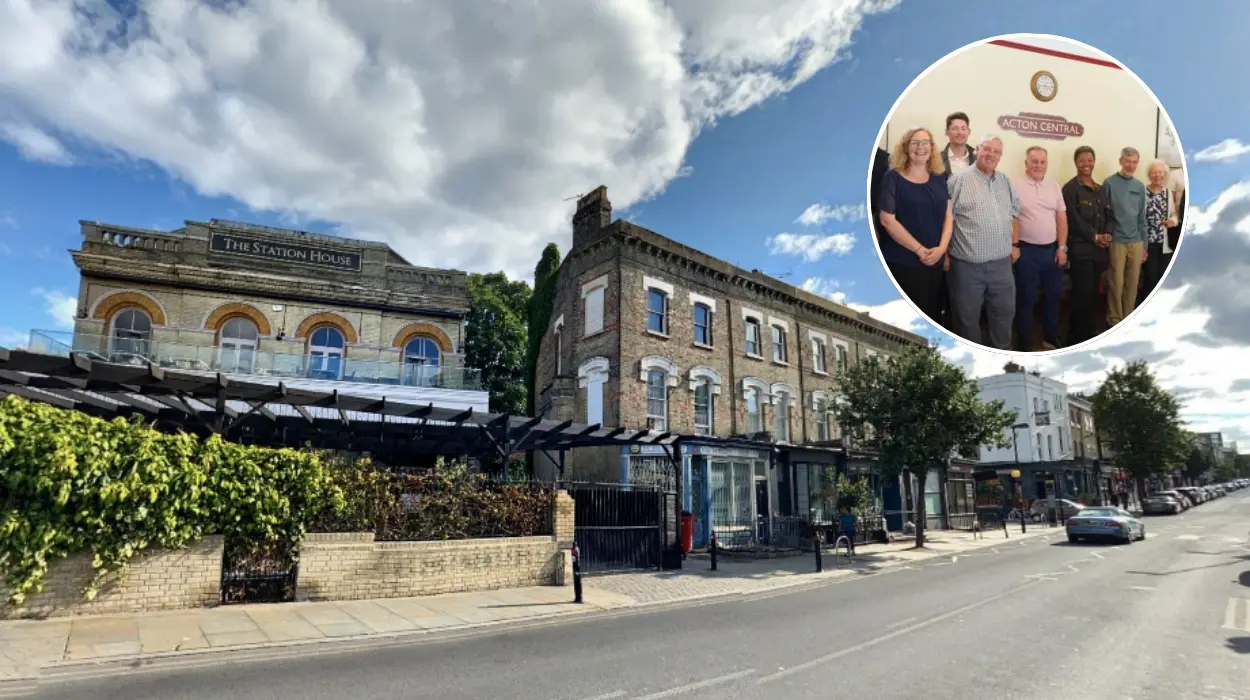
Acton (Extra London News) July 3, 2026 – Major passenger comfort upgrades have officially concluded at Acton Central station following the opening of two newly constructed toilets and a comprehensively modernised waiting room. The operational launch, which took place on Wednesday, 1 July 2026, introduces vital modern amenities to the Victorian-era transit hub, notably an accessible toilet facility that includes an integrated baby changing area. The overarching infrastructure overhaul targets long-standing accessibility barriers at the location, providing step-free entry routes to the waiting room, significantly increased seating layouts, and structural expansions designed to reduce platform congestion during peak commuter hours.
- Key Points
- What Specific Station Upgrades Have Been Introduced at Acton Central?
- Who Funded and Executed the Acton Central Refurbishment?
- What Are Transport Leaders Saying About the New Facilities?
- How Does the 1853 History of Acton Central Impact Modern Renovations?
- Why Are Accessible Toilets and Step-Free Waiting Rooms Critical for London Overground?
- What Are the Broader Regional Transit Impacts for Ealing and Acton?
What Specific Station Upgrades Have Been Introduced at Acton Central?
The structural intervention at Acton Central focuses heavily on combining modern transport requirements with historic architecture. According to the architectural specifications released alongside the launch, the project completely replaced the previous, outdated interior layouts. The addition of two separate toilet blocks provides an essential service that passengers using the London Overground network in West London have long requested. The primary inclusion is a large, fully accessible toilet built to comply with modern disability access standards, featuring robust grab rails, emergency assistance pull cords, and an integrated baby changing table to support families travelling across the network.
Beyond the plumbing installations, the waiting room has undergone a complete spatial redistribution. The walls and structural support pillars have been altered to yield a more open-plan environment, expanding the usable square footage for passengers seeking shelter from inclement weather. Designers also introduced a significant increase in heavy-duty station seating, ensuring that elderly commuters and those with limited mobility have guaranteed rest areas while waiting for incoming trains.
To improve the overall passenger sensory experience, engineers addressed the ambient environment inside the brick-and-mortar structure. A brand-new, energy-efficient LED lighting system has replaced old fluorescent fixtures, dramatically increasing visibility and strengthening natural security observation within the station. Furthermore, a custom-engineered lowered ceiling was installed specifically to address acoustic issues common to mid-19th-century terminal buildings; the new ceiling materials absorb sound waves, preventing the loud echoes and sound reflections that previously made station announcements difficult to comprehend. The interior design is rounded out by the strategic integration of new internal planting boxes, aimed at improving indoor air quality and creating a calmer, more welcoming visual aesthetic for commuters.
Who Funded and Executed the Acton Central Refurbishment?
The delivery of this extensive station upgrade required close collaboration between commercial rail operations, regional transport authorities, and historical preservation bodies. The physical construction works and engineering interventions were systematically managed and carried out by First Rail London. First Rail London serves as the private sector transport operator responsible for running day-to-day train movements and station management across the London Overground network under a strict concession agreement with Transport for London (TfL).
Because Acton Central stands as a site of distinct historical and architectural importance to London’s early industrial expansion, standard modern demolition and reconstruction techniques could not be applied. For this reason, the capital funding mechanism was closely tied to conservation expertise. The financial backing required to execute the modernisation without ruining the station’s structural heritage was supplied directly by the Railway Heritage Trust. The Trust specializes in granting financial capital and architectural oversight to ensure that operational British railway buildings dating back to the Victorian and Edwardian eras maintain their historical integrity while receiving necessary 21st-century upgrades.
What Are Transport Leaders Saying About the New Facilities?
The completion of the station upgrades has drawn strong positive statements from senior executives overseeing London’s public transportation network, who emphasize that these local changes are part of a broader push for equitable transit.
As reported by journalist Ian Miller of EALING.NEWS, First Rail London Customer Service Director Niall Rooney stated that the core operational objective behind the project was to elevate the baseline experience of every single commuter, noting that the ultimate aim was to ensure everyone felt “confident and comfortable” using public transport. Corporate leadership from the operating company indicated that providing well-lit, clean, and accessible facilities directly reduces the psychological anxiety associated with urban travel, particularly for vulnerable individuals or those travelling off-peak.
This perspective on network inclusivity was echoed by regional transit planners. As further reported by journalist Ian Miller of EALING.NEWS, TfL Customer Director Emma Strain stated that the improvements would help remove barriers to travel and make the network more accessible for people with a range of needs. Executive commentary from TfL highlights that upgrading stations like Acton Central is critical to fulfilling the Mayor of London’s broader transport strategy, which aims to make the entire capital transit web fully navigable for passengers with physical disabilities, parents with strollers, and cognitive accessibility requirements.
How Does the 1853 History of Acton Central Impact Modern Renovations?
To understand the technical difficulties faced by engineers during this July 2026 launch, one must look at the long history of the station itself. Acton Central first opened its doors to passengers in 1853 under the management of the North London Railway. It represents an irreplaceable asset within the architectural history of West London’s commuter belt. Built primarily using traditional brick and timber methodologies of the mid-Victorian period, the station was originally designed in an era when accessibility, acoustic dynamics, and plumbing systems were completely different from modern statutory requirements.
Operating a high-frequency urban rail service out of a structure that is nearly 173 years old introduces severe engineering challenges. The original waiting room rooms featured high, cavernous ceilings that generated severe reverberation, rendering modern digital audio announcements almost useless for hard-of-hearing passengers. By deploying a floating, sound-absorbing lowered ceiling, First Rail London’s engineering teams successfully managed to retain the external Victorian brick facade while completely neutralising the internal acoustic echo.
Similarly, incorporating step-free access into a station constructed long before the invention of modern wheelchairs or strict equality acts requires precise floor-level re-engineering. The thresholds of the waiting room doors had to be subtly modified, replacing historic steps with smooth, low-gradient ramps that blend seamlessly into the platforms without disturbing the structural foundations or the listed aesthetic profile protected by the Railway Heritage Trust.
Explore more Local London News:
Hillingdon and Ealing Councils Form Cross-Party Economic Alliance: West London 2026
Four New Deacons Begin Ministry Across North London: 2026
Why Are Accessible Toilets and Step-Free Waiting Rooms Critical for London Overground?
The introduction of these facilities at Acton Central reflects a deeper, systemic shift across the London Overground network to modernise outer-London transport zones. Historically, major central London terminals received the vast majority of infrastructure and accessibility funding, leaving suburban or secondary orbital stations with older, poorly equipped facilities. The lack of clean, accessible public toilets across transport networks has frequently been identified by passenger advocacy groups as a leading reason why disabled individuals or older citizens avoid using public transport altogether.
By installing a modern accessible toilet equipped with robust baby-changing fixtures, TfL and First Rail London are actively trying to close this infrastructure gap. A fully accessible toilet allows independent travel for power-chair users, who no longer need to plan their journeys strictly around larger, central hub stations. Additionally, the inclusion of modern baby changing tables acknowledges the changing demographic of the Acton area, which has seen a substantial influx of young families who rely daily on the London Overground for local and cross-city travel.
The expanded waiting room and additional seating capacity also serve a dual operational purpose. During periods of service disruption or extreme weather events, overcrowded platforms present severe safety risks. By offering an expanded, structurally safe, and acoustically clear indoor waiting environment, station staff can manage crowds much more effectively, ensuring that safety lines are maintained on the platform edges and that clear instructions can be heard by all passengers through the updated acoustic layout.
What Are the Broader Regional Transit Impacts for Ealing and Acton?
The upgrades completed at Acton Central are expected to deliver immediate positive ripple effects across the London Borough of Ealing’s broader local economy and transit network. Acton Central acts as an important transport node, linking residential communities in West London to key employment hubs across the North and East London lines. As passenger numbers continue to rise post-pandemic, local infrastructure must scale to prevent bottlenecking.
By improving the station environment, transport planners hope to encourage a permanent shift away from private automobile use towards sustainable public transit options. When local stations offer clean, safe, well-lit, and accessible amenities, the surrounding community is statistically far more likely to utilise rail travel for short-to-medium distance journeys. This aligns directly with the environmental goals outlined by Ealing Council, which place heavy emphasis on reducing carbon emissions, clearing vehicular traffic congestion from local arterial roads, and improving the air quality index across the borough’s seven core towns.
Furthermore, the successful integration of heritage funding from the Railway Heritage Trust alongside commercial execution by First Rail London establishes a strong operational blueprint for future station modernisations across the United Kingdom. It proves that ancient Victorian transport architecture does not need to be abandoned or completely demolished to meet modern accessibility laws. Instead, through sensitive engineering, acoustic design, and targeted financial investment, the transport networks of the past can be successfully adapted to serve the diverse populations of the future.