Key Points
- Downing Street Within Reach: Presumptive Prime Minister Andy Burnham is just three weeks away from moving into Number 10 Downing Street, following two prior failed attempts to secure the Labour leadership.
- The Regional Shift: Having spent a decade away from the Westminster bubble serving as the Mayor of Greater Manchester, Burnham credits his time in regional government for reshaping his political fortunes and delivering this leadership breakthrough.
- National Blueprint: Delivering his first major address as the presumptive prime minister in Manchester, Burnham pledged to use his signature regional approach, dubbed “Manchesterism,” as a governance blueprint for the entire United Kingdom.
- Establishment of ‘Number 10 North’: A core policy proposal includes establishing a major prime ministerial executive office based in Manchester to decentralise executive decision-making.
- Massive Housing Reform: The newly proposed ‘Number 10 North’ office will assume direct control over the nation’s biggest council housebuilding programme since the post-war period.
- Sweeping Devolution: Burnham promised the “biggest rebalancing of power” in British political history, pledging extensive new authorities to locally elected leaders in England, Scotland, Wales, and Northern Ireland.
- Economic Measures: The address featured economic commitments to raise general living standards, overhaul business rates to protect community institutions like pubs, and offered vague relief measures for rising living costs.
- A Call for Collaborative Politics: Attacking the “broken” Westminster system, Burnham condemned political “finger-pointing” and called for an era of cross-party collaboration to address long-standing national crises like social care.
Manchester (Extra London News) June 29, 2026 – Presumptive Prime Minister Andy Burnham has unveiled a radical blueprint for his upcoming premiership that aims to systematically dismantle Westminster’s centralized authority, using his regional “Manchesterism” doctrine to drive the largest constitutional rebalancing of power in modern British history. Speaking in Manchester just three weeks before his anticipated move into Downing Street, the former Greater Manchester Mayor announced the creation of an executive “Number 10 North” office to manage a historic post-war council housing expansion, alongside extensive new economic and legislative powers for localized leaders across England, Scotland, Wales, and Northern Ireland.
- Key Points
- What is Andy Burnham’s Vision for ‘Manchesterism’ on a National Scale?
- How Will ‘Number 10 North’ Reshape the Machinery of British Government?
- What Does the “Biggest Rebalancing of Power” Mean for the Nations and Regions?
- Can “Manchesterism” Resolve the Broken Political Culture of Westminster?
What is Andy Burnham’s Vision for ‘Manchesterism’ on a National Scale?
As detailed by political correspondent Henry Zeffman of BBC News, Andy Burnham’s ascent to the precipice of Downing Street follows a dramatic political journey defined by resilience and reinvention. Having tried and failed to capture the leadership of the Labour Party on two previous occasions, Burnham ultimately found his path to national power by stepping away from the traditional corridors of Westminster. His decade-long tenure as the Mayor of Greater Manchester provided him with the executive laboratory necessary to forge a distinct political identity—one that has now delivered the ultimate national prize that had previously eluded him in London.
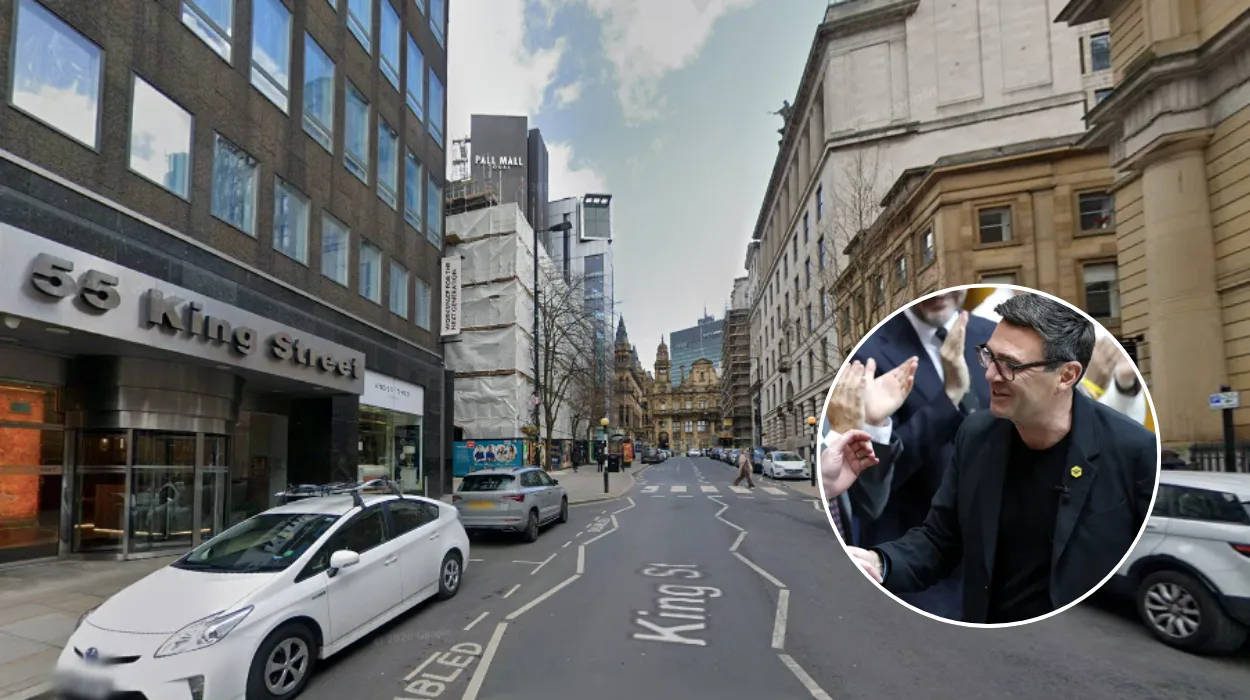
It was therefore a highly symbolic choice for Burnham to deliver his first major address as the presumptive prime minister in Manchester rather than in the capital. As noted in the BBC News analysis by Henry Zeffman, it is of little surprise that the heart of Burnham’s vision for governing the United Kingdom relies heavily on replicating his local triumphs. This specific governance philosophy, termed “Manchesterism,” is being positioned not merely as a regional success story, but as an explicit administrative blueprint designed to alter how the entire country is run.
The speech provided a concrete sense of what this systemic shift would mean for the British public and the civil service. Chiefly, it demands a significant and permanent devolution of executive authority away from Whitehall and into the types of regional, locally elected offices that Burnham himself occupied until less than a fortnight ago. By elevating the mechanics of regional government to a national standard, the incoming prime minister is attempting to fundamentally redefine the relationship between the British public, local authorities, and central government.
How Will ‘Number 10 North’ Reshape the Machinery of British Government?
Among the most structurally significant announcements delivered during the address was the formal plan to establish “Number 10 North,” a brand-new prime ministerial executive hub situated permanently in Manchester. While subsequent commentators have noted that decentralised government offices are not entirely unprecedented—pointing out that numerous civil service branches exist outside London and that under former Prime Minister Rishi Sunak, the Treasury established a prominent regional campus in Darlington—the BBC News report emphasizes that Burnham’s concept goes far beyond a simple relocation of bureaucratic personnel.
According to the reporting by Henry Zeffman of BBC News, Burnham made it clear that this new northern executive headquarters would possess direct, specific responsibility for delivering the “biggest council housebuilding programme since the postwar period.” This specific policy mandate has immediately sparked intense speculation across Westminster regarding how the incoming administration intends to manage the traditional machinery of state. By placing a massive, multi-billion-pound infrastructure and housing portfolio directly into a northern branch of the Prime Minister’s own office, Burnham’s plan raises profound questions about the future role, authority, and relevance of the existing Ministry of Housing.
This structural pivot strongly implies that a much wider, highly disruptive shakeup of central government departments is currently in development. However, the precise operational logistics of how “Number 10 North” will interface with existing Whitehall ministries, or how legislative oversight will be maintained, remain unclarified. As Henry Zeffman dryly observed in his BBC News dispatch, the intricate details of how exactly this governance system will work would undoubtedly have been a primary subject for media scrutiny, but Burnham actively declined to take questions from the gathered journalists following the conclusion of his speech.
Explore more Politics News:
Andy Burnham Unveils Radical Whitehall Devolution Plan: London 2026
Andy Burnham Trump UK Prime Minister Starmer Makerfield 2026
What Does the “Biggest Rebalancing of Power” Mean for the Nations and Regions?
Despite the notable absence of fine administrative detail, the broader strategic vision outlined in the speech has already generated significant momentum among political allies. As reported by Henry Zeffman of BBC News, observers should not underestimate how incredibly enthusiastic Labour MPs will be to finally hear a cohesive, expansive vision for national renewal after years of defensive political posturing. While the policy details remain to be fully populated, the ideological trajectory of Burnham’s upcoming administration has been made unmistakably clear to both the parliamentary party and the wider electorate.
Central to this grand constitutional strategy is a dual-track approach to empowerment. As anticipated by political analysts, Burnham did not limit his devolution promises to the national civil servants transitioning to the new Manchester complex. Instead, he explicitly vowed to transfer historic statutory powers directly to locally elected leaders throughout every corner of the country. Crucially, the presumptive prime minister went out of his way to clarify that this sweeping transfer of autonomy explicitly includes brand-new, robust authorities for devolved leaders within the nations of Scotland, Wales, and Northern Ireland.
In framing this sweeping policy, Henry Zeffman of BBC News noted that Burnham boldly proclaimed these measures would collectively bring about the “biggest rebalancing of power” witnessed in the nation’s political history. By positioning local mayors, regional executives, and devolved parliaments as the primary engines of domestic policy, the incoming administration is signaling an end to the era where major domestic initiatives are dictated solely by civil servants in southwest London.
Can “Manchesterism” Resolve the Broken Political Culture of Westminster?
What are the Key Economic Commitments of the Speech?
Although the address was formally billed by organizers as an economic speech, its financial components were frequently overshadowed by its constitutional ambitions. As reported by Henry Zeffman of BBC News, the economic platform presented by Burnham included a baseline promise to systematically raise living standards for citizens across all regions. Additionally, the presumptive prime minister announced a firm commitment to comprehensively reform the current system of business rates, a measure explicitly intended to provide vital financial breathing room to struggling, independent high-street businesses, most notably local British pubs.
The address also contained what Zeffman described as an “intriguing if vague hint” regarding direct financial relief, with Burnham suggesting his government would look to give working people “a bit extra” to help households cope with the ongoing pressures of rising everyday costs. However, because the speech lacked specific fiscal costings or defined legislative mechanisms, the true nature of this proposed relief remains a matter of ongoing debate among economic analysts.
Why is Power Deemed a Question of Political Culture Rather than Just Economics?
Ultimately, the core of this landmark address was fundamentally preoccupied with the concept of power—specifically, where it is held, who exercises it, and how it is applied. While acknowledging that the distribution of power is invariably tied to economic resources, Burnham’s primary arguments for stripping Whitehall of its traditional monopolies were rooted in a fierce critique of British political culture rather than basic macroeconomic growth formulas.
In a searing assessment of what he explicitly characterized as a “broken” Westminster system, Burnham turned his attention to the toxic nature of contemporary political discourse. As reported by Henry Zeffman of BBC News, Burnham launched a direct attack on institutional “finger-pointing,” a practice he warned was actively “destructive of what remains of public trust in politics.”
In place of this adversarial status quo, Burnham issued an impassioned call for a “more collaborative politics” across the floor of the House of Commons. Political commentators have already interpreted this collaborative rhetoric as a strong, intentional hint that the incoming prime minister intends to actively pursue cross-party talks to finally secure an elusive, long-term solution to the UK’s compounding social care crisis. For Burnham, this transition to a cooperative political model is not merely a stylistic preference, but the foundational argument for why executive power must be decisively localized—moving it away from the point-scoring environment of London and into the pragmatic, results-oriented hands of regional communities.