
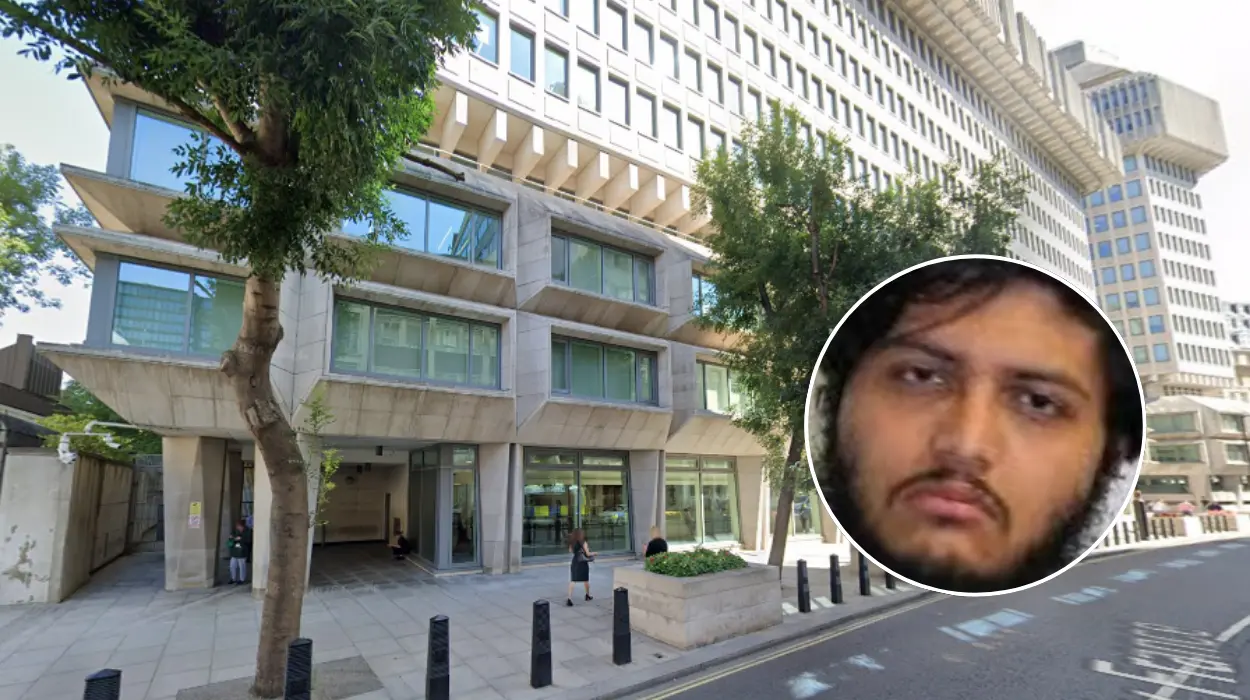
Key Points
- Conviction of Defendant: Shuja Gibraeel Mohsin, a 20-year-old resident of London, has been found guilty at the Old Bailey of possessing and distributing illegal Islamist extremist content.
- Airport Interception: Counter-terrorism officers initially stopped the defendant at Heathrow Airport in January 2024 as he was returning from a personal trip to Pakistan.
- Device Extraction: While initially allowed to leave, police confiscated his mobile phone and a USB storage drive, which revealed extreme material upon subsequent digital forensic analysis.
- Extremist Affiliations: Investigators uncovered digital evidence showing active participation in online group chats, alongside the viewing of materials linked to the Taliban, Hamas, and Islamic State (IS).
- Violent Content Found: The digital devices contained an instructional bomb-making manual as well as graphic IS execution films.
- Timeline of Arrests: Mohsin was first arrested in March 2024, followed by a second arrest and detailed interrogation session in July 2024 after further investigation.
- Prosecution Timeline: The Crown Prosecution Service (CPS) officially sanctioned criminal charges against Mohsin in April 2025.
- Specific Legal Charges: The defendant was convicted of one count under Section 58 of the Terrorism Act 2000 and two counts under Section 2 of the Terrorism Act 2006.
- Sentencing Schedule: Following the conclusion of the two-week trial on June 19, judicial authorities scheduled Mohsin’s sentencing hearing for August 14.
London (Extra London News) June 20, 2026 – A twenty-year-old London resident, Shuja Gibraeel Mohsin, faces a significant prison sentence after being convicted at the Central Criminal Court, widely known as the Old Bailey, for the possession of a bomb-making manual and the illicit distribution of graphic Islamic State execution videos. The formal convictions mark the culmination of an extensive investigation conducted by Counter Terrorism Command officers, which began during a routine border interception more than two years ago. Following a comprehensive two-week trial that concluded on June 19, a jury found the defendant guilty on multiple serious terrorism charges, spotlighting a persistent vulnerability concerning the digital radicalisation of young people across the United Kingdom.
- Key Points
- Who is Shuja Gibraeel Mohsin and Why Was He Stopped at Heathrow Airport?
- What Extremist Material Did Counter-Terrorism Police Uncover on the Devices?
- How Did the Investigation Proceed to Subsequent Arrests and Interrogations?
- What Specific Terrorism Act Charges Was the Defendant Convicted Of?
- What Warning Did the Metropolitan Police Issue Regarding Youth Radicalisation?
- How Can Parents and Carers Prevent Online Radicalisation According to Officials?
- What Penalties and Next Legal Steps Does Shuja Gibraeel Mohsin Now Face?
Who is Shuja Gibraeel Mohsin and Why Was He Stopped at Heathrow Airport?
As outlined by Alastair Lockhart, News Editor for The London Standard, the legal troubles for Shuja Gibraeel Mohsin began directly upon his arrival back in the United Kingdom following an international flight. In January 2024, the then-19-year-old was stopped by counter-terrorism police officers at Heathrow Airport as he cleared border controls returning from a journey to Pakistan.
While border authorities did not immediately detain Mohsin or place him into active custody upon his arrival, specialized officers exercised legal powers to temporarily confiscate his primary personal electronic items, including his mobile smartphone and an accompanying USB flash drive. This critical enforcement action allowed technical analysts within the Metropolitan Police Service to initiate a meticulous forensic extraction of the data architecture stored on the devices, laying the groundwork for the subsequent criminal prosecution.
What Extremist Material Did Counter-Terrorism Police Uncover on the Devices?
According to details published by Alastair Lockhart of The London Standard, the subsequent digital forensic analysis of the confiscated smartphone and USB storage drive yielded an extensive repository of highly concerning radical content. The investigation revealed that Mohsin had integrated himself into specific online group communication chats dedicated to sharing and discussing fundamentalist ideologies.
The digital data trails proved that the defendant had actively viewed, collected, and engaged with a wide array of media propaganda directly tied to proscribed extremist Islamist groups, explicitly including the Taliban, Hamas, and the Islamic State (IS). Of greatest concern to the Crown prosecution was the discovery of a highly specialized, practical instructional manual detailing the creation and assembly of improvised explosive devices, alongside several unedited, graphic videos documenting public executions carried out by Islamic State militants.
How Did the Investigation Proceed to Subsequent Arrests and Interrogations?
The investigative timeline extended over several months as counter-terrorism detectives systematically built their evidentiary case against the defendant. As reported by Alastair Lockhart for The London Standard, Mohsin was officially arrested for the first time in March 2024, a development that allowed officers to execute search warrants and seize his personal computer for further forensic analysis.
Following a deeper examination of the desktop files and web history, the police enacted a second formal arrest in July 2024. During this mid-summer arrest, detectives subjected Mohsin to rigorous, structured custodial interviews, confronting him directly with the radical materials, communication transcripts, and execution videos extracted from his multiple personal electronic devices.
Explore more Crime News:
Man Arrested After Nine Years Over Putney Bridge Pusher Attack London 2026
North Finchley Shooting: Manhunt Underway After Woman Killed 2026
What Specific Terrorism Act Charges Was the Defendant Convicted Of?
Following a comprehensive review of the digital assets amassed by the Metropolitan Police, the legal apparatus moved toward formal prosecution. As reported by Alastair Lockhart of The London Standard, the Crown Prosecution Service officially authorized a series of criminal charges against Mohsin in April 2025, leading directly to the two-week criminal trial at the Old Bailey that concluded on June 19.
The jury found Mohsin guilty on three distinct indictments under United Kingdom anti-terrorism legislation:
- One count of possession of a document likely to be of use to a person committing or preparing an act of terrorism, contrary to Section 58 of the Terrorism Act (TACT) 2000, which applied explicitly to the instructional bomb-making document found in his possession.
- Two counts of dissemination of terrorist material, contrary to Section 2 of the Terrorism Act (TACT) 2006, stemming directly from evidence that he had purposefully transmitted and shared the graphic IS execution videos with an online contact.
What Warning Did the Metropolitan Police Issue Regarding Youth Radicalisation?
Following the delivery of the guilty verdicts at the Old Bailey, senior law enforcement figures expressed deep concern regarding the age at which the defendant first engaged with extremist materials. As reported by News Editor Alastair Lockhart of The London Standard, Commander Helen Flanagan, who serves as the head of Counter Terrorism Policing London, issued an official public statement detailing the trajectory of the defendant’s online behavior.
Commander Helen Flanagan stated that:
“Our investigation showed that Mohsin was being drawn into extremist and terrorist material and ideologies from when he was only 14 or 15 years old. This is reflective of a growing trend and concern over children and young people being radicalised and accessing extremely dangerous and violent terrorist ideologies and material online.”
The Commander emphasized the changing nature of online radicalisation, noting that modern digital platforms allow extreme groups to target vulnerable minors directly within their home environments.
How Can Parents and Carers Prevent Online Radicalisation According to Officials?
In the wake of the conviction, the Metropolitan Police Service utilized the high-profile case to appeal directly to the public for increased vigilance regarding youth internet habits. As reported within the analytical coverage by Alastair Lockhart for The London Standard, Commander Helen Flanagan stressed that early intervention remains the most effective tool to combat digital grooming by terrorist entities.
In her official public advisory, Commander Helen Flanagan stated:
“It’s vital that parents and carers are aware of what children are doing on the internet. I would implore you to have conversations, to be inquisitive about what your children are doing online, and if you have any concerns, then there is help available to you via the ACT Early website.”
The official guidance points families toward specialized, non-punitive support frameworks designed to help young people disengage from radical paths before their actions cross into serious criminal thresholds.
What Penalties and Next Legal Steps Does Shuja Gibraeel Mohsin Now Face?
The guilty verdicts delivered at the Central Criminal Court carry severe legal ramifications under British law, which mandates strict custodial sentences for individuals convicted of distributing execution media and harboring explosive manuals. As documented by Alastair Lockhart of The London Standard, the presiding judge has formally deferred final sentencing to allow for the preparation of necessary pre-sentence reports.
In her concluding remarks regarding the judicial outcome, Commander Helen Flanagan noted:
“Otherwise, there are very clear and serious consequences for those who are involved in downloading or sharing terrorist content online, a reality that Mohsin is now facing.”
The judicial schedule dictates that Shuja Gibraeel Mohsin will remain in custody until his formal sentencing hearing, which has been officially set to take place at the Old Bailey on August 14.