Key Points
- Protected Status Achieved: Croydon Council has officially granted Asset of Community Value (ACV) status to the historic Kenley Hotel pub, protecting it from immediate development.
- Community-Led Victory: The application was spearheaded by the Kenley and District Residents Association (KENDRA) following a rapid, grassroots campaign that secured over 130 signatures in a single day.
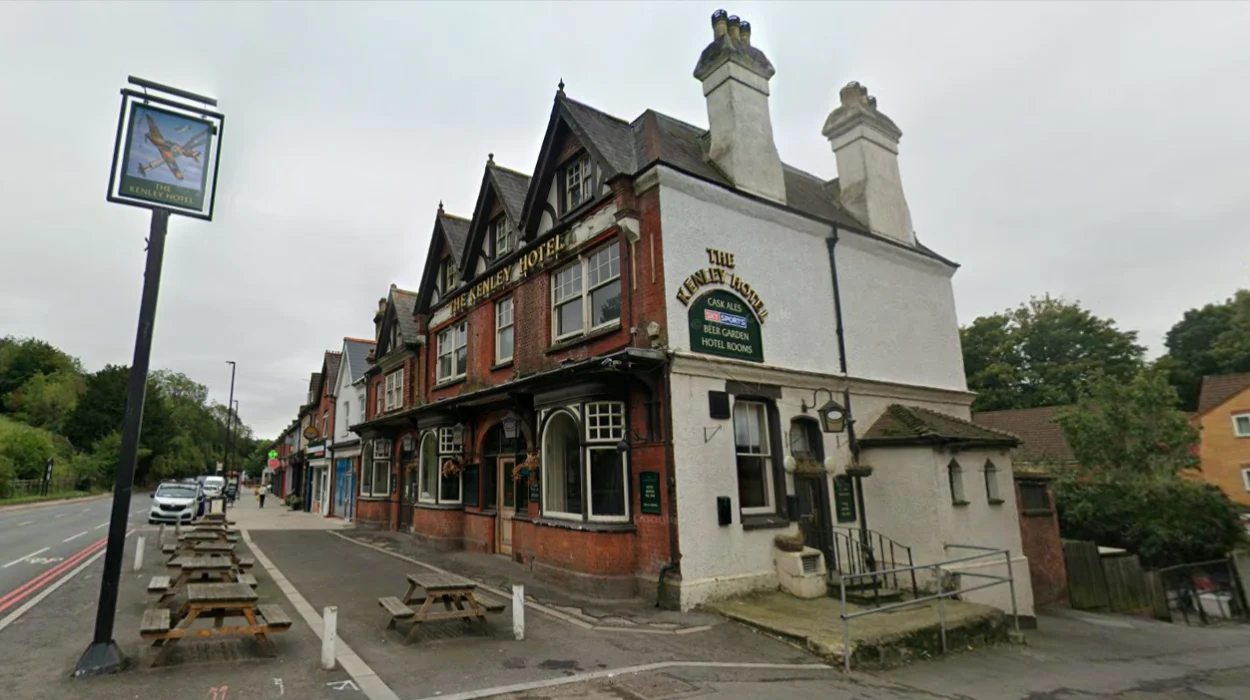
- Historical and Cultural Value: Built in 1886, the Victorian landmark on Godstone Road famously served RAF personnel during the Battle of Britain and reportedly features a bar originally crafted for the Titanic.
- Right to Bid Triggered: The ACV status establishes a statutory five-year protection period, forcing a six-month moratorium on any proposed sale to allow the community to raise funds and submit a purchase bid.
- The Community Benefit Society Plan: Campaign leaders are establishing a Community Benefit Society (CBS) registered with the Financial Conduct Authority (FCA) to launch a public share offer for local co-ownership.
- Ambitious Mixed-Use Vision: Proponents intend to restore the building as a community hub, combining a traditional pub with co-working spaces, podcasting studios, and childcare facilities for local schools.
- Lingering Corporate Silence: The building has been boarded up since its sudden closure by owners Star Pubs & Bars (Heineken) in mid-2023, with corporate leadership failing to respond to community inquiries regarding the freehold.
Kenley (Extra London News) June 11, 2026 – A major community campaign in South London has achieved a critical legal breakthrough after Croydon Council formally designated the historic, boarded-up Kenley Hotel pub as an Asset of Community Value (ACV). The landmark ruling provides the Victorian building with temporary protection from commercial redevelopment and grants local residents the statutory right to buy the site if it is placed on the market. Led by the Kenley and District Residents Association (KENDRA), the grassroots intervention follows nearly a year of local uncertainty after the landmark public house was abruptly shuttered and secured behind metal hoarding by its corporate owners.
- Key Points
- Why Is The Kenley Hotel Transitioning Into An Asset Of Community Value?
- How Did Local Activists Secure The Protective Ruling From Croydon Council?
- What Legal Protections Does An ACV Provide Against Property Developers?
- Who Currently Owns The Property And What Are Their Intentions?
- What Is The Long-Term Community Business Plan For The Kenley Hub?
- Are There Successful Precedents For Community-Owned Public Houses?
The council’s decision, finalized on May 26 and publicized this week, enacts a five-year protective designation under the Localism Act 2011. While the ACV status does not outright block future planning applications or compel the freeholder to sell to the public, it legally triggers an immediate six-month moratorium on any commercial sale. This enforcement block prevents property developers from pushing through a rapid private purchase, providing community organizers with a vital window to formulate an independent financial bid.
With legal protections established, community organizers are moving forward with a sophisticated corporate restructuring plan to transition the 140-year-old landmark into a community-owned asset. The campaign group is currently preparing paperwork to establish a formalized Community Benefit Society (CBS) regulated by the Financial Conduct Authority (FCA). This non-profit mechanism will allow residents to purchase direct shares in the building’s freehold, funding an ambitious multi-use regeneration strategy designed to blend a traditional drinking establishment with modern social infrastructure.
Why Is The Kenley Hotel Transitioning Into An Asset Of Community Value?
As reported by Harrison Galliven, the Local Democracy Reporter for MyLondon, the structural victory marks a dramatic turning point for a historic site that has sat vacant on Godstone Road since August of last year. The prominent corner building, which originally opened its doors in 1886, has historically functioned as the geographic and social focal point of the Kenley area.
Writing for Inside Croydon, local journalists noted that the Kenley Hotel is a grand example of high-Victorian architecture with deep ties to British heritage. During the height of the Second World War, the establishment famously served pints to Royal Air Force heroes and heroines stationed at the nearby RAF Kenley during the Battle of Britain. Furthermore, local historical lore maintained by the Croydon branch of the Campaign for Real Ale (CAMRA) suggests that the pub’s ornate interior bar was originally commissioned and manufactured for the ill-fated ocean liner RMS Titanic before being salvaged and permanently installed in the South London establishment.
Despite this dense cultural pedigree, the pub ceased operations under what corporate owners described as a “temporary” closure, only for the freehold to be quietly floated on commercial markets shortly thereafter. Fearing the permanent loss of the architectural landmark to residential flat conversions, KENDRA launched a rapid counter-offensive on April 14, passing a unanimous internal motion to seek formal government intervention.
Explore more Croydon News:
Mice and Cockroaches Overrun Council Homes: Croydon 2026
Southern Trains Delayed Between East Croydon and Oxted: 2026
How Did Local Activists Secure The Protective Ruling From Croydon Council?
The successful application process moved at an unusually rapid pace for municipal bureaucracies, advancing from submission to final approval in less than four weeks. According to internal campaign dispatches published by the KENDRA executive committee, organizers initially required a minimum of 21 verified local signatories on the electoral register to legitimize the legal filing.
As detailed in campaign updates published on the official KENDRA civic portal, the baseline requirement was met with overwhelming local backing:
“The strength of support for the ACV was exceptional. We needed 21 signatories to support the nomination. We got 130 plus, in a day. Our thanks to all those who signed. When submitting our ACV we had to prove that the Kenley Hotel is indeed a valued community asset.”
To reinforce the written application submitted on May 1, local filmmaker Ian Anderson produced a short documentary film capturing interviews with former patrons, neighborhood residents, and historic staff members articulating the human impact of the pub’s closure. The multimedia evidence was presented to local authorities during a public briefing at Kenley Memorial Hall, which successfully demonstrated that the venue met the strict statutory criteria of contributing to the cultural and social well-being of the neighborhood.
What Legal Protections Does An ACV Provide Against Property Developers?
The invocation of the Localism Act 2011 fundamentally alters the real estate mechanics surrounding the property, though community leaders emphasize it is not an absolute shield against corporate redevelopment. Under British planning law, the five-year ACV designation creates a system of “first refusal” for local community preservation groups.
If the current freeholder attempts to enter a contract of sale with a commercial residential developer, they are legally mandated to notify Croydon Council immediately. This notification triggers an interim six-week moratorium, during which any qualified community group can formally declare their intent to bid. Once that intent is registered, a full six-month freeze is placed on the property sale.
As analyzed by Inside Croydon editorial staff, the mechanism has historically yielded mixed results within the borough:
“ACV is a useful device for switched-on planning departments to work with community groups to maintain and restore heritage buildings and assets. But this is Croydon. The council granted ACV status to The Glamorgan on Cherry Orchard Road, but allowed the status to expire, leaving locals in Addiscombe with a planning mess to try to fix themselves—and a developer who owns the site and has demanded an unrealistically high purchase price.”
Recognizing these historical precedents, KENDRA organizers are structuring their financial strategy early to avoid the pitfalls of past failed pub rescues, ensuring they have competitive capital reserves ready before the freeholder initiates a formal market transaction.
Who Currently Owns The Property And What Are Their Intentions?
The freehold of the Kenley Hotel is held by Star Pubs & Bars, the dedicated property leasing and management subsidiary of global brewing conglomerate Heineken. While CAMRA’s London Drinker industry ledger notes that the site has historically operated under long-term commercial lease agreements generating tens of thousands of pounds in annual rent, corporate strategy has shifted toward shedding brick-and-mortar hospitality liabilities in favor of cashing in on high-value suburban land assets.
As revealed by Inside Croydon investigative reporting, campaign leaders approached the executive offices of Star Pubs & Bars and Heineken multiple months ago to formally request clarity regarding their long-term maintenance and divestment plans for the Victorian structure. To date, corporate leadership has maintained absolute silence, failing to return calls or issue any formal statement to the residents’ association.
This lack of corporate engagement is a primary motivator behind the community’s aggressive preemptive legal strategy. By securing the ACV early, the community has effectively blocked Star Pubs & Bars from executing a quiet, off-market transaction to speculative residential developers while ignoring the localized demand for the site’s preservation.
What Is The Long-Term Community Business Plan For The Kenley Hub?
Rather than returning the building to a purely commercial, corporate-managed drinking establishment, the campaign intends to pioneer a modern, mixed-use community hub model. Speaking to Harrison Galliven of the LDRS, KENDRA campaign leader Fareita Udoh detailed an expansive architectural and social vision for the multi-story complex that extends far beyond the traditional pouring of pints.
As reported by Harrison Galliven of the LDRS, Fareita Udoh stated that:
“Upstairs we could have podcasting studios, co-working spaces and places for wraparound care because there are three local schools that are struggling with facilities. The Kenley Hotel isn’t just a building. It’s a landmark woven into our local identity — a place where generations have gathered, celebrated and connected. ACV status gives us the chance to step forward and take control of our own future.”
The financial vehicle driving this vision is the impending launch of the Community Share Offer. Once the Financial Conduct Authority approves the registration of the Kenley Community Benefit Society, residents will be invited to purchase direct equity shares. This framework guarantees that every contributing neighborhood resident becomes a literal co-owner of the physical infrastructure, with voting rights structured democratically rather than based on the size of an individual’s financial investment.
Are There Successful Precedents For Community-Owned Public Houses?
While the financial mountain to climb is steep—requiring significant capital for both the initial property acquisition and an extensive internal refurbishment of the deteriorating interior—organizers point to highly successful regional blueprints as evidence of viability.
In public statements issued by the ACV organizational committee, campaign leaders identified The Hope in neighboring Carshalton as the gold standard for customer-owned models. Since transitioning away from corporate brewery control to full community ownership in 2011, The Hope has thrived commercially, ultimately being named London’s Pub of the Year seven separate times by industry experts.
The Kenley campaign is drawing directly from the advisory resources of CAMRA’s “Saving Your Pub” framework to assemble specialized volunteer working groups over the summer. These highly structured teams will focus on municipal planning law, crowdfunding compliance, and structural engineering assessments. Commenting to the LDRS on the scale of the upcoming endeavor, Fareita Udoh summarized the collective mood of the neighborhood following the council’s designation:
“This is a huge win for Kenley — and it’s only the beginning. The CBS and share offer will give every resident the opportunity to be part of something historic.”