Key Points
- Capacity Increase Approved: The Environment Agency has officially varied the environmental permit for Viridor’s Beddington Energy Recovery Facility, enabling a processing increase of nearly 35,000 tonnes per year.
- New Operational Maximum: This variation elevates the total permissible volume of non-recyclable household and commercial waste handled by the facility from 347,422 tonnes to 382,286 tonnes annually.
- Widespread Political & Local Backing Against: Local Liberal Democrat MP Bobby Dean, Hackbridge Councillor Dave Tchil, and Sutton Council’s Environment Committee have heavily condemned the choice, highlighting that it goes entirely against local public interests.
- Extensive Past Emissions Breaches: The decision arrives after a Compliance Assessment Report revealed the facility recorded 916 nitrogen oxide exceedances between September 2022 and March 2024.
- Inter-Borough Operations Continue: The incinerator will continue to process residual rubbish collected across the South London Waste Partnership—which includes Croydon, Kingston, Merton, and Sutton boroughs—alongside external regional commercial waste.
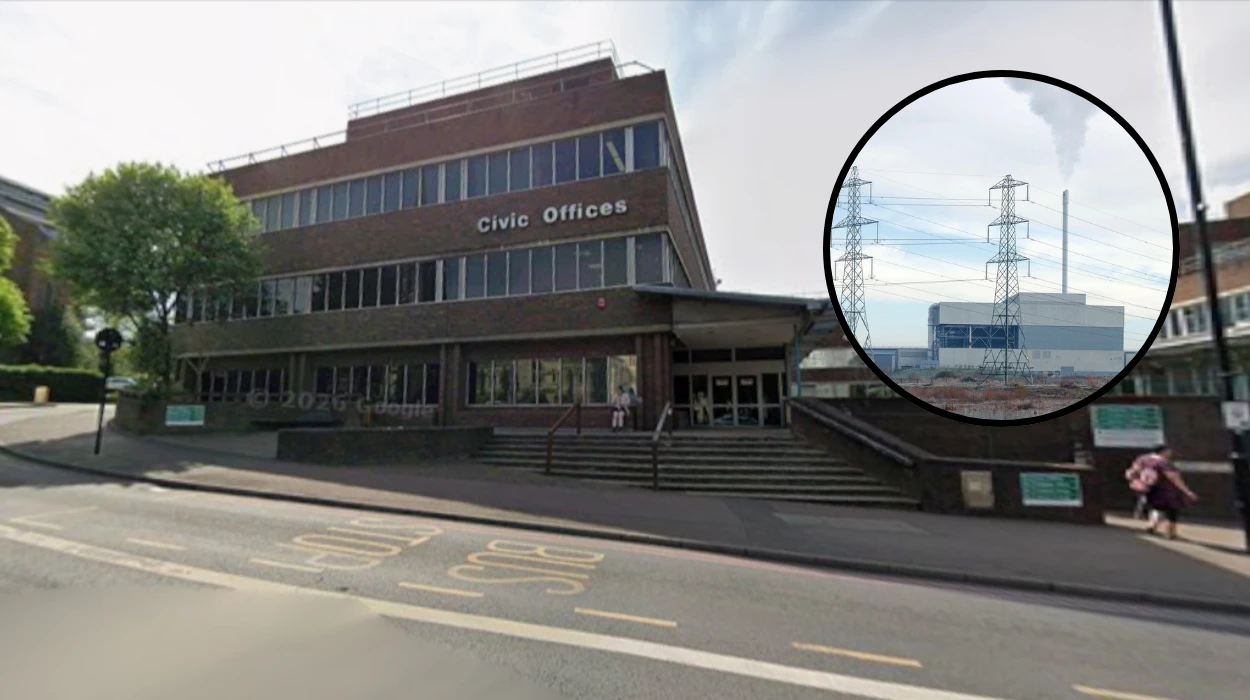
Sutton (Extra London News) June 4, 2026 – The Environment Agency has officially sanctioned plans to expand operations at the controversial Beddington Lane incinerator in South London, permitting an additional 34,864 tonnes of non-recyclable waste to be incinerated each year. The regulatory authority confirmed on Wednesday that it had approved the permit variation requested by operator Viridor South London Ltd, pushing the total capacity from 347,422 tonnes to a maximum of 382,286 tonnes per annum. This landmark ruling bypasses intense public resistance and fierce pushback from nearby regional assemblies, who contend that the expansion threatens community welfare and ignores a documented history of hundreds of toxic atmospheric emissions failures.
- Key Points
- Why Has the Environment Agency Approved the Beddington Incinerator Expansion?
- Why Are Local MPs and Councillors Calling the Decision an Absolute Betrayal?
- How Did Past Nitrogen Oxide Emissions Breaches Affect the Compliance Debate?
- Why Is Sutton Council Deeply Disappointed by the Expanded Capacity?
- What Else is Changing Under the Newly Revised Environmental Permit?
- What Is the Long-Term Background of the Beddington Lane Facility?
The facility serves as the central hub for processing domestic refuse coming from the South London Waste Partnership, which represents the boroughs of Croydon, Kingston, Merton, and Sutton, whilst additionally burning commercial refuse gathered from across the broader region. Local political leaders and residents have collectively voiced fury at the timing of the decision, noting that it directly follows the publication of official compliance data detailing widespread pollution events. Government figures published last autumn verified that the plant breached its specific statutory limits on nitrogen oxides on 916 separate occasions over an 18-month monitoring window, leading to an official downgrade of the operator’s environmental compliance rating.
Why Has the Environment Agency Approved the Beddington Incinerator Expansion?
In an official public announcement published by the executive body on 3 June 2026, the regulatory authority defended the permit revision, asserting that the facility satisfies all technical and legal safety obligations. The agency outlined that the decision followed a meticulous engineering review and two extensive rounds of public focus consultations designed to gauge the physical impact on the surrounding urban footprint.
As documented in the official statement released by the Environment Agency, technical specialists spent considerable time analyzing the core details of the application alongside data provided by localized advocacy groups. The authority insisted that its foundational legislative duty is to measure applications strictly against statutory environmental frameworks, concluding that the updated operational limits provide an uncompromised, high level of safeguarding for both the ecosystem and surrounding public health.
To contextualise the regulatory architecture, Matt Higginson, the Environment Manager for the Environment Agency across Kent, South London, and East Sussex, stated that:
“Environmental permits set out stringent conditions for all waste sites. We talk to bodies like the UK Health Security Agency before issuing them. The environmental permit for Beddington is set at levels to protect human health and the environment.”
Matt Higginson further explained that emissions profiles emerging from the stack are tracked via automated monitoring protocols operating around the clock, with all logged data undergo rigorous forensic assessments to catch any ongoing permit deviations. The agency stressed that it maintains statutory authority to issue enforcement mandates, suspend permits, or pursue criminal prosecution if serious breaches recur under the revised framework.
Why Are Local MPs and Councillors Calling the Decision an Absolute Betrayal?
The response from local representatives has been overwhelmingly critical, characterized by calls for immediate ministerial intervention to stall the capacity expansion. Politicians representing the affected communities argue that the regulatory body has placed corporate priorities above the explicitly stated health concerns of taxpayers.
As reported by Harrison Galliven, a Local Democracy Reporter for MyLondon, Hackbridge Councillor Dave Tchil branded the permit authorization an “absolute betrayal” of the working-class families and households located within the immediate fallout zone of the Beddington site. Councillor Dave Tchil, who has spent years collaborating with grassroots environmental campaigners to track, plot, and expose sudden structural outages at the plant, expressed deep concern that local communities are being forced to bear the brunt of expanded industrial activity with zero localized benefits.
Simultaneously, the parliamentary representative for Carshalton and Wallington has escalated the matter straight to central government departments. As published in an official dispatch by the Sutton Liberal Democrats, Bobby Dean MP described the regulatory greenlight as “disgraceful,” noting that the expansion lacks any justifiable geographical necessity.
Bobby Dean MP stated that:
“We’ve just heard the disgraceful news that the Environment Agency has approved an increase in waste processing at the Beddington incinerator. This is despite strong opposition from me, the Council, and local residents. My colleagues and I have repeatedly raised all of our concerns with ministers in Parliament, submitted detailed objections to the Environment Agency, and met directly with its officers to make the case against this increase.”
The Liberal Democrat lawmaker further emphasized that accelerating operations when there is no verifiable communal demand raises fundamental questions about whose interests the regulator truly protects, adding that senior Labour figures have previously conceded that London maintains a surplus of waste incineration capacity.
Explore More London Local News
Westminster Urges Airbnb to Curb Illegal West End Renting: London 2026
882-Home Plan Threatens Grove Farm Nature Reserve: Objections Open in Sudbury 2026
How Did Past Nitrogen Oxide Emissions Breaches Affect the Compliance Debate?
A central battleground in the public consultation process was the facility’s recent operational track record, which critics argue should have disqualified the site from any capacity increases. The focal point of this scrutiny involves a Compliance Assessment Report generated by the regulator following structural irregularities at the plant.
As detailed in an investigative report by Peter Davies-Dennis for Circular Online, a Compliance Assessment Report compiled by the Environment Agency confirmed that Viridor’s infrastructure breached its mandatory environmental permit 916 times between September 2022 and March 2024. The data revealed a persistent pattern of nitrogen oxide exceedances, which occurred alongside separate logged infractions for volatile organic compounds, hydrogen chloride, and sulphur dioxide.
According to technical specifications published on WikiWaste, these extensive exceedances, combined with systemic deficiencies in the facility’s internal management schemes and poor localized monitoring protocols, led to a Category 2 non-compliance designation. This category denotes a failure that carries a significant potential to cause distinct environmental degradation. Consequently, the facility was slapped with a severe Compliance Classification Scheme score of 95, which subsequently triggered a formal downgrading of Viridor’s regulatory compliance tier.
What Was the Operator’s Defense Regarding the Documented Malfunctions?
Faced with intense scrutiny over the data, the corporate leadership of the facility has deflected primary responsibility for the systemic monitoring failures, pointing instead to external engineering variables.
As reported by Peter Davies-Dennis of Circular Online, Viridor, which self-reported the operational discrepancies to the authorities, maintained that the hundreds of logged atmospheric breaches were directly caused by the actions of an independent, third-party contractor rather than fundamental flaws in their own corporate governance. Despite this defense, local municipal committees have remained highly skeptical of the firm’s transparency, referencing past internal communications problems.
According to historical records from a Sutton Council Hackbridge, St Helier and The Wrythe Local Committee meeting, municipal directors noted severe alarm regarding how slow Viridor had historically been to notify elected authorities when structural accidents occurred on-site, prompting formal letters demanding greater corporate accountability.
Why Is Sutton Council Deeply Disappointed by the Expanded Capacity?
The local government framework overseeing the borough of Sutton has formally registered its institutional opposition to the expansion, stating that the plant’s baseline physical setup is poorly suited for heavier throughput.
As reported by Circular Online, the Chair of Sutton Council’s Environment and Sustainable Transport Committee, Christopher Woolmer, released an official statement declaring that the local authority was “deeply disappointed” by the outcome of the Environment Agency’s review.
Councillor Christopher Woolmer stated that:
“We argued that the site and plant lack the capacity to process the proposed amount of waste. We are also concerned about Viridor’s repeated permit breaches, which last year resulted in a downgrading of their compliance rating.”
In addition to structural capability concerns, local residents have continuously bombarded the council with administrative complaints centered on deteriorating quality of life factors. Families living on the periphery of the Beddington Lane installation have cited a rise in heavy goods vehicle traffic along residential roads and a frequent release of pungent, unpleasant odours drifting from the processing chambers.
What Else is Changing Under the Newly Revised Environmental Permit?
While the headline change centers on the thousands of extra tonnes of rubbish slated for incineration, the varied document also institutes a total overhaul of the site’s overall licensing structure, consolidating multiple industrial activities under a single regulatory umbrella.
As outlined in the official regulatory brief published by the UK Government, the new permit brings into force several key operational updates:
- Permit Consolidation: It merges the individual environmental permits for the primary Energy Recovery Facility and the adjacent waste transfer station into one single, unified regulatory framework.
- Atmospheric Discharge Points: It explicitly amends all listed emission point locations for discharges bound for surface water systems and regional sewerage lines.
- Shredder Emissions Integration: It formally incorporates a new, dedicated emissions point specifically allocated to track output from the heavy shredding machinery working within the waste transfer station.
- Hazardous Waste Categorization: It incorporates supplementary European Waste Catalogue codes allowing the temporary storage and transit of specialized clinical and hazardous materials.
The Environment Agency was careful to clarify that these new European Waste Catalogue classifications apply strictly to temporary logistics and holding operations, explicitly stating that hazardous and clinical materials are completely banned from being processed inside the primary high-temperature energy-recovery burners.
What Is the Long-Term Background of the Beddington Lane Facility?
The controversy surrounding the Beddington site stretches back more than a decade, rooted in long-term municipal planning initiatives designed to transition South London away from traditional landfill methods.
As detailed by WikiWaste’s industrial repository, original planning authorization for the Beddington energy-from-waste installation was initially granted by Sutton Borough Council in May 2013, a decision that was later reviewed and fully upheld by the Mayor of London in August of that same year. From its very inception, the planning blueprint explicitly accounted for high vehicle volumes and vast intake capacities, meaning that issues such as heavy lorry traffic fall outside the scope of the Environment Agency and remain under the jurisdiction of local borough transport departments.
The physical plant, constructed by engineering groups CNIM and Lagan at a capital expenditure of roughly £196 million, features two specialized incineration lines utilizing Martin Reverse Acting Grate technology. Although building work commenced in 2015, the facility did not achieve full operational status until January 2020. It was built primarily to fulfill a lucrative 25-year public-private partnership contract brokered in November 2014 with the South London Waste Partnership.
This is not the first time the plant has successfully secured an expansion of its operational footprint. In December 2020, the Environment Agency approved an initial 15 per cent increase in annual tonnage, raising the threshold from 302,500 tonnes to the recently superseded 347,422 tonnes limit. Viridor launched its initial application to push the permit to the current 382,000-tonne range in January 2022. The long-term corporate positioning of the asset was further solidified in December 2025, when investment firm Equitix expanded its financial stake in Viridor, establishing a clear transitional path to acquiring a 50 per cent ownership share in the multi-million-pound waste facility.