Key Points
- Incident Overview: A man in his 30s was subjected to a violent stabbing assault on a major thoroughfare in South London.
- Emergency Response: Metropolitan Police officers and crews from the London Ambulance Service rushed to the scene on London Road, Croydon, following emergency calls.
- Timing of Event: The assault took place late on the evening of Monday, June 1, 2026, with authorities being alerted at approximately 10:10 pm.
- Victim Care and Condition: The victim sustained a targeted stab wound to his leg. He was treated at the scene and transported to a nearby hospital; his injuries have been officially classified as non-life-threatening and non-life-changing, and he has since been discharged.
- Suspect Status: No arrests have been made in connection with the knife attack. The unidentified assailant managed to flee the area and remains at large.
- Active Investigation: Detectives have launched an ongoing enquiry, establishing a crime scene on London Road. The Metropolitan Police have issued an urgent public appeal for witnesses, dashcam footage, or any relevant information, providing specific police logs and anonymity channels.
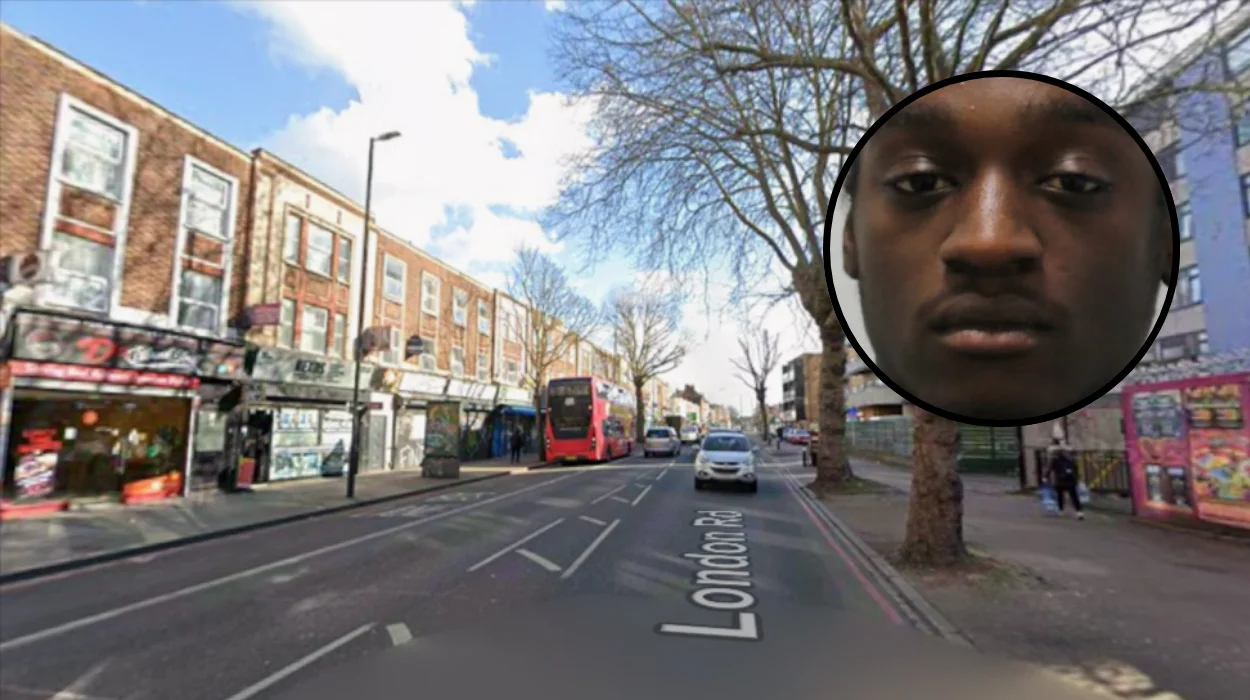
Croydon (Extra London News) June 2, 2026 – A violent knife attack on a busy South London high street has triggered an intensive police investigation after a man in his 30s was stabbed in the leg late last night. Emergency services, including specialised medical personnel and Metropolitan Police units, descended on London Road in Croydon at approximately 10:10 pm on Monday, June 1, following frantic reports from members of the public regarding an ongoing assault. Upon arrival, emergency responders located the injured victim suffering from a single stab wound to his lower limb. The unidentified attacker managed to evade immediate capture and remains at large, prompting local authorities to rapidly deploy resources to secure the area, gather vital forensic evidence, and launch an appeal for witnesses to piece together the events leading up to the bloodshed.
- Key Points
- What Happened on London Road in Croydon on Monday Night?
- What Official Statement Did the Metropolitan Police Issue Regarding the Croydon Stabbing?
- What is the Current Medical Condition of the Croydon Stabbing Victim?
- Why Has the Attacker Not Been Arrested and Where Are They Now?
- How Can Members of the Public Help the Police Catch the Suspect?
- What Broader Community Concerns Form the Backdrop to This Assault?
- What Are the Next Steps in the Croydon Knife Crime Investigation?
Following initial stabilisation at the scene by paramedics, the victim was blue-lighted to a major trauma centre for urgent medical evaluation. In an update released later by medical staff and police representatives, it was confirmed that the man’s wounds were thankfully not as severe as initially feared; his injuries were explicitly deemed to be non-life-threatening and non-life-changing. Following targeted medical intervention to treat the leg laceration, the victim was officially discharged from hospital care on Tuesday morning. Meanwhile, a cloud of unease hangs over the local Croydon community as frontline officers and detectives continue their tracking efforts, with no suspects currently in custody and the motive behind the targeted street violence remaining entirely unclear.
What Happened on London Road in Croydon on Monday Night?
The peace of a late Monday evening in South London was shattered when a public space transformed into a crime scene. According to official dispatches distributed by emergency services, a wave of calls hit the command centre shortly after 10:00 pm, pointing to a severe physical altercation taking place on London Road—a major, bustling arterial route that cuts directly through the heart of Croydon. The geographical positioning of the assault, flanked by local retail storefronts, transport links, and residential blocks, meant that the incident took place in an area heavily trafficked by vehicles and pedestrians even during the late-night hours.
As outlined in the official accounts compiled by the emergency services network, the Metropolitan Police deployed multiple mobile units to the precise coordinates provided by witnesses. Simultaneously, dispatchers routed units from the London Ambulance Service (LAS) to ensure rapid triage of the casualty. Frontline police officers were the first to touch down at the scene, swiftly establishing a protective cordon around the victim to allow medical staff unhindered access.
The immediate environment was rapidly cordoned off using police tape, temporarily disrupting local traffic flow and blocking pedestrian access across sections of London Road. Forensic teams and local officers combed the pavement for discarded weapons, clothing items, or physical traces that could offer clues regarding the identity or flight path of the perpetrator. Neighbors and patrons of nearby establishments reported a heavy police presence stretching late into the night and early Tuesday morning, as spotlighting gear was brought in to examine the structural layout of the assault site.
What Official Statement Did the Metropolitan Police Issue Regarding the Croydon Stabbing?
In an effort to provide transparent facts to the public and mitigate rising community anxieties, the Metropolitan Police service issued an official media release outlining the exact timeline and state of their active investigation. The statement provides the foundational legal and factual framework regarding the emergency deployment and the subsequent investigative protocols initiated by the South Area Command Unit.
As detailed in the formal press briefing published by a designated Met spokesperson, the precise parameters of the police response were clear: “Officers were called at 10.10pm on Monday, June 1, to London Road, Croydon to reports of an assault. Officers attended alongside London Ambulance Service.” This initial confirmation highlights the swift co-ordination between the law enforcement teams and emergency medical workers during the critical golden hour of the incident.
The statement continued by offering critical clarity on the physical state of the victim and the subsequent steps taken by hospital staff: “A man in his 30s was taken to hospital with a stab injury to his leg. His injuries were confirmed as non-life changing and non-life threatening, he has been discharged from hospital. No arrests have been made and enquiries remain on going.” Through this formal update, the Metropolitan Police confirmed that while the physical trauma required immediate hospital intervention, the long-term prognosis for the survivor is positive, allowing detectives to shift their primary focus toward identifying the individual responsible for the blade assault.
What is the Current Medical Condition of the Croydon Stabbing Victim?
When knife crime occurs on metropolitan streets, the primary concern remains the preservation of human life. In this specific incident, the victim—whose identity is being withheld by authorities to protect his personal safety and privacy during an active criminal hunt—bore the brunt of a sharp-force injury directly to his leg. Leg stabbings carry a deceptively high level of risk due to the presence of major blood vessels, such as the femoral artery, which can lead to catastrophic, fatal blood loss within a matter of minutes if severed.
Fortunately, the rapid arrival of London Ambulance Service paramedics prevented a worst-case scenario. Medics applied advanced trauma care directly on the tarmac of London Road, successfully controlling the bleeding before moving the patient into an ambulance chassis. He was then transported under emergency conditions to a regional hospital equipped with specialized surgical facilities.
Following a comprehensive assessment by trauma doctors, the medical evaluations brought immense relief to the victim’s family and investigators alike. Clinical teams officially updated his status, validating that the knife penetration missed critical arterial pathways and structural nerves. The injuries were formally designated as non-life-threatening and non-life-changing, indicating that the victim is expected to make a full physical recovery without permanent mobility loss. Following standard observation and wound closure procedures, the hospital authorized his official discharge, allowing him to return home to recuperate while remaining in contact with family liaison officers.
Why Has the Attacker Not Been Arrested and Where Are They Now?
One of the most pressing and unsettling realities of this developing story is that the perpetrator remains at large within the community. In the immediate aftermath of the stabbing, the attacker leveraged the cover of darkness and the complex, interconnected layout of Croydon’s side streets to flee the scene before police vehicles could completely seal off the surrounding blocks. The rapid dispersal into the urban landscape has presented a significant challenge to initial containment efforts.
As it stands, no arrests have been finalized. Detectives are operating without an immediate, confirmed identity for the suspect, forcing them to rely heavily on circumstantial data and retroactive tracking. The lack of an immediate detention means that a potentially dangerous individual, willing to carry and utilize a blade in a public space, is currently moving through society unchecked.
To counter this defense, local command structures have intensified localized patrols across the Croydon district. Officers are actively analyzing the immediate timeline, evaluating whether the attack was a premeditated ambush born out of a pre-existing dispute, or a spontaneous escalation of a random street confrontation. Until the motive is mapped out, police are advising local residents to remain vigilant while emphasizing that dedicated teams are working around the clock to neutralize any ongoing threat to public safety.
Explore More Croydon News
Ozempic Theft: Driver Admits Stealing Weight-Loss Drugs in Croydon 2026
Rogue Croydon Garage Shut Down After Anti-Social Behaviour Crackdown: Thornton Heath 2026
How Can Members of the Public Help the Police Catch the Suspect?
Experience shows that complex street investigations are frequently broken wide open by a single, distinct piece of information provided by a civic-minded member of the public. Recognizing this, the Metropolitan Police have paired their fieldwork with an urgent, widespread public appeal, calling upon anyone who was in the vicinity of London Road on Monday night to come forward immediately.
Detectives are specifically looking to speak with motorists who may have been driving along London Road or nearby connecting streets between 9:45 pm and 10:30 pm on June 1. Modern dashcam installations frequently capture high-definition background footage of individuals running from crime scenes or acting suspiciously before an incident occurs, providing invaluable digital evidence for prosecutors. Similarly, local business owners and residential occupiers who operate private CCTV grids or smart doorbells are being urged to review their recordings for any anomalous activity during that specific timeframe.
To streamline the intake of these crucial tips, the Met spokesperson provided direct contact routes: “Anyone with information is asked to contact police on 101, quoting CAD9050/2June or Crimestoppers, anonymously, on 0800 555 111.” By utilizing the 101 non-emergency line and referencing the unique Computer Aided Despatch (CAD) number, informants can ensure their data lands instantly on the desks of the specific officers managing this case. For those who fear retaliation or prefer absolute secrecy, the independent charity Crimestoppers offers a completely untraceable telephone and online portal, ensuring vital clues reach the front lines without revealing the caller’s identity.
What Broader Community Concerns Form the Backdrop to This Assault?
While this specific stabbing on London Road is being treated as an isolated criminal act, it inevitably feeds into a wider, highly charged social dialogue regarding safety, infrastructure, and local governance across Greater London. Urban centres are increasingly finding themselves at a crossroads where public anxiety regarding violent crime intersects with daily operational frustrations, creating an environment where residents feel broader systemic issues are being left unresolved.
For instance, across various regional media spaces, communities frequently voice frustration over how local councils allocate resources. In unrelated but culturally indicative coverage detailing the pressures faced by vulnerable urban populations, journalists tracking municipal distribution have highlighted extreme cases of systemic friction. As documented by veteran housing reporter Sarah Williams of The North London Independent, a highly contentious case emerged when a vulnerable “North London woman asked council for help when family kicked her out – they put her in a male hostel,” triggering an intense debate over safety protocols and gender-segregated emergency accommodation. While entirely separate from the Croydon assault, such reporting highlights a growing sentiment among urbanites that protective safety nets—whether physical or social—are facing significant strain.
Simultaneously, public faith in the basic structural management of London’s streets faces routine challenges, often manifesting in community mockery of local infrastructure execution. In another recent dispatch filed by transport correspondent James Fletcher of The Metropolitan Gazette, local road users expressed severe exasperation when “North London cyclists [were] left baffled as cycle lane [was] built around an advertising board,” creating an immediate physical hazard. This pattern of administrative oversight, combined with sudden explosions of street violence like the one witnessed on London Road, contributes to a collective feeling that urban environments require more rigorous oversight, better lighting, and a more coherent strategy to ensure that public spaces remain fundamentally safe, logical, and secure for the law-abiding public.
What Are the Next Steps in the Croydon Knife Crime Investigation?
As the active crime scene on London Road is systematically scaled back to allow normal economic and transit activity to resume, the logistical focus of the Metropolitan Police shifts squarely into the analytical phase of criminal detection. The coming days will be defined by rigorous data compilation and structured forensic reviews aimed at building an airtight case file.
Moving forward, the primary investigative strategy will center on the digital reconstruction of the environment. Digital forensic officers are currently mapping out a grid of every operating camera within a one-mile radius of London Road. By synchronizing timelines, analysts hope to capture the exact moment the suspect entered the area, potentially revealing unmasked facial features or tracking a vehicle arrival that can be cross-referenced with regional Automatic Number Plate Recognition (ANPR) cameras.
Concurrently, witness statement collation is entering its secondary phase. Officers will be conducting follow-up interviews with the shopkeepers and residents who initially phoned in the assault, extracting more granular descriptions of the clothing, height, build, and speech patterns of the attacker. The victim will also be formally interviewed by trained detectives as soon as his emotional and physical recovery permits, providing firsthand insights into whether he recognized his assailant or could identify a potential catalyst for the confrontation. Local community leaders are urging calm but persistent cooperation, emphasizing that removing knives and violent offenders from Croydon’s streets is a collective responsibility that requires the unyielding partnership of the police and the public alike.