Key Points
- Infrastructure Failure: A severe breakdown of the electricity supply network in the New Barnet area has resulted in major blockages across critical railway lines.
- Widespread Commuter Delays: Commuters travelling on primary routes between London Kings Cross, Moorgate, and Stevenage are experiencing severe delays ranging from 20 to 50 minutes, alongside widespread service revisions and cancellations.
- Six Rail Operators Impacted: The major technical infrastructure fault is actively impacting services across six prominent rail operating brands, including London North Eastern Railway (LNER), Thameslink, Great Northern, Lumo, Hull Trains, and Grand Central.
- Stranded Passenger Warning: Transport officials have issued a directive warning passengers on stranded trains in the affected areas that they face extended waiting times before emergency response teams can safely maneuver vehicles to nearby platforms.
- Multi-Agency Response: Network Rail engineering units are currently on-site working alongside local commercial electricity suppliers to fix the power distribution network, with disruption initially projected to last until at least 13:00.
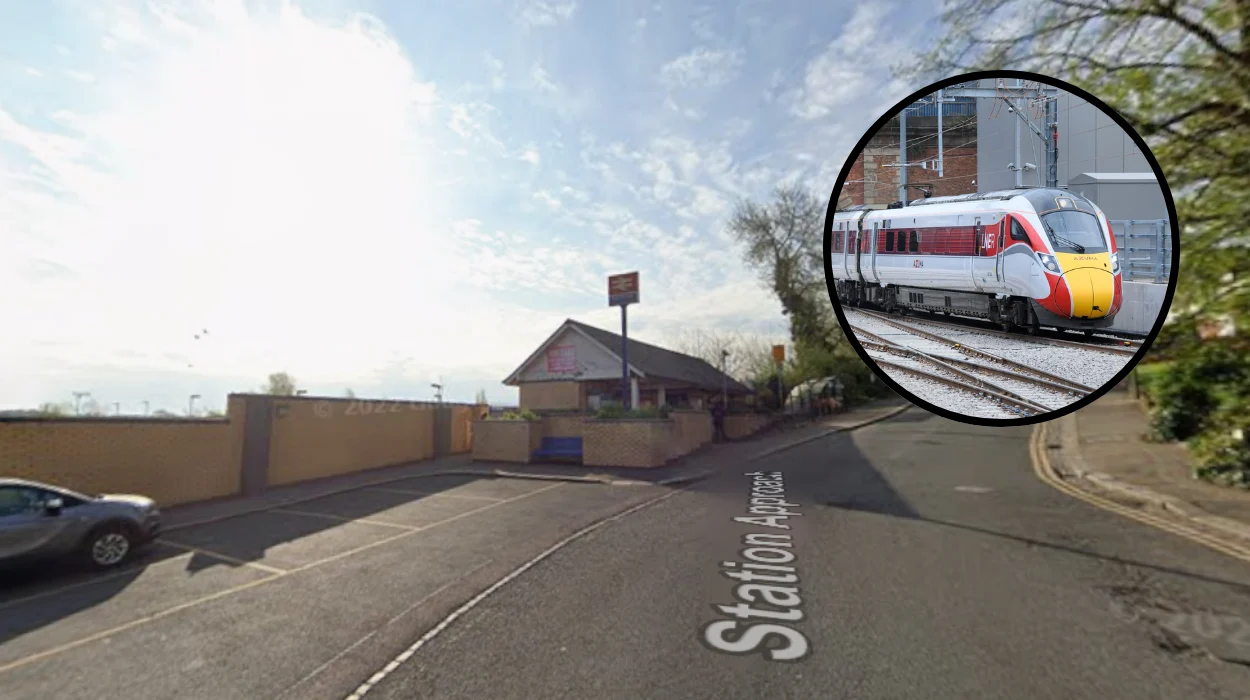
New Barnet (Extra London News) May 22, 2026 – A critical infrastructure failure within the electricity supply network in the New Barnet area has caused severe gridlock across main rail arteries connecting the capital to the north, leaving vital running lines completely blocked. Commuters and long-distance passengers travelling on routes between London and Stevenage are facing an afternoon of transit chaos, with train schedules hit by cancellations, tactical route revisions, and compounding delays extending up to 50 minutes. The emergency operational changes are currently reverberating across multiple high-profile networks, including London North Eastern Railway (LNER), Lumo, Hull Trains, Grand Central, Great Northern, and Thameslink, leaving tens of thousands of weekend travelers facing widespread gridlock.
- Key Points
- What Caused the Severe Rail Disruptions Between London and Stevenage?
- Which Rail Routes and Train Operators are Actively Affected?
- How Long is the Train Service Disruption Expected to Last?
- What Guidance Has Been Issued to Passengers Trapped on Stranded Trains?
- What Alternative Travel Arrangements and Advice Should Commuters Follow?
- How Can Affected Passengers Claim Financial Compensation for Delays?
- How Does Hot Weather Complicate Current Railway Repair Efforts?
- What Support Channels are Available for Real-Time Travel Updates?
As reported by rail industry correspondents at DPSimulation Railway News, regional technical teams have launched a multi-agency emergency response, working in coordination with Network Rail specialists and regional utility engineers to diagnose and isolate the electrical fault. Rail operators have publicly confirmed that until the high-voltage track supply is fully restored, commuters must brace for ongoing timetable alterations. Furthermore, operational staff have issued warnings directly to those currently stranded on motionless rolling stock trapped within the affected power grid sector, stating that individuals face a significantly prolonged wait before specialist teams can clear line blocks and safely guide their trains forward to the nearest platform.
What Caused the Severe Rail Disruptions Between London and Stevenage?
The sudden transport halt was triggered during the early morning hours by a sudden failure in the electrical distribution systems that feed power to operational track infrastructure and overhead lines around New Barnet. According to reports published by regional transport reporter Deb Gayen of London Now, the electrical supply problem was officially logged at 07:51, instantly incapacitating localized tracking, signaling, and traction systems.
As reported by Deb Gayen of London Now, a formal statement released by a Network Rail spokesperson confirmed the technical breakdown, noting:
“Unfortunately, operators have been advised of a problem with the electrical supply to the trains in the New Barnet area. This means that some of our services can’t move as normal until power is restored.”
The network operator further detailed that the physical fault has directly blocked several key lines, preventing regular train movements and creating immediate bottlenecks on the approaches to London King’s Cross and Moorgate stations. While emergency crews are working on-site to inspect transformers and cabling infrastructure, the physical blockage means that incoming trains are backed up along the East Coast Main Line corridor, resulting in a severe reduction in track capacity.
Which Rail Routes and Train Operators are Actively Affected?
The localized electrical blackout has triggered a cascading operational impact across a massive geographical footprint, severing primary commuter pathways and disrupting cross-border intercity routes that stretch from London into the north of England and Scotland.
As detailed within the official service logs compiled by DPSimulation Railway News, the following operators and specific routes are experiencing ongoing disruption:
- LNER (London North Eastern Railway): Heavy delays and cancellations affecting long-distance express services between London Kings Cross and major regional hubs, including Lincoln, Hull, Leeds, Bradford Forster Square, Harrogate, York, Newcastle, Berwick-upon-Tweed, Edinburgh Waverley, Aberdeen, and Inverness.
- Thameslink: Widespread scheduling changes affecting regional cross-London commuter services operating between Brighton and Cambridge, Horsham and Peterborough, as well as the commuter lines linking Sevenoaks with Welwyn Garden City.
- Great Northern: Critical service reductions affecting inner and outer suburban networks between Moorgate and Welwyn Garden City, alongside parallel lines between London Kings Cross and Letchworth Garden City, Royston, Cambridge, Peterborough, Ely, and Kings Lynn.
- Lumo: High-speed budget services running along the East Coast Main Line between London Kings Cross, Newcastle, Edinburgh, and Glasgow Queen Street are suffering from cascading delays.
- Hull Trains: Direct intercity services operating between London Kings Cross and Hull or Beverley are facing extended delays and platform alterations.
- Grand Central: Open-access passenger services connecting London Kings Cross with Bradford Interchange and Sunderland have been heavily impacted by the loss of pathway access.
How Long is the Train Service Disruption Expected to Last?
Network Rail and train operating companies have indicated that the engineering recovery process will be an extended operation due to the complex nature of high-voltage rail systems. As stated in the initial operational dispatches carried by DPSimulation Railway News, “Disruption is expected to continue until at least 13:00.” This timeline, however, remains subject to change depending on the progress made by engineers on the ground.
As reported by Deb Gayen of London Now, localized line impact data reveals a directional variance in how the fault is manifesting across the tracks. The Network Rail spokesperson stated:
“Trains are being delayed by 10 – 15 minutes in the direction towards Welwyn Garden City. Services running towards London have not been affected.”
Despite London-bound lines remaining open, the blockage on outbound paths has severely disrupted the turnaround of trains, leading to wider scheduling gaps. To manage the bottleneck, operators have implemented a strict emergency timetable pattern. The Network Rail spokesperson added:
“A reduced number of trains will be stopping at New Barnet and Hadley Wood in the direction towards Welwyn Garden City. Thameslink services continue to call at both stations in this direction.”
What Guidance Has Been Issued to Passengers Trapped on Stranded Trains?
For passengers who were already traveling when the power grid failed, the situation remains highly problematic. Multiple trains have been caught out on open tracks between stations within the New Barnet power sector, unable to draw the traction current required to move.
According to the safety advisories published by London Now, passengers stuck inside these delayed carriages are being ordered to stay inside the vehicles for their own protection. The Network Rail operational team has strongly emphasized that under no circumstances should passengers attempt to self-evacuate or exit onto the live railway infrastructure.
As reported by journalist Deb Gayen of London Now, safety officials issued an explicit warning to stranded travelers:
“Please remain on board and listen to announcements or speak with staff. Passengers are asked not to leave trains unless instructed, as the tracks remain active and hazardous.”
Because nearby lines are still carrying active traffic and auxiliary power systems may still be energized, unauthorized track walking poses a lethal risk. Rescue teams are working chronologically to systematically guide the affected trains to adjacent station platforms using secondary diesel locomotives or via localized power re-routing.
Explore More Barnet News
Labour and Conservatives Strike Deal to Control Council: Barnet 2026
Barnet Museum Seeks UNESCO Nod for Battle of Barnet Banners, Barnet 2026
What Alternative Travel Arrangements and Advice Should Commuters Follow?
With station concourses swelling and standard timetables effectively suspended, transport agencies have enacted emergency contingency routing protocols to help travelers circumvent the New Barnet bottleneck.
As reported by Deb Gayen of London Now, specific station bypass instructions have been issued for passengers trying to navigate the outer London suburban lines:
“If you are travelling to these stations [New Barnet and Hadley Wood], we recommend travelling to Finsbury Park to change for a Thameslink service towards these stations. If you are travelling from New Barnet or Hadley Wood, please travel using a Thameslink service towards your destination.”
In addition to suburban changes, intercity operators are leveraging alternative rail corridors to keep traffic moving north. According to the service advisories documented by London Now, Hull Trains and Lumo passengers should anticipate baseline delays of at least 25 minutes on all operating units, while “LNER trains will be delayed by up to 20 minutes or will be diverted via Hertford” to completely bypass the physical track blockages at New Barnet.
How Can Affected Passengers Claim Financial Compensation for Delays?
Under the nationwide rail passenger framework, commuters caught up in today’s infrastructure failure are legally entitled to financial restitution, provided their total journey time is extended past designated limits.
According to the official consumer support documentation updated on the LNER Travel Alerts platform, passengers who have had their travel plans disrupted should retain all physical and digital transit passes to validate future claims. The LNER customer service division noted:
“You may be entitled to compensation if you experience a delay in completing your journey today. Please keep your train ticket and make a note of your journey, as both will be required to support any claim.”
The LNER service delivery team further clarified that for passengers holding valid reservations on trains that end up entirely cancelled, “Most of the time, you won’t need to buy a new ticket or get a refund,” as ticket acceptance protocols allow travelers to board the next available service run by any participating operator along the same destination path. Furthermore, for travelers who completely abandon their journeys due to the power fault, full ticket refunds are accessible without administration fees through their original point of purchase.
How Does Hot Weather Complicate Current Railway Repair Efforts?
The ongoing engineering response to restore the New Barnet electrical supply is taking place against a backdrop of challenging seasonal weather conditions, which present secondary operational hazards across the wider rail network.
As highlighted by technical updates published on the LNER Service Delivery portal, current elevated temperatures are forcing maintenance teams to carefully monitor ambient environmental factors, as extreme heat fundamentally alters the physical properties of heavy steel tracks and high-voltage power components.
The LNER technical support team warned:
“Heat can cause overhead lines to expand and sag, line-side fires, and also cause rails to buckle.”
Because overhead copper contact lines naturally expand under high thermal loads, any pre-existing electrical power fault can be exacerbated by structural sagging, creating a risk that passing train pantographs could physically tear down the wires.
Furthermore, solar radiation can elevate rail temperatures past 50°C, threatening to warp the steel lines out of alignment if trains pass over them at high velocities. Consequently, even as electricity providers resolve the primary supply breakdown at New Barnet, speed restrictions may remain in place across adjacent track sectors to prevent infrastructure damage, keeping overall transit times high through the afternoon.
What Support Channels are Available for Real-Time Travel Updates?
With scheduling data shifting dynamically as platforms alter and trains undergo tactical diversions, transit operators have scaled up their public information networks to provide real-time updates directly from control centers.
According to the customer care team at LNER, multiple digital communication networks have been opened to help passengers manage their routes:
- WhatsApp Service Delivery Alerts: Passengers can subscribe to a direct broadcast chain to receive instant push alerts from line controllers.
- Social Media Desks: Dedicated support teams are active across X (formerly Twitter), Facebook, and Instagram to handle individual routing queries.
- Live Webchat & Helplines: The centralized Customer Solutions Team is reachable directly on 0345 722 5333 or via real-time web portals.
- National Rail Journey Planner: The digital National Rail Enquiries portal remains the definitive source for checked platform numbers and live arrival tracking.
Station managers continue to advise all individuals to check their journeys before arriving at their departure hubs, carry ample water due to high temperatures, and seek immediate assistance from station staff or platform help points if they begin to feel unwell while waiting amidst the crowds.