Key Points
- Political Backlash: The Westminster Green and Labour parties have hit out at the newly elected Conservative council leader, Councillor Paul Swaddle OBE, accusing him of operating under “double standards” regarding public demonstrations.
- The Moratorium Call: Prior to the weekend events of 16 May 2026, Cllr Swaddle sent a formal letter to Home Secretary Shabana Mahmood demanding a “moratorium” on recurring pro-Palestine marches, citing public spending and high crime rates.
- Omission of the Far-Right: Opponents emphasize that while Cllr Swaddle singled out the pro-Palestine Nakba Day procession, his correspondence completely ignored a simultaneous, high-risk rally held by the far-right group “Unite the Kingdom,” led by Stephen Yaxley-Lennon (Tommy Robinson).
- Opposition Statements: Both opposition groups claimed the selective approach harms local community safety and fractures democratic norms, linking Swaddle’s actions to a broader shift in the national Conservative Party.
- Recent Election Context: The political row unfolds just weeks after the 7 May 2026 local elections, where the Conservatives secured a 32-seat majority to regain full control of Westminster City Council.
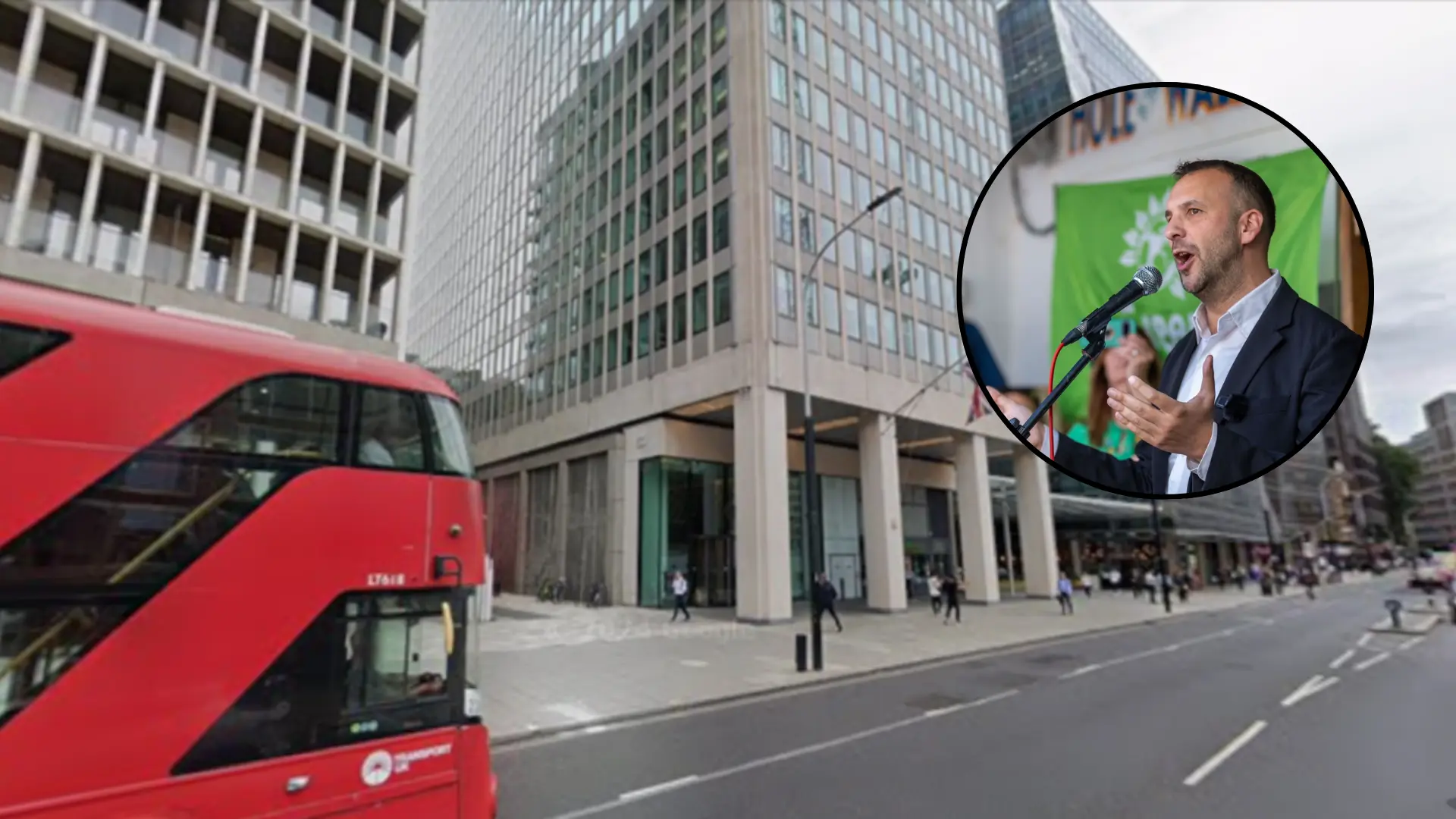
London (Extra London News) May 20, 2026 – Both the Green Party and the Labour Party in the City of Westminster have launched a scathing joint-offensive against the newly elected Conservative council leader, Councillor Paul Swaddle OBE, accusing him of deploying blatant “double standards” by demanding an outright ban on pro-Palestine demonstrations while remaining completely silent on adjacent far-right extremist rallies. The political dispute erupted after it emerged that Cllr Swaddle wrote an official letter to Home Secretary Shabana Mahmood ahead of major parallel weekend demonstrations, selectively singling out anti-war marches for government intervention on the grounds of rising local policing costs and public disruption.
- Why Did Cllr Paul Swaddle Call for a Ban on Pro-Palestine Marches?
- What Happened During the Weekend Protests in Westminster?
- How Did the West Central London Green Party Respond?
- What Was Westminster Labour’s Position on the Council Leader’s Silence?
- How Does the Latest Westminster Election Shape This Conflict?
The row has laid bare deep-seated ideological fractures inside the newly formed local government, coming less than a fortnight after the Conservatives swept back to power in the borough. Opposition factions contend that by excluding the controversial “Unite the Kingdom” march—helmed by right-wing activist Stephen Yaxley-Lennon, widely known as Tommy Robinson—from his security concerns, the new council leader has compromised his neutral civic duties, alienated multi-ethnic communities, and compromised democratic consistency within the heart of London.
Why Did Cllr Paul Swaddle Call for a Ban on Pro-Palestine Marches?
The catalyst for the local political storm was an official letter dispatched by Cllr Swaddle to the Home Secretary, the Rt Hon Shabana Mahmood MP, on Tuesday, 12 May 2026. Writing in his newly minted capacity as Leader-Elect of Westminster City Council following the local government elections, Cllr Swaddle expressed profound administrative anxieties regarding a series of highly publicised demonstrations scheduled to pass through the capital over the weekend of 16 May.
As officially documented in the text of the correspondence published by the Cities of London & Westminster Conservative Association, Cllr Swaddle stated that the council was deeply concerned by the recurring nature of these assemblies. Seeking immediate intervention from the Home Office, Cllr Swaddle declared:
“We agree with the Government’s reviewer of terrorism legislation, Jonathan Hall KC, that there should be a ‘moratorium’ on pro-Palestinian marches—to be clear we support freedom of speech and assembly but this should be proportionate as for too long these continuous almost weekly marches/protests have added to the challenges.”
In justifying this sweeping stance, Cllr Swaddle pointed directly to the acute operational and financial pressures bearing down upon the borough’s public infrastructure. He noted that the Metropolitan Police’s localized data indicates Westminster already suffers from the highest cumulative rates of theft, violence, drug offences, and sexual misconduct across any single London borough.
Furthermore, Cllr Swaddle warned that the escalating post-protest sanitation and maintenance bills were systematically depleting municipal resources, stating that “the clean-up costs fall on Westminster City Council and means other areas that deserve care and maintenance are being neglected.” To address these structural grievances, he explicitly pressed the Home Secretary to urgently convene a collaborative meeting with council officials and Met Police Commissioner Sir Mark Rowley to institute more rigid regulatory frameworks.
What Happened During the Weekend Protests in Westminster?
The demonstrations in question proceeded on Saturday, 16 May 2026, bringing thousands of opposing activists into the streets of central London simultaneously. The first major deployment involved a massive pro-Palestine procession organized to commemorate Nakba Day—the historical term referencing the mass displacement of Palestinian populations during the Arab-Israeli War in 1948. This march, which also drew substantial turnout from anti-racism coalitions including “Stand Up To Racism,” successfully advanced along an agreed public highway route stretching from Exhibition Road all the way to Pall Mall.
Concurrently, a separate, highly volatile demonstration was staged by the right-wing nationalist group “Unite the Kingdom.” Spearheaded by Stephen Yaxley-Lennon, the crowd gathered to march from Kingsway down into the immediate vicinity of Parliament Square.
In a public operational update, Scotland Yard confirmed that the Metropolitan Police had successfully negotiated strict, independent transit routes with the respective organisers of both events beforehand. This tactical isolation successfully kept the mass ideological factions separated throughout the afternoon, preventing direct physical confrontations in the heart of the capital despite high underlying operational friction.
Explore More Westminster News
Green Party Challenges Westminster Council Leader Over Dual Protests, London 2026
Inkd Ltd Files Premises Licence for Great Portland Street, Fitzrovia West 2026
How Did the West Central London Green Party Respond?
The publication of Cllr Swaddle’s unilateral demands to the Home Office sparked swift condemnation from local progressive parties, who took issue with the complete omission of the far-right mobilization from his official security assessment. On Monday, 18 May 2026, the West Central London Green Party issued an open, strongly worded letter directly to the council leader, systematically dismantling his framing of public safety.
As reported by Linus Rees of The Fitzrovia News, the West Central London Green Party executive formally stated to Cllr Swaddle:
“In your letter to the Home Secretary, you began by making gestures towards both protests, but then you swiftly transitioned to calling for a moratorium solely on the pro-Palestine marches.”
The Green Party went on to draw direct comparisons to historical instances of civic disorder linked to Stephen Yaxley-Lennon’s base, reminding the council leader of the structural damage and community fear generated during previous standard-right demonstrations. The Green executive remarked:
“Last September, we saw a large range of unacceptable and racist behaviour at the Unite The Kingdom protest, with officers severely injured, Islamophobic chants and Elon Musk saying that attendees must “fight back or […] die”. Immigrants and people of colour were made to feel unsafe in the city that they call home. This year, we saw much of the same.”
Concluding their public broadside, the Greens explicitly demanded that Cllr Swaddle formally withdraw his remarks regarding the pro-Palestine campaigners. They further accused him of weaponizing his office to accommodate far-right agitators, maintaining that his selective silence amounted to turning a blind eye toward systemic racism inside a deeply cosmopolitan, multi-ethnic London borough.
What Was Westminster Labour’s Position on the Council Leader’s Silence?
Mirroring the criticisms leveled by the Green Party, the Westminster Labour Party released an extensive official position paper on Monday, 18 May 2026, targeting the structural legitimacy of the Conservative leader’s policy interventions. The opposition party expressed immediate alarm over the political direction being signaled by the fresh Tory administration.
In a formal statement published on the Westminster Labour press portal, a party spokesperson declared:
“Westminster Labour is deeply concerned that one of Cllr Paul Swaddle’s first actions as Conservative Leader of Westminster City Council has been to call for the banning of pro-Palestine protests, while failing to call for similar restrictions on far-right demonstrations.”
The party emphasized its unyielding structural alignment with standard constitutional liberties, stating that “Westminster Labour supports the fundamental democratic right to peaceful protest for all, regardless of political ideology” while remaining “unequivocally opposed to hate crime in all its forms.” However, they adamantly warned that Cllr Swaddle’s asymmetric approach to local enforcement threatened to destabilize public trust in local governance. The statement continued:
“Cllr Swaddle’s decision to single out pro-Palestine demonstrations raises legitimate questions among residents about why he has remained silent on far-right rallies. This selective approach risks undermining confidence in the consistent application of democratic principles.”
Is This Row Connected to National Conservative Party Politics?
According to broader political analysis provided within the Westminster Labour press briefing, the local skirmish in Westminster reflects a much larger, coordinated ideological alignment occurring across the top echelons of the UK’s opposition layout. Local Labour strategists asserted that the new Conservative council leadership is actively shifting its rhetoric to shield itself from right-flank electoral erosion by national entities like Reform UK.
To support this claim, the Westminster Labour statement pointed to recent national pronouncements from prominent shadow cabinet members. Specifically, they cited recent remarks from Conservative Leader Kemi Badenoch, who publicly advocated for an outright ban on pro-Palestinian marches while conversely defending the assemblies of “Unite the Kingdom” as acceptable public expressions.
Furthermore, Westminster Labour highlighted recent statements by Shadow Justice Secretary Nick Timothy, who drew heavy criticism for demanding restrictions on Muslim mass prayer events in Trafalgar Square following the Ramadan Open Iftar. Local opposition figures argue that Cllr Swaddle’s local policy requests are merely a tailored continuation of this broader national strategy, directly warning that this ideological shift will ultimately come “at the expense of the rights and sense of security of diverse communities who call Westminster home.”
How Does the Latest Westminster Election Shape This Conflict?
The intense, unforgiving nature of this rhetorical standoff is deeply amplified by the high-stakes local political landscape left behind by the 7 May 2026 municipal elections. The vote radically shifted the balance of power inside Westminster City Hall, bringing a definitive end to a period of progressive alignment and handing an absolute governing mandate to the local Conservative party.
As confirmed by verified local election returns, Cllr Swaddle successfully marshaled the Conservatives to an outright victory, capturing 32 of the 54 highly contested seats available across the borough. This decisive outcome allowed the Tories to rapidly draft a brand-new cabinet proposal, installing Councillor Caroline Sargent as the new Cabinet Member for Enforcement to aggressively champion policing and street-level crackdowns.
Conversely, the Labour Party saw its local strength diminished, falling into the secondary opposition slot with 22 seats. The West Central London Green Party suffered the most agonizing electoral paradox of the cycle; despite securing a historic and robust 18 percent of the aggregate popular vote cast across Westminster, the mechanics of the first-past-the-post system prevented them from capturing a single physical seat on the council. This lack of formal chamber representation has forced the Greens to rely heavily on public extra-council advocacy, press campaigns, and community coalitions to challenge Cllr Swaddle’s legislative agenda.
With the Conservatives firmly holding the legislative reins and the opposition determined to fight what they view as discriminatory municipal policing, this clash over London’s streets is expected to remain a defining battleground for the foreseeable future.