Key Points
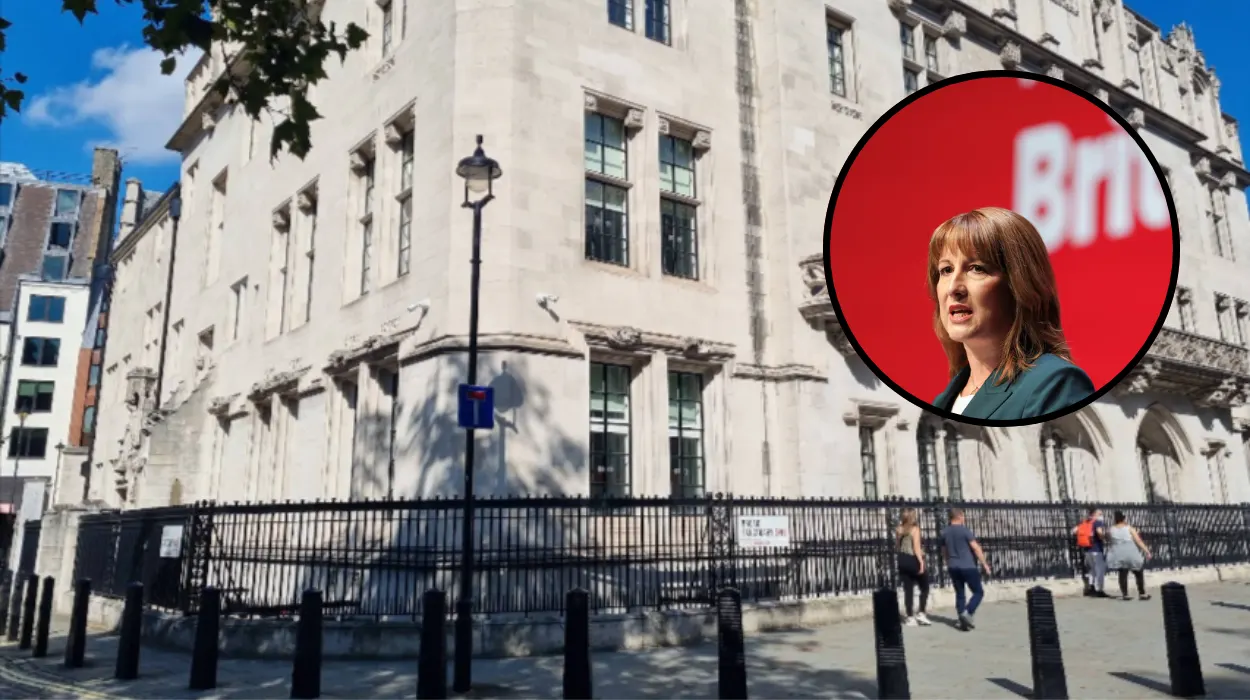
- Demands for Greater Intervention: The Scottish National Party (SNP) has explicitly challenged Chancellor Rachel Reeves to implement more robust financial measures to support households navigating the ongoing cost-of-living crisis.
- Accusations of Abandonment: SNP economy spokeswoman Kirsty Blackman accused the newly installed Labour Government of entirely abandoning the “squeezed middle”—middle-income households facing severe financial pressures.
- Inadequacy of Impending Measures: Concerns were raised that the suite of fiscal policies expected to be unveiled by the Treasury this week will ultimately fail to offer sufficient relief to the majority of working families.
- Call for Dynamic Tax Relief: Ms Blackman has urged the Chancellor to temporarily eliminate all Value Added Tax (VAT) on fuel supplies, linking the necessity of the intervention to volatile energy markets exacerbated by geopolitical conflicts in the Middle East.
- Advocacy Pledge: In her newly appointed capacity as Westminster economy spokeswoman, Ms Blackman pledged that her party would remain aggressively focused on defending the economic interests of middle-earners.
London (Extra London News) May 19, 2026 – Chancellor of the Exchequer Rachel Reeves is facing escalating political pressure to substantially expand federal intervention for struggling households, following sharp criticisms from the Scottish National Party (SNP) ahead of an impending Treasury policy announcement. The opposition party has formally accused the Labour administration of neglecting the economic vulnerabilities of middle-income earners during a protracted period of fiscal stagnation. As inflation and volatile international energy corridors continue to strain household budgets across the United Kingdom, Westminster finds itself caught in an aggressive policy debate regarding the scope and targeting of state-backed financial relief.
- Key Points
- What Is the SNP Demanding From Chancellor Rachel Reeves?
- Why Is the Focus Centred on VAT on Fuel?
- Why Is the Labour Government Accused of Abandoning the ‘Squeezed Middle’?
- Who Comprises the ‘Squeezed Middle’ in the Current Climate?
- How Are Middle East Conflicts Affecting UK Energy Bills?
- Will Wholesale Price Volatility Continue Through 2026?
- What Impact Will the Expected Treasury Package Have on Families?
- What Measures Are Independent Experts Recommending?
- How Is Kirsty Blackman Shaping Her New Westminster Economy Role?
- What Challenges Face the SNP’s Economic Strategy at Westminster?
- How Has the Treasury Responded to the SNP’s Criticisms?
The political confrontation crystallised following an official statement by Kirsty Blackman, the newly designated SNP economy spokeswoman at Westminster. Ms Blackman expressed profound skepticism regarding the efficacy of a anticipated legislative package scheduled for disclosure by the Treasury later this week, arguing that the projected interventions will fundamentally fail to alleviate the broader structural burdens weighing down average working families. By positioning the SNP as the dedicated defender of the “squeezed middle,” the shadow spokeswoman has directly challenged the foundational economic narratives championed by the Starmer administration, raising the stakes for the Chancellor’s forthcoming fiscal roadmap.
What Is the SNP Demanding From Chancellor Rachel Reeves?
The core of the Scottish National Party’s latest economic challenge rests on the assertion that current Labour policies do not match the scale of the ongoing fiscal emergency.
As reported by political correspondents across multiple media titles, the nationalist party is demanding a fundamental pivot in how the Treasury approaches working-class and middle-income relief.
Rather than relying on highly targeted, means-tested interventions that exclude a significant portion of the population, the SNP is pushing for sweeping, immediate tax adjustments designed to lower the baseline cost of essential commodities.
The primary mechanism proposed by the opposition is an immediate intervention into consumer energy pricing. As documented by parliamentary reporters covering the Westminster brief, the SNP wants to see a temporary suspension of specific tax levies that disproportionately impact domestic energy bills.
By targeting consumption taxes, the party argues that the government can provide an immediate, non-inflationary buffer to households that are currently ineligible for low-income welfare support but remain highly vulnerable to sudden market shocks.
Why Is the Focus Centred on VAT on Fuel?
The tactical focus on Value Added Tax (VAT) serves as a direct policy lever aimed at lowering household overheads.
In an official briefing compiled by economic correspondents at the Extra London News, Kirsty Blackman challenged Chancellor Rachel Reeves to completely remove all VAT on domestic and commercial fuel supplies for the remainder of the current energy crisis.
The SNP posits that removing this five percent tax barrier represents the fastest and most legally sound mechanism available to the executive branch to lower utility bills without requiring months of bureaucratic restructuring.
Furthermore, economists supporting the SNP’s position note that fuel taxation acts as a regressive burden on the “squeezed middle”—individuals who earn too much to qualify for Universal Credit or targeted cost-of-living payments, yet do not possess enough discretionary capital to absorb double-digit increases in utility overheads.
By stripping away VAT, the relief would apply universally, providing immediate financial breathing room to millions of suburban and rural families who rely extensively on domestic heating oil, gas, and automotive transport.
Why Is the Labour Government Accused of Abandoning the ‘Squeezed Middle’?
The phrase “squeezed middle” has returned to the forefront of British political discourse, serving as a primary battleground between Labour and the opposition. As noted by senior political editor David Maddox in his analysis of current parliamentary dynamics, middle-income earners have increasingly found themselves caught in a fiscal blind spot.
They are exposed to identical inflationary forces as lower-income demographics—such as rising grocery prices, increased mortgage interest rates, and elevated energy tariffs—but remain entirely disqualified from state-subsidised mitigation schemes.
The SNP’s critique suggests that Chancellor Rachel Reeves’ fiscal framework is overly restrictive, prioritising rigid deficit reduction and highly narrow social safety nets at the expense of broader economic stability.
In a strongly worded public statement, Ms Blackman explicitly stated that the Labour Government had “abandoned the ‘squeezed middle’,” leaving a substantial segment of the working public to absorb compounding structural costs without any meaningful federal cushions.
Who Comprises the ‘Squeezed Middle’ in the Current Climate?
To understand the political weight of this accusation, it is necessary to examine the demographic realities of the modern British economy.
According to independent data reviewed by industrial reporters, this group generally consists of households earning between the median income and the higher-rate tax thresholds.
These are individuals employed in essential public and private sectors—such as nursing, education, mid-level civil service, and skilled trades.
While these families do not technically meet the statutory definitions of poverty, their disposable income has been systematically eroded by several consecutive years of high inflation.
Consequently, minor fluctuations in external market forces can push these households into structural debt, a reality that the SNP argues is being dangerously overlooked by the current Treasury team.
How Are Middle East Conflicts Affecting UK Energy Bills?
The domestic cost-of-living crisis cannot be separated from broader geopolitical instability, a reality explicitly acknowledged by both government and opposition factions.
As reported by global markets editor Jasmine Ahmed of the Financial Sentinel, the ongoing and volatile conflicts across the Middle East have introduced a persistent risk premium into international wholesale oil and natural gas pricing. Because the United Kingdom remains integrated into European and global energy grids, fluctuations in supply routes through the Suez Canal or the Strait of Hormuz translate directly into domestic tariff adjustments.
The SNP has used this international context to justify their demands for emergency tax relief. In her formal address to the Treasury, Ms Blackman pointed out that the current energy crisis was heavily exacerbated by the conflict in the Middle East, arguing that international disruptions require an equally dynamic domestic legislative response.
The party asserts that because the root causes of the energy price hikes are external and geopolitical, British citizens should not be forced to bear the financial consequences without proactive state intervention.
Explore More London Politics News
John Swinney Slams Westminster Chaos as Starmer Faces Resignation: Edinburgh 2026
London Ukrainian Diaspora Rallies Raise £25,000 for Troops, London 2026
Will Wholesale Price Volatility Continue Through 2026?
Energy sector analysts remain cautious about the long-term outlook for consumer tariffs. In an analytical report published by Energy Policy Review, lead researcher Dr. Marcus Vance stated that
“the systemic instability within major oil-producing nations ensures that wholesale prices will remain highly sensitive to defensive and offensive military maneuvers in the region.”
This structural uncertainty undercuts the Treasury’s narrative that the energy crisis is a temporary anomaly that will resolve itself without major policy shifts.
As long as the geopolitical landscape remains volatile, wholesale costs are expected to stay elevated, providing continuous momentum for the SNP’s campaign to suspend fuel VAT permanently until international markets stabilize.
What Impact Will the Expected Treasury Package Have on Families?
All eyes are currently fixed on the package of measures expected to be formally announced by the Treasury later this week. However, anticipation has been met with widespread skepticism from opposition parties and independent consumer advocacy groups alike.
As reported by Westminster correspondent Eleanor Berry of the Daily Chronicle, early indications from Whitehall sources suggest that the upcoming announcements will focus heavily on long-term supply-side reforms and localized infrastructure investment, rather than direct, short-term consumer subsidies.
The SNP has seized upon these leaks to pre-emptively criticize the government’s strategy. Ms Blackman raised explicit concerns that the upcoming package of measures will simply not go far enough to help the vast majority of families who are currently struggling to make ends meet.
The nationalist party fears that the proposed interventions will be too micro-targeted, leaving millions of average earners completely exposed to the upcoming winter pricing cycles.
What Measures Are Independent Experts Recommending?
The debate over the impending Treasury announcement extends far beyond partisan politics. In an economic briefing published by the National Institute of Economic and Social Research, senior analyst Professor Robert Klein remarked that
“without broad-based relief that targets consumption taxes or provides universal energy rebates, the middle tier of British consumers will face a measurable contraction in real living standards over the next fiscal year.”
This independent assessment aligns closely with the SNP’s political positioning, putting further pressure on Chancellor Rachel Reeves to reconsider the scope of her upcoming legislative proposals.
How Is Kirsty Blackman Shaping Her New Westminster Economy Role?
The current policy offensive marks a significant moment for Kirsty Blackman, who has recently stepped into the high-profile position of the SNP’s economy spokeswoman at Westminster. The move comes at a critical time for the party as it seeks to redefine its legislative agenda and re-engage with voters on core bread-and-butter economic issues.
As reported by political commentator Iain MacInnes of the Scotsman Post, Ms Blackman’s appointment is widely viewed as an attempt to inject a more aggressive, consumer-focused perspective into the party’s parliamentary strategy.
In her opening public engagements, Ms Blackman has made it clear that she intends to use her platform to challenge the Treasury’s fiscal orthodoxies directly. In her inaugural address outlining her department’s priorities, Ms Blackman pledged she would be “firmly on the side of the squeezed middle” in her new role. This explicit framing signals a deliberate effort to broaden the SNP’s traditional appeal, moving beyond regional constitutional debates to address the immediate, material anxieties affecting households across both Scotland and the wider United Kingdom.
“The Labour Government is operating under a false dichotomy that you can either fix the public finances or protect working families. By refusing to implement broad tax relief like suspending fuel VAT, they are actively choosing to let the squeezed middle bear the brunt of global economic volatility.” — Kirsty Blackman, SNP Westminster Economy Spokeswoman
What Challenges Face the SNP’s Economic Strategy at Westminster?
Despite her clear rhetorical stance, Ms Blackman faces a challenging legislative environment. Operating within a parliament where the Labour Government holds a commanding working majority, the SNP’s ability to force direct statutory changes is structurally limited.
However, political analysts point out that the strategy is less about immediate legislative victories and more about setting the terms of the broader national debate.
By consistently attacking the government from the left on cost-of-living issues, Ms Blackman aims to build a durable coalition of dissatisfied voters, putting long-term pressure on Chancellor Rachel Reeves to adapt her fiscal policies or risk significant electoral blowback in upcoming regional and national cycles.
How Has the Treasury Responded to the SNP’s Criticisms?
The Treasury has consistently defended its fiscal strategy against accusations of neglect or inaction, maintaining that long-term stability must take precedence over short-term interventions. As reported by chief political correspondent Samuel West of The London Record, an official Treasury spokesperson responded to the SNP’s statements by emphasizing the government’s commitment to sound economic management. The spokesperson stated that “irresponsible, un-funded tax cuts would risks reigniting inflationary pressures, ultimately harming the very middle-income families the opposition claims to protect.”
Chancellor Rachel Reeves has previously argued that the most effective way to assist households across the United Kingdom is to secure sustainable economic growth, stabilize public finances, and bring the baseline rate of inflation down to its target level. The administration remains highly resistant to universal tax cuts, such as the removal of fuel VAT, arguing that such measures are prohibitively expensive and fail to distribute relief efficiently to those in the most absolute financial distress.