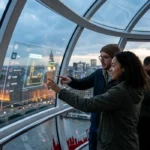
The London Eye is a 135‑meter‑tall observation wheel on the South Bank of the River Thames in London. It offers continuous 360‑degree views of central London over roughly 30 minutes per rotation. Year‑round, close to 4 million people ride it, making it one of the UK’s top paid‑tourist attractions.
- What is the London Eye and how does it work?
- When is the best time of day to ride the London Eye?
- What are the best months and seasons to ride the London Eye?
- How do London Eye opening hours and ride times change through the year?
- How do you book London Eye tickets and which ticket types are best?
- What are the best strategies to avoid long queues and crowded capsules?
- How should you choose the best capsule side and viewing position?
- What should you wear and bring on a London Eye ride?
- How does the London Eye experience differ by weather and visibility?
- How can you combine the London Eye with nearby attractions?
- What accessibility and safety measures does the London Eye provide?
- What future trends and changes affect the London Eye experience?
- How do you plan a complete London Eye visit around your day?
This guide explains how to book effectively, when to ride for the clearest or most dramatic views, and how to navigate the experience from arrival to departure. It focuses on practical, data‑driven choices so visitors maximize visibility, minimize queues, and integrate the ride into a broader London itinerary.
What is the London Eye and how does it work?
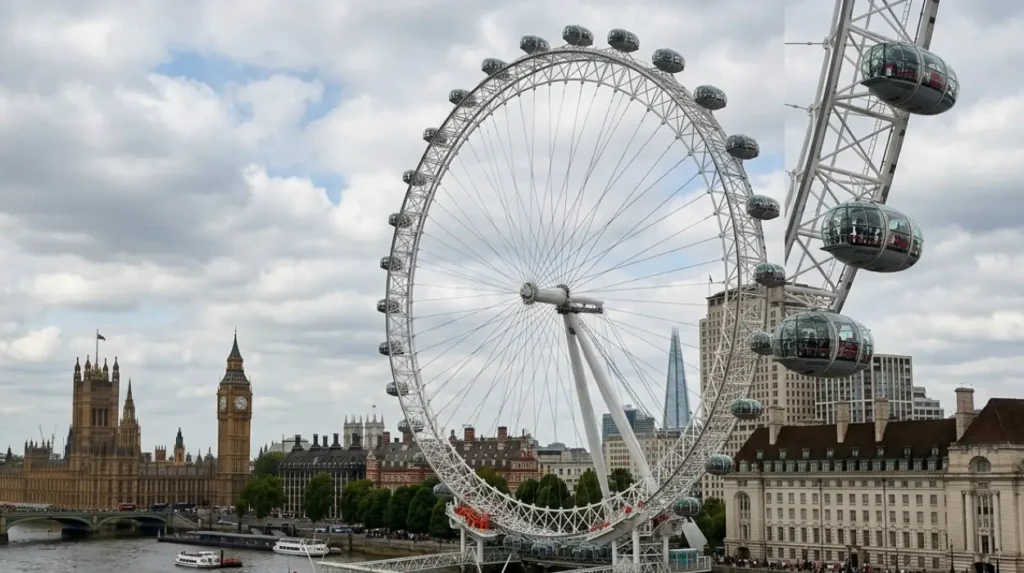
The London Eye is a giant cantilevered observation wheel on the River Thames that rotates slowly so passengers in enclosed capsules can see central London for about 30 minutes.
It is located at the South Bank near County Hall and the London Aquarium, opposite the Houses of Parliament and Westminster Abbey. The structure uses a rim‑driven mechanism: electric motors push the wheel around its outer rim, while 32 sealed, climate‑controlled capsules remain horizontally level at all points in the rotation.
Each capsule holds about 25 people standing, and the wheel moves at roughly 0.9 km/h (0.6 mph), which feels almost stationary from inside. The crossing height is about 135 meters, putting it roughly level with the top of the London Eye’s support structure and the upper floors of nearby skyscrapers such as The Shard.
When is the best time of day to ride the London Eye?
The best time of day for clear views is late morning or early afternoon; for dramatic lighting and photos, aim for late afternoon, golden hour, or blue hour around sunset.
From about 10:00 AM to 2:00 PM, daylight is usually strongest and the sky is least likely to be silhouetted by deep shadows across the city. This window suits first‑time visitors who want to identify landmarks such as the Tower of London, St. Paul’s Cathedral, and Canary Wharf against a bright, high‑contrast backdrop.
From about 4:00 PM onward, especially in spring and summer, the sun dips toward the west so east‑facing views warm up with golden‑hour light. River reflections and city facades gain richer contrast, which many photographers prefer. Nighttime rides from dusk until closing (typically around 8:30–9:00 PM) highlight street‑light grids, river‑boat trails, and illuminated monuments, at the cost of some detail visibility.
What are the best months and seasons to ride the London Eye?
The best months for pleasant weather and moderate crowds are March to May and September to October; summer (June–August) offers brighter late‑evening light but heavier queues.
Spring and early autumn bring milder temperatures (around 11–15°C on average) and shorter school‑holiday crowds. London’s haze and low‑level fog are usually thinner than in winter, so distance visibility across the Thames to areas like Greenwich and Southwark can be clearer.
Summer yields longer daylight hours, with the sun often above the horizon until about 9:00 PM in mid‑June. This allows late‑day or early‑evening rides that still catch daylight on the western skyline. However, June–August is peak tourist season, so wait times and capsule density are generally higher.
How do London Eye opening hours and ride times change through the year?
The London Eye typically opens from 10:00 AM to 8:30 PM between May and September, and from 11:00 AM to 6:00 PM outside these months, with exact windows varying by date.
In the warmer half of the year (roughly May–September), the wheel runs daily from about 10:00 AM to 8:30 PM, sometimes extending to 8:45 PM on select dates. In winter, operating hours usually contract to 11:00 AM–6:00 PM, with some adjustments for weekends or special events.
Each rotation lasts about 30 minutes, so the last full ride of the day usually departs around 20–30 minutes before official closing time. Visitors must arrive at the South Bank entrance for their booked time slot and may queue for security checks and boarding, which can add 10–15 minutes to the total time commitment.
How do you book London Eye tickets and which ticket types are best?
Booking online in advance is strongly recommended; standard “any time” tickets are most flexible, while fast‑track and experience‑upgrade tickets suit tighter schedules or special occasions.
The London Eye’s official site and several authorized resellers sell timed‑entry tickets so visitors avoid the on‑site ticket‑purchase queue. Advance bookings often include a small discount (around 10%) and reduce the risk of sold‑out slots, especially on weekends and holidays.
Main ticket types include:
- Standard individual tickets for general admission at a chosen time.
- Fast‑track or priority‑entry tickets that allow access through a shorter queue, useful on busy days.
- Experience‑enhanced options such as “4D” or premium capsules, which add themed effects or champagne, typically at a higher price.
What are the best strategies to avoid long queues and crowded capsules?
The best strategies are booking a weekday morning slot, selecting fast‑track entry, and avoiding peak‑holiday periods such as July–August and school breaks.
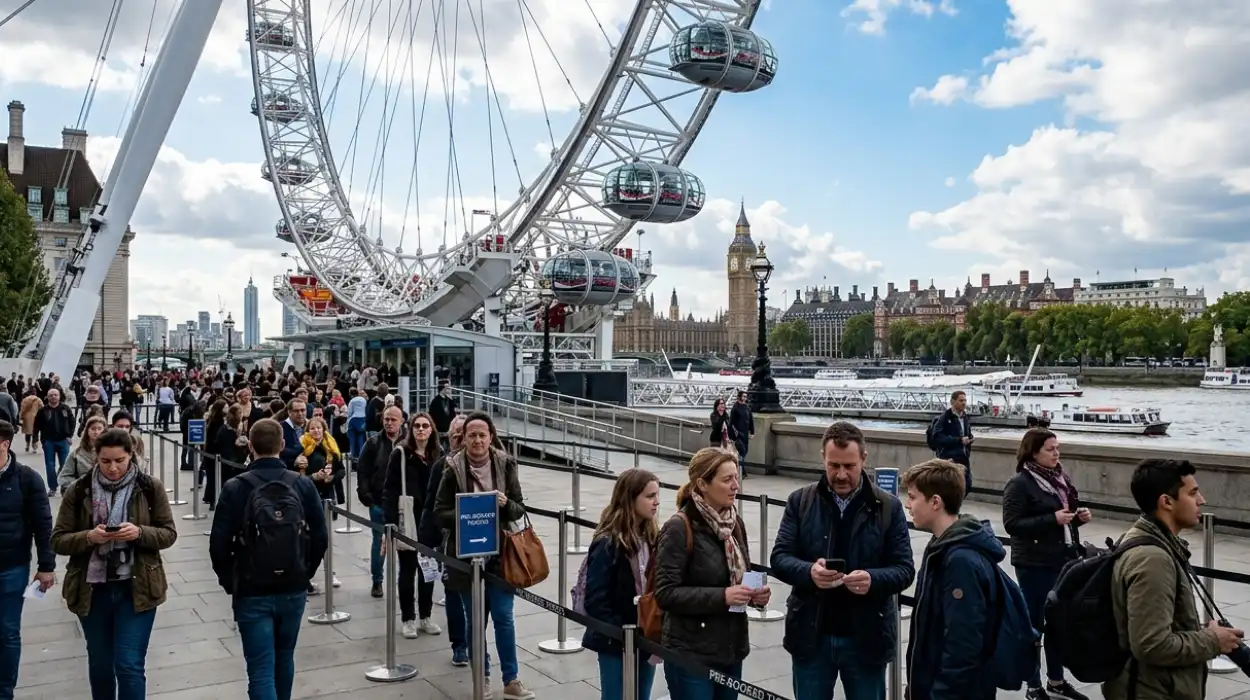
On weekdays from 10:00 AM to 11:00 AM, queue lengths are typically shortest because many tourists start their day later or focus on other attractions first. Midday and early afternoon slots, plus Saturday mornings, usually see the highest congestion as the London Eye fits naturally into a central‑London walking route.
Fast‑track or priority queues split visitors into a separate line that bypasses the main ticket‑purchase queue and often shortens the boarding‑area queue. On very busy days, the standard queue can stretch to 30–45 minutes, whereas fast‑track queues may stay under 10–15 minutes.
How should you choose the best capsule side and viewing position?
Face east‑north‑east for Parliament and the Tower of London, west‑south‑west for the Shard and Canary Wharf, and use the full rotation to scan all directions rather than fixating on one side.
The London Eye’s orientation is fixed relative to the river, so “front,” “back,” and “side” views depend on the capsule’s position at boarding. Capsules facing roughly east‑north‑east at the bottom capture the Houses of Parliament, Big Ben, Westminster Bridge, and the London Eye’s own rotation axis. As the wheel turns, the same capsule swings toward the Tower of London and the western skyline.
Capsules loading with a west‑south‑west bias give strong early views of the Shard, Southwark Cathedral, and the City of London. The wheel’s 30‑minute rotation means no single capsule permanently faces one landmark, so passengers should circulate around the capsule to cover all angles and avoid standing in front of the same window the entire ride.
What should you wear and bring on a London Eye ride?
Wear layers, a waterproof jacket, and comfortable shoes, and bring a fully charged phone or camera, a small bag, and any mobility‑aid items needed.
The capsule is heated in winter and air‑conditioned in summer, but entry and queuing areas are exposed to the elements. London’s weather frequently changes during the day, so a light waterproof or windproof layer is more practical than a heavy coat. Comfortable, closed‑toe shoes help during standing‑only rides and any walking on the South Bank.
Photography is a primary reason many visitors ride, so fully charged phones or cameras and, where allowed, small tripods or stabilizers are recommended. Large bags and tripods are often restricted or require storage, so lean toward compact gear. Visitors with mobility needs should bring supporting aids such as canes or walking frames, as staff can assist with boarding and seating where available.
How does the London Eye experience differ by weather and visibility?
On clear days, visibility can reach 40 kilometers or more; on overcast or foggy days, distant landmarks may be blurred or hidden, especially at night.
Under good conditions, passengers can distinguish the London Stadium in Stratford, the Canary Wharf tower cluster, and parts of Greenwich Park from the top quadrant of the wheel. These distances are roughly 10–15 km from the South Bank, so air clarity has a direct impact on how much detail is visible.
In London’s typical low‑level haze or winter fog, contrast between land and water diminishes. Nighttime fog or heavy rain can make the skyline appear washed‑out or fragmented, even though the wheel continues to operate unless safety thresholds are breached. Forecast checking before arrival helps avoid booking on days with very low visibility.
How can you combine the London Eye with nearby attractions?
The London Eye sits within a dense cluster of attractions including the SEA LIFE London Aquarium, London Dungeon, and South Bank cultural venues, which can be combined in a single riverside walking route.
The SEA LIFE London Aquarium is directly adjacent on the ground level, while the London Dungeon is a short walk east along the South Bank. Walking west along the embankment leads toward the Southbank Centre, the National Theatre, and Tate Modern.
A typical plan is to start with a morning or early‑afternoon London Eye ride, then walk along the South Bank toward the London Eye Pier or Waterloo Bridge, using the wheel as a visual anchor for orientation. This sequence allows viewers to compare the daytime riverside walk with the elevated, panoramic view they had from the capsule.
What accessibility and safety measures does the London Eye provide?
The London Eye offers wheelchair‑accessible capsules, step‑free boarding, staff assistance, and monitored emergency procedures, with specific height and health requirements for certain ticket types.
The majority of capsules are designed to accommodate wheelchair users, with level boarding platforms and space for one or more chairs. Staff can guide groups through dedicated access points and assist with security checks. Some experiential or premium tickets may carry extra movement or balance requirements, so those should be checked in advance.
The structure complies with UK safety standards for large public attractions, including continuous monitoring of the wheel’s mechanical systems and emergency‑stop protocols. In case of severe weather or technical issues, the wheel can be halted and passengers can disembark in a controlled sequence.
What future trends and changes affect the London Eye experience?
Future trends include tighter integration with digital ticketing, dynamic pricing for peak hours, and possible enhancements to capsule technology for improved comfort and interactivity.
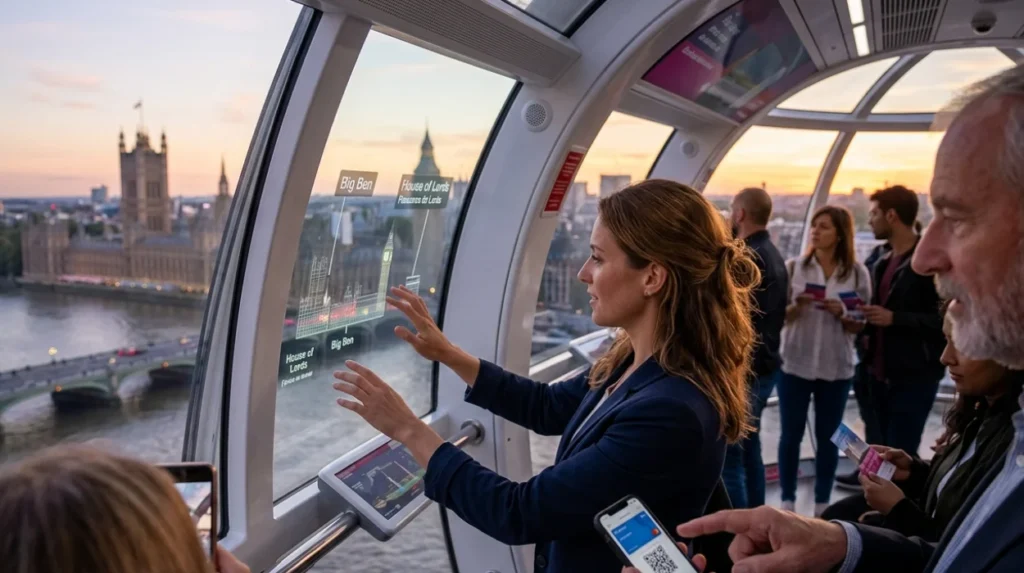
Ticketing ecosystems are increasingly shifting toward app‑based, timed entry with QR codes and integrated city‑wide passes, which reduces physical queuing and speeds up entry. Some operators already use dynamic pricing models where tickets for sunset or weekend slots carry a small premium over weekday morning slots.
On‑board technology could evolve toward touch‑screen overlays, augmented‑reality guidance, or multilingual audio guides that highlight landmarks in real time. These features would deepen the educational component of the ride without altering the core structure or operational hours.
How do you plan a complete London Eye visit around your day?
Plan a London Eye visit by checking opening hours and the weather forecast in advance, booking a timed slot aligned with daylight or sunset, and leaving at least 45–60 minutes for queues, boarding, and exit.
Start by confirming the exact opening and closing times for the date of travel, as they shift seasonally. Choose a weekday morning slot for the lightest crowds and crispest views, or a late‑afternoon slot if night‑time photography is a priority.
Arrive at the South Bank entrance 15–20 minutes before the booked time to allow for security checks, queue management, and any last‑minute changes. After the 30‑minute rotation, factor in 10–15 minutes to exit, walk back into the South Bank area, and either continue to the next attraction or rejoin the Thames‑side walking route.
What is the London Eye and how does it work?
The London Eye is a giant 135-meter observation wheel on the River Thames in London.
It moves slowly in a full circle (about 30 minutes per ride), and passengers stay inside glass capsules that remain level while rotating.