Key Points
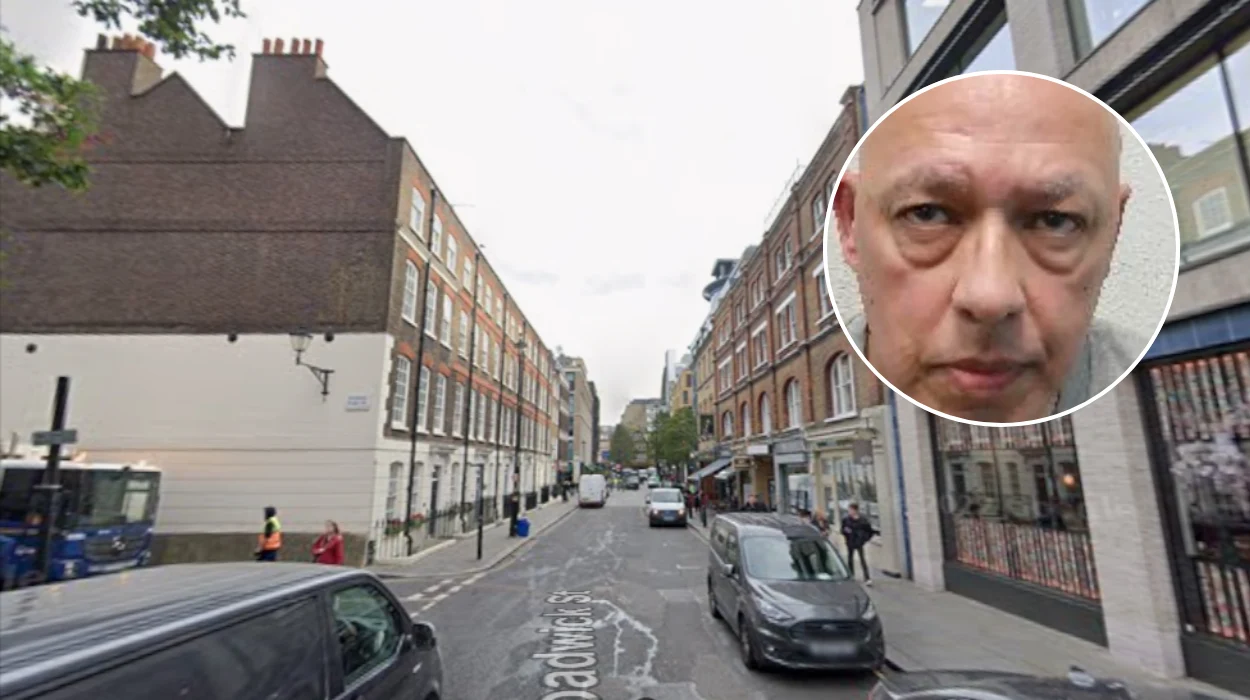
- Registered sex offender James Manchand, 62, from Camden in north London, was jailed for 20 months after targeting women in Soho, central London.
- Police spotted him repeatedly walking around queues outside popular West End venues on 16 January this year before stopping him for a search.
- Officers found 29 videos on his phone, showing more than 20 victims, all recorded on the same night in Soho.
- Manchand was already subject to a Sexual Harm Prevention Order because of a previous voyeurism conviction.
- Westminster magistrates also ordered the forfeiture of his laptop and mobile phone.
- Police urged the public to report suspicious behaviour to officers or venue staff immediately.
Soho (Extra London News) 16 April 2026 – registered sex offender James Manchand, 62, from Camden in north London, has been jailed for 20 months after police caught him targeting young women in Soho and later found videos of more than 20 victims on his phone, according to the Daily Mail report by the paper’s newsroom.
As reported by the Daily Mail, officers first noticed Manchand on 16 January this year as he repeatedly walked back and forth near queues outside popular venues in the West End, behaviour that initially led them to think he might be scouting for theft. Uniformed police then intervened when he continued lingering around groups of young women, and checks revealed he was a registered offender already covered by a Sexual Harm Prevention Order linked to a previous voyeurism conviction.
How did police identify him?
Police found that Manchand was required under the order to hand over his phone and allow it to be examined, according to the Daily Mail account. That search led officers to 29 videos on his device, showing over 20 victims, all filmed on the same evening in Soho.
The report says the discovery was made after officers detained him on the spot, turning what began as surveillance for suspicious behaviour into an arrest for sexual offending. Westminster magistrates later sentenced him to 20 months in prison and ordered the seizure of both his laptop and phone.
What sentence did he receive?
The Daily Mail reported that Manchand received a 12-month sentence for each of two breaches of the Sexual Harm Prevention Order, with those terms to run concurrently. He also received a four-month sentence for recording images under clothing, which was ordered to run consecutively, along with another four-month term activated from a previously suspended sentence.
That combination of penalties brought the total custodial term to 20 months. The case therefore involved both the original voyeuristic conduct and the breach of court restrictions already placed on him because of his earlier offending.
Why does this case matter?
This case shows how street policing, stop-and-search powers in the right circumstances, and digital evidence can combine to identify repeated sexual offending quickly. It also underlines the role of existing Sexual Harm Prevention Orders in giving police a legal basis to act when a known offender is seen behaving suspiciously.
The report also highlights the scale of harm that can be captured on a single mobile phone, with the device containing material linked to more than 20 women filmed in one night. Police advice in the case was straightforward: members of the public who see someone behaving in a predatory way should report it immediately to police or venue staff.
Background of the development
Voyeurism and upskirting cases in England and Wales have increasingly involved digital devices because mobile phones can store large numbers of images and videos. In this case, the offender was already known to authorities, which meant the Sexual Harm Prevention Order had practical importance when officers checked his identity and were able to examine his phone.
The report indicates that the offence took place in one of London’s busiest nightlife districts, where queues, crowds and late-night movement can make detection more difficult. It also shows how police may initially approach a suspect for one concern, such as theft, before evidence reveals a different type of offence.
Prediction for the public
For young women and other nightlife visitors, the case is likely to reinforce the importance of reporting suspicious behaviour quickly, especially in crowded entertainment areas where offenders may try to blend in. For venue staff and police, it may encourage continued vigilance around known repeat offenders and closer attention to behaviour such as lingering near queues or repeatedly moving around the same area.
The case may also strengthen awareness that digital searches can uncover a wider pattern of offending than is visible on the street, which can lead to faster intervention and sentencing. For the wider public, it is a reminder that existing protection orders only work effectively when breaches are identified and acted upon promptly.