Key Points
- Historic Record Breakers: The United Kingdom is bracing for its hottest May bank holiday on record, with temperatures projected to climb as high as $35^\circ\text{C}$ across southern and south-eastern parts of England.
- Unprecedented Margin of Increase: While regional meteorological records are typically broken by mere tenths of a degree, current weather models indicate the national May temperature record could be shattered by nearly $3^\circ\text{C}$.
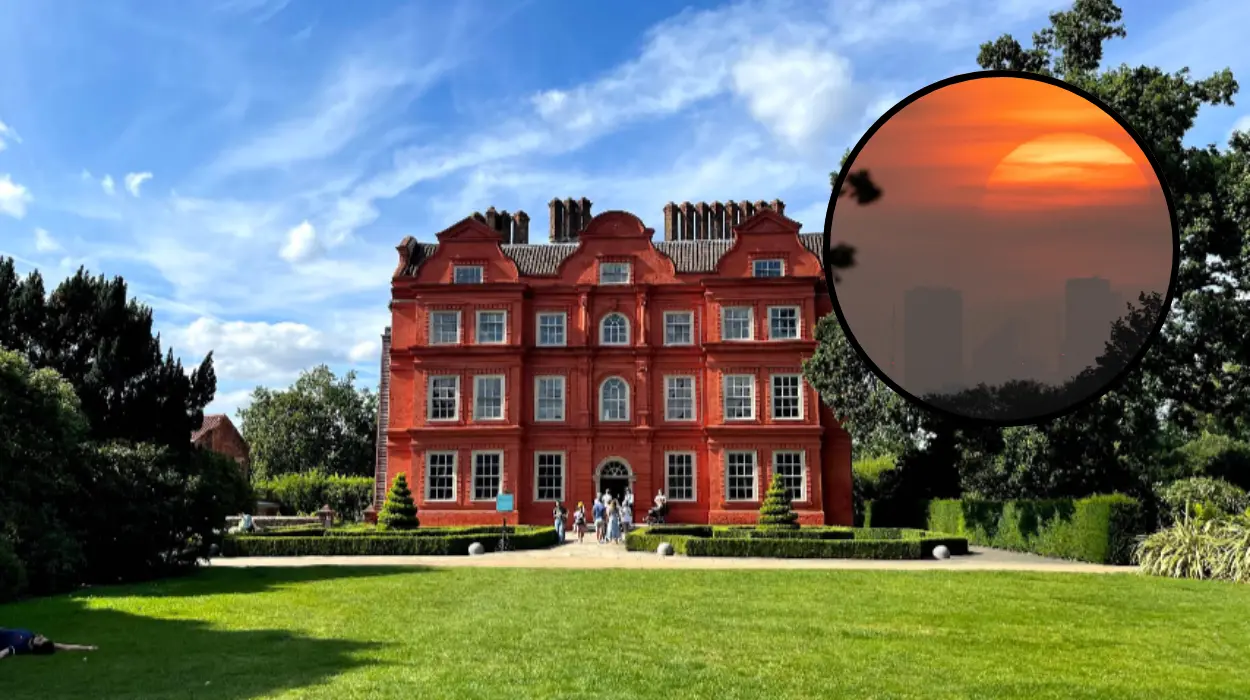
- Shattered Daily Highs and Lows: Kew Gardens in south-west London logged a historic daily high of $32.3^\circ\text{C}$ on Sunday, whilst Kenley Airfield in south London provisionally registered the warmest May night on record, failing to drop below $19.4^\circ\text{C}$.
- Official Heatwave Status Reached: The Met Office confirmed that official heatwave conditions have been established across eight distinct monitoring regions in England, including Heathrow, Northolt, and Santon Downham.
- The Climate Change Factor: Senior forecasters attribute the extreme, sudden escalation from a freezing $-5^\circ\text{C}$ in Scotland last week to historic highs this week to accelerated climate change shifting modern heatwave dynamics.
- Widespread Social and Infrastructure Impact: The intense heat has prompted amber health warnings from health agencies, triggered water supply infrastructure failures in Kent, and forced public institutions like the Marylebone Cricket Club to suspend traditional dress regulations.
London (Extra London News) May 25, 2026 – The United Kingdom is standing on the precipice of an unprecedented meteorological event this bank holiday Monday, with weather experts projecting that all-time May temperature records could be shattered by an astonishing margin of nearly $3^\circ\text{C}$. Following an extraordinary weekend that saw parts of the British Isles match the heat of the Mediterranean, the Met Office has forecast that the mercury could climb to an historic $35^\circ\text{C}$ in parts of the south and south-east of England. The rapid surge comes less than 24 hours after Kew Gardens in south-west London recorded a staggering peak of $32.3^\circ\text{C}$, marking the hottest May day the country has witnessed in at least 79 years, accompanied by overnight conditions that broke structural records dating back to 1944.
- How Did the Met Office Describe This Historic Weather Event?
- What Impact Is Climate Change Having on Modern British Heatwaves?
- Which Regions of the UK Have Officially Reached Heatwave Thresholds?
- How Are Infrastructure and Public Health Responding to the Crisis?
- What Advice Have Charities and Community Leaders Issued?
Meteorologists have expressed deep concern over the sheer scale of the arriving heat, noting that national temperature records are traditionally broken by minute increments—measured in tenths of a degree—rather than multiple whole degrees. The extreme atmospheric shift represents a dizzying swing in conditions across the British Isles; only last week, parts of Scotland were registering shivering overnight lows of $-5^\circ\text{C}$, while daytime temperatures across the remainder of England and Wales languished around a modest $14^\circ\text{C}$ to $15^\circ\text{C}$. As the unrelenting heatwave intensifies over Monday and Tuesday, public infrastructure has already begun to buckle, emergency services have issued critical safety warnings, and public health authorities have implemented strict monitoring alerts to protect vulnerable populations caught in the sudden, tropical embrace of early summer.
How Did the Met Office Describe This Historic Weather Event?
The sheer velocity and scale of the temperature surge have caught the attention of climate scientists and national forecasters alike. Writing on the social media platform X on Monday, May 25, 2026, the official account of the Met Office confirmed the extraordinary nature of the shift:
“Today will be the hottest day in May in the UK in our temperature records, with highs of 35 degrees Celsius expected. The current May record is 32.8 °C. Records are usually only broken by tenths of a degree – making this heatwave unprecedented for the time of year.”
As reported by Sapphire Hope of The Independent, the current record-breaking spell represents a dramatic break from normal historical patterns, with Sunday’s reading of $32.3^\circ\text{C}$ at Kew Gardens officially locking in the warmest May afternoon since 1947. The weekend sequence showed a steady escalatory pattern; Saturday marked the very first time in 2026 that the United Kingdom surpassed the $30^\circ\text{C}$ threshold, achieving that mark at the earliest calendar date since 1952.
As detailed by Tom Morgan, a senior Met Office meteorologist, in a direct briefing to the Press Association, the development of mid-thirty-degree heat before June is an exceedingly rare phenomenon. As reported by Michael Howie of The Standard, Tom Morgan stated that:
“We rarely see temperatures above 35C, even in the summer months, so to see temperatures getting close to 35C in May is, as I say, pretty historic.”
Furthermore, the heat has refused to dissipate after sunset, introducing a phenomenon known to weather experts as “tropical nights.” In a digital update published on Monday morning, the Met Office announced that it had provisionally tracked the warmest night ever documented during the month of May. According to the agency’s official notification:
“We’ve provisionally recorded the UK’s highest daily minimum temperature for May on record. Temperatures didn’t fall below 19.4°C at Kenley Airfield overnight, provisionally breaking the previous May record of 18.9°C set back in 1944.”
What Impact Is Climate Change Having on Modern British Heatwaves?
The alarming speed at which this heatwave developed has prompted senior meteorologists to issue direct warnings regarding the footprint of global warming on localized weather systems. In past decades, British heatwaves were characterized by a slow, multi-day building process as high-pressure systems drew warm air from the continent over an extended period. The current system, however, has exploded into record territory within a matter of days.
As reported by an uncredited national reporter for the Irvine Times, senior Met Office meteorologist Greg Dewhurst explained that climate change is fundamentally reshaping the physical behavior of these thermal systems. Greg Dewhurst stated that:
“We see these changes happening so much more dramatically. In the past, heatwaves built and built and built and built over days and days and days – these now just develop so quickly. It’s huge sort of swinging temperatures, and obviously records being broken by day and by night, so it just shows sort of how extreme the weather can change, and how quickly it can change as well.”
Greg Dewhurst further warned that historical baseline expectations for British seasons are becoming increasingly obsolete under modern emissions scenarios. As reported by the Penarth Times, Greg Dewhurst added that, as a direct result of ongoing climate change, all meteorological models are currently predicting:
“More extreme heat, more extreme weather events” and “hotter, drier summers – wetter, windier winters.”
This analytical assessment is supported by structural climate modeling released by the national weather service. As reported by The Guardian, an official Met Office spokesperson quantified the changing mathematical probability of these severe spring anomalies, stating that:
“Breaking the 32.8C May record is around three times more likely now in our current climate than it would have been in natural climate conditions before the Industrial Revolution. What was around a one-in-100-year event is now around a one-in-33-year event.”
Which Regions of the UK Have Officially Reached Heatwave Thresholds?
The Met Office maintains distinct, regionally adjusted criteria for declaring an official heatwave, based on sustained local temperatures over a three-day period. In London and its surrounding home counties, a heatwave is defined when temperatures reach or exceed $28^\circ\text{C}$ for three consecutive days. For other parts of southern England and south-east Wales, the bar is set at $26^\circ\text{C}$ or $27^\circ\text{C}$, dropping to $25^\circ\text{C}$ for the rest of Wales, Scotland, Northern Ireland, and northern England.
As reported by Sapphire Hope of The Independent, the Met Office confirmed that by midday on Sunday, official heatwave conditions had been successfully met across eight specific monitoring stations in England:
- Heathrow (Greater London)
- Kew Gardens (Greater London)
- Northolt (Greater London)
- Benson (Oxfordshire)
- Brooms Barn (Suffolk)
- Santon Downham (Suffolk)
- High Beech (Essex)
- Writtle (Essex)
According to a detailed breakdown provided by The Guardian, Santon Downham in Suffolk was the very first location in the country to formally breach the heatwave threshold, cross-referencing its local target of $27^\circ\text{C}$ at precisely 11:30 am on Sunday morning. It was followed shortly thereafter by Heathrow at 11:50 am, where temperatures comfortably surpassed the required $28^\circ\text{C}$ baseline.
While the most oppressive thermal intensity remains centered over southern and eastern England, the heatwave has exerted a powerful influence across all four home nations. On Sunday, Cardiff reached a peak of $27^\circ\text{C}$, securing the warmest day of 2026 for Wales. Simultaneously, Northern Ireland recorded its own annual high, with the mercury climbing to $23.4^\circ\text{C}$ in Armagh. Scotland similarly sweltered through an unusually hot afternoon, with Edinburgh tracking a maximum of $23.5^\circ\text{C}$—landing a mere $0.1^\circ\text{C}$ short of the standing Scottish May record of $23.6^\circ\text{C}$, which had been logged in Aboyne earlier in the month on May 1. Forecasts indicate that while England will continue to roast under high pressure on Monday, north-west Scotland will provide a stark contrast, turning breezier, cloudier, and considerably damper.
Explore More London Local News
Kings Cross Train Delays: New Barnet Power Fault Blocks Lines (2026)
Father Ben Caunter Becomes Oldest Active Pro Boxer: Barnet 2026
How Are Infrastructure and Public Health Responding to the Crisis?
The sheer immediacy of the heatwave has placed a severe strain on localized public utilities and prompted emergency interventions from health watchdogs. The sudden spike in consumer water demand, combined with operational stressors on distribution networks, resulted in widespread infrastructure issues across the home counties.
As reported by journalists at BBC News, residents living within three rural villages in Kent experienced a complete loss of water supply or severely depressed water pressure for two consecutive days over the bank holiday weekend. The affected settlements were identified as Charing, Challock, and Molash, located near Ashford, where households initially filed emergency complaints on Saturday evening. In an official corporate statement, utility operator South East Water (SEW) noted that while the initial disruption had been temporarily resolved overnight, systemic failures reappeared at approximately 9:25 am on Sunday morning due to ongoing “issues with the pumping station.” The water provider has issued an unreserved public apology to the hundreds of affected families who remain without reliable water access during the peak hours of the heatwave.
Simultaneously, the sudden thermal spike has caused deep anxiety regarding public safety and vulnerable demographics. The UK Health Security Agency (UKHSA) took proactive measures on Friday by activating its very first amber health alert of 2026. The amber designation signifies a formal warning that the prevailing weather conditions pose a significant, immediate threat to the operational capacity of national health and social care services, with the emergency alert mandated to remain in active enforcement until at least Wednesday.
What Advice Have Charities and Community Leaders Issued?
With statistical data confirming that extreme heat poses an acute threat to elderly populations whose bodies struggle with autonomous thermoregulation, national advocacy groups have mobilised to issue community guidance. Speaking to reporters on Sunday afternoon, Caroline Abrahams, the Charity Director of Age UK, urged the British public to look out for isolated neighbours. As reported by Michael Howie of The Standard, Caroline Abrahams stated that:
“We can all help older people stay safe during periods of hot weather by checking in on older relatives, friends and neighbours to see if they need anything or are struggling with the heat. Offering to pick up shopping or medication, or even lending a fan, can make a real difference.”
Age UK has formally recommended that older adults remain entirely indoors during the peak ultraviolet and thermal hours of the day—specifically between 11:00 am and 3:00 pm—and utilize regular cold baths or showers to keep core body temperatures within safe limits.
The heat has also triggered unusual adaptions across cultural and recreation sectors. In London, thousands of sunbathers flooded green spaces such as Battersea Park and Richmond Park to utilize public water fountains. At the historic Lord’s Cricket Ground, the Marylebone Cricket Club (MCC) took the rare step of explicitly relaxing its famously strict traditional dress code for its members’ pavilion. Under normal operating regulations, spectators inside the pavilion are required to wear full lounge suits or tailored jackets accompanied by ties; however, due to the health risks associated with the $32^\circ\text{C}+$ conditions, the club authorized members to shed their jackets throughout the matches. Even the animal kingdom required human intervention; a spokesperson for the London Zoo confirmed that handlers had begun distributing custom-made ice lollies to animals accustomed to milder British climates to ensure they remained properly hydrated.
The weekend’s soaring temperatures have tragic consequences as well. Lincolnshire Police officially confirmed that the body of 15-year-old Declan Sawyer was successfully recovered from the water at Swanholme Lakes in Lincoln. Emergency services had received frantic reports of a youth in significant respiratory and physical distress in the water at approximately 2:30 pm on Sunday. The incident has renewed urgent warnings from emergency services regarding the extreme dangers of open-water swimming during sudden heatwaves, where individuals entering lakes and rivers can experience immediate cold-water shock despite high ambient air temperatures.