
A suspicious phone call. A convincing text message. A voice that sounds exactly like someone you trust.
- Why the UK and India are working together
- What the new UK–India agreement actually does
- India already has AI tools fighting fraud
- Britain is also trying to make telecom networks harder to exploit
- But AI is also helping the criminals
- What could this mean for ordinary phone users?
- A new kind of UK–India cooperation
As technology makes digital fraud increasingly difficult to spot, the UK and India are now looking to use another powerful technology – artificial intelligence – to fight back.
Telecommunications industry leaders in Britain and India have agreed to strengthen cooperation on online fraud, scams and digital harms, with AI expected to play a growing role in protecting consumers and securing communication networks.
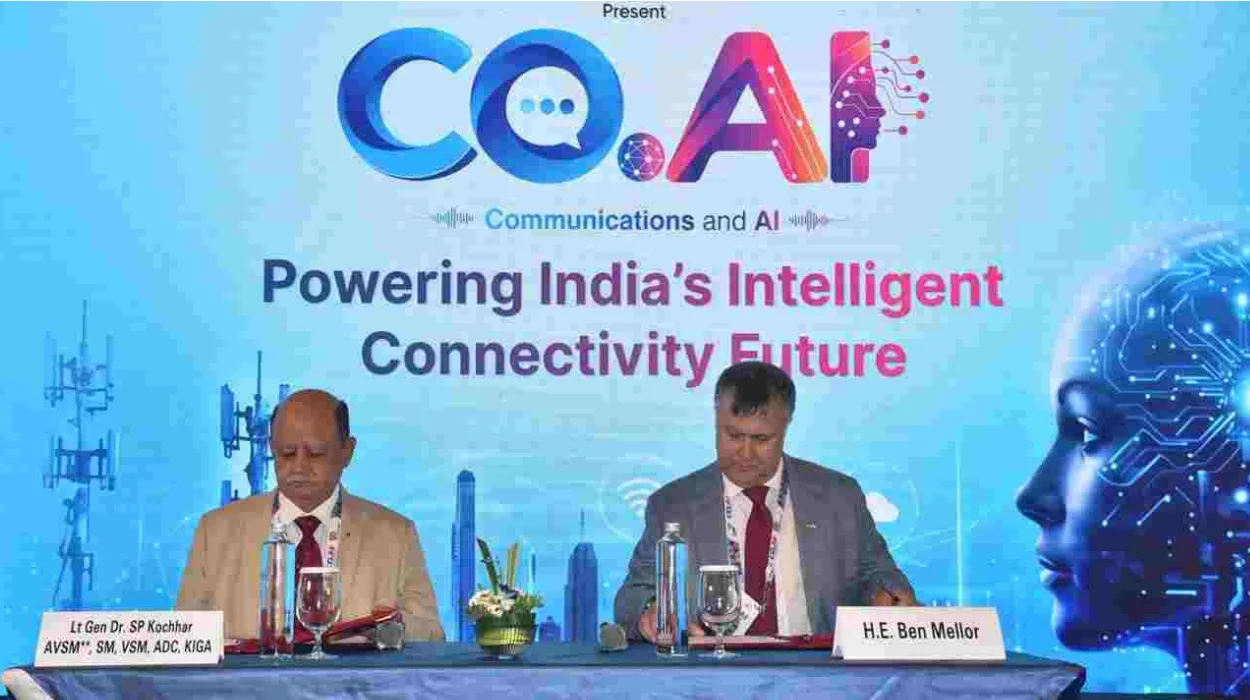
The partnership was formally agreed on 14 September 2026 through a Memorandum of Understanding between the British High Commission in India and the Cellular Operators Association of India (COAI). The UK government announced the agreement on 15 September.
The agreement will create a framework for the two countries’ telecoms industries to share knowledge, exchange expertise and explore new approaches to digital-fraud prevention, including the use of emerging AI technologies.
Why the UK and India are working together
Fraud does not stop at a country’s borders.
The UK government says more than two-thirds of fraud cases in the UK have an international element, highlighting the increasingly cross-border nature of the crime. Fraud against individuals and businesses is also described by the government as the largest reported crime type in England and Wales, costing the UK economy an estimated £14.4 billion in 2023–24.
The UK’s Fraud Strategy 2026–2029 says criminals are increasingly using technologies such as generative AI, deepfakes, large language models and voice cloning to make scams more convincing and easier to carry out at scale.
That creates a technological race.
The same technology that can help criminals make a scam look real could also help telecom companies identify suspicious activity before it reaches a victim.
What the new UK–India agreement actually does
The agreement does not create a single new UK–India AI system.
Instead, it establishes a framework for cooperation between the two countries’ telecom sectors on digital fraud and security. The UK government says the partnership will allow experts to share learning and examine how new technologies and approaches can be used alongside developments in AI.
The first formal collaboration included representatives from the Department of Telecommunications, Telecom Regulatory Authority of India, Vodafone, Jio Infocomm and Bharti Airtel, as well as the British High Commission and COAI.
Ben Mellor, Acting British High Commissioner to India, said AI was transforming how communication networks are designed and secured.
He said industry partners were “central to protecting citizens, business and institutions” from people seeking to cause harm, adding that the agreement reflected a shared UK–India commitment to tackling challenges at the intersection of telecommunications and digital security.
India already has AI tools fighting fraud
India is not starting from scratch.
The country’s Department of Telecommunications has already introduced several systems designed to identify suspicious mobile connections and fraudulent communications.
One of them is ASTR, an artificial intelligence and big-data analytics system designed to identify suspicious mobile connections. According to the Department of Telecommunications, more than 88 lakh mobile connections had been disconnected after failing reverification.
Another system, the International Incoming Spoofed Calls Prevention System (CIOR), targets international calls that falsely display Indian mobile numbers.
The Department of Telecommunications says that since CIOR was commissioned on 17 October 2024, it has blocked 1.35 crore calls in a 24-hour period and contributed to a nearly 99% reduction in spoofed calls displaying Indian mobile numbers.
India has also introduced the Financial Fraud Risk Indicator (FRI), which gives suspicious mobile numbers a risk category based on their potential association with financial fraud.
The Department of Telecommunications said that, since FRI was launched in May 2025, financial institutions had reported preventing potential fraud worth more than ₹1,400 crore through alerts, transaction declines and other interventions.
Britain is also trying to make telecom networks harder to exploit
The UK has been developing its own measures.
Its Telecommunications Fraud Sector Charter calls for the industry to strengthen data sharing, improve call security and use AI responsibly to detect and prevent scams. The charter also calls for an industry AI Fraud Prevention Working Group and greater sharing of threat intelligence.
The UK’s Fraud Strategy says the government is also working with Ofcom, law enforcement and the telecommunications sector to reduce the abuse of communications networks.
It plans to develop a National Telecommunications Traceback Scheme by early 2028, which would help investigators trace suspicious or fraudulent communications across interconnected networks.
But AI is also helping the criminals
The challenge is that artificial intelligence is not only being used by those trying to stop fraud.
The UK’s 2026–2029 Fraud Strategy warns that criminals are using AI-generated deepfakes, voice cloning and large language models to make fraudulent communications more convincing.
A scammer can potentially create more realistic messages, imitate voices and tailor approaches to individual victims making it increasingly difficult for people to recognise a fraud simply by looking for obvious mistakes.
That is why the UK–India partnership comes at an important moment.
As AI becomes better at generating convincing content, telecom companies and governments are also trying to improve their ability to identify suspicious behaviour.
What could this mean for ordinary phone users?
For most people, the success of the partnership may not be something they see.
There may be no new app or warning screen. Instead, the technology could work behind the scenes — identifying suspicious numbers, detecting unusual patterns or helping networks block fraudulent communications.
But greater use of AI also makes privacy, transparency and accuracy important questions.
A system designed to stop scams needs to distinguish between genuinely fraudulent behaviour and legitimate communication. The UK government’s telecommunications charter specifically refers to the need for responsible AI use while protecting privacy, transparency and consumer trust.
Lt Gen Dr SP Kochhar, Director General of COAI, said India’s next phase of connectivity needed to be “intelligent, secure, resilient and citizen-centric.”
He said telecom networks would increasingly become AI-enabled systems capable of strengthening security and protecting consumers from emerging digital risks.
A new kind of UK–India cooperation
The September agreement adds another area to an already broad UK–India relationship, which includes trade, technology, education, defence and research.
But this partnership is particularly relevant to everyday life.
A scammer does not need to be in London to target someone in London. A fraudulent call can originate thousands of miles away, while an AI-generated message can be produced in seconds.
That makes international cooperation increasingly important.
For now, the UK and India are sharing expertise and developing a framework for cooperation rather than announcing a single joint AI solution.
The real test will come later: can governments and telecom companies make the networks faster at recognising fraud than criminals are at creating it?
For millions of people who carry a smartphone every day, that race is already underway.