Key Points
- Construction Work: Construction work for an innovative new flood mitigation scheme is due to commence later this month at Lyndhurst Park and The Meads Open Space in Barnet.
- Scheme Objective: The scheme is aimed at changing the shape of parts of Burnt Oak Brook to achieve channel slopes that are more safe and stable.
- Flood Detention Basins: New basins to store the floods (also known as detention basins) will be dug, collecting the excessive water and allowing it to slowly seep underground, thus reducing the risk of flooding for the neighboring houses and streets.
- Environmental Enhancement: Environmental enhancement works include planting of wetlands, new trees, creating meadows and low hills, as well as landscaping changes in both parks.
- Previous Projects: This scheme is the fourth of its kind that Barnet Council is developing; previously similar projects were completed at Watling Park in Burnt Oak, Friary Park in Friern Barnet, and Halliwick Park in Muswell Hill.
- Financial Support: The financial support for the project will come from Defra as part of the £6 million Action for Silk Stream project through the Flood and Coastal Innovation Programmes funded by the Environment Agency.
- Public Consultation: Public consultations conducted by the project’s partner Thames21 showed positive response from the local community.
London (Extra London News) September 5, 2026 — Comprehensive engineering work targeting long-term climate resilience is set to commence this month across two vital public green spaces in North London. As reported by local news providers, the ambitious initiative focuses on Lyndhurst Park and The Meads Open Space, areas that straddle Burnt Oak and Mill Hill, with the core intent of mitigating escalating flood hazards posed to local properties and infrastructure. By restructuring parts of the local watercourse and introducing engineered natural drainage features, municipal authorities seek to protect neighboring residential zones and commercial enterprises from extreme weather events.
What is the scope of the new flood alleviation project in Barnet?
According to details outlined by municipal authorities and covered extensively in regional reporting, the initiative is designed to fundamentally alter how excess stormwater moves through the local catchment area. As detailed by the London Borough of Barnet, the structural engineering works will adjust the slopes flanking Burnt Oak Brook, rendering the banks significantly safer and more stable.
Furthermore, the project incorporates the excavation of designated flood-storage basins—frequently designated as detention basins—which are engineered specifically to intercept and hold excess water during periods of heavy and prolonged rainfall. Explaining the functional mechanics of these installations, media reports note that these basins are constructed to remain dry for the majority of the time, functioning primarily as grassed areas that can seamlessly retain recreational utility and ease of maintenance for the public. Once water is pooled temporarily during storms, it is structured to filter and drain slowly back into the ground, cutting down peak surface runoff pressures that threaten surrounding roads and structural foundations.
Explore More Barnet News:
Jamie Duncan Trial for Barnet Girlfriend Murder in London 2026
London Council Integrates Islamic School with Compulsory Hijab Rule, Barnet 2026
Why are Lyndhurst Park and The Meads being targeted for updates?
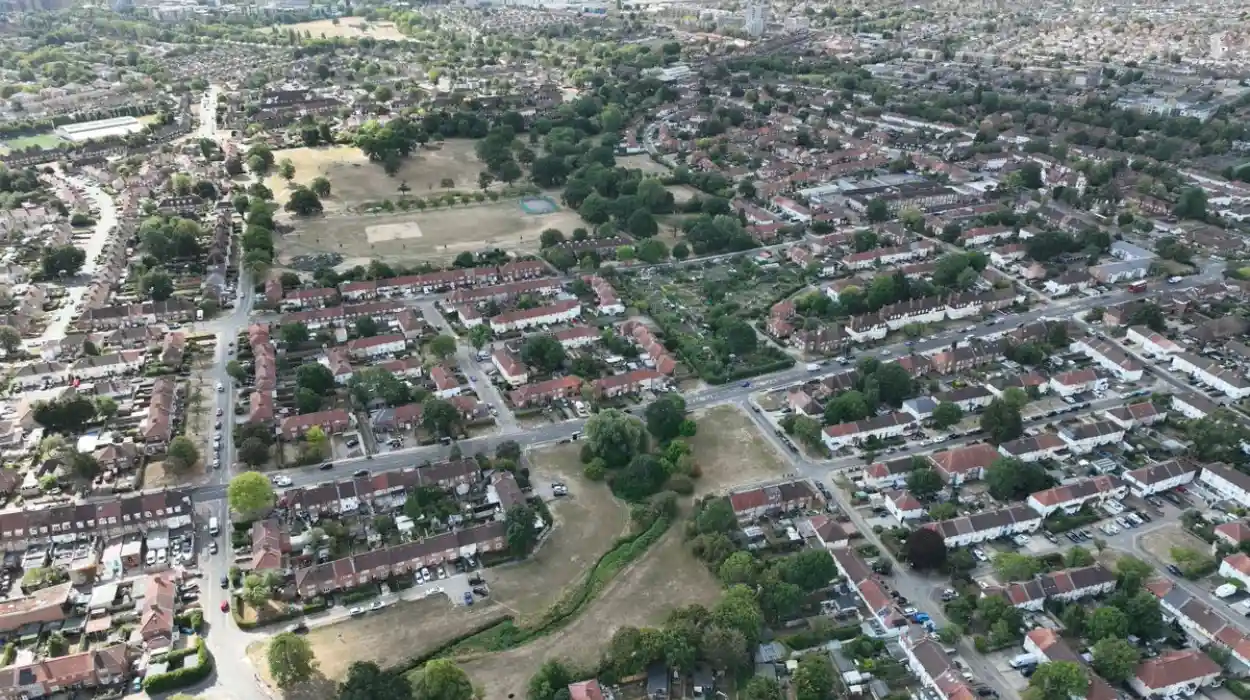
Lyndhurst Park and The Meads Open Space occupy strategic geographical positions flanking either side of Burnt Oak and Mill Hill, where The Meads tracks the path of Burnt Oak Brook westward toward Watling Park. Because these spaces lie directly within the vulnerable Silk Stream catchment zone, they have been identified as prime locations for deploying natural flood management methodologies.
As highlighted by Jo Barnes, Community Content Editor for the Ham & High, the overarching project forms a critical line of defense against the multiplying threats introduced by global climate shifts. Beyond the core structural defenses against high water levels, the scheme is engineered to drastically enhance local biodiversity. Local landscaping plans incorporate extensive wetland planting regimes, the integration of new native trees, expansive meadow layouts, low-lying soil mounds, and cohesive aesthetic developments across both parks.
How does this project fit into Barnet Council’s wider environmental strategy?
The commencement of works at Lyndhurst Park and The Meads marks a continuation of municipal strategies aimed at ecological protection and sustainable urban planning. Highlighting the precedent for this initiative, municipal updates note that this scheme is the fourth project of its specific class introduced by the local authority. It directly follows similar, award-winning flood alleviation schemes successfully deployed at Watling Park in Burnt Oak, Friary Park in Friern Barnet, and Halliwick Park in Muswell Hill.
Speaking on the broader implications of the infrastructure development, Councillor Alan Schneiderman, Cabinet Member for Environment and Climate Change at Barnet Council, emphasized the dual purpose of the undertaking. As reported by London Now, Councillor Schneiderman stated that:
“This will help address the increasing risk posed by climate change. While reducing the risk of flooding, it will also provide a more biodiverse and picturesque amenity space for residents to enjoy throughout the year.”
Echoing these remarks in coverage by the Ham & High, Councillor Schneiderman further elaborated on municipal sustainability goals, stating that:
“We’re working together as a borough to become more sustainable and make Barnet net zero by 2042 – and this is another step we’re making in the right direction.”
Where is the funding coming from and who is involved?
The financial backing for the interventions at Lyndhurst Park and The Meads originates from national resilience funds. The project is heavily supported by a £6 million allocation provided by the Department for Environment, Food and Rural Affairs (Defra). This capital was successfully secured by Barnet Council via the Flood and Coastal Innovation Programmes, which are centrally overseen and managed by the Environment Agency.
The wider regional undertaking, known broadly as the Action for Silk Stream project, functions as a collaborative partnership. Led conjointly by the London Borough of Barnet and the London Borough of Harrow, the initiative incorporates active stakeholder participation from environmental groups such as Thames21. Thames21 has been instrumental in facilitating community engagement channels, including workshops and walks, allowing residents to offer vital feedback regarding basin positioning, vegetation types, and local park amenities.
Official documentation and progress trackers for residents seeking further technical specifications or design visualisations remain accessible via the specialized Action for Silk Stream pages hosted by Thames21 and the official Barnet Council digital portal. With machinery moving on-site this month, local stakeholders expect the transformation to swiftly lay down physical foundations for a more climate-resilient urban ecosystem.