Key Points
- Conversion Successful: After a decade of legal wrangling between the developers and Ealing Council, the conversion of office premises above Barclays Bank to six residential flats has been approved.
- Site: The development will take place at 52-53 The Broadway, just off Ealing Broadway in west London.
- Dispute History: The conversion plans were initially turned down in November 2016 by Ealing Council, claiming that the site had been zoned for community or medical purposes rather than office purposes.
- Resolution: The developers managed to prove that the first floor had been occupied as lawful Class E commercial office space by Barclays Bank since at least 2007.
- Project Information: The project includes four studios, one one-bedroom apartment and one two-bedroom apartment. It will be totally car-free with ten bicycle spaces provided.
- Operational Considerations: Barclays Bank will be continuing their business from the ground-floor retail branch uninterrupted.
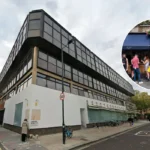
Ealing (Extra London News) August 15, 2026 – Developers have finally overcome a ten-year planning impasse with Ealing Council, securing the necessary approvals to transform vacant office space situated above a busy Barclays Bank branch in west London into residential accommodation. The project, located at the prominent 52-53 The Broadway near Ealing Broadway station, is set to deliver six new residential units following years of bureaucratic and legal scrutiny regarding the building’s historical planning designation.
Why was the Ealing Broadway conversion delayed for a decade?
The project’s path to approval was significantly obstructed by a long-standing disagreement over the building’s intended use. As reported by Philip James Lynch, Local Democracy Reporting Service (LDRS) reporter for The Standard, Ealing Council originally rejected a planning application for the first-floor space in November 2016.
The local authority’s primary contention was that the premises did not fall under the commercial office classification required for such a conversion. Instead, the council argued that the space was lawfully designated for community or medical use—a categorization known as “Class D1” in planning terms. This classification, had it been upheld, would have effectively prohibited the developer from pursuing residential development under the then-applicable planning regulations.
How did developers prove the building was eligible for conversion?
To overturn the council’s refusal, the developers had to meticulously reconstruct the site’s operational history. According to the reporting by Philip James Lynch of The Standard, the applicant presented comprehensive evidence proving that the first-floor office space had been occupied continuously by Barclays Bank for nearly two decades, dating back at least to 2007.
The council’s initial objection was rooted in planning permissions granted for neighbouring units within the same block, which had created historical ambiguity regarding the status of the specific space at 52-53 The Broadway. The developer’s planning team was ultimately successful in legally distinguishing their site from the adjacent units. By demonstrating that the office use had been uninterrupted, they satisfied the criteria for modern permitted development rights introduced in 2021, which allow for the conversion of commercial buildings to housing if they have served a lawful commercial purpose for at least two years.
Explore more Ealing News:
Ealing Ranks Lowest in London Food Hygiene Study 2026
Big Gay Beaver Day Returns to Greenford and Perivale Greenford 2026
What will the new residential development look like?
Following the formal approval of the planning application on August 5, 2026, the redevelopment is now moving forward. The final plan approved by the council entails the creation of six individual homes: four studio apartments, one one-bedroom flat, and one two-bedroom flat.
In line with contemporary urban planning priorities, the development is designed to be entirely car-free. To mitigate potential parking pressures, the design includes secure facilities for ten bicycles. Notably, the project will not impact the ground-floor operations of the Barclays Bank branch, which will continue to serve the local community as a retail banking hub.
What is the wider significance of this planning decision?
This case serves as a high-profile example of the complexities inherent in repurposing older urban commercial assets for residential use. The shift towards “permitted development” has been a significant trend in London’s property sector, intended to streamline the delivery of new homes. However, as evidenced by the decade-long struggle in Ealing, the reliance on historical planning data can often lead to prolonged conflict between developers and local authorities.
By resolving the dispute, both the developer and the council have reached a pragmatic outcome that facilitates the creation of new housing stock in a highly accessible location near Ealing Broadway station, while also maintaining the continuity of a long-standing commercial presence in the area.