Key Points
- Proposed Pilot Scheme: Croydon Council has put forward the idea of implementing a pilot scheme whereby GPS ankle tags are worn by persistent shoplifters to discourage repeat offenses.
- Exclusion Zones: The project seeks to set up “exclusion zones” surrounding the town center and district retail centers, where the offenders wearing GPS tags are prohibited from accessing those places.
- Zero-Tolerance Strategy: Jason Perry, the Executive Mayor of Croydon, has described the policy as an integral component of his overall zero-tolerance approach toward crimes and antisocial behavior.
- Sussex Model: Croydon Council is seeking advice from Sussex Police which has used GPS ankle tags to track repeat retail offenders and impose immediate penalties in the United Kingdom.
- Impact on Retail Businesses: According to the Croydon Business Association, retail businesses have found shoplifting a nuisance in terms of the costs involved, and have further reported that it affects their staff’s moral well-being and safety.
- Extent of the Crime: There have been 4,796 shoplifting crimes that occurred in the town center of Croydon in the last 12 months, which is a reduction by 4.9% from the previous year.
- Rejection of Previous Proposal: Previously, the mayor of Croydon, Jason Perry, proposed the implementation of the scheme, but it was rejected by Mayor of London Sadiq Khan, who argued that shoplifting is “not a priority.”
Croydon (Extra London News) August 11, 2026 – Persistent shoplifters could soon face the prospect of electronic monitoring and exclusion from parts of the borough under new, stringent proposals currently under examination by Croydon Council. As the borough seeks to tackle a high volume of retail theft, Executive Mayor Jason Perry has signalled a move toward a “zero-tolerance” policy, exploring the implementation of GPS ankle tags to track and restrict the movements of prolific offenders.
How would the GPS tagging pilot work for shoplifters?
The proposed pilot aims to address the small group of repeat offenders believed to be responsible for a disproportionate number of retail thefts. According to the official news release from Croydon Council, the technology would function by requiring persistent offenders to wear ankle tags. This would allow authorities to enforce “exclusion zones,” effectively banning individuals from specific high-risk areas, such as the town centre and other key retail hotspots.
As reported by the Croydon Council Newsroom, the Council is currently in discussions with police, technology providers, and external partners to determine the logistics of funding and enforcement. The model draws heavily from a system already in use by Sussex Police, which has successfully utilized GPS ankle tags to create digital boundaries around shops, allowing for real-time monitoring and immediate “fast recall” when conditions of an order are breached.
Why is Croydon Council taking this action now?
The decision to explore these measures follows an analysis of the persistent financial and psychological toll on local businesses. Official figures indicate that there were 4,796 reported shop thefts in the town centre in the last year.
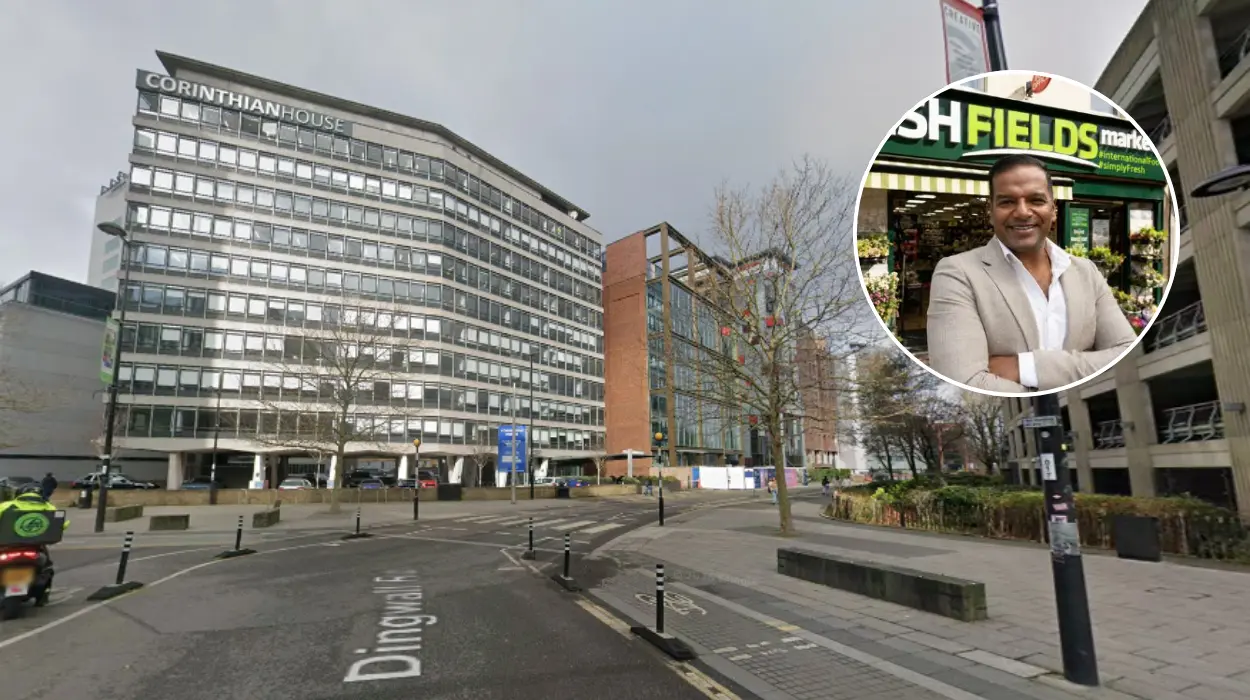
“Shoplifting has a significant impact on businesses, particularly retailers. It is not simply the financial value of the goods being stolen,” stated Benedict Selvaratnam, managing director of Freshfields Market in Croydon and co-founder of the Croydon Business Association. “There is also the cost of additional security, and the pressure it puts on staff, and morale. Persistent offenders make staff feel unsafe at work, and many businesses feel frustrated when the same individuals return repeatedly“.
Mr Selvaratnam expressed support for the measure, noting, “I would support tougher and more effective action against persistent offenders, including the appropriate use of GPS tagging. Where individuals repeatedly target shops and businesses, there needs to be a meaningful deterrent”.
Has the proposal faced opposition?
The road to this proposal has not been without political friction. Earlier in the year, Mayor Jason Perry campaigned on the promise of launching a GPS tagging pilot. However, his initial efforts to secure the scheme for Croydon were rebuffed by City Hall.
As detailed by Mayor Jason Perry’s official communications, he had formally requested that Croydon be designated as London’s first pilot for this technology. The response from the Deputy Mayor for Policing and Crime, Kaya Comer-Schwartz, indicated that the office of the Mayor of London would not support the initiative, stating that shop theft “does not align with the types of offences that the Mayor is seeking to prioritise”.
Mayor Jason Perry described this response as “simply not good enough,” arguing that the persistent nature of retail crime in Croydon requires a more aggressive, evidence-based approach. He maintains that if an individual comes to Croydon to steal, they should expect consequences, describing the potential pilot as “zero-tolerance in action”.
Does GPS tagging work to reduce crime?
Proponents of the scheme point to evidence from other jurisdictions and existing London programmes. GPS tagging is already utilized in the capital for offences such as knife crime, domestic abuse, and stalking. Furthermore, a Ministry of Justice and Metropolitan Police pilot targeting high-harm acquisitive criminals—such as burglars and robbers—reported a 20% reduction in reoffending rates.
Mayor Jason Perry argues that this technology is a “practical, proven tool.” By providing live alerts to the Metropolitan Police and probation services, the tags would allow for rapid enforcement when an exclusion zone is breached, while also helping investigators identify patterns in how stolen goods are being “fenced” or sold on.
Explore more Croydon News:
Police Appeal Over Unexplained Death in Croydon 2026
Missing Teenager Sidrit Appeal: Croydon 2026
What other steps is Croydon taking to fight retail crime?
The GPS tagging proposal is part of a wider effort by Croydon Council to secure its high streets. The borough has recently ramped up its collaboration with the police and local business partnerships.
In July 2026, the Council successfully secured a borough-wide injunction against a repeat antisocial behaviour offender, a move intended to send a “clear message” that such behaviour will not be tolerated. Additionally, the Council has introduced “Parkguard Patrol” officers—accredited community safety personnel—to monitor antisocial behaviour hotspots throughout the summer.
Simultaneously, London is seeing a broader rollout of new CCTV-reporting technology. As reported by the Chiswick Calendar, the Metropolitan Police have launched a platform allowing shop staff to upload CCTV evidence directly to officers within minutes. Where this system has been implemented, cases are reported to be four times more likely to result in a caution or charge compared to historic averages. Croydon and Sutton are among the areas next in line for this specific technological advancement, which complements the broader strategy of digitising crime reports to ensure more successful prosecutions.
What are the next steps for the tagging pilot?
While the GPS tagging scheme for shoplifters remains at the research and exploration phase, Mayor Jason Perry has reiterated his commitment to seeing it through. “I am determined that Croydon will lead the way in taking tough, practical action against shoplifting,” the Mayor stated. “We will continue working with the police, businesses and technology providers to develop this pilot and make Croydon a safer place in which to work, shop and live”.
The Council’s approach continues to be framed as one of “continuity, not politics,” arguing that since successive London administrations have expanded the use of GPS tracking for other crimes, its application to prolific retail offenders is a logical next step to protect the livelihoods of local shopkeepers and residents.