Key Points
- Lack of Swans: Climate activist and paddleboarder Nicola Baird has alleged that there could be no swans left in the whole of Islington Borough.
- The “Last Pair”: The nine-year-old regular paddler at Regent’s Canal recognized a particular couple as the last surviving swans in Islington prior to their departure this year due to aging and ill-health.
- Nature Emergency: The activists have cited a deteriorating “nature emergency” and climate change that is causing warming of waterways.
- Effect of Pollution: In one of the recent voluntary litter picking drives, around 400 kilograms of garbage, equal to the weight of 39 swans, was collected from the waterway.
- Official Stand: According to the Canal & River Trust, there is no data available regarding the number of swans in Islington since they are not endangered birds and are doing fine in neighboring places such as Docklands and Brent Reservoir.
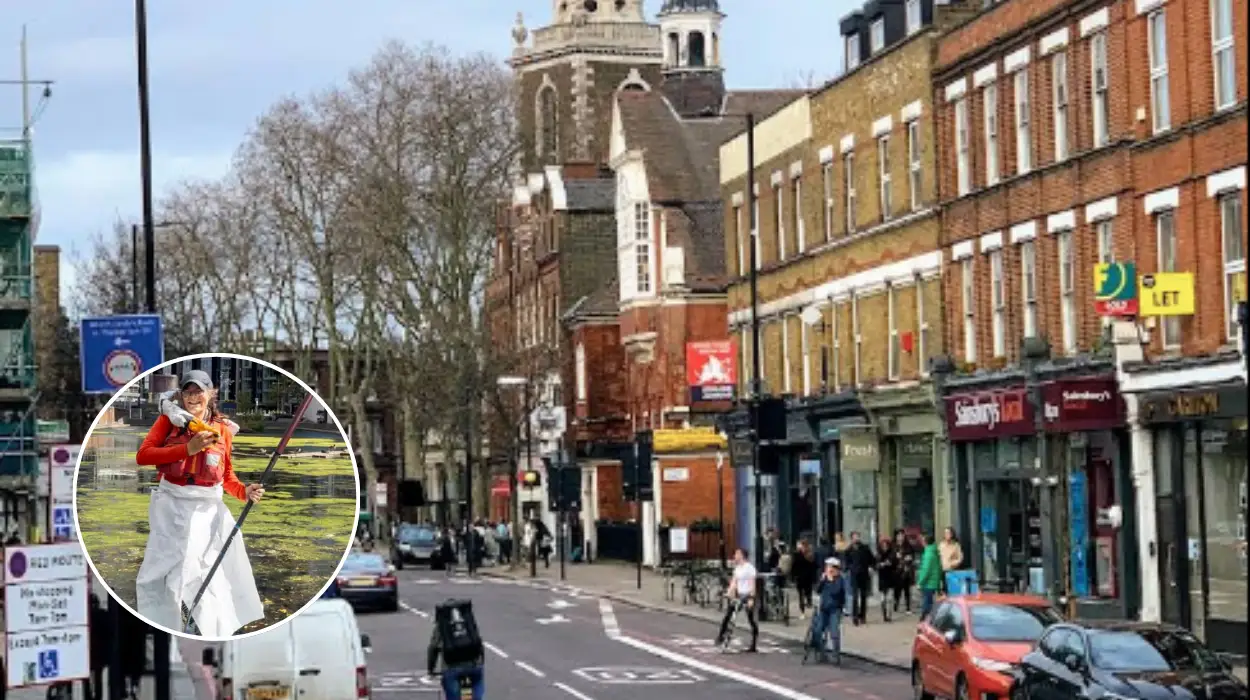
Islington (Extra London News) August 7, 2026 – A worsening “nature crisis” gripping London’s waterways may have resulted in the total disappearance of swans from the borough of Islington, according to a local climate campaigner. Nicola Baird, an experienced paddle-boarder who has traversed the Regent’s Canal for nearly a decade, has expressed deep concern that the swans she once considered the final representatives of the species in the area are no longer present.
Why does the disappearance of swans matter for Islington’s future?
As reported by Finn Logue of the Islington Tribune, the absence of these birds is being viewed by Ms. Baird as a poignant symbol of a wider ecological decline. Having spent nine years paddling the canal, Ms. Baird told the Tribune that she became intimately familiar with a specific pair of swans that frequented the borough’s waterways. She asserted that these two birds were the “last two swans in Islington,” a conclusion she reached based on her frequent personal observations while out on the water.
The situation reached a turning point earlier this year. According to Ms. Baird’s account to the Tribune, the male swan, or “cob,” was relocated to a specialist sanctuary due to declining health and old age. Subsequently, the female swan left the area for Hackney. This departure has left the borough without its familiar swan population for the first time in nearly a decade.
“I’m very, very sad and quite reflective about the fact these swans are not here, meaning there are none within the whole borough for the first time in nine years,” Ms. Baird told the Tribune. She further emphasized the long-term psychological impact on the community, stating, “What really gets me is the fact that now, because of the climate crisis and nature crisis in our waterways, many kids may think it’s normal to grow up without wildlife.”
What is the broader impact of the ‘nature crisis’ on local waterways?
The concern over the vanishing swans is set against a backdrop of significant environmental degradation. During a recent litter-picking expedition along the canal, which was funded by Active Thames, volunteers removed approximately 400 kilograms of refuse. To highlight the scale of the pollution, Ms. Baird noted that this mass of waste is equivalent to the weight of 39 swans. The items retrieved included a variety of pollutants ranging from plastic bags to discarded footwear.
Ms. Baird led a commemorative tribute for the missing swans during the litter-picking event, using recycled materials to create replica swans in their honour. This act served as both a memorial and a protest against the degradation of the canal environment.
“There’s been a huge decline in nature, our water heating up has left it in a bad state,” Ms. Baird told the Tribune. “It’s meant to be an ecosystem that people can escape to, people who may not have so much access to nature and wildlife. If you don’t know they were ever here, you won’t notice when they’re gone.”
Explore more Islington News:
EHRC Single-Sex Code Backlash in Islington 2026
Lovebites Delivers Outstanding Power Metal Mastery in London 2026
Is the swan population truly in danger?
While Ms. Baird’s observations paint a bleak picture for the borough of Islington specifically, the national picture for mute swans is somewhat different. As noted by the Islington Tribune, mute swan populations have actually seen an increase across the United Kingdom since the 1970s, despite the general decline of many other avian and wildlife species. This trend provides a glimmer of optimism for Ms. Baird, who told the Tribune that she hopes the current situation in Islington is a “temporary blip” rather than a permanent loss.
The Canal & River Trust, which manages the waterways, offers a more tempered perspective on the situation. In response to the claims, the Trust stated that it does not hold specific data regarding the number of swans in Islington, noting that because the birds are not considered a threatened species, they are not tracked in the same way as endangered wildlife.
Furthermore, the Trust highlighted that the broader waterway network remains well-populated. According to the Tribune, the Canal & River Trust reported that there is a “significant swan population” located further down the canal in the Docklands, as well as on the Brent Reservoir, which serves as a vital feeder for the canal system. The Trust suggested that, based on this data, the overall swan population continues to thrive, even in the face of pressures such as the avian flu outbreak that occurred earlier this year.
How does the community perceive the loss of wildlife?
The dialogue surrounding the disappearance of Islington’s swans highlights the growing tension between urban development and environmental preservation. Ms. Baird’s work, which often documents the stories of Islington residents through her “Islington Faces” blog, frequently touches upon the importance of local heritage and the environment.
Her focus on the “nature crisis” aligns with broader efforts in London to quantify and address the impacts of climate change on urban green and blue spaces. By drawing attention to the silence on the canal where there used to be wildlife, she is calling for greater accountability in how these spaces are maintained.
The Islington Tribune report underscores that while the species as a whole is not at risk of extinction, the loss of “local” populations—those that residents interact with daily—can have a profound impact on the “nature-deficit” felt by urban dwellers. The transition from a space occupied by wildlife to one dominated by 400 kilograms of human-generated waste is, for campaigners like Ms. Baird, a clear indicator that the ecosystem is struggling to cope with the pressures of urban life and rising temperatures.
As the community reflects on these developments, the conversation remains focused on whether the canals can be effectively rehabilitated to once again support local wildlife. Whether the swans return to Islington or the borough remains a “wildlife desert,” as Ms. Baird has previously characterized some landscapes, depends on the ongoing efforts of volunteers and the policies of the bodies responsible for London’s waterways.
For now, the tribute fashioned from recycled materials serves as a reminder of what was lost, and a plea for the preservation of what remains. The story of the swans of Regent’s Canal is not just about two birds, but about the standard of nature we expect to find in our own backyards and the collective responsibility to ensure that the next generation does not grow up assuming that a city without wildlife is the natural order of things.