Key Points
- Date and Location: The press conference took place in London on August 3, 2026, hosted by Reform UK party leader Nigel Farage and home affairs spokesperson Zia Yusuf.
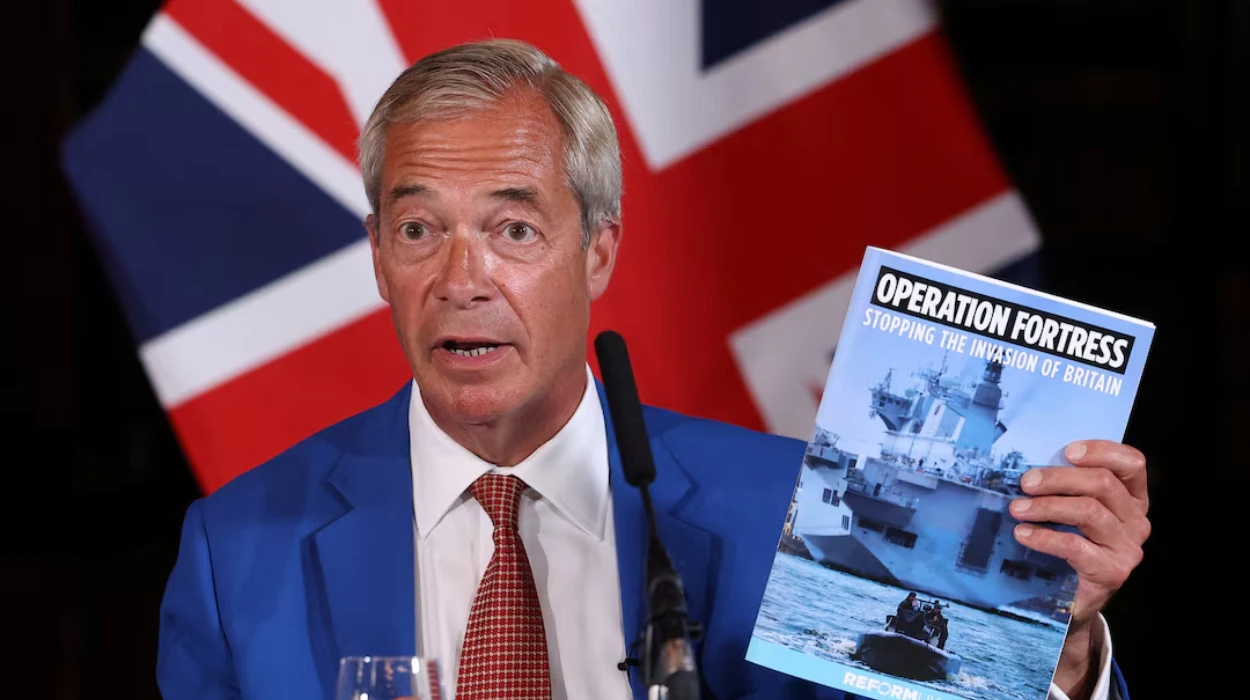
- “Operation Fortress”: Reform UK unveiled a 28-page policy document proposing what it termed the largest military operation in the English Channel since World War II to stop asylum seekers crossing in small boats.
- Proposed Enforcement: The hard-right party pledged that, if elected, a Reform government would deploy the Royal Navy to intercept and return all small boats directly to France, claiming it would stop all Channel crossings within a fortnight.
- Context of Migration Pressure: As reported by Agence France-Presse (AFP) and Reuters, the announcement followed recent events where tens of thousands of migrants entered Spain’s North African enclave of Ceuta, intensifying the European debate on irregular migration.
- Coalition and Leadership Talks: During the conference, Nigel Farage addressed media inquiries regarding a potential right-wing coalition, confirming to Sky News and Anadolu Ajansı that he had reached out to Restore UK leader Rupert Lowe following Lowe’s public proposal for talks.
- Political Climate: The high-profile event occurs as Reform UK navigates a shifting political landscape, having faced recent scrutiny over party finances, gifts, and donations, alongside a new political dynamic under Prime Minister Andy Burnham.
London (Extra London News) August 3, 2026 — Britain’s right-wing opposition party, Reform UK, used a high-stakes press conference in the capital on Monday to launch its aggressive new immigration blueprint, dubbed “Operation Fortress,” while party leader Nigel Farage simultaneously addressed ongoing turbulence regarding potential right-wing alliances and internal party scrutiny.
Standing alongside the party’s home affairs spokesperson, Zia Yusuf, party leader Nigel Farage laid out a hardline manifesto proposal aimed at completely halting irregular migration across the English Channel. Against the backdrop of recent migration pressures witnessed in Spain’s North African enclave of Ceuta, the anti-immigration party sought to reposition itself at the forefront of the national debate on border security. However, the event also brought to light deeper questions concerning the party’s political trajectory, leadership dynamics, and recent overtures from figures on the broader right.
What Does Reform UK’s “Operation Fortress” Involve?
As detailed in a 28-page policy document presented to journalists, Reform UK’s flagship immigration proposal centres on deploying the full weight of the British military to secure maritime borders. According to international news agency reports, the strategy relies heavily on the active engagement of the Royal Navy to intercept small boats carrying asylum seekers and immediately return them to French shores.
As reported by Anadolu Ajansı and Reuters, Nigel Farage told reporters at the London briefing that the intervention would constitute the largest military operation in the Channel since World War II. Highlighting the urgency of the policy, Farage stated that
“Under a Reform government, within a fortnight, there would be no more boats”.
The plan closely mirrors strategies previously mooted and subsequently shelved by past Conservative administrations. Consequently, political rivals and independent migration experts have roundly criticized the proposals as legally impractical and unworkable. Critics from the Labour Party accused Reform UK of merely recycling tired, unfeasible rhetoric to capture headlines while evading scrutiny over practical governance.
Why Was This Press Conference Significant for Nigel Farage’s Leadership?
The London gathering marks a notable return to the political frontline for Nigel Farage, who has maintained a relatively lower profile over the summer months following shifts in government and increased media scrutiny. Over the past several months, Reform UK has faced intense questioning regarding party finances, transparency, and donations made to senior figures.
As noted by political commentators, the pressure from ongoing inquiries into donations—alongside the political oxygen commanded by Prime Minister Andy Burnham’s administration—has shifted the momentum that Reform UK enjoyed previously. By stepping back in front of the press alongside Zia Yusuf, Farage aimed to re-establish control over the political narrative, insisting that the party remains a unified, formidable force despite a challenging few months in national opinion polls and approval ratings.
Explore More London Politics News
Council Tax Hike And Service Cuts Warning For London 2026
Zelensky Meets UK PM Andy Burnham in Portsmouth 2026
What Did Nigel Farage Say Regarding the Rupert Lowe Coalition Proposal?
Beyond the unveiling of “Operation Fortress,” the press conference served as a platform for Nigel Farage to address swirling speculation regarding a potential alliance with other right-wing political figures. Over the weekend, former Reform UK Member of Parliament and current Restore UK leader Rupert Lowe released a 12-minute video proposing talks to unite Restore UK and Reform.
As reported by Sky News and covered by Anadolu Ajansı, Nigel Farage confirmed during the press briefing that he had indeed attempted to make contact with Lowe following the public appeal. Addressing the sincerity and method of Lowe’s approach, Farage stated:
“I did actually reach out yesterday to him. I did say, ‘look, should we have a call? I haven’t heard back yet. So I don’t know what the sincerity of this is.”
Farage further criticized the public nature of the overture, noting to journalists that political deals are conventionally negotiated behind closed doors rather than broadcasted digitally.
As reported by Anadolu Ajansı, Farage remarked:
“If you want to do a political deal with somebody, you know, you would contact them privately and not do a 12-minute video.”
Furthermore, Farage alleged that Lowe had previously maintained close working relations with the Conservative Party before experiencing a breakdown in those ties. Despite past personal and political fallouts involving everyone within Reform and Lowe, Farage indicated a willingness to set historical grievances aside if a genuine, pragmatic discussion could be established.
How Are Other Parties and Observers Responding to Reform’s Strategy?
The unveiling of “Operation Fortress” and the ongoing maneuvers regarding right-wing coalition talks have prompted sharp reactions across the British political spectrum. Academic and political analysts, such as University of Manchester politics professor Robert Ford, have pointed out that while Reform continues to rely heavily on Farage’s personal political brand, the reliance on second-tier spokespersons during quieter stretches has exposed vulnerabilities in the party’s broader structural depth.
Meanwhile, mainstream political opponents maintain that Reform UK’s policies fail to address the complex humanitarian, legal, and international diplomatic frameworks governing modern asylum systems. With a general election not formally mandated until 2029—alongside immediate local electoral challenges—Reform UK’s leadership is banking on tough border rhetoric to reinvigorate its core base. However, whether “Operation Fortress” and tentative coalition gestures will translate into sustained electoral growth remains a central question as Britain’s political landscape continues to evolve.