Key Points
- Official Declaration: The Environment Agency has officially declared a flash drought across seven major areas, encompassing more than half (51.4 percent) of England.
- Affected Regions: The designated drought zones include East Anglia, Hertfordshire and the whole of London, Thames Valley, Hampshire and the Isle of Wight, Devon and Cornwall, the West Midlands, and Wessex.
- Unprecedented Dry Weather: July is tracking to be the driest on record, with England receiving only 7 percent of its expected average rainfall, dropping to a mere 1 percent across southern regions.
- Water Restrictions and Bans: Seven private water companies—Affinity Water, Anglian Water, Cambridge Water, Southern Water, South East Water, Thames Water, and South West Water—have imposed Temporary Use Bans (hosepipe bans), impacting roughly 23 million citizens (40 percent of the population).
- Environmental and Agricultural Toll: Approximately 78 percent of English rivers are classified as below normal or lower, reservoir storage has fallen 7.4 percent below average, and farmers face early cereal harvesting alongside heightened wildfire risks.
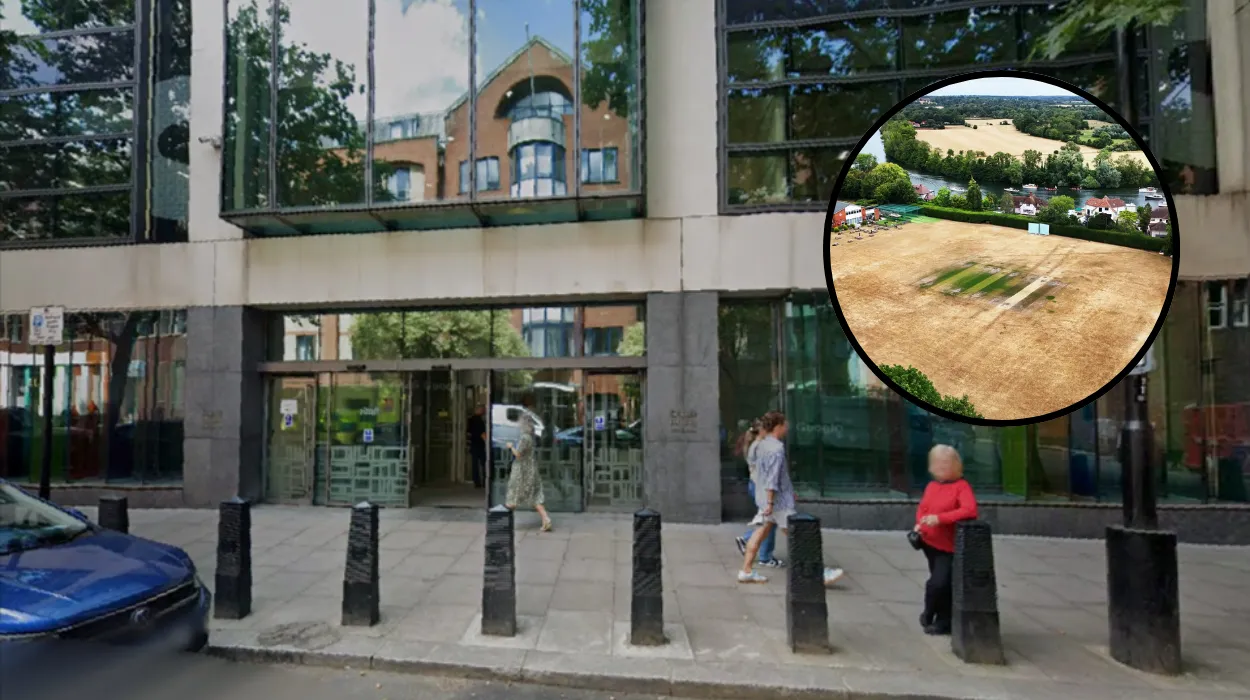
London (Extra London News) August 1, 2026 – Striking aerial visuals captured across the British capital this week lay bare the severe ecological strain gripping the nation, as local cricket matches unfold on starkly parched grounds against the backdrop of the City of London financial district. The poignant scenes at Hackney Marshes materialized just days after Britain’s Environment Agency formally declared that seven expansive regions spanning over half of England had plunged into an official drought. Triggered by an explosive combination of record-low rainfall and punishingly high temperatures during what is poised to be the driest July on record, the rapid-onset “flash drought” has forced sweeping water restrictions, crippled agricultural output, and triggered profound warnings from government and regulatory bodies regarding the long-term sustainability of the country’s water reserves.
- Key Points
- How Did This Sudden Flash Drought Develop Across England?
- Which Specific Regions and Populations Are Directly Impacted?
- What Are the Broader Consequences for Agriculture and Wildlife?
- How Are Government Officials and Water Companies Responding?
- Is Any Sustained Relief Expected in the Immediate Future?
How Did This Sudden Flash Drought Develop Across England?
The rapid intensification of dry conditions caught many off guard, particularly following an exceptionally wet winter that initially replenished groundwater and reservoir levels. However, an acute lack of precipitation throughout the spring and summer completely flipped the hydrological balance.
As reported by Pippa Neill of The Guardian, July has experienced a meagre 7 percent of its expected long-term average rainfall, with figures plummeting to just 1 percent across southern England.
Furthermore, meteorological records highlighted by the Financial Times noted that parts of Devon recorded an astonishing 50 consecutive days without a measurable drop of rain.
Commenting on the severity of the crisis, Helen Wakeham, Director of Water at the Environment Agency and Chair of the National Drought Group, stated in an official government briefing that:
“The hot and dry weather means we are currently using water faster than nature can replenish it. A second consecutive summer drought is an exceptionally serious situation and one that will have long-lasting impacts on our environment, wildlife, and the economy.”
Wakeham further emphasized the public responsibility during the crisis, noting,
“We want everyone to stay safe and hydrated during the hot weather but every drop we can save is a drop more for nature and agriculture.”
Which Specific Regions and Populations Are Directly Impacted?
The emergency declaration issued by the Environment Agency covers 51.4 percent of the nation. The seven designated drought areas comprise East Anglia, Hertfordshire and the whole of London, Thames Valley, Hampshire and the Isle of Wight, Devon and Cornwall, the West Midlands, and Wessex—which encompasses Dorset, Somerset, Wiltshire, and south Gloucestershire.
As detailed by government reports from the Department for Environment, Food and Rural Affairs (Defra), an additional six areas—including Kent and East Sussex, Cumbria and Lancashire, and the East Midlands—have been formally categorized as experiencing prolonged dry weather.
To combat the dwindling supplies, seven major water utilities—Affinity Water, Anglian Water, Cambridge Water, Southern Water, South East Water, Thames Water, and South West Water—have implemented Temporary Use Bans. These restrictions prohibit hosepipe use for approximately 23 million customers, accounting for roughly 40 percent of England’s population.
Explore More Hackney News
Hackney Empire’s Threads Play Explores Community in Hackney 2026
Hackney Mayor Zoë Garbett Haifa Twinning October 7 Deadline Controversy London 2026
What Are the Broader Consequences for Agriculture and Wildlife?
The compounding pressures of soaring temperatures and depleted moisture levels have wreaked havoc on ecosystems, river flows, and food production supply chains.
According to data compiled by the Financial Times, roughly 78 percent of rivers across England are currently operating at levels classified as below normal or lower, with 17 percent categorized as exceptionally low.
The drastic reduction in river volumes has severely impeded aquatic life. Environmental correspondents noted that migratory fish, including Atlantic salmon, have found themselves unable to migrate upstream. In response, environmental protection teams have had to execute dozens of emergency fish rescues, including operations on the River Teme, River Onny, and River Redlake to relocate stranded populations. Chemical aeration projects have also been deployed at vulnerable locations such as Tuckers Pond in Oxfordshire to combat plunging oxygen levels driven by algae proliferation.
Paul Tompkins, Deputy President of the National Farmers’ Union (NFU), underscored the wider economic and societal ramifications of the weather pattern. As highlighted by The Guardian, Tompkins stated that:
“Water is a vital ingredient in food production, and without a secure supply, we cannot build resilient farm businesses or strengthen the country’s food security.”
The agricultural sector has faced immense hurdles, characterized by early cereal harvesting, diminished crop yields, and heightened risks of devastating field fires as parched soils and vegetation dry out completely.
How Are Government Officials and Water Companies Responding?
In response to mounting public scrutiny and mounting infrastructural strain, the National Drought Group convened an emergency briefing alongside Water Minister Emma Hardy to evaluate ongoing containment measures and preparedness frameworks.
Water Minister Emma Hardy addressed the shifting climatic reality during the sessions, stressing that infrastructure must evolve. As quoted in official Government news releases, Hardy noted:
“Our climate is changing, droughts are becoming increasingly common, and we need to be prepared for this new normal. We’re delivering long-term change in the water industry and driving record investments in infrastructure, including nine new reservoirs.”
Furthermore, Hardy urged corporate utility providers to accelerate efforts to curb infrastructural waste, demanding that water companies
“go further and faster to reduce leaks and to ensure supplies are not disrupted even in the driest of weather.”
This directive follows independent research published by Greenpeace UK, which revealed that water companies continue to lose vast volumes of treated water through leaking pipes—quantified at roughly five times the volume that a nationwide domestic hosepipe ban manages to save.
Is Any Sustained Relief Expected in the Immediate Future?
Meteorological assessments from the Met Office offer little immediate comfort for the parched landscapes. Will Lang, Chief Meteorologist at the Met Office, indicated that while isolated, brief unsettled spells might introduce sporadic rainfall to select localized spots at the start of August, there remains
“little sign of the widespread, sustained rainfall that would be needed to make a significant difference to the areas most affected by the dry weather.”
With reservoir storage currently hovering at 75.3 percent capacity—approximately 7.4 percent below normal historical averages for early August—authorities maintain that existing reserves remain sufficient for upcoming months.
However, experts caution that without systemic infrastructural overhaul and substantial autumn downpours, the UK’s mounting vulnerability to recurring summer flash droughts will continue to threaten public supply, ecological preservation, and national food security for years to come.