Key Points
- The UK High Court has dismissed a legal challenge brought by the Royal Mint Court Residents’ Association (RMCRA) against the approval of a Chinese mega embassy in London.
- Planning permission for the site at the historic former Royal Mint, near the Tower of London, was granted by the government in January.
- The RMCRA, representing families and businesses across roughly 100 properties, argued the massive 22,000-square-metre development poses severe espionage threats, security vulnerabilities, and fire risks due to potential diplomatic immunity.
- Campaigners also raised fears that the complex could be utilized to enforce “draconian” Chinese laws on British soil and target dissidents.
- The Ministry of Housing, Communities and Local Government (MHCLG) and the London Borough of Tower Hamlets robustly defended the claim, stating they “conscientiously and carefully had regard” to local concerns.
- Mrs Justice Lieven, sitting alongside Lord Justice Dingemans, ruled that ministers acted lawfully, noting that certain arguments relied on “suspicion and conjecture” and that the government fully recognized the identity of the applicant.
- Despite the ruling, the RMCRA and associated activists, including Luke de Pulford of the Inter-Parliamentary Alliance on China, have confirmed plans to seek an appeal.
London (Extra London News) July 31, 2026 — A high-stakes legal battle over the construction of a controversial Chinese mega embassy in the heart of the British capital has suffered a major setback after the High Court dismissed a comprehensive challenge brought by local residents. The landmark ruling clears the path for Beijing to move forward with its expansive diplomatic mission at the site of the former Royal Mint near the Tower of London, a project that has consistently strained political and diplomatic relations.
What Was the Legal Challenge Brought Against the Chinese Embassy?
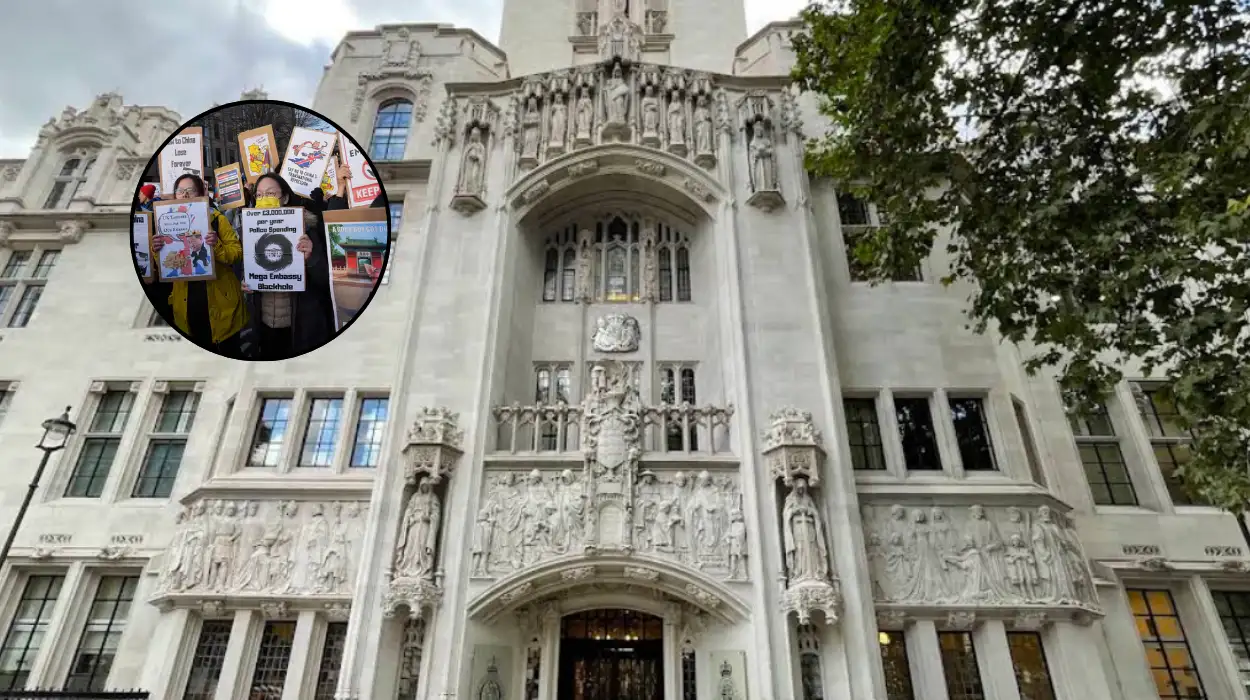
The legal challenge was spearheaded by the Royal Mint Court Residents’ Association (RMCRA), an organization representing families and business owners operating out of approximately 100 properties situated directly on the perimeter of the 5.4-acre site.
As reported by BBC News, the local campaign group argued that the high-security compound posed a direct espionage threat to the neighbourhood and could potentially serve as a domestic stronghold to enforce “draconian” Chinese laws inside the United Kingdom, as well as track and target political dissidents.
Furthermore, as noted in coverage by the Financial Times, lawyers representing the RMCRA argued during a hearing earlier in the month that the development critically heightened the risk of terrorist attacks and would cause chronic disruption from widespread public demonstrations.
The association also flagged major concerns regarding fire safety obligations, warning that standard safety regulations would prove entirely unenforceable across parts of the complex due to the shield of diplomatic immunity.
How Did the Government and Defense Respond to the Allegations?
In response to the mounting public and legal pressures, the Ministry of Housing, Communities and Local Government (MHCLG) alongside the London Borough of Tower Hamlets strongly defended the legality of the planning approval process.
As highlighted by BBC News, government and council defense teams maintained that officials “conscientiously and carefully had regard” to all resident concerns before greenlighting the blueprint.
Additionally, legal filings from the government underscored that wider “diplomatic and trading relations” with Beijing were treated as separate parameters and were not treated as a core material consideration dictating the technical planning outcome.
State authorities insisted that the administrative procedures undertaken prior to the January planning endorsement followed strict statutory guidelines and procedural fairness.
Explore More Local London News
Man Charged with Murder After Hungerford Road Attack in Islington 2026
Ealing Population Drops in ONS Estimates 2026
What Did the High Court Judges Rule?
The case was presided over by Mrs Justice Lieven, sitting alongside Lord Justice Dingemans, who ultimately handed down a definitive judgment dismissing all grounds of the RMCRA’s claim. As reported by BBC News, Mrs Justice Lieven stated that there was “no doubt” the government explicitly took into account the reality that it was the Chinese state applying for planning permission.
Addressing specific allegations concerning transparency and structural safety documents, Mrs Justice Lieven addressed the withholding of a detailed “blast assessment”—a file outlining the simulated physics and local impact of a prospective terrorist explosion.
According to BBC News, the judge ruled that the RMCRA suffered no material disadvantage or procedural unfairness by not receiving an exhaustive copy of the blast assessment at the time of the initial decision, as core findings had been adequately addressed.
The Financial Times further reported that the bench categorized several broader assertions brought forward by the opposing residents as being fundamentally anchored in “suspicion and conjecture” rather than tangible administrative flaws.
The court emphasized that its mandate was strictly limited to evaluating whether ministers acted lawfully rather than passing qualitative judgment on the political wisdom of hosting Beijing’s mega mission.
What Are the Broader Geopolitical Implications of the Ruling?
The development project at Royal Mint Court—which China acquired for £255 million back in 2018—is envisioned to become the largest diplomatic mission operated by Beijing anywhere in Europe. The decision to grant planning clearance in January came shortly before high-level diplomatic visits intended to thaw bilateral relations between London and Beijing.
Critics of the ruling and opponents of the Chinese Communist Party (CCP) have voiced deep alarm over what they perceive as a systemic compromise of national security for diplomatic convenience.
Speaking at a post-trial press conference covered by RTL Today, prominent critic and former Conservative opposition leader Ian Duncan Smith asserted that concessions made to foreign powers carry heavy human costs, stating,
“The price we pay when we kowtow to China is in human lives”.
Similarly, Hong Kong pro-democracy activist Chloe Cheung emphasized to reporters that the legal battle extends far beyond bricks and mortar, representing a critical frontier for safeguarding international human rights standards on British soil.
Will the Residents Continue Their Legal Fight?
Despite the definitive dismissal by the High Court, opponents of the mega embassy have made it clear that their campaign is far from over. As detailed by Perspective Media, local community members reacted to the verdict by asserting that the judicial outcome
“doesn’t change the fact that a fortress doesn’t belong in our community”.
Legal teams acting on behalf of the RMCRA have already received instructions to immediately prepare and submit applications for permission to take the fight to higher appellate courts. Luke de Pulford, the executive director of the Inter-Parliamentary Alliance on China, issued a fiery statement captured by the Financial Times and Perspective Media, warning state authorities:
As reported by the Financial Times and Perspective Media, Luke de Pulford stated that “Beijing thinks this judgment is the final word. It isn’t. The appeal is already in the works. If they expect us to roll over and allow our own capital to become a [Chinese Communist Party] power centre, they have completely misjudged the strength of opposition to this mega embassy”.
With crowdfunding campaigns being actively relaunched by the RMCRA to sustain their mounting legal expenditures, the controversy surrounding the Royal Mint Court site is poised to endure through prolonged appellate proceedings, keeping the spotlight firmly on the delicate balance between national security, local community welfare, and UK-China foreign policy.