Key Points
- Prime Minister Sir Keir Starmer has executed a dramatic, last-minute policy U-turn allowing pubs across England to remain open until 5:00 am on Monday morning.
- The extended opening hours are designed to allow football fans to watch the England national team face Mexico in a highly anticipated early-morning World Cup knockout clash, which kicks off at 1:00 am.
- Home Secretary Shabana Mahmood had originally introduced a blanket licensing extension that only applied to matches scheduled between 5:00 pm and 10:00 pm, sparking widespread public outcry before the government’s sudden reversal.
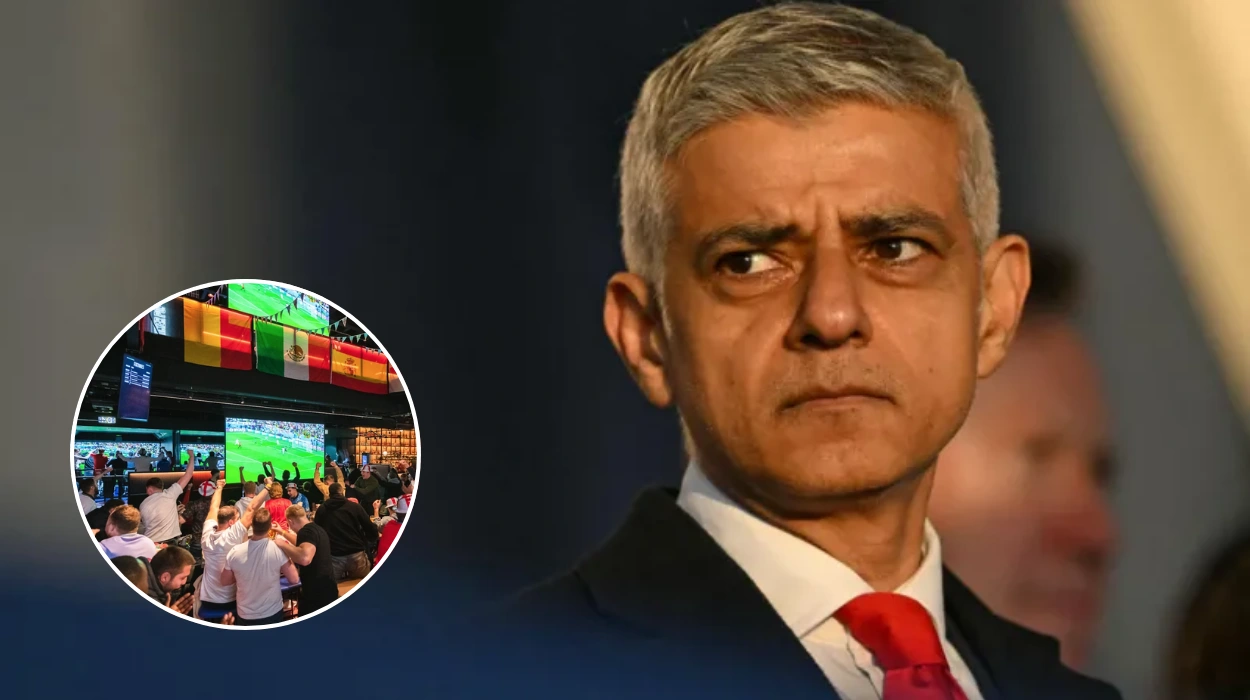
- Fans will be able to support the team, now managed by Thomas Tuchel, across a vast network of designated London venues including multiple Boxpark sites, Brewdog bars, and traditional local boozers.
- Simultaneously, a major political rift has deepened in local government as Islington Council becomes the latest Labour-run local authority to formally oppose London Mayor Sir Sadiq Khan’s emergency housing strategy.
- Islington Council has confirmed it will actively lobby against the Mayor’s controversial decision to slash affordable housing requirements on new developments from 35 per cent down to 20 per cent.
- The emergency housebuilding measures, initially unveiled in October 2025 and set to run until December 2028, were jointly put forward by the central Government and City Hall to combat a severe slump in capital construction starts.
- While voicing strong opposition to the housing cuts, Islington Council has strategically distanced itself from a high-profile legal challenge launched against City Hall by three other London boroughs in June.
London (Extra London News) July 7, 2026 — In a double blow of political drama shaking both central government and City Hall, British authorities are facing significant domestic battles over both public leisure licensing and the future of the capital’s housing infrastructure. Downing Street has performed an abrupt administrative U-turn to grant nationwide pubs a blanket extension to serve alcohol until 5:00 am on Monday morning, ensuring millions of football fans can watch England’s crucial World Cup fixture against Mexico. Simultaneously, a growing mutiny within local government has intensified as Islington Council officially joined a coalition of London boroughs actively lobbying against Mayor Sadiq Khan’s controversial emergency housing cuts, which slashed affordable housing development targets across the capital from 35 per cent to 20 per cent.
- Key Points
- Why Did Sir Keir Starmer Authorise a 5:00 am World Cup Pub Extension?
- Where Can London Football Fans Watch England Versus Mexico?
- Why Is Islington Council Rebelling Against Sadiq Khan’s Housing Policy?
- How Do Islington’s Actions Differ From Other London Boroughs?
- What Are The Broader Implications For London’s Governance?
Why Did Sir Keir Starmer Authorise a 5:00 am World Cup Pub Extension?
The decision to extend licensing hours came after immense political and commercial pressure caught the government off guard. As reported by the political reporting team of The Evening Standard, the initial legal framework surrounding the tournament’s licensing hours was deemed fundamentally restrictive by hospitality chiefs and football enthusiasts alike. A blanket rule originally introduced by Home Secretary Shabana Mahmood allowed pubs to stay open for an extended period, but it strictly applied only to games scheduled between the evening hours of 5:00 pm and 10:00 pm.
This left a significant legal loophole for early-morning fixtures, meaning that when England qualified for a high-stakes round-of-16 clash against Mexico in a stadium operating across a drastically different timezone, the law technically required local venues to lock their doors before the whistle blew. Facing a potential public relations disaster and substantial loss of revenue for the struggling hospitality sector, Prime Minister Sir Keir Starmer intervened on Thursday afternoon to formally expand the emergency rules, allowing the country to cheer on Thomas Tuchel’s side directly from their local establishments.
Hospitality bodies have highly praised the decision, noting that major sporting events provide a vital economic lifeline for venues recovering from long-term inflationary pressures. Under the freshly amended statutory instrument, any venue already holding a valid late-night license can remain operational, serving alcohol and hot food throughout the early hours of Monday morning without fear of local council prosecution or licensing breaches.
Where Can London Football Fans Watch England Versus Mexico?
For residents across the capital, a vast and comprehensively updated directory of venues has emerged to accommodate the thousands of fans planning to stay up through the night. As documented by the lifestyle and city reporters at The Evening Standard, major entertainment hubs and corporate pub groups have adjusted their operations to facilitate the 1:00 am kick-off. In central London, venues such as Brewdog in Seven Dials, Generator London in Russell Square, and the Victoria Taps in Westminster have committed to the full duration of the match. Furthermore, high-profile locations including Langan’s Brasserie in Mayfair, Arcade on Tottenham Court Road, and historic pubs like The Albert in Victoria and The Allsop Arms in Marylebone will keep their doors open until the 5:00 am closing limit.
The operational expansion covers all geographical quadrants of the city, ensuring that fans outside the central district are not excluded from the festivities. In North London, Boxpark Wembley is set to serve as a primary fan zone alongside local establishments such as The Elephant Inn in Finchley, the Grand Junction Arms in Harlesden, and the Maynard Arms in Crouch End. East London residents can access Boxpark Shoreditch, the Steel Yard in Hackney, and multiple Brewdog franchises spanning from Canary Wharf to Tower Hill.
South London will see large-scale screenings at Greenwood in Victoria, Redwood at London Bridge, and TOCA Social at the O2 Arena, alongside popular local spots like The Falcon in Clapham and The Devonshire in Balham. Meanwhile, West London’s football crowd is being catered to by iconic venues such as The Cabbage Patch in Twickenham and The Crabtree in Fulham, which have completed the necessary regulatory adjustments to guarantee operations until dawn.
Why Is Islington Council Rebelling Against Sadiq Khan’s Housing Policy?
While the capital prepares for sports-driven celebrations, a profound ideological conflict is unfolding within London’s municipal politics regarding social infrastructure and regional development. As reported by the municipal affairs team of The Evening Standard, Islington Council has officially voiced its strong opposition to Sir Sadiq Khan’s decision to temporarily reduce affordable housing obligations for private developers. The Labour-run North London authority is openly challenging the emergency housebuilding measures that were originally unveiled by City Hall and central government representatives in October 2025.
The core policy under dispute dictates a significant reduction in the mandatory affordable housing allocation required for new residential developments, lowering the threshold from its historical benchmark of 35 per cent down to just 20 per cent. According to documentation circulated by City Hall planners, this dramatic policy relaxation is scheduled to remain active until December 2028. The primary rationale provided by the Mayor of London and the central government is economic necessity; the policy aims to aggressively stimulate construction activity across the capital following a catastrophic, multi-year slump in new building starts driven by high material costs and escalating interest rates.
However, local representatives in Islington argue that the policy change represents an unacceptable betrayal of working-class Londoners who rely heavily on subsidized, sub-market rental properties. Council leaders contend that lowering the threshold will allow private developers to maximise corporate profits while building fewer social housing units, permanently altering the demographic makeup of urban neighborhoods and worsening the ongoing homelessness crisis.
Explore more Islington News:
Islington Council Faces High Court Challenge Over Nursery Closure: London 2026
Islington Post Office Relocates to New Islington Square Premises, 2026
How Do Islington’s Actions Differ From Other London Boroughs?
The political battle lines are complex, as Islington Council is attempting to walk a fine line between expressing severe ideological dissent and maintaining regional party unity. As observed by local government analysts for The Evening Standard, the North London borough has intentionally distanced itself from more aggressive punitive measures being taken by its neighbors. Specifically, Islington has refused to join the formal legal challenges launched against City Hall by three separate London boroughs earlier this June.
Instead of entering an expensive and adversarial High Court battle against a Mayor from their own political party, Islington’s leadership has opted for an organized, long-term political lobbying campaign. This strategy allows the council to publicly signal its defense of affordable housing to its local electorate while avoiding the financial risks and structural damage associated with formal litigation against the Greater London Authority (GLA).
Municipal experts suggest this approach highlights a fracturing within London’s Labour administration. While some boroughs view the Mayor’s 20 per cent emergency threshold as a pragmatic, necessary evil to get cranes moving in the capital again, a growing faction of local authorities views it as a structural failure that leaves local councils to manage the fallout of an under-built, hyper-expensive rental market.
What Are The Broader Implications For London’s Governance?
The friction generated by these simultaneous developments points to a larger, systemic tension between top-down regulatory directives from central government and the practical, day-to-day demands of local communities. In the case of the late-night World Cup licensing extension, central intervention was required to rapidly override local bureaucratic limits, proving that national cultural events can successfully force rapid structural adjustments from senior politicians.
Conversely, the escalating affordable housing row illustrates a structural breakdown where regional strategies designed by City Hall are failing to gain unanimous support from the very boroughs required to implement them. With the emergency housing policy mandated to last until the end of December 2028, the pushback from Islington Council signals that the Mayor of London will face sustained, unified resistance from local local authorities, potentially complicating future urban development schemes and stalling the broader regeneration targets set by the central state.