Key Points
- Former Mayor of Greater Manchester, Andy Burnham, arrived at London Euston station today following his victory in the Makerfield parliamentary by-election, marking a decisive step toward the Labour Party leadership.
- The arrival occurred hours after Prime Minister Sir Keir Starmer announced his resignation as Labour leader at a Downing Street lectern, following immense private pressure from party colleagues.
- Mr Burnham has officially been sworn in as the new Member of Parliament (MP) for Makerfield after holding off a significant challenge from Reform UK in a ballot widely seen as engineered for his Westminster return.
- In a statement issued via social media, Mr Burnham praised Sir Keir’s “huge service” and “dedication” while confirming his own candidacy in the upcoming leadership contest to ensure a “positive process of renewal.”
- While prominent figures like Health Secretary Wes Streeting have backed Mr Burnham, leading to expectations of an uncontested coronation, critics have accused the new Makerfield MP of political betrayal.
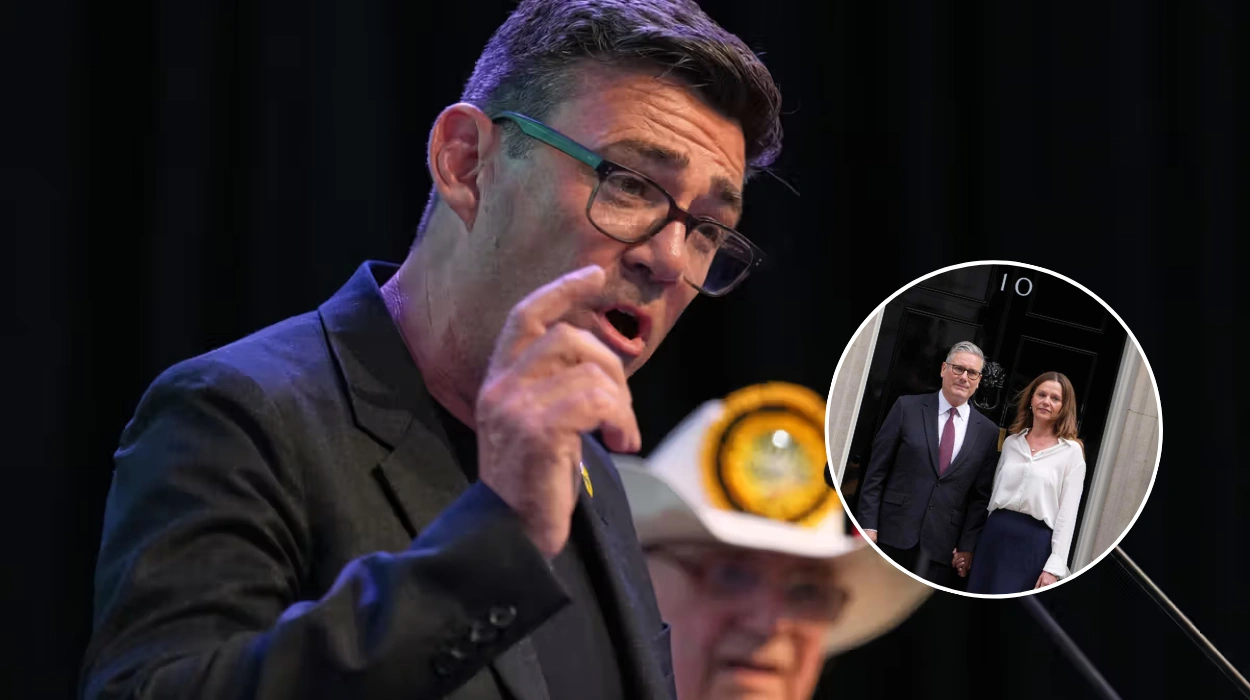
London (Extra London News) June 22, 2026 – The landscape of British politics has experienced a seismic shift today as the former Mayor of Greater Manchester, Andy Burnham, arrived at London Euston station to a crowd of supporters and a massive media presence, cementing his position as the frontrunner to become the next Prime Minister. His arrival in the capital follows a carefully orchestrated political sequence that saw him secure a return to the House of Commons via a by-election victory in Makerfield last week, followed immediately by the dramatic resignation of Sir Keir Starmer as leader of the Labour Party. Sir Keir’s emotional address from Downing Street came after intense behind-the-scenes pressure from senior Labour figures, who privately advised him that his position had become untenable following the by-election results.
- What Happened at Euston Station as Andy Burnham Arrived?
- Why Did Sir Keir Starmer Decide to Resign?
- How Did Andy Burnham Return to the House of Commons?
- What Was Andy Burnham’s Full Statement Regarding the Transition?
- How Have Labour Colleagues and Political Rivals Reacted to the Power Shift?
- Is Andy Burnham Facing Backlash Over Sir Keir Starmer’s Ouster?
- What Are the Next Steps for the Labour Party Leadership?
What Happened at Euston Station as Andy Burnham Arrived?
The atmosphere at London Euston station was highly charged this lunchtime as political correspondents, photographers, and members of the public gathered to witness the return of the man widely tipped to take over the keys to Number 10 Downing Street. As reported by the political reporting team of the Camden New Journal, a large pack of well-wishers and journalists turned out to greet the former Manchester Mayor as he stepped off the train, signaling a profound shift in the center of gravity within the ruling party.
According to live tracking updates from Andrew Sparrow of The Guardian, Mr Burnham’s train arrived at Platform 4 at 1:31 pm, running approximately 22 minutes late. Observers noted that the incoming MP for Makerfield allowed other passengers to alight first before making his way off the carriage, trying to navigate past a restive press pack. Rather than walking through the main concourse, Mr Burnham was initially ushered down an alternative route toward an underpass to a waiting vehicle, prompting a scramble among global broadcasters who had set up cameras around the station perimeter while a helicopter tracked the movement from above.
Eyewitness accounts compiled by reporters on the ground illustrated the public curiosity surrounding the arrival. As recorded by The Guardian, Naresh, a tourist visiting from New Delhi, expressed surprise at the scene, stating: “I’m amazed, in India the prime minister would be surrounded by security and he would never travel by train. It’s good to see because he’s a public servant.”
Before departing the station in a taxi, Mr Burnham briefly addressed reporters on the platform. When questioned by journalists regarding his previous political positions—specifically his 2022 demand for an immediate general election when Rishi Sunak replaced Boris Johnson—Mr Burnham dismissed suggestions that a similar national vote should be held now. As reported by the Westminster press gallery, Mr Burnham stated: “I think you’re talking several hurdles ahead there.” He instead focused his remarks on his departure from his previous role, adding that it had been deeply sad to leave Greater Manchester because “the people had been brilliant to me, and I loved every minute of it,” expressing his hope that he leaves the region “in a better place.”
Why Did Sir Keir Starmer Decide to Resign?
The swift arrival of Mr Burnham in London was directly precipitated by the extraordinary downfall of Sir Keir Starmer, who had won a historic general election victory just two years prior. Standing at a lectern outside Downing Street early this morning, Sir Keir confirmed his departure from the leadership, acknowledging that the political reality within his party had changed irreversibly.
As detailed by political correspondents for PoliticsHome, Sir Keir had initially intended to fight for his position, meeting the immediate aftermath of the Makerfield by-election with an assertion that he would stand and defend his record in any subsequent leadership challenge. However, the political calculations altered rapidly over the weekend. Sources within the Parliamentary Labour Party (PLP) confirmed that senior colleagues approached Sir Keir in private to explicitly state that the time had come for him to step down for the sake of party unity and government stability.
In his final address from the Downing Street podium, Sir Keir maintained a dignified but defensive tone regarding his legacy. As transcribed by The Guardian’s live political coverage, Sir Keir noted that he accepted “with good grace” that he was no longer the optimal figure to lead the Labour Party into the next general election cycle. He concluded his speech by stating that he would leave “the biggest job in the country” to dedicate his time to what he described as “the most important job” of being a husband and a father.
At this stage, uncertainty remains regarding Sir Keir’s immediate parliamentary future. Writers for the Camden New Journal highlighted that it is not yet clear whether the outgoing Prime Minister intends to retain his seat as the Member of Parliament for the Holborn and St Pancras constituency, which covers the southern portion of the London Borough of Camden.
How Did Andy Burnham Return to the House of Commons?
Mr Burnham’s transition from regional governance back to frontline Westminster politics required a swift legislative vacancy, which was fulfilled via a rapidly executed by-election in the Greater Manchester constituency of Makerfield last week. The ballot was widely interpreted by political analysts across all major media titles as a deliberate mechanism engineered to return the former cabinet minister to the House of Commons, clearing his path to challenge for the highest office in British governance.
As reported by political editors at the Financial Post, Sir Keir Starmer—already weakened and increasingly isolated within his own cabinet—had chosen not to block Mr Burnham from seeking the Labour nomination for the safe seat of Makerfield. The subsequent electoral contest proved to be a critical test of political strength. Mr Burnham ultimately secured a resounding victory, successfully holding off a well-funded and aggressive challenge from the right-wing Reform UK party.
The significance of this victory cannot be overstated. Journalists analyzing the data for PoliticsHome observed that Reform UK had made sweeping gains across traditional industrial heartlands, taking control of several local councils in the exact same geographical territory just six weeks prior. By halting Reform UK’s momentum, Mr Burnham proved to nervous Labour backbenchers that he possessed the unique ability to bridge voter expectations within an increasingly fractured, polarized, and volatile electorate. This specific victory made Sir Keir’s continued tenure at Downing Street untenable, acting as the ultimate catalyst for the transition of power.
What Was Andy Burnham’s Full Statement Regarding the Transition?
Immediately following Sir Keir Starmer’s formal resignation speech, Mr Burnham sought to set a tone of constructive transition, releasing a comprehensive public statement via social media to outline his vision for the party’s future while officially declaring his intention to enter the leadership race.
As recorded in full by the Camden New Journal, Mr Burnham responded to the Prime Minister’s exit by writing:
“Keir has given huge service to our country and I want to thank him for his leadership and dedication during such a challenging period. His decision marks the beginning of a transition and it is important that this process is conducted in an orderly and responsible way. I will put myself forward as part of this process. The country expects stability, seriousness and a continued focus on the issues that matter most and that is what it will get.”
Mr Burnham further elaborated on the policy priorities that would define his upcoming leadership platform, adding:
“As we move forward, our priority must be to work together to get the country back to where we all want it to be. People want to see progress on economic growth, cost of living, public services, housing and opportunities for the next generation. Political change should never distract from the responsibility to improve people’s lives. The Labour movement has always been at its strongest when it looks forward with confidence and purpose. This is what we will do from here and we will make sure this transition is a positive process of renewal for our party and our country.”
How Have Labour Colleagues and Political Rivals Reacted to the Power Shift?
The reaction inside Westminster to Mr Burnham’s arrival has been swift, with a substantial portion of the Parliamentary Labour Party moving immediately to align themselves with the incoming leader. This rapid consolidation has led many commentators to predict a swift coronation rather than a protracted, divisive internal campaign.
As reported by Jessica Elgot, the Deputy Political Editor of The Guardian, approximately 200 Labour MPs—representing roughly half of the total Parliamentary Labour Party—gathered en masse in Westminster Hall this afternoon to greet Mr Burnham and pose for photographs. Among those present to welcome him were Chancellor Rachel Reeves, Chief Whip Jonathan Reynolds, Energy Secretary Ed Miliband, Treasury Ministers Torsten Bell and Dan Tomlinson, and Deputy Labour Leader Lucy Powell. Notably, the crowd included both staunch Starmer loyalists, such as Communities Secretary Steve Reed, and reform-minded figures.
A critical endorsement came from Health Secretary Wes Streeting, who publicly ruled himself out of any potential leadership challenge and threw his full weight behind the new Makerfield MP. Speaking to political correspondents, Mr Streeting stated that Mr Burnham was fully committed to “an inclusive party that draws on the best of our political traditions.” According to analysis by BBC Political Correspondent Nick Eardley, because any rival candidate would require the formal nominations of at least 81 MPs to trigger a ballot, the sheer volume of visible support displayed in Westminster Hall indicates that Mr Burnham is on track to be elected entirely unopposed.
International and domestic reactions have continued to flood in. Internationally, European Commission President Ursula von der Leyen paid tribute to the outgoing Prime Minister, tweeting: “It can take many leaders years to grow into the statesman you became in just two years. European and Ukrainian security is stronger because of you.” Domestically, however, political opponents have used the moment to demand a broader democratic mandate. As reported by The Guardian, Reform UK Leader Nigel Farage responded to the internal Labour transition by issuing an immediate demand for a snap general election, arguing that the public should choose the next Prime Minister rather than allowing an internal party handover.
Explore more Politics News:
Labour Activist Admits Vote Rigging: Croydon East 2026
UK AI Infrastructure Plan Unveiled by Keir Starmer: London 2026
Is Andy Burnham Facing Backlash Over Sir Keir Starmer’s Ouster?
Despite the carefully managed show of unity displayed by cabinet ministers in Westminster Hall, the transition has not been entirely free of friction or public acrimony. The speed with which the political coup was executed has left a degree of bitterness among portions of the electorate and party loyalists.
Writers for the Camden New Journal observed that despite the diplomatic and warm words contained within Mr Burnham’s official statement, public reception has been mixed. The publication highlighted that the complimentary remarks did not prevent a significant social media backlash, with numerous detractors responding to the announcement with explicit claims that Mr Burnham had effectively ‘stabbed the Prime Minister in the back’ to secure his own advancement.
Furthermore, internal ideological battles are already beginning to surface. From the left wing of the political spectrum, former Labour leader Jeremy Corbyn’s political vehicle, ‘Your Party’, issued a highly critical assessment of the outgoing administration. As reported by the Westminster press gallery, the group stated that Sir Keir had “failed to stand up for working people, criminalised protest and aided Israel’s crimes in Gaza.” Conversely, green politicians have expressed concerns about the incoming leader’s policy platform. Zack Polanski, the Deputy Leader of the Green Party, told reporters that Mr Burnham’s recent policy remarks were “not encouraging,” warning that if he assumes the role of Prime Minister, he “must be bold” rather than reverting to cautious centrist positions.
What Are the Next Steps for the Labour Party Leadership?
Following his arrival at Euston and his reception in Westminster Hall, Mr Burnham proceeded directly to the floor of the House of Commons to be officially sworn in as an MP, a procedural necessity before he can formally assume the leadership of the party and, subsequently, the government.
As described by parliamentary sketch writers, the swearing-in ceremony provided a moment of brief levity amidst the intense political drama. When Speaker Sir Lindsay Hoyle called out, “We now come to Andy Burnham, member for Makerfield,” veteran Conservative MP Sir Desmond Swayne heckled loudly, shouting, “Rome is saved!” Another MP countered by shouting the famous comedic line, “He’s not the Messiah!” to which Mr Burnham smilingly replied that he was merely a “naughty boy.”
With the swearing-in complete, the formal timeline for the transfer of executive power is now underway. According to institutional guidance issued by Downing Street officials, Sir Keir Starmer indicated that a new leader will be firmly in place before Parliament returns from its summer recess in September. Under the current rules, if Mr Burnham remains entirely unopposed—as now appears certain due to the endorsements from Wes Streeting and the PLP layout—the transition could be completed as early as mid-July.
However, this political upheaval has already impacted the UK’s international schedule. European Council President António Costa confirmed this afternoon that the annual UK-EU summit, which had been formally scheduled for July 22 to reset post-Brexit relations, has been officially postponed to allow the incoming Prime Minister sufficient time to prepare and establish his administration. As a result, Sir Keir Starmer’s final appearance on the global stage is expected to be limited to the upcoming NATO summit in Ankara on July 7–8, before he formally tenders his resignation to the King.