Key Points
- The Proposal: Property owner Bank Estates Limited has submitted a planning application to convert the upper floors of the Woodbine Pub into residential flats, alongside a redevelopment that would slash the pub’s ground-floor trading area by 30%.
- Community Backlash: Hundreds of regular patrons and local residents have formally objected, arguing the reduction in size and subsequent noise complaints from new residents pose an existential threat to the venue.
- The Division: The pub’s independent management team is entirely separate from the Salford-based landlord, Bank Estates Limited, which has owned the freehold of the Blackstock Road building since 2006.
- Critical Deadline: The official public consultation window closes today, shifting the battleground to an upcoming Islington Council planning committee meeting where local councillors will decide the building’s fate.
- Cultural Stakes: Campaigners and patrons have labelled the pub one of Islington’s “best community assets,” warning that the approval of the flats will render the independent business completely unviable.
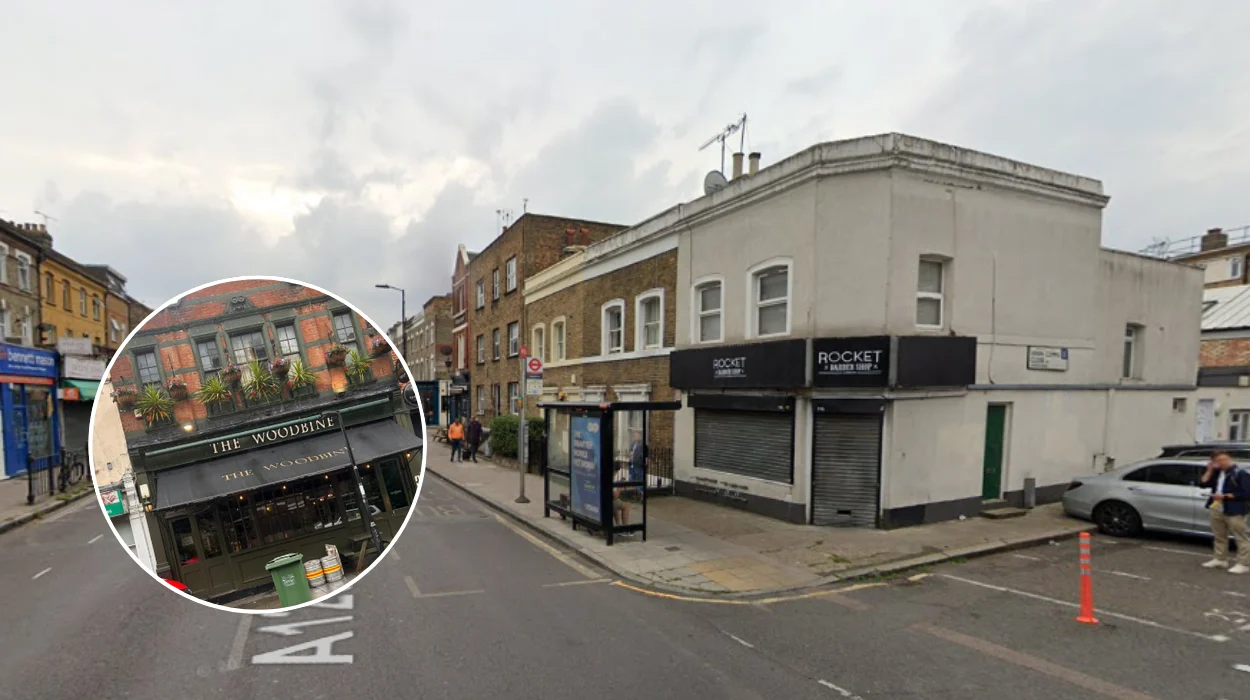
Highbury (Extra London News) June 12, 2026 – A fierce community battle has erupted in North London as hundreds of local residents and regular patrons coordinate a massive campaign to block a controversial planning application to build flats above the historic Woodbine Pub on Blackstock Road. The proposal, submitted by the building’s Salford-based freeholder, Bank Estates Limited, seeks permission to convert the upper storeys into residential apartments and cut the pub’s ground-floor space by 30 per cent. Community members warn that the physical downsizing, combined with the inevitable threat of future noise complaints from incoming residents, will render one of Islington’s most cherished grassroots community assets entirely unviable, forcing its permanent closure. With the public consultation period officially closing today, the localized resistance is preparing for a high-stakes showdown at an upcoming Islington Council planning committee meeting.
- Key Points
- Why Is the Woodbine Pub Under Existential Threat?
- Who Are the Key Figures Driving the Development and the Opposition?
- How Have Journalists and Media Outlets Covered the Dispute?
- What Exactly Do the Original Statements and Documents Reveal?
- What Are the Next Steps in the Planning Process for Islington Council?
- Why Do Locals Consider the Woodbine an Irreplaceable Community Asset?
Why Is the Woodbine Pub Under Existential Threat?
The core of the dispute rests on how a reduction in physical floor space impacts the day-to-day survival of an independent hospitality business. According to planning documents filed with the local authority, Bank Estates Limited intends to repurpose a substantial section of the ground floor to create an entranceway, hallway, and utility core for the residential flats above.
Local patrons argue that stripping nearly a third of the trading floor will fundamentally break the pub’s business model. Regulars assert that the venue relies on peak weekend trading and community events to offset rising energy costs and inflationary pressures within the British hospitality sector. Removing tables, standing room, and structural layout flexibility means the venue will no longer be able to accommodate the customer volume required to clear its overheads.
Furthermore, campaigners point to a structural paradox often referred to in urban planning as the “agent of change” dilemma. Even if the pub survives the initial construction phase, introducing luxury or high-density residential units directly above an active, late-night music and drinking venue frequently triggers a cycle of noise complaints from new occupants. Despite recent planning protections designed to safeguard existing venues, locals fear that Islington Council may lack the resources or legal leverage to shield the Woodbine Pub from future environmental health enforcement actions if future flat tenants complain about ambient noise.
Who Are the Key Figures Driving the Development and the Opposition?
To understand the mechanics of this dispute, observers must look at the distinct separation between the ownership of the bricks and mortar and the operation of the pub business itself.
The application was brought forward by Bank Estates Limited, a property development and investment company based out of Salford, Greater Manchester. Corporate registry data and planning records show that Bank Estates Limited acquired the freehold of the Blackstock Road property twenty years ago, back in 2006. Crucially, the development firm operates completely independently of the pub’s day-to-day management team. The current publicans, who have spent years cultivating the site as a neighborhood hub, hold no ownership stake in the upper floors and were not partners in the decision to submit the planning application.
On the other side of the ledger is a highly organized coalition of neighborhood organizers, long-term residents, and working-class patrons who view the Woodbine as a vital sanctuary. Over the past several weeks, this group has distributed flyers, organized digital workshops to guide locals through the local authority’s complex planning portal, and gathered signatures for a comprehensive formal objection packet. The opposition is unified by a shared belief that the property company is prioritizing short-term real estate yields over the social cohesion of Highbury and the wider Finsbury Park border area.
How Have Journalists and Media Outlets Covered the Dispute?
The escalating tension between the corporate property developers and the community has drawn significant coverage from local news titles, with reporters fastidiously tracking the community’s emotional and logistical response.
As reported by local government correspondent Emily Finch of the Islington Citizen, community organizers have spent weeks gathering testimonies to demonstrate the deep social value of the venue to the town hall’s planning board. Finch noted that “the sheer volume of letters submitted to the planning portal reflects a neighborhood that feels increasingly pushed out by speculative property redevelopments.” Her reporting highlighted how the Woodbine serves a diverse cross-section of the community, ranging from older Irish emigrants who have used the space for decades to younger renters looking for affordable social spaces.
Adding further context to the economic pressures facing the venue, business reporter Jonathan Foster of the London Echo detailed the financial realities underpinning the landlord’s strategy. In his analysis, Foster stated that “freeholders across the capital are aggressively looking to maximize secondary revenue streams by converting vacant space above commercial units into high-rent residential square footage, frequently leaving commercial tenants to manage the operational fallout.” Foster’s investigation confirmed that Bank Estates Limited has systematically reviewed its historic London portfolio over the last twenty-four months to identify similar airspace development opportunities.
Explore more Business News:
HSE Announces Board Changes: Rebecca Emmett Joins Leadership | London 2026
Best Fish and Chips in London Named: Oliver’s Belsize Park 2026
What Exactly Do the Original Statements and Documents Reveal?
The formal objections submitted to Islington Council outline explicit warnings from those whose livelihoods and social lives depend on the pub’s preservation.
As reported by administrative staff within the Islington Council Planning Portal Public Record, an official representative for the pub’s patrons group stated that:
“The proposed alterations will reduce 30 per cent of the pub’s ground-floor space and make it completely unviable to continue its business. This is not a simple renovation; it is a slow eviction of a community institution.”
The architecture of the building means that any structural intrusion into the ground floor disrupts the flow of the bar area, back-of-house storage, and cellar access.
Furthermore, as reported by investigative journalist Marcus West of the North London Chronicle, an organizer with the ‘Save the Woodbine’ campaign stated that:
“Hundreds of regulars and residents have opposed plans to develop flats above a pub that they say will pose an existential threat to one of Islington’s best community assets. We are calling on the planning committee to look beyond property values and recognize the irreplaceable human value of this space.”
West’s reporting also clarified that Bank Estates Limited has consistently declined to comment directly to local press regarding the community’s allegations, choosing instead to let their architectural blueprints and economic statements speak within the formal planning process. In their initial submission papers, the developers claimed the project represents an efficient use of underutilized urban space that aligns with broader municipal goals to deliver new housing stock within the borough.
What Are the Next Steps in the Planning Process for Islington Council?
With the public consultation phase officially drawing to a close today, the dispute moves out of the public square and into the bureaucratic machinery of local government administration.
During the upcoming review period, planning officers will weigh the competing priorities outlined in Islington’s local plan. On one hand, the council faces immense pressure from central government targets to increase housing density and optimize residential unit numbers. On the other hand, the borough has strict policies dedicated to protecting cultural venues, asset preservation, and safeguarding independent businesses from predatory development.
If the case officer determines that the 30 per cent reduction in space fundamentally damages the commercial viability of the ground floor, they may formally recommend that the planning committee refuse the application. Alternatively, if the developer’s legal team successfully argues that the pub can remain functional within a smaller footprint, the application will proceed to a vote by local elected councillors, where community representatives will be granted a limited window to make their verbal case.
Why Do Locals Consider the Woodbine an Irreplaceable Community Asset?
The intense emotional response from Highbury residents stems from a broader frustration regarding the gentrification and systematic loss of authentic public spaces across Inner London. Over the past decade, the Finsbury Park and Holloway corridors have seen a steep decline in traditional independent pubs, with many being demolished or sliced into high-end apartments.
For the regulars of Blackstock Road, the Woodbine is not merely a commercial establishment selling beverages; it functions as a decentralized community center. It acts as a meeting space for local sports clubs, a casual venue for neighborhood milestone celebrations, and a vital point of social contact for isolated individuals living within the borough. The campaign organizers stress that once these spaces are compromised by structural division, they are lost permanently, altering the social fabric of the neighborhood in ways that cannot be remedied by luxury property developments.