Key Points
- Minority Administration Formed: The Labour Party has successfully retained control of Barnet Council as a minority administration despite losing its overall majority in the recent local elections.
- Historic Power-Sharing Agreement: A cross-party deal has been struck between Labour and the Conservatives, granting the Tories significant oversight and executive access in exchange for allowing Labour to govern.
- May 2026 Election Deadlock: The local election on Thursday, 7th May 2026, resulted in an exact tie, with both Labour and the Conservatives winning 31 seats each—both just one seat short of the 32 required for a majority.
- Barry Rawlings Re-elected: Incumbent leader Councillor Barry Rawlings was re-appointed as Council Leader at the annual general meeting following a strategic abstention by the Conservative Group.
- Tory Leader Joins Cabinet: Under the new arrangement, Barnet Conservative Leader Peter Zinkin will join the Leader’s Cabinet as a non-executive member to ensure direct opposition input.
- Scrutiny Shifted to Opposition: The Conservatives will assume the chairmanship of key watchdog panels, including the Governance, Audit, Risk Management and Standards (GARMS) Committee and the Pension Fund Committee.
- Third-Party Isolation: Both major political parties completely bypassed the sole Green Party councillor, Charli Thompson, citing unbridgeable policy differences, leaving the micro-party isolated.
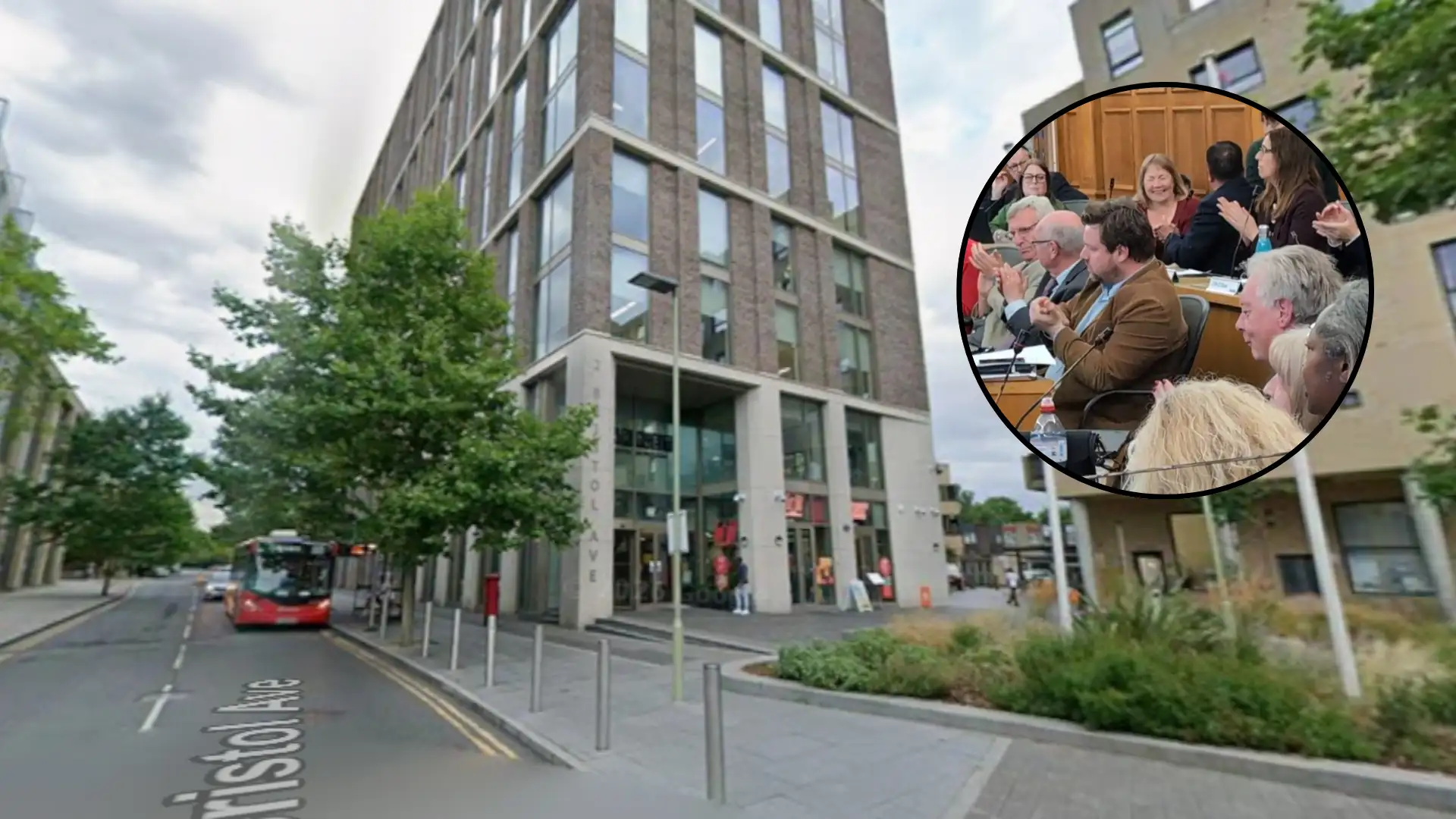
Barnet (Extra London News) May 20, 2026 — The Labour Party has successfully retained operational control of Barnet Council despite failing to secure an absolute majority, following a historic, power-sharing compromise struck with the Conservative opposition. Incumbent Council Leader Barry Rawlings was officially re-elected to lead a newly established Labour minority administration during a high-stakes vote at the first full annual council meeting held on Tuesday, 19th May, at Hendon Town Hall. The dramatic assembly follows a deadlocked local election on Thursday, 7th May, which stripped Labour of its previous comfortable majority and left the borough in a state of No Overall Control (NOC).
- Key Points
- What Happened at the Barnet Council Annual Meeting?
- How Did the May 2026 Local Elections Reshape the Council?
- What Specific Concessions Did the Conservatives Win?
- What Do the Political Leaders Say About the Power-Sharing Deal?
- Who is in the New Labour Minority Cabinet?
- Why Was the Green Party Excluded From the Coalition?
- What Does This Deal Mean for the Future of Barnet’s Governance?
The newly minted bipartisan pact features a series of sweeping concessions that will inject a distinctly “bluer hue” into the local governance framework. While the Labour Group clings tightly to all pre-existing cabinet portfolios and retains total leadership over major decision-making bodies such as planning and licensing, the Conservatives have extracted unprecedented administrative concessions. Crucially, the agreement elevates the Leader of the Barnet Conservatives, Councillor Peter Zinkin, into the Leader’s Cabinet meetings as a non-executive member, creating a rare mechanism for direct opposition input into top-level executive discourse before policies are formalised.
Following the adjournment of Tuesday’s highly charged meeting, the exterior facade of Hendon Town Hall was seen illuminated by bright red lighting cutting through the evening darkness. It remains unconfirmed by municipal officials whether the choice of lighting was a deliberate gesture of celebration by the surviving Labour administration or a standard structural display. However, the visual served as a stark reminder of the razor-thin margin by which the borough’s political landscape is now bound.
What Happened at the Barnet Council Annual Meeting?
The internal machinations of the agreement played out transparently during the roll-call votes at Hendon Town Hall on Tuesday night. To ensure the smooth passage of the minority administration without triggering constitutional gridlock, the Barnet Conservative Group engineered a tactical floor strategy. As officially reported in a formal public dispatch by Barnet Council’s media unit, the Conservative nomination for Council Leader was put forward as a performance of unified party support, subsequently failing by 32 votes to 31.
Immediately following this, during the definitive vote to ratify a Labour Council Leader, the entire Conservative contingent abstained en masse. This intentional manoeuvre permitted the reappointment of Councillor Barry Rawlings by a final tally of 31 votes in favour to just one against.
In terms of civic appointments, the council floor experienced far less friction during its standard mayoral selections. The chamber successfully approved the appointment of Councillor Zahra Beg, who will formally succeed Danny Rich as the London Borough of Barnet’s civic mayor, stepping in to serve the full 2026/2027 municipal term.
How Did the May 2026 Local Elections Reshape the Council?
The political crisis was triggered by an unprecedented shift in voter sentiment during the local elections held on 7th May 2026. Prior to the vote, the Labour Party held a dominant, historic 40-seat majority, while the Conservatives occupied 19 seats, with the remaining seats fragmented among micro-parties and vacancies. The 2026 election saw a massive influx of local democratic engagement, drawing a record-breaking 312 candidates across the borough’s 24 geographic wards, compared to just 207 candidates during the previous cycle in 2022.
When the ballots were finalised, the electoral maths presented an exact stalemate. Both the Labour Party and the Conservative Party captured exactly 31 seats each. Because the threshold for an absolute governing majority inside the 63-seat chamber sits at 32 seats, neither major faction could claim total victory. The final remaining seat was claimed by the Green Party, throwing the local authority into a classic hung parliament scenario and triggering intense behind-the-scenes negotiations.
What Specific Concessions Did the Conservatives Win?
The full details of the cross-party framework, published by the local authority late on Tuesday evening, outline an array of “enhanced arrangements” specifically designed to afford the Conservative opposition substantial leverage over municipal scrutiny. Joe Ives, reporting for the Local Democracy Reporting Service (LDRS) via the Barnet Post, noted that the deal forces Labour to concede major legislative avenues of influence to their primary rivals.
Beyond granting Councillor Peter Zinkin a non-executive seat at the executive cabinet table, the terms dictate that Conservative councillors will now take over the control and chairmanship of multiple highly critical oversight bodies. The opposition group has secured the chairs for the Governance, Audit, Risk Management and Standards (GARMS) Committee, alongside the Pension Fund Committee. Furthermore, the council has altered its structural blueprint to assign Conservative chairs to the vast majority of Overview and Scrutiny sub-committees. This expansion features the creation of two entirely new dedicated sub-committees tasked with dissecting municipal Finance & Growth and Environment matters before they ever reach a binding vote.
Explore More Barnet News
Labour and Conservatives Tie in Barnet Council Election 2026, Barnet
Barnet Council Links Golders Green Stabbings to South London Attack (2026)
What Do the Political Leaders Say About the Power-Sharing Deal?
In an official public statement released via the Barnet Council press office immediately following his confirmation, Councillor Barry Rawlings sought to strike a tone of collaborative optimism while reaffirming his party’s core legislative targets. As documented by the Barnet Council communications team, Councillor Rawlings stated:
“I am honoured to be reappointed to serve as Leader of the Council, and to take forward our ambitious agenda for Barnet. We will continue to care for people, our places and the planet, work to drive down poverty and towards our Net Zero targets, invest in community safety and prevention to ensure everyone can live their best lives, deliver the public realm improvements residents want to see, and bear down on costs to get us to financial sustainability. We will work constructively with the Opposition to govern in the best interests of residents and deliver the improvements Barnet residents need and deserve.”
On the opposite side of the chamber, the motivation for entering into such an unconventional pact was framed around pragmatic oversight. As reported by Joe Ives of the LDRS, the overarching objective for the Barnet Conservatives centred around exploiting a historic opportunity to directly check executive power after being decisively frozen out of control since their heavy local election losses in 2022. Local analysts indicate that while the desire to completely reclaim the local authority remains the ultimate target for the Tories, this deal effectively institutionalises opposition power within Barnet’s executive branch to a degree never seen before in the borough’s history.
Who is in the New Labour Minority Cabinet?
Despite the structural concessions made to the opposition regarding scrutiny and audit committees, the internal composition of the executive branch remains entirely under Labour control. Following his successful reappointment, Councillor Barry Rawlings moved swiftly to formally appoint his core executive Cabinet.
According to the official statutory records published by Barnet Council on 19th May 2026, the political executive driving the minority administration consists of the following appointments:
- Councillor Barry Rawlings: Leader of the Council, Strategic Partnerships, Economy & Effective Council.
- Councillor Ross Houston: Deputy Leader, Homes & Regeneration.
- Councillor Anne Clarke: Culture, Leisure, Arts & Sport.
- Councillor Pauline Coakley-Webb: Family Friendly Barnet.
- Councillor Sara Conway: Community Safety, Community Cohesion and Ending Violence Against Women & Girls.
- Councillor Alison Moore: Adult Social Care and Health.
- Councillor Nagus Narenthira: Equalities, Poverty Reduction and the Voluntary and Community Sector.
- Councillor Simon Radford: Financial Sustainability.
Why Was the Green Party Excluded From the Coalition?
The numerical deadlock naturally placed the single, newly-elected Green Party councillor for the Woodhouse ward, Charli Thompson, in a potential “kingmaker” position. However, instead of courting the minor party to clear the 32-seat majority hurdle, both Labour and the Conservatives deliberately chose to isolate the Green representative.
As detailed by journalist Joe Ives in his coverage for the LDRS, Barnet Labour leadership defended their total refusal to negotiate with the Greens by citing “significant policy differences.” This sentiment was mirrored across the aisle by the Conservatives, who explicitly locked their doors to any third-party coalition talks, designating their policy differences with the Green platform as entirely “unbridgeable.”
This mutual hostility left Councillor Thompson as a lone dissenting voice within the chamber. During the floor votes, Councillor Thompson acted as the sole member of the council to vote directly against the reappointment of Councillor Rawlings as leader, while additionally voting down the performative nomination of the Conservative leader, Councillor Zinkin. The subsequent alignment of the two major parties to shut out the progressive minority has led local commentators to describe the arrangement as a classic textbook case of “the enemy of my enemy is my friend.”
What Does This Deal Mean for the Future of Barnet’s Governance?
The longevity and stability of this minority administration will depend entirely on how smoothly the newly established oversight committees function. By handing the keys of the finance, audit, and scrutiny panels to the Conservatives, Labour has guaranteed that every single penny spent and every policy drafted will face exhaustive opposition friction before implementation.
Political analysts point out that while Labour maintains the legal authority to advance its progressive agenda, including its Net Zero carbon targets and poverty reduction schemes, it no longer possesses the raw voting numbers to ram legislation through without friction. If the “enhanced scrutiny arrangements” are utilised by the Conservatives as a political weapon rather than an input mechanism, Barnet Council could face persistent legislative logjams. For now, the borough enters uncharted territory, governed by a fragile red-and-blue equilibrium born out of sheer electoral mathematical necessity.