Hyde Park originated as a private hunting estate acquired by King Henry VIII in 1536 after the Dissolution of the Monasteries. The land became a controlled royal deer park used for hunting, court recreation, military reviews, and demonstrations of Tudor authority over former ecclesiastical property.
- How did Hyde Park change during the Stuart period?
- What role did Hyde Park play in eighteenth-century London society?
- How did nineteenth-century reforms transform Hyde Park into a modern public park?
- Why did Hyde Park become associated with protest and free speech?
- How did Hyde Park survive modern urban development pressures?
- What historical features and monuments remain visible in Hyde Park today?
- Why does Hyde Park remain historically significant in modern London?
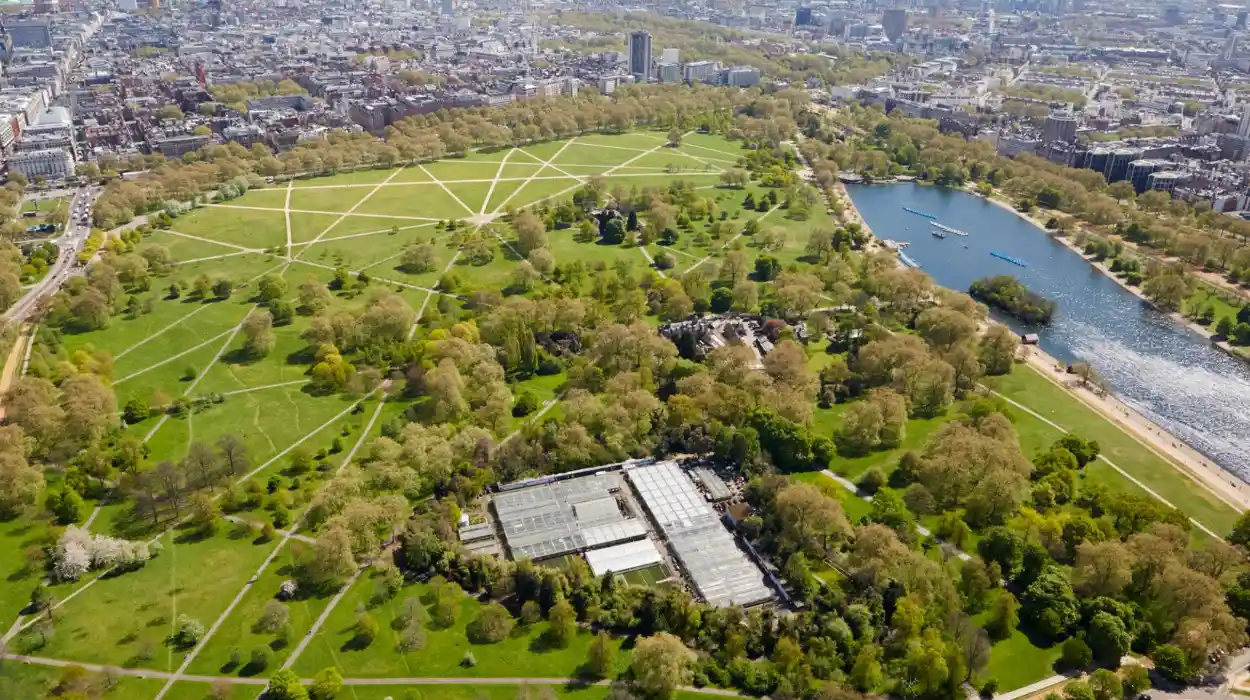
Hyde Park stands in central London and covers approximately 350 acres. The park forms part of a larger connected green corridor with Kensington Gardens, Green Park, and St James’s Park. Its historical development reflects major shifts in the English monarchy, urban planning, social access, public protest, and environmental management.
The land originally belonged to Westminster Abbey during the medieval period. The name “Hyde” is derived from the Anglo-Saxon land measurement known as a “hide,” which referred to a unit of agricultural land sufficient to support a household. Before royal ownership, the estate functioned as farmland, woodland, and pasture connected to church administration.
In 1536, King Henry VIII seized monastic properties during the Dissolution of the Monasteries. Hyde became crown land under direct royal control. Henry VIII enclosed the estate and converted it into a deer park used primarily for hunting. Deer hunting represented aristocratic privilege and reinforced political hierarchy during Tudor England.
The hunting grounds operated under strict access restrictions. Only royal guests, courtiers, and approved nobles entered the estate. The park landscape included wooded sections, grassland, marshy terrain, and managed animal populations. Hunting parks throughout Tudor England served both recreational and political purposes. Examples included Richmond Park, Greenwich Park, and Hampton Court hunting lands.
The location west of medieval London proved strategically useful. The site remained close enough to Westminster Palace for royal access while remaining sufficiently rural for controlled hunting activity. During the sixteenth century, London’s urban expansion had not yet fully reached the western outskirts surrounding Hyde Park.
The transformation from monastic estate to royal hunting ground reflected wider Tudor centralisation policies. Crown ownership of church land significantly increased royal wealth and administrative power. Hyde Park became part of a national redistribution of property that altered English land ownership for centuries.
How did Hyde Park change during the Stuart period?
Hyde Park evolved during the seventeenth century from an exclusive royal hunting estate into a semi-public ceremonial space. Stuart monarchs introduced roads, carriage routes, and controlled public access, transforming the landscape into an important social and political environment within expanding London.
King James I permitted limited public access to Hyde Park in the early seventeenth century. This marked a major shift in the park’s role. Although ownership remained royal, sections became accessible to wealthier London residents who used the grounds for riding, carriage travel, and social gatherings.
King Charles I accelerated these changes during the 1630s. In 1637, he formally opened Hyde Park to the public. Charles, I also introduced the Ring, a carriage circuit designed for fashionable society. The Ring became a centre of elite display where aristocrats demonstrated wealth, clothing, horses, and status.
Hyde Park increasingly functioned as a social theatre for Restoration-era London. Aristocratic visitors travelled through the park in decorated carriages. Samuel Pepys, the seventeenth-century naval administrator and diarist, recorded frequent visits and observations concerning Hyde Park’s social atmosphere.
The park also gained military and political significance. Troops assembled there during periods of national instability. During the English Civil War period between 1642 and 1651, control over London’s open spaces carried strategic value. Hyde Park’s open terrain allowed military drilling and review exercises.
Landscape modifications expanded during the Stuart period. Roads improved movement through western London. Tree planting programmes and controlled boundaries reshaped the estate. The park’s role shifted from purely recreational hunting toward broader urban integration.
London itself expanded rapidly during the seventeenth century. Population growth increased pressure on the land surrounding the city. Hyde Park became increasingly important as a protected open space amid urban development. This distinction later contributed to its preservation as a public park rather than residential property.
What role did Hyde Park play in eighteenth-century London society?
During the eighteenth century, Hyde Park became a prominent centre for elite leisure, ceremonial display, and urban recreation. Improved infrastructure, increased carriage traffic, and landscaped avenues transformed the park into one of London’s most important public gathering spaces.
Eighteenth-century London experienced substantial urban growth. Hyde Park became integrated into the capital’s expanding transport and residential systems. Roads surrounding the park improved commercial and social connectivity between Westminster, Mayfair, and Kensington.
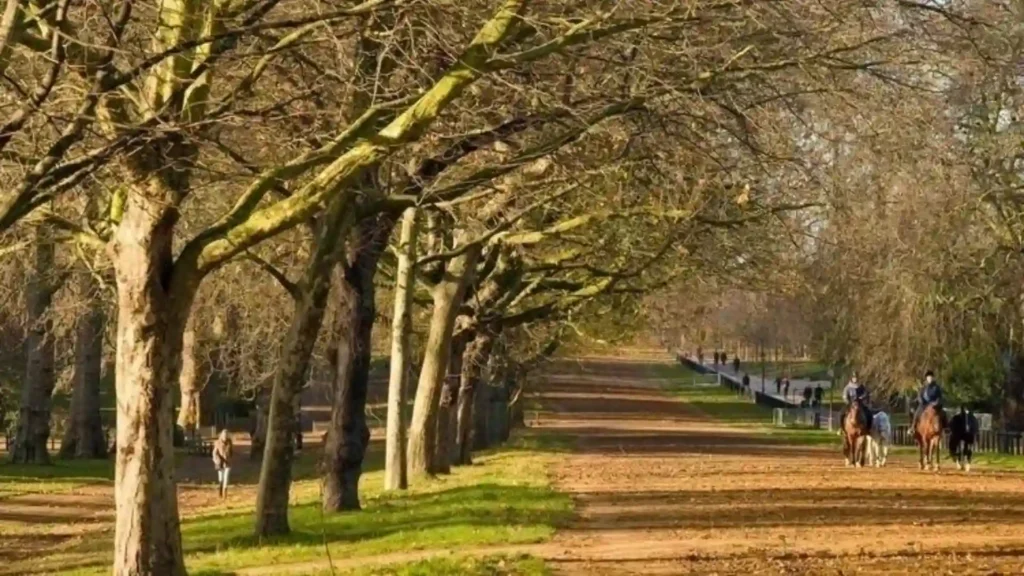
Rotten Row emerged as one of Hyde Park’s defining features during this period. Originally constructed under King William III in the 1690s, the route functioned as a safer illuminated riding path between Kensington Palace and St James’s Palace. Oil lamps installed along the route represented an early form of public street lighting.
Rotten Row developed into a prestigious equestrian promenade. Members of the aristocracy rode horses there during peak social hours. Public visibility became central to upper-class identity in Georgian London. Hyde Park, therefore, operated both as a recreational space and a public performance environment.
The park also hosted duels, reviews, celebrations, and military exercises. Public events reflected broader Georgian political culture. Royal ceremonies and military displays reinforced national identity during periods of imperial expansion and continental conflict.
The social composition of park visitors diversified over time. Although aristocratic influence remained dominant, middle-class Londoners increasingly visited Hyde Park for walking and recreation. Commercial development around the park created easier access for broader populations.
Today, many of these surviving Georgian-era routes and ceremonial spaces still shape visitor experiences explored in The Best Things to See in Hyde Park: A Complete Walk Guide, which highlights the park’s most historically important landmarks and pathways.
How did nineteenth-century reforms transform Hyde Park into a modern public park?
Nineteenth-century reforms reshaped Hyde Park into a structured public park designed for mass urban recreation, political assembly, and civic identity. Infrastructure projects, landscaping improvements, and legal protections established Hyde Park as a permanent public institution within industrial London.
The nineteenth century transformed London into the world’s largest industrial city. Rapid population growth created overcrowding, pollution, and public health concerns. Open spaces gained new importance as environments for recreation and physical relief.
Government authorities expanded Hyde Park’s public function through landscaping and infrastructure programmes. Paths improved pedestrian movement. Drainage systems reduced flooding. Tree planting stabilised sections of the landscape affected by heavy public use.
One of the most important nineteenth-century developments involved the creation of the Serpentine. Although initially designed in 1730 under Queen Caroline, the lake became central to Victorian recreational culture. The Serpentine supported boating, walking, swimming, and winter skating activities.
Political demonstrations became a defining feature of Hyde Park during the Victorian era. Reform movements used open spaces for mass gatherings demanding voting rights, labour protections, and social reforms. Hyde Park emerged as a symbolic centre for political expression.
The Great Exhibition of 1851 also reshaped Hyde Park’s history. Organised under Prince Albert and Queen Victoria, the exhibition showcased industrial innovation, imperial trade, and technological development. The Crystal Palace stood temporarily within Hyde Park before relocation to south London.
To experience this historic landmark in person today, consult our comprehensive [The Best Things to See in Hyde Park: A Complete Walk Guide] for itineraries and visiting parameters.
Why did Hyde Park become associated with protest and free speech?
Hyde Park became internationally associated with protest and free speech because nineteenth-century reform movements repeatedly used the park for public demonstrations. Government negotiations, legal disputes, and public activism gradually established the site as a recognised arena for political expression and assembly.
Political gatherings occurred in Hyde Park long before formal free speech protections emerged. However, the Victorian period institutionalised the park’s association with public protest.
The 1866 Reform League demonstration represented a turning point. Authorities attempted to prevent entry into Hyde Park by locking gates and deploying police. Protesters forced sections of the railings open, leading to confrontations that attracted national attention.
Speakers’ Corner emerged near Marble Arch during the late nineteenth century. The area became informally recognised as a space for public oratory. Speakers addressed subjects including socialism, religion, labour rights, women’s suffrage, imperial policy, and civil liberties.
Notable speakers included Karl Marx, Vladimir Lenin, George Orwell, and suffrage campaigners connected to the women’s voting movement.
The suffragette movement frequently used Hyde Park for mobilisation. Major rallies organised by the Women’s Social and Political Union attracted tens of thousands of participants during the early twentieth century.
How did Hyde Park survive modern urban development pressures?
Hyde Park survived modern urban development pressures through legal protections, public preservation campaigns, royal ownership structures, and urban planning policies that recognised the environmental and cultural importance of large public green spaces within central London.
By the nineteenth century, land values surrounding Hyde Park had risen dramatically. Residential and commercial development transformed nearby districts, including Mayfair, Knightsbridge, and Kensington. Large open spaces faced increasing financial pressure from property expansion.
Public support for preservation strengthened during the Victorian era. Urban reformers argued that parks improved public health, reduced overcrowding impacts, and promoted social stability. These ideas influenced municipal planning policies across Britain.
The Royal Parks administration eventually formalised management systems covering Hyde Park and associated royal green spaces. Maintenance programmes addressed pathways, planting, water management, and crowd control.
Environmental considerations also became increasingly important during the twentieth century. Hyde Park contributed to air circulation, biodiversity support, and urban temperature regulation within central London.
What historical features and monuments remain visible in Hyde Park today?
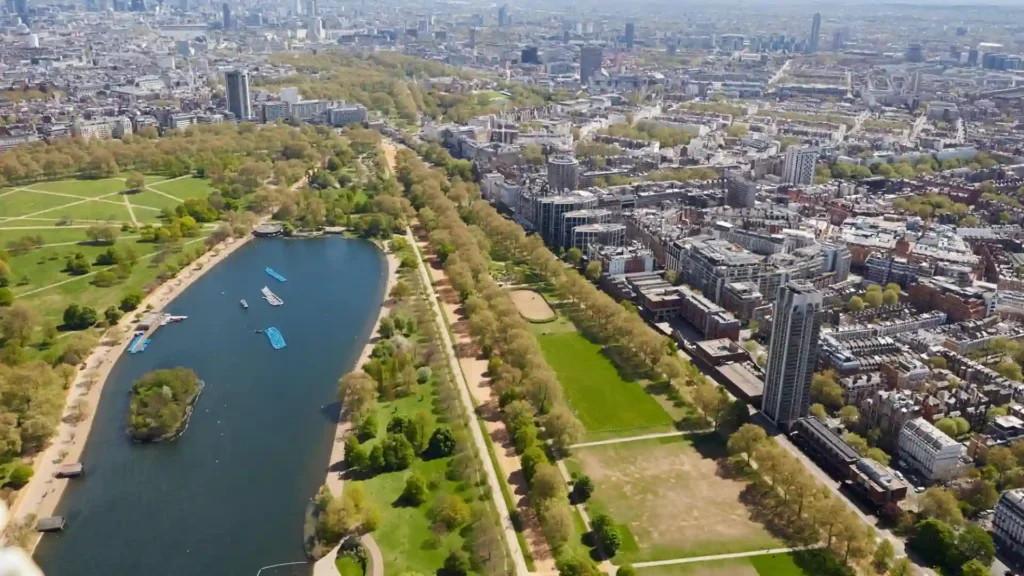
Hyde Park retains numerous historical monuments, ceremonial routes, and landscape features that reflect its evolution from royal hunting estate to civic public park. These surviving elements preserve Tudor, Georgian, Victorian, and modern layers of London’s historical development.
Rotten Row remains one of Hyde Park’s most historically significant routes. Although modernised over centuries, the path continues to reflect its original function as an elite riding avenue connecting royal residences.
The Serpentine remains central to the park’s identity. Its curved design represented a departure from rigid formal garden traditions common in earlier European landscape planning.
Speakers’ Corner continues operating near Marble Arch. Public speeches, debates, and demonstrations regularly occur there. The location remains symbolically associated with democratic expression and civic participation.
The Diana, Princess of Wales Memorial Fountain opened in 2004 and introduced contemporary commemorative architecture into the historic landscape. The memorial reflects changing public approaches toward remembrance and interactive civic design.
Why does Hyde Park remain historically significant in modern London?
Hyde Park remains historically significant because it embodies nearly five centuries of English political, social, environmental, and urban transformation. The park preserves evidence of monarchy, democratic protest, landscape design, public recreation, and heritage conservation within one continuously used civic space.
Few urban landscapes demonstrate such extensive historical continuity. Hyde Park reflects Tudor royal expansion, Stuart ceremonial culture, Georgian leisure practices, Victorian reform politics, and modern environmental preservation within a single geographic setting.
The park also illustrates changing relationships between state power and public access. Originally reserved for monarchy and aristocracy, Hyde Park gradually evolved into one of Britain’s most accessible civic environments.
Its historical significance extends beyond Britain. International visitors recognise Hyde Park as part of London’s global cultural identity. The park frequently appears in literature, journalism, political history, tourism studies, and urban planning research.
From royal hunting territory seized during the Tudor Reformation to one of the world’s most recognised urban parks, Hyde Park represents the transformation of English public space across nearly five centuries of national history.
What was Hyde Park originally used for?
Hyde Park was originally used as a private royal hunting estate after Henry VIII acquired the land in 1536 during the Dissolution of the Monasteries.