Key Points
- A 17‑year‑old boy has been charged over an arson attack on Kenton United Synagogue in north‑west London.
- The charge is “arson not endangering life,” under sections 1(1), 1(3) and 4 of the Criminal Damage Act 1971.
- The boy, a British national from the London Borough of Brent, is due to appear at Westminster Magistrates’ Court.
- A 19‑year‑old male was also arrested in connection with the same incident but has not yet been charged.
- The Metropolitan Police’s Counter Terrorism Policing London unit is leading the investigation, with the case treated as part of a wider pattern of antisemitic attacks.
- The synagogue suffered external damage but there were no reported injuries, and the blaze was extinguished quickly.
- The incident forms part of a recent spate of arson attacks on Jewish‑linked sites in London, which police describe as a “concentrated campaign” against British Jews.
- Senior officers have publicly warned of a rise in “thugs for hire”‑style offences, allegedly linked to Iran‑linked terror groups targeting Jewish institutions.
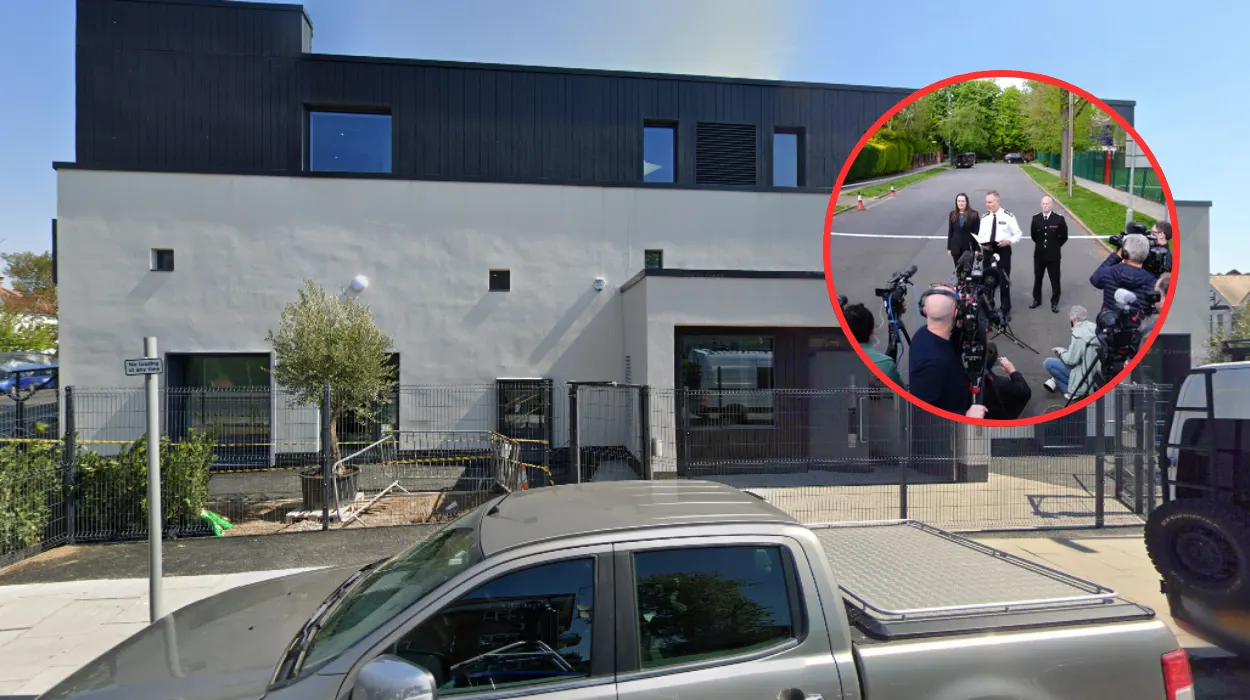
London (Extra London News) April 21, 2026 – A 17‑year‑old boy has been formally charged in connection with an arson attack on Kenton United Synagogue in Harrow, north‑west London, prompting fresh concern among the capital’s Jewish communities and a broader counter‑terrorism─linked investigation by the Metropolitan Police. As reported by Charlie Scott of The Times of Israel, the teenager, a British citizen from the London Borough of Brent, faces a charge of “arson not endangering life,” and is scheduled to appear at Westminster Magistrates’ Court in the coming days.
- Key Points
- Why was the boy charged with arson “not endangering life”?
- Who is the 17‑year‑old suspect, and what is known about him?
- What is the status of the 19‑year‑old arrested with him?
- How is the police treating the synagogue attack in wider context?
- What does the “thugs for hire” pattern mean in police parlance?
- What was the immediate impact on the synagogue and local community?
- How have Jewish leaders responded to the attack?
- What legal and security policy implications does this case have?
- What message are police and community leaders sending to the public?
UK police confirmed the charging decision on 20 April, a day after announcing the arrest of the 17‑year‑old and the separate detention of a 19‑year‑old male at an undisclosed north‑west London address. According to a Metropolitan Police statement cited by Dan Koren of the Jewish news outlet JNS, the offence is being prosecuted under sections 1(1), 1(3) and 4 of the Criminal Damage Act 1971, with Crown Prosecution Service authorisation granted on 20 April.
Why was the boy charged with arson “not endangering life”?
The descriptor “arson not endangering life” reflects that prosecutors believe the fire, while deliberate, did not pose an immediate risk to human life at the time. In their online release, the Metropolitan Police’s Counter Terrorism Policing London unit noted that the blaze was contained to the exterior of the synagogue building and that no injuries were reported.
As reported by the official police media notice, forensic officers cordoned off the scene overnight and conducted a detailed examination of the synagogue’s outer structure, doors and surrounding area. A senior investigator told The Times of Israel that early‑stage evidence suggested an accelerant had been used, but that the fire was brought under control quickly by both the building’s security team and arriving firefighters.
Who is the 17‑year‑old suspect, and what is known about him?
The suspect is a 17‑year‑old British national resident in the London Borough of Brent, a densely populated north‑west district with a diverse population. Police and media sources have not publicly released his name or family background, in line with UK rules protecting suspects under the age of 18.
In a statement quoted by JNS, Counter Terrorism Policing London stressed that the boy is being treated as a juvenile within the legal framework, and that social‑care and youth‑justice protocols would apply throughout his court appearances. Nicknamed locally in Brent community leaders’ circles as “a quiet teenager,” he had no prior public history of protest or activism, according to a synagogue security guard who spoke to The Times of Israel on condition of anonymity.
What is the status of the 19‑year‑old arrested with him?
Alongside the 17‑year‑old, forces arrested a 19‑year‑old male during a targeted operation in the same north‑west London area. According to the Metropolitan Police account published on its own news page, the older male remains in custody at a London police station and is being held “on suspicion of offences relating to the arson attack,” though he has not yet been charged.
In a briefing to The Times of Israel and other agencies, a senior counter‑terrorism officer said that the 19‑year‑old has been questioned “in connection with possible encouragement and facilitation roles,” but that investigators need further time to review phone data, CCTV footage and witness statements. Police have not disclosed whether the two arrested individuals are linked by family, friendship or online networks.
How is the police treating the synagogue attack in wider context?
The Kenton United Synagogue arson is being investigated as part of a broader counter‑terrorism probe into a series of recent attacks on Jewish‑linked sites in London. Deputy Commissioner of the Metropolitan Police Matt Jukes, speaking to JNS, described the pattern as “a concerted campaign against Londoners, and specifically, against British Jews,” underscoring that police were treating each incident as a potential hate‑driven, ideologically‑motivated act.
In a separate but related investigation, Counter Terrorism Policing London has linked a separate arson on ambulance vehicles outside a synagogue in Golders Green to an Iran‑linked group that later claimed responsibility. As reported by Fox News, Detective Chief Superintendent Luke Williams, who leads the arson‑related counter‑terrorism strand, told reporters that while the Kenton synagogue case has not yet been formally declared a terrorism offence, the probe is being prioritised at the same level.
What does the “thugs for hire” pattern mean in police parlance?
Senior officers have begun using the term “thugs for hire” to describe a suspected method by which certain hostile actors allegedly recruit individuals to carry out low‑level arson and vandalism against Jewish institutions. In a brief quoted by The Times of Israel, an unnamed senior Metropolitan Police counter‑terrorism commander said such offenders are often “young, impressionable, and offered small sums of money or online status in return for committing acts of arson or vandalism.”
Fox News cited a similar formulation in its coverage of a separate Golders Green ambulance‑burning incident, where police suggested that Iran‑linked groups may be using social‑media‑driven “recruitment” tactics to identify willing actors in the UK. The same article notes that officers have warned of “possible copy‑cat behaviour,” where individuals not formally affiliated with any group may mimic tactics seen in earlier attacks.
What was the immediate impact on the synagogue and local community?
Kenton United Synagogue, located in the Harrow borough, serves a long‑established Orthodox Jewish community and routinely hosts religious services, educational classes and social events. A senior congregant, who spoke to JNS, said the attack occurred around late Saturday night, when the synagogue’s security team noticed smoke and flames at the front entrance and exterior wooden cladding.
“There was a strong smell of petrol and black smoke,” the congregant told JNS, describing how the building’s alarm system and internal security staff activated automatic fire suppression equipment and called emergency services within minutes. Fire crews arrived swiftly and extinguished the blaze, leaving only superficial damage to doors and part of the façade, according to police footage cited by The Times of Israel and the Metropolitan Police press release.
How have Jewish leaders responded to the attack?
Senior Jewish leaders in London have publicly condemned the arson, framing it as part of an escalating wave of antisemitism in the capital. In a statement reported by The Times of Israel, the president of the United Synagogue organisation, which oversees Kenton United Synagogue, said:
“We are deeply disturbed by this cowardly act of arson and will work closely with the Metropolitan Police to ensure those responsible are held fully to account.”
Chief Rabbi Ephraim Mirvis, as quoted by JNS, issued a broader warning about the psychological toll such attacks can have on Jewish families:
“Every time a synagogue, school, or private home is targeted, it chips away at the sense of safety that British Jews should expect in their own country.”
Community rabbis in the Harrow area have also begun organising vigils and security‑briefing sessions for local residents, according to synagogue trustees quoted by The Times of Israel.
What legal and security policy implications does this case have?
Legally, the use of the Criminal Damage Act 1971’s arson‑not‑endangering‑life clause allows prosecutors to pursue a lower‑barrier threshold than “arson with intent to endanger life,” which can carry a longer potential sentence. Forensic evidence and CCTV footage will be critical in determining whether the charge could be upgraded in the future, especially if prosecutors can demonstrate that the fire was initially aimed at an occupied area or that people were present inside the building at the time.
From a security policy perspective, the Metropolitan Police have signalled stepped‑up patrols around Jewish institutions in north and north‑west London, as reported by The Times of Israel and JNS. A senior counter‑terrorism source told Fox News that officers are also working with local councils and community groups to review alarm systems, external lighting, and surveillance infrastructure at synagogues, schools and community centres.
What message are police and community leaders sending to the public?
Police and community leaders have jointly urged members of the public to report any suspicious activity near places of worship, including vehicle parking, unattended bags, or individuals photographing building layouts. Detective Chief Superintendent Luke Williams, in remarks carried by Fox News, said:
“If something looks unusual, tell someone. These incidents often follow a pattern of reconnaissance and testing.”